Why Google and Bing penalize sometimes our website.


Published on March 4, 2014
Published on Wealthy Affiliate — a platform for building real online businesses with modern training and AI.
In a recent WA blog Joe (webBIZ44) asked why his site wasn’t SEO friendly for Bing. This question gave me the idea to research why Google and Bing could penalize our websites.

Especially since the Penguin update 2012 many Internet marketers fear to be punished by Google.
How recognize a penalty

Penalties may be automatic or manual. The manual penalty, and that one may have already told you, can take place without that you know why. For algorithmic penalties there some clear indications.
• If your site or pages are loosing some places or even are slipping as a whole to the rear.
• Running a site search - yourwebsite.com as a keyword - no results
• When you enter your home page keyword and appear instead of the home page any other page of your site.
• Page ranking you had is slipping back to page two or three without any action on your part.
• Page Rank for your site has inexplicably dropped from a respectable two or three to a big fat zero (or a measly PR of one).
If any of these phenomena, they are applicable to it has certainly been punished by Google.
Why Google has punished me?
There are many reasons that can lead to a Google penalty. I 'm counting on you some, but there are far more. Here are newbie errors that can lead to a penalty (not required)
Duplicated content
Hopefully you realize that Google does not like duplicate content. Make sure that your content is unique and is well written.
Too many H1 tags for titles and subtitles
Ready to put this into action?
Start your free journey today — no credit card required.
The H1 tag helps Google to understand what is the content of your page. If you do have multiple H1 title on one page that could mean that you are bombing Google with keywords.
Internal 404’s (error)

Google wants to ensure that you have your site under control and monitor the content and functioning. If it finds one or more 404’s in your site, it is for Google a sure sign that your visitors do not get from you all information that they want.
Keyword stuffing
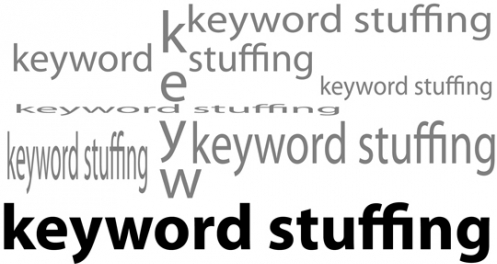
There are many and strange rules about keyword density, but most have not been proven. A very high keyword density is a sure sign for Google of a poorly written content. In this case Google may - rightly or wrongly - punish you.
Broken external links
Check regularly whether your external links still exist. If not, there is a 404-error message that Google absolutely does not like.
Scraped content
Some site owner’s copy paste, especially when they start building their site, entire content from other sites to enlarge their content in no time. Google sees this as a pointless duplication. So only put your own content on your website.
Missing data Sitemap
Google uses the XML sitemap to parse your site 's structure and learn how it's put together. Make sure your XML sitemap is available and up -to-date, and then submit it in your Webmaster Tools account
Website Timeout

If a site goes down, everyone is excited: You, the user, and the search engine. If Google does not find your website, it would rather prefer de-index the site than send the visitor to an impasse.
Affiliate links all over the place
Google has nothing against affiliate links. In contrast, it sees a red flag when a site abounds of affiliate links. Of course you can mask this with relinks. But this is not necessarily advisable.
Your site loads too slow
Many factors affect the hosting speeds. So this is a tricky problem that is not easy to solve. Be sure to install a good caching plugin. Also ensure that your image files are not too big and de-activate the unnecessary plugins.
Spun content
You bought an article in good faith from an author. If you think you bought the content cheap, so it is quite possible that the author has sold it to others. So please do control the content (integral or partial) via Google.
Too many outbound links

When linking to other websites, keep it natural. A high quantity of links is a sign that you’re swapping links with people for the sake of mutual SEO benefit.
So if you take care of these problems before Google is penalizing your website, there are less chances to be punished. If you have been penalized, try to fix the problem and give Google time to re-index your site and pages. In some very few cases it’s better to abandon a site than fight a Google penalty.
Share this insight
This conversation is happening inside the community.
Join free to continue it.The Internet Changed. Now It Is Time to Build Differently.
If this article resonated, the next step is learning how to apply it. Inside Wealthy Affiliate, we break this down into practical steps you can use to build a real online business.
No credit card. Instant access.