100 percent Google PageSpeed Score


Published on May 6, 2017
Published on Wealthy Affiliate — a platform for building real online businesses with modern training and AI.
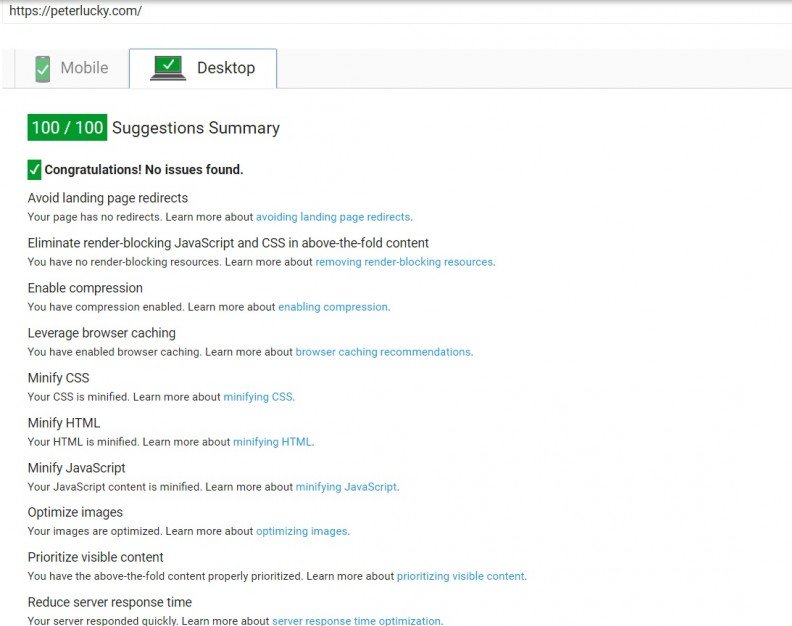
A few days ago, Kyle and Carson introduced SiteSpeed feature. I tested it on my site and it worked great. My site scores 100% on Google PageSpeed in both desktop and mobile. This is so amazing!
Desktop Score
Mobile Score
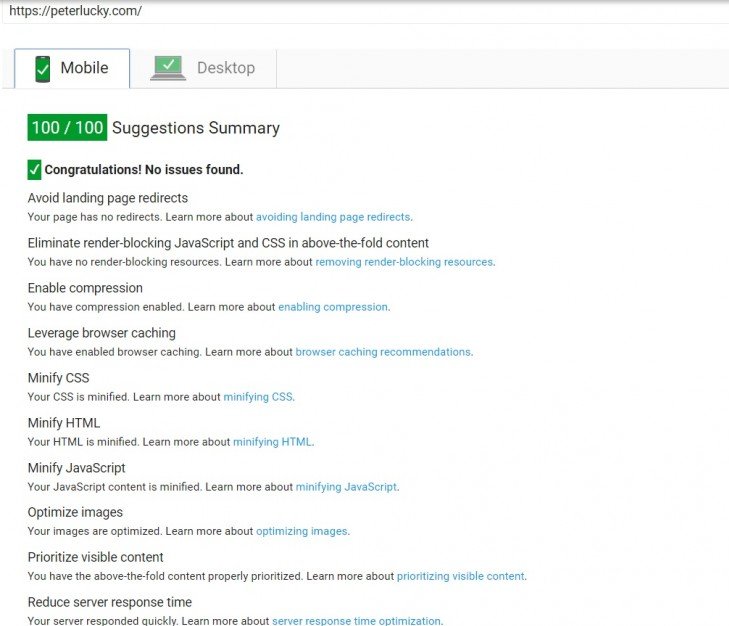
Before I used the SiteSpeed, my site scored 87%. I had only one problem in "Eliminating render blocking Javascript and CSS". This is a tricky part, but now it is taken care of.
If you're using SiteSpeed and the score is lower than 80%, here are some tips that will improve speed:
1. Use Small Image File Size
In my experience, large image file size is #1 that causes slow speed. When your web page has large images, the page has a large file size. It will take a long time for web browsers to load a page.
I would recommend you use image editing software such as Photoshop or PhotoScape. There is "Image Resize" or "Crop" option. This is how you make an image smaller without losing the quality and resolution of an image.
2. Reduce Banner Ads and Video Ads
Ready to put this into action?
Start your free journey today — no credit card required.
If you display more than 10 ads per page, the site is slow and sometimes non-responsive. The reason is your site has to load external scripts from other sites. When your site stops loading or takes too long to load, people will leave your site.
I want to mention something about ads here. A lot of people are aware of affiliate marketing and online advertising these days. People know when they click on your ads, you'll get commission. If you don't provide helpful contents and display tons of ads, they know you want to sell ads and waste people's time.
Sometimes people bypass your affiliate links and go directly to advertiser's websites.
3. Use Less than Five Plugins
Every time you install a new plugin, more scripts will be added to the site. A premium plugin often has a lot of features and options to customize. For this reason, it has a lot of scripts, so it's heavy.
When you visit a site, it has to load everything to display on a web browser. This includes images, text, plugins, etc. The less plugins you have, the more storage your site has.
4. Use a lightweight WordPress Theme
There are a lot of free themes and paid themes on the market.
Free themes are lightweight but they don't have many options. Many free themes are not mobile friendly and have errors. This happens because theme authors don't update the themes frequently.
Many people choose paid themes (or premium themes) because they have better code quality and more options.
I love premium themes because they look beautiful. I think the authors did a good job in marketing the themes. However, after I install the theme, my site is so slow.
The theme has too many options that I don't need. For example, I never use online store options. These unnecessary options consume my site's storage.
If you're looking for a new theme, find a theme that is less than 15MB file size.
When you visit a theme demo page, test the pagespeed to see if it scores greater than 80%.
In addition, in your WP Dashboard - Appearance, delete the themes you don't use anymore. Keep one active theme and one back up theme. The active theme is the theme you are using. The back up theme can be any themes.
There are more ways to improve pagespeed, but it's very technical. I will leave technical things for professionals.
I hope my first blog will help you improve your website speed. Time is money and speed is money too.
Peter
Share this insight
This conversation is happening inside the community.
Join free to continue it.The Internet Changed. Now It Is Time to Build Differently.
If this article resonated, the next step is learning how to apply it. Inside Wealthy Affiliate, we break this down into practical steps you can use to build a real online business.
No credit card. Instant access.