What's in Your Computer?


Published on October 8, 2015
Published on Wealthy Affiliate — a platform for building real online businesses with modern training and AI.
I have lots of information on the computer - 6 or 7 terabytes! There are times I lose track of what I filed where, and times I forget having a resource saved at all! How do you keep track of all the bits and pieces?
(Re) Introducing Google Desktop Search
The good news is that Google Desktop Search (GDS) is free. The bad news is that it was discontinued by Google in September of 2011. But... wait for it... the good news is that you can still download and use the power of Google to search and index your computer. All the indexing is done on your computer, and the index file itself is stored on your computer - no Internet connection is necessary.
There have been a number of occasions when GDS has saved my bacon by helping me locate resources I buried and forgot, or that I remembered burying, but couldn't find when I needed them.
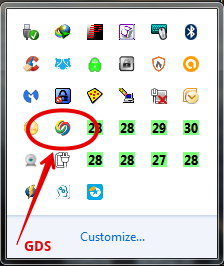
Where to find GDS
Ready to put this into action?
Start your free journey today — no credit card required.
Head over to http://www.techspot.com/downloads/1424-google-desk... for the PC version or head to http://www.macupdate.com/app/mac/24587/google-desk... for the Mac. After downloading and saving the file, scan it for viruses (I found none in either download), then install it on your computer. Once it's installed, you'll see an icon in the taskbar (shown above for a Windows 7 PC). Right clicking on the icon will bring up a menu that allows you to set options for the program, check the status of indexing for your computer, etc. It works entirely in the background while it's indexing, and it's lightning fast finding files you need to locate.
You can also set up hotkey access to GDS (Control-Control for the PC, or Command-Command for the Mac) to initiate a desktop search, as shown below.

The downside?
GDS is no longer supported by Google, but you can still find information about its use at sites like http://lifehacker.com/187425/technophilia-master-g... on the web.
Even when it was supported by Google, it did not 'track' files if you moved them after you'd initially stored them. I use a little utility called TweakGDS to simply delete the Google Desktop index from time to time, and let GDS re-index everything again so all the file locations are current. TweakGDS also lets you access other 'hidden' settings for GDS, including which drives you want indexed, whether your browsing history should be indexed, etc.
Like GDS, TweakGDS is no longer supported, but can be downloaded at http://www.podsync.com/tweakgds.htmNote that while GDS can index email for some programs such as Outlook, it cannot access cloud based files or email, such as files stored in Dropbox or email kept in Yahoo or Gmail.
Do you know what's in your computer?
I'm curious - what do others use to locate files buried in your own computer? Do you simply rely on the gray matter between your ears, or do you have some additional software assistance from a program such as GDS?
Sing out!
Dennis
Share this insight
This conversation is happening inside the community.
Join free to continue it.The Internet Changed. Now It Is Time to Build Differently.
If this article resonated, the next step is learning how to apply it. Inside Wealthy Affiliate, we break this down into practical steps you can use to build a real online business.
No credit card. Instant access.