What I learned about using AI from Huckleberry Finn


Published on August 10, 2025
Published on Wealthy Affiliate — a platform for building real online businesses with modern training and AI.


Morning, lovely WA family. Here's wishing you a great Monday and week ahead.
I thought I'd share a few insights I've had recently about using AI, which came to mind whilst I was reading a copy of "The Adventures of Huckleberry Finn" by Mark Twain.
Now the book was published in 1884/5 so 140 years ago, and obviously way before computers and way, way, way before AI!
So what could Huckleberry Finn possibly teach me about AI?
The answer is to do with trust and blind acceptance.
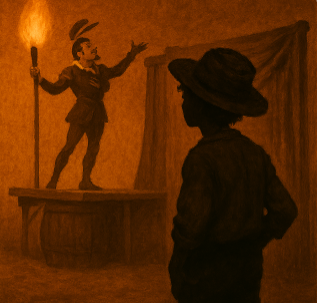
There's a great passage in the book describing a time when Huck and his ally, Jim are travelling along the Mississippi River on a raft, with two con men who are intent on relieving the local villagers of their money through various dubious means. One of the con men's ideas is to put on a Shakespearean extravaganza showing the sword fight from Richard III and Hamlet's soliloquy - the famous "To be or not to be?" speech.
Well, the sword fight turns out to be dramatic, but the soliloquy, even for the uninitiated, is priceless, since the con man can only vaguely remember the speech and manages to mangle and mash it up with so many misquotes from other Shakespeare plays that it becomes the epitome of pastiche.
It goes like this:
To be, or not to be; that is the bare bodkin
That makes calamity of so long life;
For who would fardels bear, till Birnam Wood do come to Dunsinane,
But that the fear of something after death
Murders the innocent sleep,
Great nature’s second course,
And makes us rather sling the arrows of outrageous fortune
Than fly to others that we know not of.
There’s the respect must give us pause:
Wake Duncan with thy knocking! I would thou couldst;
For who would bear the whips and scorns of time,
The oppressor’s wrong, the proud man’s contumely,
The law’s delay, and the quietus which his pangs might take.
In the dead waste and middle of the night, when churchyards yawn
In customary suits of solemn black,
But that the undiscovered country from whose bourne no traveler returns,
Breathes forth contagion on the world,
And thus the native hue of resolution, like the poor cat i’ the adage,
Is sicklied o’er with care.
And all the clouds that lowered o’er our housetops,
With this regard their currents turn awry,
And lose the name of action.
’Tis a consummation devoutly to be wished.
But soft you, the fair Ophelia:
Ope not thy ponderous and marble jaws.
But get thee to a nunnery—go!
Ready to put this into action?
Start your free journey today — no credit card required.
The effect is comic for us, but the poor, uneducated Huckleberry Finn, found it awe-inspiring and amazing. In his ignorance about Shakepeare's plays, he fell for the conman's confidence and 'smoke and mirrors' delivery - as did many of the villagers who parted with their money!
Now I'm not criticising Huck for not knowing Shakespeare, but it made me think about how we can easily fall into the same trap ourselves if we blindly trust our AI assistants and don't take the time to check facts or references.
Neither am I criticising AI because I love it and use it daily for all sorts of things. And I use ChatGPT (Sparky), Gemini and Copilot amongst others.
But I am saying that we need to be aware that all AI make mistakes, misquote things, offer out-of-date references and plain mess things up sometimes! That's why it's important to remember:
DO NOT SWITCH OFF YOUR OWN BRAIN WHEN USING AI!
Things to watch out for
Here are a few things to look out for and check:
1. Word counts - these are often wrong in my experience, and I always have to point this out to Sparky - he's always apologetic but he'll say he's given me a 1500-word articl,e but it will turn out to be only 900! I find the WA blog writer usually goes over the word count.
2. Facts - you need to check these and NEVER just accept them blindly unless this is a topic you know well and you know the facts. If you publish things online, you are opening yourself up to being questioned about your sources of information. If the information you offer turns out to be incorrect, you will lose trust with your audience and could be unknowingly spreading false information or misinformation. So check!
3. References - again - check that these are real and up-to-date. Even when asking for up-to-date sites, I can get sites that are no longer active or have errors on them. My rule of thumb is, if I can't find the reference for something I've quoted, I take it out or make the point more generally.
4. Recent data - the internet is FULL of data, but not all of it is up-to-date. I recently wrote a post about new safeguarding information for schools, and ChatGPT gave me a list of data which sounded realistic, but when I double-checked the links offered, it said that the document had been discontinued a couple of years ago in favour of something else.
5. Quotes - don't assume that all the quotes you ask for are real. I've often questioned where they come from and sometimes I'm told that they just 'made them up'. Also, check the source of quotes with other sites or the general internet because sometimes things are misquoted or misattributed to the wrong people. I wanted some quotes from a play once and asked for some and was given either quotes from the wrong play or the wrong people who said them. Luckily, and unlike Huck Finn, I knew the plays well, so I could spot the errors on the spot.
What you can and should do
Knowing that AI can make errors, you should ALWAYS CHECK on facts, quotes and references that you are given. You don't have to trek to the library (as I once used to do regularly while researching things), but a few minutes checking online will save you a red face in the future!
Check using another AI assistant by asking them to check the post for "factual accuracy, errors, omissions and typos". This is a good habit to get into. I've found this a great way of verifying data, and if that doesn't work, I usually do my research the old-fashioned way by searching using a search engine (e.g. Google) and looking for the data manually on a site. My rule of thumb is, if you can't reference it from a reliable source, then don't use it, or label it as anecdotal rather than 'facts'.
So that's it - let's not just blindly accept everything AI tells us and put our brains out to pasture! Keep your own neural networks online and TOGETHER, you and your AI assistant can take over the world... tomorrow and tomorrow and tomorrow!
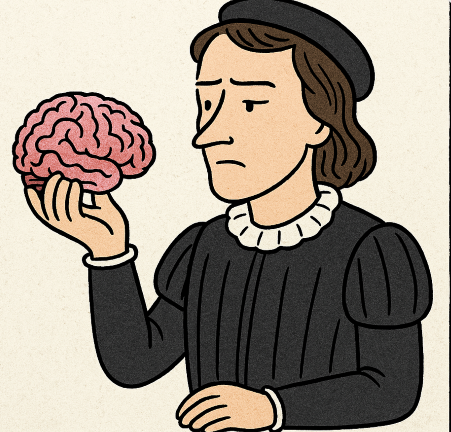 Alas, poor Brain, I used it once, Horatio! A fellow of infinite jest, of most excellent fancy.”
Share this insight
This conversation is happening inside the community.
Join free to continue it.The Internet Changed. Now It Is Time to Build Differently.
If this article resonated, the next step is learning how to apply it. Inside Wealthy Affiliate, we break this down into practical steps you can use to build a real online business.
No credit card. Instant access.