The Six Thinking Hats Technique. Clarified


Published on June 28, 2024
Published on Wealthy Affiliate — a platform for building real online businesses with modern training and AI.


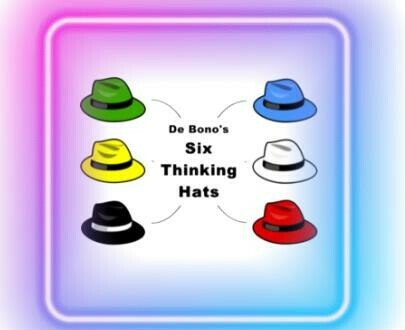
In my last post called "Effective Techniques for Brainstorming New Marketing Ideas"
I mentioned two techniques to help you with brainstorming as an affiliate marketer.
The first is about "The Six Thinking Hats", and the second will be a separate post on "The Scamper Technique".
Each post will allow you to understand these methods in more detail.
This will help you understand the meanings with some examples on a deeper level.
I will include some questions you can think of as well.
What are The Six Thinking Hats?
The Six Thinking Hats, developed by Edward de Bono. The aim is to help problem-solve on a deeper level to help your marketing efforts.
The Six Thinking Hats method helps marketers look at problems from different angles.
This involves considering facts, feelings, risks, benefits, and new ideas.
This will help you to consider various areas for a better marketing strategy.
It encourages parallel thinking by systematically exploring different perspectives.
Using this method allows for diverse viewpoints and can lead to innovative solutions.
Here’s a detailed look at each point and how they can benefit you.
I have provided some examples and possible questions one could ask.
This can apply to yourself or within a group environment.
1. White Hat: Information and Data
The White Hat focuses on data, facts, and information.
Wearing this hat, you are encouraged to look at the available data. Then identify what information may or is needed.
Example:
In a marketing campaign, you may need to analyze market research data. This would include customer demographics. , and sales figures to understand the current market situation.
Here are some Questions to Ask.
· What information do I have?
· What information is missing?
· What can I learn from the data?
2. Red Hat: Emotions and Intuition
The Red Hat focuses on allowing all involved to express areas without justification.
This hat acknowledges the role of emotions in decision-making. This would include feelings, intuitions, and gut reactions based on the issue given.
Example:
If you are considering a new product launch. You or if in a team might share your initial feelings about the product’s potential success or failure.
Questions to Ask:
· How do I feel about this idea?
· What is my gut reaction?
Ready to put this into action?
Start your free journey today — no credit card required.
· Are there any emotional responses from our target audience?
3. Black Hat: Critical Judgment
The Black Hat is all about caution and critical thinking.
It involves identifying potential problems, risks, and obstacles.
Here you are evaluating any downsides. At the same time, ensuring that all possible issues are considered.
(Note: This is not related to "black hat" SEO techniques banned by Google. Instead, it is a metaphorical hat used in a brainstorming technique.)
Example:
In a marketing strategy, this can help to identify potential pitfalls in a campaign.
Pitfalls such as budget constraints or negative public reactions.
Questions to Ask:
· What could go wrong?
· What are the potential risks?
· What are the weaknesses in this plan?
4. Yellow Hat: Optimism and Benefits
The Yellow Hat focuses on positivity and optimism.
It encourages those involved to look for the benefits and value of an idea or solution.
Example:
This area, helps highlight the potential increase in brand awareness and customer engagement.
Questions to Ask:
· What are the benefits?
· Why is this idea valuable?
· What is the best-case scenario?
5. Green Hat: Creativity and New Ideas
The Green Hat is all about creativity and innovation.
It encourages thinking outside the box and exploring new possibilities.
Example:
Wearing the green hat can be used to generate creative marketing strategies.
This can be viral campaigns or unique social media content.
Questions to Ask:
· What are some alternative solutions?
· How can I think outside the box?
6. Blue Hat: Process Control
The Blue Hat manages the thinking process.
Here you are ensuring any discussion you have stays on track. Along with making sure that all perspectives have been considered.
Example:
The Blue Hat might be used to set the agenda, summarize key points, and decide on the next steps.
Questions to Ask:
· What is my goal?
· What thinking process should I follow?
· What are the next steps?
If you are ready to apply the Six Thinking Hats in your marketing efforts here is a quick summary of steps to take.
1. Define the Problem: Clearly state the marketing challenge or opportunity.
2. Assign Hats: Decide the order in which the hats will be used. Typically, the Blue Hat is used first to set the agenda.
3. Facilitate Discussion: If in a group, guide the team through each hat, ensuring that everyone contributes. If on your own follow step two above and work you way through.
4. Summarize Insights: Use the Blue Hat to summarize the key points and decide on the next steps.
Final Thoughts
For brainstorming and problem-solving, the Six Thinking Hats technique is vital
This can be a very effective tool to help your marketing efforts. Particularly, in any marketing campaign.
By exploring different perspectives, you can generate more comprehensive and innovative solutions.
If you are developing a new campaign, launching a product, or solving a complex problem.
Then the Six Thinking Hats can help you think more creatively and critically.
Regardless if you are doing this alone or have a group this benefits all.
As Always
Share this insight
This conversation is happening inside the community.
Join free to continue it.The Internet Changed. Now It Is Time to Build Differently.
If this article resonated, the next step is learning how to apply it. Inside Wealthy Affiliate, we break this down into practical steps you can use to build a real online business.
No credit card. Instant access.