Myer-Briggs Personality Test


Published on September 20, 2023
Published on Wealthy Affiliate — a platform for building real online businesses with modern training and AI.

Who Invented the Myers-Briggs Type Indicator (MBTI)?
It began with Katharine Cook Briggs and her daughter, Isabel Briggs Myers, in the United States in the early mid-20th century. Briggs was inspired to research personality type theory when she met Isabel's future husband, Clarence Myers.
The Theory Behind the Myers-Briggs?
There are 16 possible combinations of letters leading to 16 distinct MBTI personality types. The theory of psychological type says that people with different preferences naturally have different interests and views, behave differently, and are motivated by different things.
What are the 4 Myers-Briggs Personality Types?
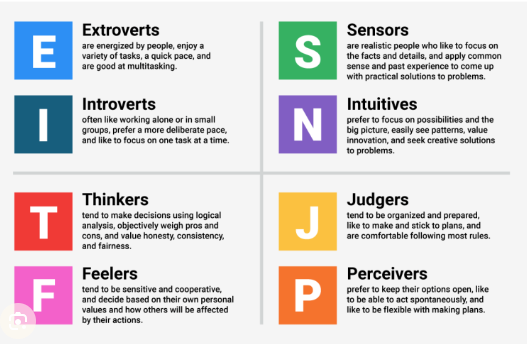
The Myers-Briggs® system consists of four preference pairs that reflect different aspects of personality—opposite ways to direct and receive energy through:
(E) Extraversion
(I) Introversion
(S) Sensing
(N) Intuition
(T) Thinking
(F) Feeling
(J) Judging
(P) Perceiving
How Accurate is Myers-Briggs?
As a result, the MBTI and its results aren't exactly reliable. Studies have shown that 50 percent of people are classified into a different type the second time they take the test, even if the test-retest period is short (e.g. five weeks).
Why is Myers Briggs not valid?
Psychologists say the MBTI is not reliable because people often get different results when taking different tests or even retaking the same one :
(Pittenger, 2005). Feb 25, 2021)
Fun Facts
Katherine Briggs was just 14 years old when she went to college, and ended up graduating first in her class, explains author Merve Emre. She married the man who graduated just behind her at No. 2 - and while he became a scientist, she was expected to take care of the home.
This incredibly educated woman - who was never expected to do anything but be a wife and a mother - she wanted to figure out how to take those roles and professionalize them," Emre says....
"She wanted to figure out how she could do something in her home that would be as rigorous and as important as what everybody thought her husband was doing in his laboratory."
Ready to put this into action?
Start your free journey today — no credit card required.
What are Dominant Female Personalities?
According to Abraham Maslow dominant women have more self-confidence, higher poise, prefer to be treated like a “person” and not like a “woman”, prefer independence and “standing on their own feet”, lack feelings of inferiority, and generally do not care for concessions that imply they are inferior, weak or that they need.

What is the Least Popular Myers Briggs Type?
Taken from The Myers & Briggs Foundation , which is a reliable source, the rarest personality type are INFJs, followed by ENTJs.
What is Kim Kardashian's Myers-Briggs?
Kim Kardashian is an ISFJ personality type. Reliable and loyal, you can always count on Kim to keep her word. As an ISFJ, Kim is detail-oriented, to the point of being a perfectionist.
INFJ
The rarest personality type, INFJ, makes up only 1.5% of the population, or 3 out of every 200 people. It might be rare, but having this personality type or another rare one isn't all bad.
On the Design of the Early Tests
Initially, Katherine Briggs gathered neighborhood kids at her home to assess their personalities. Her aim was to shape personalized education programs for each child's self-actualization. She began by administering a simple questionnaire to parents, a forced choice survey with only two options, A or B, leaving no room for ambiguity.
Questions probed: Is your child calm or impulsive? Does he frequently get upset or remain calm? Does he sleep alone or with you? From these responses, she formulated the earliest personality categories for children, laying the foundation for today's Myers-Briggs Type Indicator.

Briggs Discovers Carl Jung
Her life had been dedicated to caring for children, including her daughter, Isabel. When Isabel left for school, Katharine plunged into deep depression, uncertain of her life's purpose. It was during this period that she stumbled upon Carl Jung's work, specifically "Psychological Types," which captivated her.
Katharine initiated correspondence with Jung, seeking clarity on terms like "intuitive" and "feeling." She wanted to apply Jung's abstract concepts to assist people in discovering their own types and living as their best selves.
Briggs' Ideas Morphed Into a "People Sorting" Test
For Katharine, it was a spiritual quest. She was profoundly religious and believed that true salvation lay in understanding one's true self and living accordingly.
Isabel Gets Creative
Isabel, Katharine's daughter, adopted the language of type during World War II. Inspired by her mother's ideas, Isabel pondered creating a questionnaire to match people with jobs that suited them best. Her vision aimed to emphasize that every individual, regardless of their type, possessed unique strengths and weaknesses.
She sought to avoid categorizing people as "normal" or "abnormal" but rather as individuals with distinct attributes, leading to the practical application of Jungian theories in what Isabel termed "people sorting."

The Office of Strategic Services
The concept of "people sorting" gradually gained traction and found its way into various institutions. The Office of Strategic Services became the first organization to purchase the test during World War II, using it to assign covert operatives to classified missions.
Briggs' Test Lands in the Government
Over time, the test was adopted by educational institutions such as Berkeley and Swarthmore in the late '50s, incorporating it into their admissions processes. It slowly permeated wellness centers, hospitals, and religious institutions, ultimately becoming a fixture in the institutions shaping our daily lives.
Where the Test Thrives: Corporations
The true breakthrough came within corporations. After Isabel Briggs Myers' passing in the 1980s, businesses began promoting worker satisfaction and contentment. The type indicator emerged as a powerful tool to convince individuals that they were fulfilling their intended roles and should embrace their work with enthusiasm.

People are Drawn to the Test
The MBTI's allure lies in its simplicity and lack of judgment. It provides an accessible language for self-expression, enabling people to articulate their desires without apology. This thirst for self-understanding often arises during periods of significant life transitions, such as couples counseling, job changes, or the transition to college.
Myers-Briggs as a Parenting Tool
Katharine Briggs initially envisioned the test as a parenting aid. It offers clarity during complex and confusing times in life. Despite skepticism about its validity and social applications, individual experiences with the indicator can be profoundly liberating.
Personality Can Change Over A Lifetime
Believing in the innate or essential nature of one's identity provides comfort, as it means there's no need to apologize for who you are; you simply accept it as part of your being.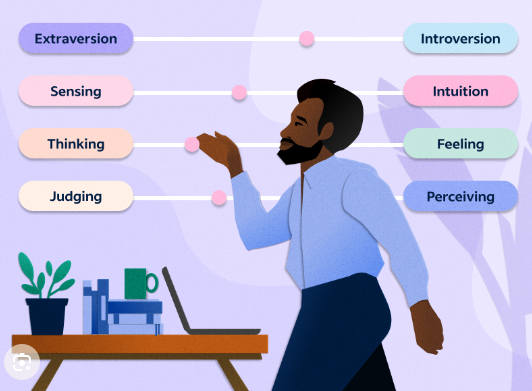
Have You or Anyone You Know Taken Myer-Briggs?
TheRachele of LA
Share this insight
This conversation is happening inside the community.
Join free to continue it.The Internet Changed. Now It Is Time to Build Differently.
If this article resonated, the next step is learning how to apply it. Inside Wealthy Affiliate, we break this down into practical steps you can use to build a real online business.
No credit card. Instant access.