Research, Rankings and 4,794,388,243 New Article Ideas (Part Two)


Published on March 13, 2021
Published on Wealthy Affiliate — a platform for building real online businesses with modern training and AI.


Okay, so here’s Part Two.
A recap of Part One first:
I was in no way suggesting that you shouldn’t use Jaaxy for keyword research.
I was simply recommending that you could use more of the “human element” when it comes to keyword research.
Just because you find a keyword with low QSR doesn’t mean you’re going to rank for that keyword.
You should always check PAGE ONE of Google to see who’s ranking.
If your target keyword is littered with Authority websites on page one of Google, it may be time to find another keyword.

However, if you find that Page One is claimed by forums, such as Quora and Reddit, as well as Social Media posts, Facebook, Twitter, Pinterest, etc. there’s a really good chance of you ranking with a well-structured and well-optimized article.
In fact, if I had 2 keywords, and the first one had a QSR of 12, but the first page was full of websites like Healthline, WebMD, Mayo Clinic, etc.
And the second keyword has a QSR of 200, but the first page had articles from Reddit, Facebook, HealthForum, etc.
I will ALWAYS target the second keyword.
Pure and Simple, I have a better chance of ranking on the first page.
Sorry to be the bearer of bad news - page 2, page 3, page 4, etc. of Google means nothing.
You could have targeted a keyword that has 10,000 searches a month, but you are ranked in position 19.
The likelihood is over the period of a year you won’t get more than 10 visitors from that keyword (if that).
I will even say that the difference between ranking position 4-10 on page one and position 1-3 on page one can be astronomical (in terms of traffic).
So, realistically you want to target keywords that give you the best chance of ranking position 1-3.
But position 4-10 is a fantastic start - it proves you can get to that coveted top spot eventually.
Therefore, ALWAYS check the first page for your real competition.
I also mentioned in Part One that I didn’t strictly trust the monthly traffic figures on Jaaxy and other keyword tools.
These are typically based on historical data.
They may be fairly accurate in many cases.
They could be well off the mark in others.
This is why I generally prefer to use Google Autosuggest for keyword research.
Okay, admittedly I have no traffic data whatsoever now, so I am merely guessing.
However, Google is literally TELLING ME what people are searching for.
Who knows more about how much traffic Google gets?
A keyword tool or GOOGLE?
If the search query makes sense and I feel that it is a question that people are likely to ask in my niche, I will write the article.
If the search query is a little “out there”, then although Google Autosuggest tells me that people are searching for this, I may avoid writing the article.
It just depends on how “Out There”.
Do You Want an Example?

Here’s a little test for you.
Go and open an incognito tab.
What are you waiting for?
Why are you still reading?
Go and open an incognito tab.
Thank You.
Type in Google.com
Then type in “Why Does” and wait for the autosuggest queries.
For those of you in the Pet Niche, 2 of the main queries are:
“Why Does My Dog Stare at Me?”
“Why Does My Cat Lick Me?”
Sounds weird, right?
But, I would hazard a guess that literally 1,000s and 1,000s of people search these queries every month.
Why?
Because dogs REALLY DO stare at you.
And cats REALLY DO lick you.
Little weirdos!
You’d be hard pushed to come across these keywords in Jaaxy or any other keyword tools.

When I click on the “Cat Licking” keyword.
I find the section “People Also Ask”.
One of the questions is “Why Does My Cat Lick Me When I Pet Him?”
I click on this (are you still following along in your incognito tab? I bet you’re not.)
Now, while there are a few pet authority sites on the first page, I note there is also the pet exchange forum and Quora.
If I’m in the Pet Niche, I am definitely writing this article (Kathy, you never read my blogs, but I know you’re in the Cat niche).
Ready to put this into action?
Start your free journey today — no credit card required.
I can probably rank fairly easily on page one for “Why Does My Cat Lick Me When I Pet Him?”
If I make my article better than everything else on that page, I can rank in the top 3.
I can actually leverage the information from the other articles on page one to make mine better.
I do this by having separate subheadings that give the information from the other articles on page one in my own words.
Subheading One
“According to Purina, they state that your cat licks you because…”
Subheading Two
“Whereas Cuteness claims that your cat licks you…”
Subheading Three
“The Cat in the Box has a completely different idea behind your feline’s licking fetish…”
Subheading Four
“Having checked the Pet Exchange Forum and Quora I have found…”
Subheading Five
“From my research it appears that the 3 most common reasons that your cat licks you are…”
Okay, hopefully you get the point.
I’m pretty sure Jaaxy will tell me that “Why Does My Cat Lick Me When I Pet Him?” has no searches (I haven’t checked).
But Google is telling me that people are searching for this phrase.
You write an article as above, you have leveraged information from your competitors, but in effect you have the best article on page one.
Basically, you are providing information in one article that your readers will need to visit 10 other websites to get.
You should also link out to some of these websites for “further reading” for your visitors.
Add a relevant YouTube video or two.
Suddenly you have the most helpful article on this subject.
Who’s Google going to rank highest?
That’ll be you.
Eventually, you will also rank for “Why Does My Cat Lick Me?” or “Why Do Cats Lick?” or “Cat Licks Me”, etc. and probably another 100 “cat licking” keywords.
You hit position 1-3 for at least 5 of these keywords, I would hazard a guess you’re looking at ONE article that gets a few thousand visitors EVERY MONTH.
You get the picture.
And yet you found all of this information without using a keyword tool and leveraging Google Autosuggest.
I also mentioned in Part One that I loved the “alphabet soup” option on Jaaxy.
And in truth, this is one of the main things I use Jaaxy for.
This once again leverages the Google Autosuggest feature and places it within a keyword tool.
It’s More Human and Less Generic
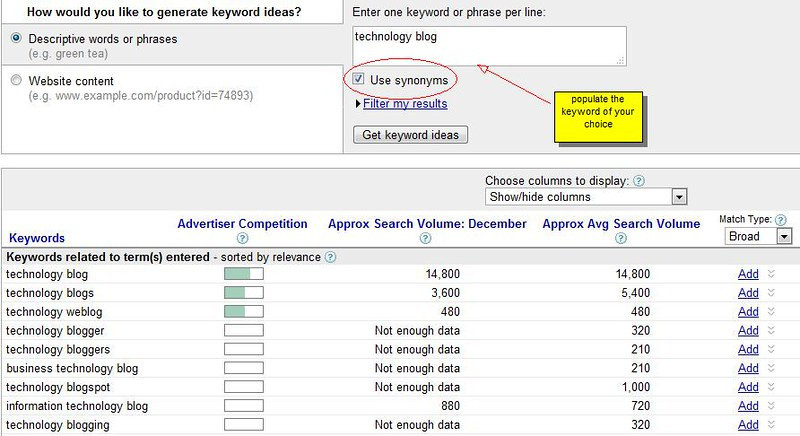
Some of the phrases/questions/search results that Google throws up through it’s autosuggest tool make far more sense to me.
If you think about it, many of the keywords you typically target through keyword tools are very generic in nature.
You may write an article focusing on the keyword:
“How to Make Money Online with Affiliate Marketing”.
You can bet your bottom dollar that Neil Patel, Pat Flynn, and Brian Dean are ALL probably ranking on page one for that keyword phrase (I haven’t checked).
That’s 40 years of online experience between just those three.
Good luck outranking them.
However, using Google Autosuggest you may come up with really, really long longtail keywords that not everyone else is writing about.
I can guarantee that there’s 100s, maybe 1,000s of people every month searching for phrases like:
“How Much Money Can I Make From Affiliate Marketing With 1,000 Visitors a Month?”
OR
“How Many Amazon Affiliate Link Clicks Does it Take to Make a Sale?”
There’s probably a better chance of ranking for these keywords.
Let's Do The Same Again
You can do the same again as you did with the “cat licking” article.
You can actually write a BETTER article by doing ORIGINAL research, while leveraging other people’s information once more.
Let’s say that the 10 articles ranking on page one of Google for the phrase:
“How Much Money Can I Make From Affiliate Marketing With 1,000 Visitors a Month?”
You can take the information given from all 10 articles and convert it into a table.
You MUST quote each website that you got the information from, and it won’t do you any harm to link to these websites too.
Your article could also have 10 subheadings (but make a table too, Google LOVES tables, infographics, etc.).
Subheading One
“According to Neil Patel, he found that on average he produces 7 sales equalling $248 from every 1,000 visitors a month”
Subheading Two
“Now onto Brian Dean from Backlinko. Brian states that he produces an average of 12 sales equalling $198 from every 1,000 visitors a month”.
At the end of your article you could add up all the number of sales and commissions made from the 10 sources you have used, and give that as an average.
You have then leveraged information from authority sites, you have credited them in your research and writing, and you have written a completely ORIGINAL article.
Plus, your keyword phrase is not a generic “How to Make Money Online”, but something far more focused on real life, and that people are probably actually search for.
Once again, I can guarantee that an article like this will “eventually” rank for lots and lots of different keywords.
Jaaxy will tell you that “How Much Money Can I Make From Affiliate Marketing With 1,000 Visitors a Month?” has >10 searches a month.
But in truth, your article could rank for up to 100 different keywords, each keyword receiving between 1 and 100 visitors a month.
The potential limits for traffic are endless.
Jaaxy and other keyword tools will “tell you” not to write the article.
But Google suggests that people are regularly asking these questions.
Who knows better how much Google traffic a keyword phrase receives, a keyword tool or Google?
Quoting Part One of this article again:
Go to the source (the husband), don’t rely on information based on knowledge and experience (the wife).
I will add you MUST answer the keyword query in your article. If you don't, your article won't be viewed as relevant, so you probably won't rank.
So, ALWAYS answer the query in your article.
Move Over Alphabet Soup, Here’s Partha’s Potion

I’ve come up with a list of words over time that I like to use in conjunction with Google Autosuggest.
You type your seed keyword into the Google search bar, and then add these words before or after, and you’ll get a lovely selection of phrases and questions THAT PEOPLE ARE ACTUALLY SEARCHING FOR ON GOOGLE.
Don’t forget to check out page one, do your research, check out “People Also Ask” and “Related Searches” and you’re good to go.
Oh and by the way, ALWAYS do your Google Autosuggest research in an incognito tab.
You should always use a private browser.
Remember, I said Google was intelligent. She knows what you’ve previously been searching for and this will skew the results.
So, open an incognito tab for research purposes.
Here are the phrases you can add to your seed keyword:
- How
- Are
- Where
- Is
- Don’t
- Aren’t
- Why Do
- Where Do
- What
- When
- Which
- Do
- Have
- Can
- Would
- Could
- Will
- Prevent
- Difference
- Bad
- Help
- Fix
- Broken
- On
- In
- On a
- In a
- A
- Has
- Does
- With
- Questions
- Easy
- Hard
- What Makes
- Was
- Must
- Did
- If
- Who
- Should
- Best
- Under
- Isn’t
- Can You
- Vs.
- Get
- Fast
- To Avoid
- Worth It
- Cheap
Why not go and find 10 keywords this way.
Then go and find 10 keywords the “normal” way using Jaaxy.
Write those 20 articles.
Give it some time, and see which articles rank quicker and higher.
And which articles receive the most traffic.
You never know until you try.
Now get to researching and writing.
If you made it this far, I thank you for reading.
Partha
Share this insight
This conversation is happening inside the community.
Join free to continue it.The Internet Changed. Now It Is Time to Build Differently.
If this article resonated, the next step is learning how to apply it. Inside Wealthy Affiliate, we break this down into practical steps you can use to build a real online business.
No credit card. Instant access.