WA Advent Calendar 2025 - Friday 19th December



Morning lovely WAers!
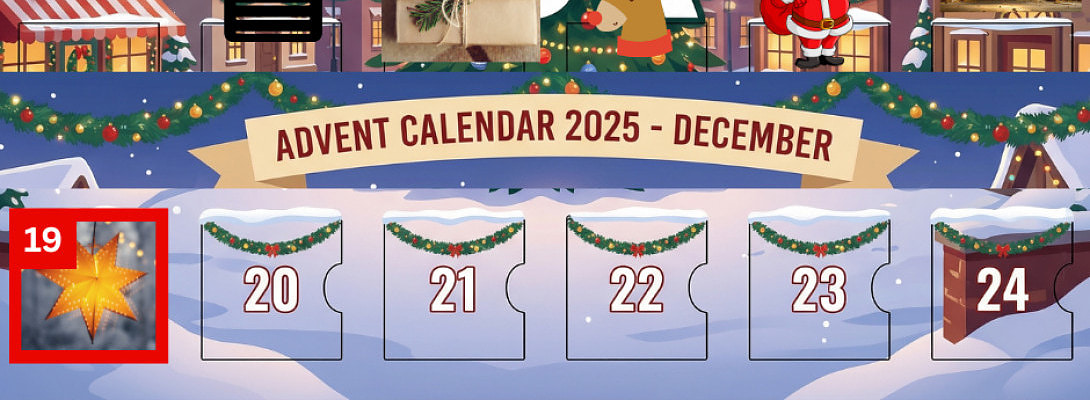
Day 19 now, and less than a week to go to the big day. Today, our Advent calendar has revealed A Star. But not just any star, the Star of Bethlehem.
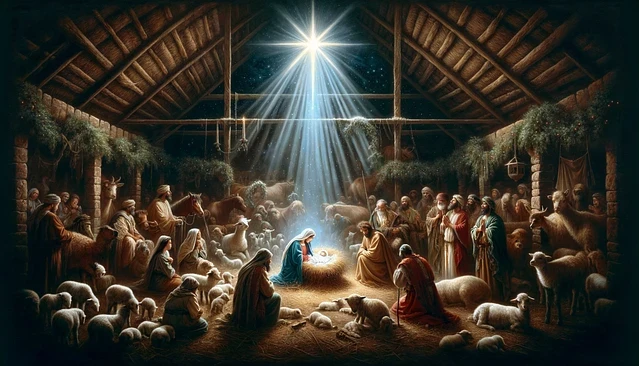 An artist's impression of the nativity showing the Star of Bethlehem
One of the most mystical images of Christmas is the Star of Bethlehem — the light in the sky that, according to the Gospel of Matthew, guided the Magi to the baby Jesus. The story has inspired artists and poets for centuries, but what was that star?
Astronomers and historians have long debated this. There’s no universally accepted explanation, but some of the most fascinating scientific theories include:
• A planetary conjunction, where bright planets like Jupiter and Saturn come close together and create a brilliant light in the night sky
• A meteor or comet, a rare but spectacular visitor that would have drawn attention from trackers of the heavens
• A supernova, a star exploding in the far distance, briefly outshining whole galaxies
Scholars and Theories about the Star of Bethlehem
No one really knows what the Magi and others might have actually seen. No single answer has universal agreement, but several well-known theories come with names and dates, showing just how curious humanity has been about this celestial mystery. The Gospel narrative is short and poetic, leaving room for many interpretations. Some experts look at it through astronomy, others through astrology, and some see it as a miraculous sign that transcends natural explanations altogether.
The variety of theories — from planetary alignments and comets to astrological interpretations — shows that even today’s science doesn’t have a definitive answer. That mystery mirrors how much about the cosmos we still don’t understand — and why a mysterious light in the sky would inspire wonder then, and curiosity now.
Here are some of the most famous ideas from scientists:
Johannes Kepler (1614)
The German astronomer Johannes Kepler was one of the first to suggest that planetary conjunctions — close apparent meetings of bright planets like Jupiter and Saturn — could explain the Star. He calculated that a series of conjunctions happened around 7 BC that might have looked unusual in the sky.
Colin Humphreys (1995)
Physicist and scholar Colin Humphreys argued in his influential paper The Star of Bethlehem that historical astronomical events, including comets recorded in ancient Chinese sources, could fit the timeline and description of the star. His work helped spur deeper scientific discussion in the late 20th century.
Michael R. Molnar (1999)
Astronomer Michael R. Molnar proposed a more astrological interpretation in his book The Star of Bethlehem: The Legacy of the Magi (1999). He suggested that the star might have been a significant planetary event observed as a natal horoscope chart, meaningful to the Magi as astrologers.
Colin R. Nicholl (2015)
Author Colin R. Nicholl explored the comet theory in The Great Christ Comet (2015), arguing that a large comet, visible for months and moving in the sky, could better match the descriptions in Matthew’s Gospel.
Mark Matney (2025)
Most recently, NASA scientist Mark Matney published a new paper in the Journal of the British Astronomical Association suggesting that a bright comet recorded by Chinese astronomers in 5 BC might have passed very close to Earth, appearing to “hover” and even behave in a way that could resemble a guiding star.
No matter the exact cause, the Star of Bethlehem reminds us that the sky above has always stirred human imagination and wonder and this continues in modern times, in fact, on this very day!
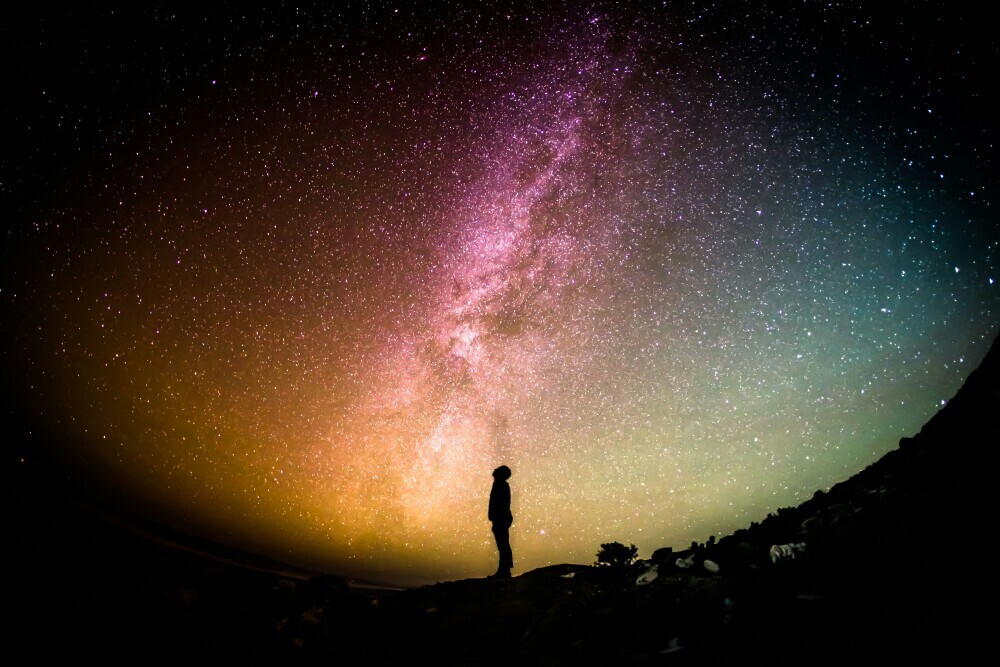
A Cosmic Visitor this Advent
Right now — on 19 December 2025 — astronomers are watching something remarkable in the night sky: an interstellar comet named 3I/ATLAS, the third confirmed object from beyond our Solar System ever detected.
Discovered in July 2025 by the ATLAS survey telescopes in Chile, 3I/ATLAS is travelling on a hyperbolic trajectory, which means it’s not bound by the Sun’s gravity and is just passing through — a true wanderer from another star system.
On 19 December, it will make its closest approach to Earth at about 1.8 astronomical units away — roughly 170 million miles (270 million kilometres). It poses no danger, but it gives us a rare opportunity to study material from outside our Solar System and think about how much we still have to learn about the cosmos.
Find out more from NASA at: https://science.nasa.gov/solar-system/comets/3i-atlas/
Here's a screenshot from their website.
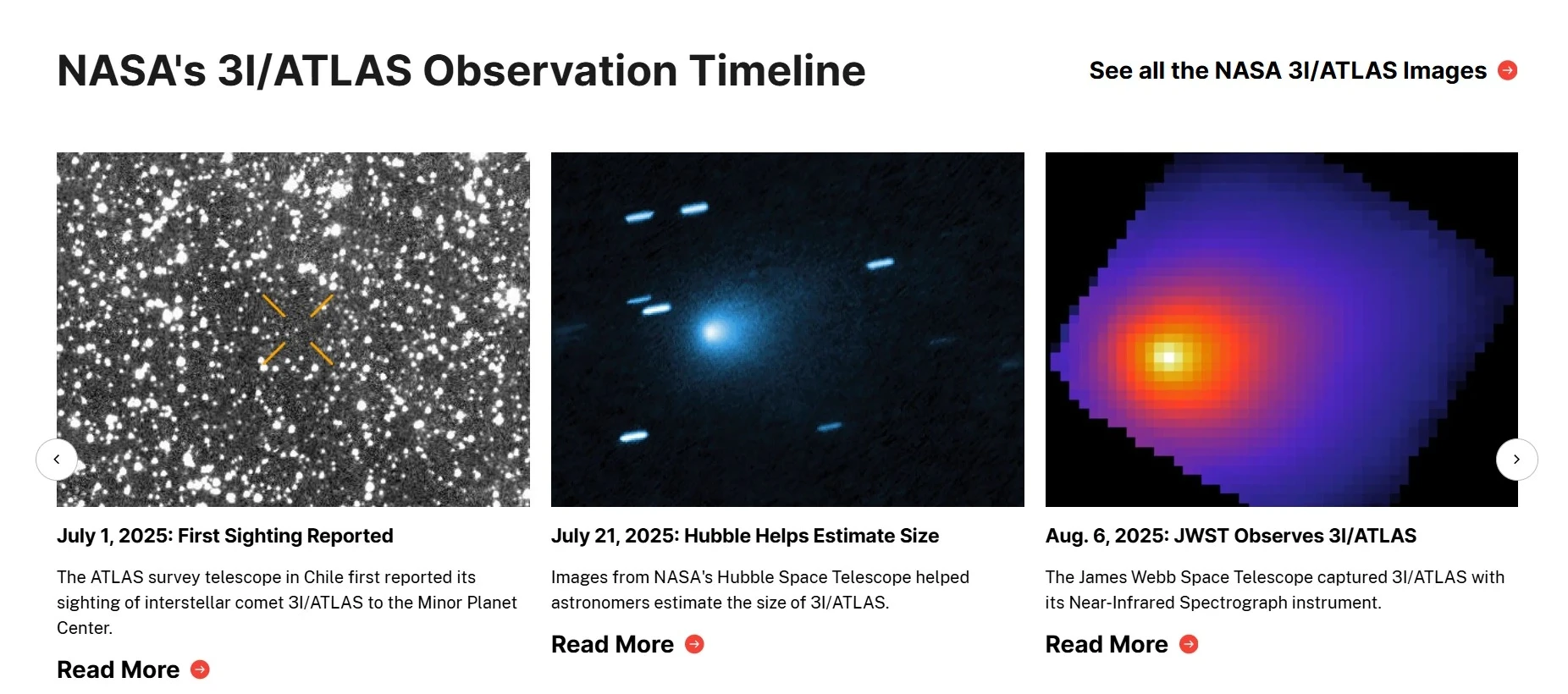
Could the Star of Bethlehem have been something like this, but bigger?
There are some who believe that 3i/ATLAS is of extra-terrestrial origin, and there are certainly enough anomalies that are being observed to support some of these theories, but perhaps we will never know.
So much we still don’t understand
Just as people centuries ago looked up and wondered at a bright star signalling something profound, we too look to the skies today — not often with fear now, but with awe and curiosity. The heavens are vast, mysterious and still full of surprises. Whether it’s the ancient Star of Bethlehem or a comet from another galaxy, these celestial sights invite us to pause, reflect and feel connected to something far bigger than ourselves.
Above all, they remind us that light in the darkness — whether a guiding star or a fleeting comet — stirs wonder, hope and the sense that there is more than meets the eye in the universe around us.
I'm certainly willing to keep a very open mind. How about you?
Let me know your thoughts in the comments below.
Wishing you lots of starlight today,
Gail
PS. Today is also my daughter's 18th birthday, so I'm celebrating twice!
PPS. There's also a flower called the Star of Bethlehem, and here's a picture!

Join FREE & Launch Your Business!
Exclusive Bonus - Offer Ends at Midnight Today
00
Hours
:
00
Minutes
:
00
Seconds
2,000 AI Credits Worth $10 USD
Build a Logo + Website That Attracts Customers
400 Credits
Discover Hot Niches with AI Market Research
100 Credits
Create SEO Content That Ranks & Converts
800 Credits
Find Affiliate Offers Up to $500/Sale
10 Credits
Access a Community of 2.9M+ Members
Recent Comments
20


Happy 18th Birthday to your daughter! I hope she has a lovely day - the sun is shining for her - and it's the last day of term, so plenty of reasons to celebrate.
Happy to leave all the theories to the scientists and stick with the simple description in the Bible.
Enjoy today - celebrate with your daughters! It's something they will remember...
Isabella
Thanks, Isabella. She's been planning her celebrations since she was 12!! LOL. I'm sure she'll have fun.


See more comments
Join FREE & Launch Your Business!
Exclusive Bonus - Offer Ends at Midnight Today
00
Hours
:
00
Minutes
:
00
Seconds
2,000 AI Credits Worth $10 USD
Build a Logo + Website That Attracts Customers
400 Credits
Discover Hot Niches with AI Market Research
100 Credits
Create SEO Content That Ranks & Converts
800 Credits
Find Affiliate Offers Up to $500/Sale
10 Credits
Access a Community of 2.9M+ Members
This is absolutely Beautiful, Gail. :D
JD
Thanks JD. I think stars are really beautiful and I often look up in wonder and amazement at how small we are compared to the universe.
Indeed, Gail. :D
Welcome.
JD