Landing Pages and PPC Ads



Disclaimer:
This post is for an intermediate or advanced affiliate marketer. To be able to understand the technical language and terminology, you will need to know the lion’s share of at least an intermediate level.
The Purpose a Dedicated Landing Page for a PPC Ad?
It is logical and practical to send your paid search traffic to a dedicated, optimized PPC landing page. This is because organic traffic and paid traffic are not the same. Let's examine how they differ.
Any attempts to optimize your page titles, meta descriptions, or blog posts for SEO is meant to help your website appear organically when a visitor searches for a specific keyword. If any links on your site are the best match for a given search query, Google will select and display them in the search engine results pages (SERPs). Where your website ranks depends on how well you optimize it for search.
But with a Google Ads campaign, you get to decide exactly where to direct your visitors. You can choose to link the paid traffic to any page on your website. This allows you to specifically and directly address the needs, wants, and objections of a particular group of people.
Think of it this way: Unlike people who accidentally land on your website from a social media ad, those who use Google to search for something have a specific intent. In many cases, they’re looking for a practical solution to their particular problem. So, when they can't find what they want on your generic landing page, they may leave and go to another website instead. This signals to Google that the landing page experience wasn’t satisfactory.
In contrast, if visitors click on an ad and arrive at a highly relevant landing page that matches the ad copy and compels them to take action, Google receives positive signals that your ad quality is high. This is because you kept on the promise shown in your ad and, more importantly, helped visitors find the solution they wanted. Just imagine - by making your offer as clear as possible and fulfilling prospects’ needs, you have a much better chance that they’ll convert, which is exactly your goal.
A dedicated PPC landing page is focused on a way that a homepage and other website pages aren't. As Seth Godin says, “Landing pages have specific, measurable offers. You can tell if they’re working or not. You can improve the metrics and make them work better.”
In addition, a dedicated, high-performing landing page can help increase your Google Ads Quality Score. In simple terms, Quality Score measures how relevant your ad components (ads, keywords, landing pages) are to a searcher's query. The more conversions you get from your landing page, the higher your ad's Quality Score will be. This results in better ad positions on SERPs and a lower cost-per-click.
What are the Core Elements of a Killer PPC Landing Page?
All types of landing pages have some identical necessary elements - the key things you should include on them.
For example:
- Unique selling proposition (USP)
- Compelling offer
- Visuals (images, graphics, video, etc.)
- Strong, eye-catching call to action
- Social proof such as reviews, ratings, testimonials
- Sense of urgency (like a countdown timer)
Most of these are essential no matter what your page is about. To learn more about each element, read this guide on the 5 essential landing page elements.
Ultimately, it depends on your goals. A sales page can be much longer than a lead capture page. An upsell landing page will have a different design focus than a squeeze page. Once you understand the fundamentals, you can adapt and customize them. These elements provide the foundation.
A high-performing Google Ads landing page should also have these additional elements:
Good Ad-Landing Page Message Match
In other words, if you’re advertising a YouTube course, sell a YouTube course. Don’t send your paid traffic to a page featuring “how to make money with Facebook.” Your PPC landing page content should directly relate to the keywords you’re bidding on.
The reasons boil down to this - if your landing page shows something very different from your ad, you will frustrate visitors who might have bought from you or joined your email list. Still not convinced? Ask yourself how often you've clicked a search result link and thought “How did I end up here?” You would assume you landed on the wrong page.
By matching your ad message with your landing page, you reassure your paid traffic that they arrived in the right spot. This also demonstrates that your content (and brand) is credible and trustworthy.
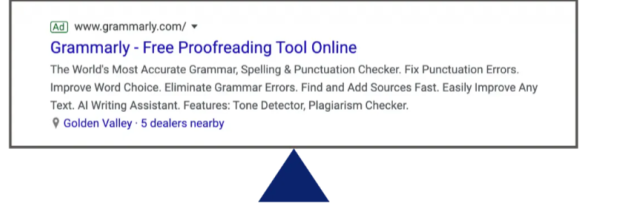
Best practice is to make your landing page headline nearly identical to your ad headline.
Here is a great example from Grammarly:
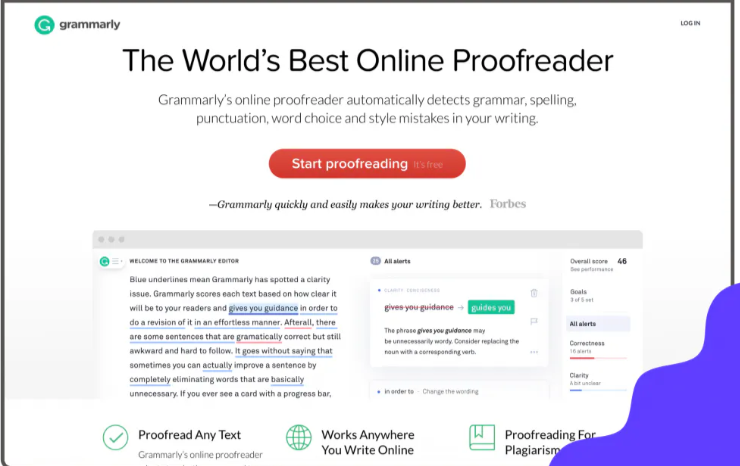
Landing Page:
Whenever you change any copy on your landing page, double check that your PPC ad remains consistent.
Fast Loading Speed
Landing page loading speed is vital because Google prioritizes pages with high-quality user experiences. Faster sites positively impact your Quality Scores, ad rank, and cost-per-click.
And that’s not all - 40% of visitors will abandon a website that takes more than 3 seconds to load. For mobile, the bounce rate can increase by 90% as page load time rises from 1 second to 5 seconds.
The rule of thumb? Aim for a landing page loading speed under 2 seconds.
“How Do I Measure My Landing Page Speed?”
No problem. Enter your URL into any of these tools:
- Google PageSpeed Insights
- GTmetrix.com
- Pingdom Website Speed Test
Bear in mind that speed test results vary based AB on WiFi connection, screen size, device, etc.
Leadpages has many built-in speed solutions like loading CSS/JavaScript in the header. This is part of what makes it so well-suited for marketing vs. other more generic tools.
There are also a few quick tips to improve landing page load times without a developer:
- Host videos elsewhere like Wistia and YouTube, then embed them with the Leadpage video widget
- Remove unnecessary scripts and plugins. Disable them one at a time and retest to identify problematic plugins
- Fix broken links - these hurt user experience and slow pages down. Use Google Webmaster Tools to spot them
Make these changes, then recheck your landing page loading speed.
You should also optimize your homepage speed - visitors will likely view it first. A slow home page could cause them to leave immediately, even if your landing page is faster.

What are PPC Landing Page Design Best Practices?
Now let's cover some key PPC landing page design best practices. Apply these for amazing results from your paid campaigns.
1. One ad, one landing page
The golden rule - create one ad per landing page. This way, you can easily see how each ad impacts landing page performance. With multiple ads per page, you can't clearly identify which ad delivers conversions.
Here's an example from Optimizely:
These 3 ads have the same description text and opt-in form. But each has a unique headline and landing page to easily compare performance.
Although Asana uses different ad text here, you can see that the ads and landing pages target respective keywords.
To try this, make a separate ad group for each single-page campaign.
2. Optimize PPC landing page copy
As mentioned before, SEM traffic has transactional intent - they're ready to buy and just need a solution. PPC visitors skim quickly, moving from ad to ad until they find what they want. They don’t read landing page content in depth.
That’s why matching your ad and landing page message is vital.
Additionally, the copy itself should be concise and straightforward:
- Use bullet points instead of paragraphs
- Emphasize key points with block quotes, quote images, subleaders
- Write in active voice
- Focus copy/imagery on solutions vs. features
- Keep forms short and focused - if you only need an email address, don’t ask for more
- Place a clear call to action (CTA) above the fold to reinforce desired action
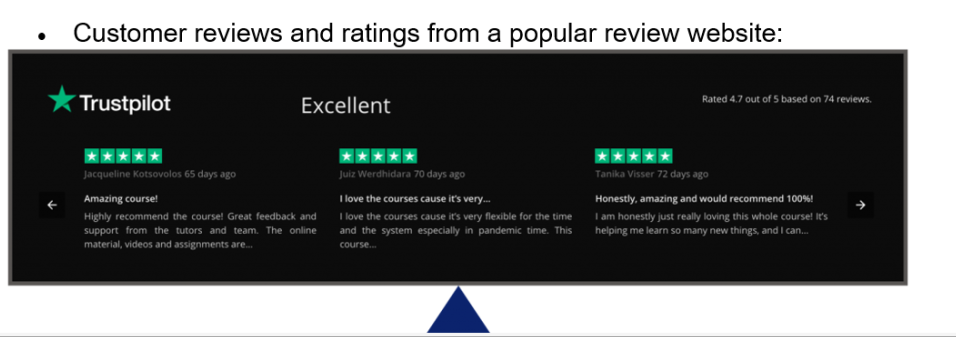
Your PPC landing page also requires ample social proof like reviews and testimonials. Simply claiming “This product is amazing, I love it” isn’t that convincing. You need authentic customer perspectives explaining the benefits and how your offer improves lives.
The Institute of Makeup Artistry uses various types of social proof on their PPC landing page.
Let's examine them from top to bottom:
- Customer reviews/ratings from a popular review site
- Logos of organizations that have accredited and recognized them
- Mention of a partnership with a well-known brand to demonstrate trustworthiness
- Displaying course author credentials
- Very detailed, enthusiastic testimonials from students about the usefulness of the course:
- Links to individual student portfolios that visitors can click through
All of these elements make the business seem more authentic and reliable.
3. Apply directional cues
Directional cues include arrows, lines, eye gaze, pointing, gesturing, and strategic use of white space. They effectively draw attention to key items like CTAs or videos. Though small, they strongly encourage visitors to take action.
Here is an excellent example of directional cues on Octal IT Solution’s PPC landing pages:
The arrows starting from the headline intuitively guide visitors to the most important elements down the page, ending with the CTA popup.
This visual hierarchy directs visitors exactly where the business wants them to focus.
Final Thought
Creating dedicated landing pages for PPC campaigns gives you ultimate control over the visitor experience. Unlike organic traffic, you choose precisely what paid searchers see, enabling you to directly address their needs. A targeted landing page also leads to better Quality Scores and lower cost-per-click overtime.
Include essential elements like matched messaging and social proof, along with a streamlined design to encourage visitors to convert. Test and refine different versions to maximize the outcomes you want from each source of paid traffic. With strategic effort, a custom-built PPC landing page will become one of your most valuable marketing assets.
What are your thoughts on Landing pages for PPC Ads?
TheRachele
Join FREE & Launch Your Business!
Exclusive Bonus - Offer Ends at Midnight Today
00
Hours
:
00
Minutes
:
00
Seconds
2,000 AI Credits Worth $10 USD
Build a Logo + Website That Attracts Customers
400 Credits
Discover Hot Niches with AI Market Research
100 Credits
Create SEO Content That Ranks & Converts
800 Credits
Find Affiliate Offers Up to $500/Sale
10 Credits
Access a Community of 2.9M+ Members
Recent Comments
2


This is very informative Rachele , PPC always leave me with a question
thought (What, When, Who and How much). Thanks for sharing.
😃👍
Join FREE & Launch Your Business!
Exclusive Bonus - Offer Ends at Midnight Today
00
Hours
:
00
Minutes
:
00
Seconds
2,000 AI Credits Worth $10 USD
Build a Logo + Website That Attracts Customers
400 Credits
Discover Hot Niches with AI Market Research
100 Credits
Create SEO Content That Ranks & Converts
800 Credits
Find Affiliate Offers Up to $500/Sale
10 Credits
Access a Community of 2.9M+ Members
My thoughts on landing pages for PPC ads are twofold:
1. I was looking for exactly what you have written here. I see now that my landing pages are confounded with too much distraction from the main event, which was my hunch and why I was looking for some insight. You provided the insight I was looking for.
2. I don't know nearly as much as I thought I did about PPC. I've got a lot to learn. It's time for me to pay much closer attention to detail.
Thanks
Bob