The 7 Mistakes Writers Make



The 7 Mistakes Writers Make
And the Soul Promises That Heal Them
You don't have to write perfectly. But if you're gonna write, write with your whole chest. After editing over 1000 pages, here are 7 mistakes I see again and again... and what your soul might be whispering behind each one.
1. Rushing the Beginning
The Mistake:
Starting too fast, skipping setup, diving into drama with no context.
Why it hurts:
The reader doesn’t know who to care about or why. It’s like walking into a party and someone yells, “She cheated on me!” and you’re like, “Who are you, bro?”
Soul Promise #1:
I will let my story breathe.
Example:
Instead of "He punched the wall,"
start with: "Matt had been staring at the same email for fifteen minutes. Then he punched the wall."
2. Info Dumping
The Mistake:
Dropping too much backstory at once.
Why it hurts:
Readers drown. You built a whole world and then dropped it on their head.
Soul Promise #2:
I will trust the reader to keep up.
Example:
Don't start with your character's entire family history.
Let us meet Grandma through the story. Show her scolding the dog, not her birth certificate.
3. Over-Explaining
The Mistake:
Telling us what to feel. Then telling us again. Then adding italics just in case.
Why it hurts:
It kills the magic. Readers want to feel, not be told howto feel.
Soul Promise #3:
I will write with faith, not fear.
Example:
Instead of "She was devastated. Her heart broke. She felt horrible,"
try: "She stared at the voicemail. The words kept echoing."
4. Characters Without Drive
The Mistake:
Passive characters who just react. No goals. No spark.
Why it hurts:
If your character doesn’t care what happens, neither will your reader.
Soul Promise #4:
I will give my characters something to fight for.
Example:
Not "Sarah went to work like always,"
but "Sarah clocked in, counting the hours until she could slip her resignation letter onto her boss's desk."
5. Flat Dialogue
The Mistake:
Characters talk like robots. Or worse, like the author in disguise.
Why it hurts:
It pulls the reader out of the story. Dialogue is where we hear the real people.
Soul Promise #5:
I will let my characters speak in their own voice.
Example:
Instead of "I am not happy about this situation,"
try: "You serious right now? This is a dumpster fire, Kev."
6. No Scene Purpose
The Mistake:
Writing scenes that don't move the story forward.
Why it hurts:
Readers start skimming. Momentum dies.
Soul Promise #6:
Every scene earns its place.
Example:
If two characters are having coffee, make sure one leaves with a secret, a plan, or a broken heart.
7. Not Finishing
The Mistake:
Quitting halfway through. Or worse, endless tinkering with Chapter One.
Why it hurts:
Your story never lives. It stays trapped in potential.
Soul Promise #7:
I will finish the damn thing.
Example:
Even if it’s messy. Even if you hate it by draft three. Even if your cat judges you. Hit "The End." Then edit with love.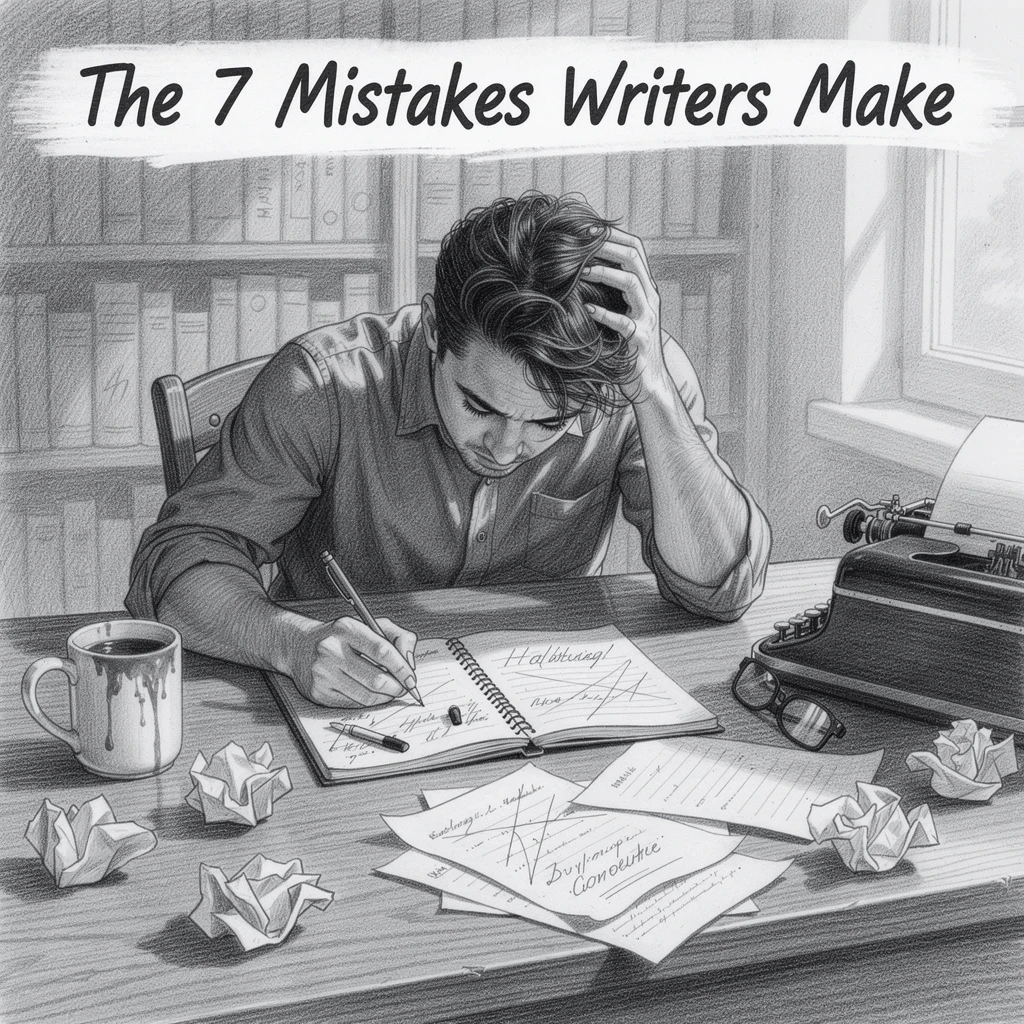
Final Whisper?
Writing isn’t about getting it perfect. It’s about getting it honest.
These mistakes? They're just signals from your story, asking you to listen deeper.
So write. With guts. With grace. And always, with your soul at the wheel.
✨ Fleeky
P.S.
One of the most powerful things you can do?
Re-read your work like someone else wrote it. That’s where the magic (and the mistakes) reveal themselves.
Join FREE & Launch Your Business!
Exclusive Bonus - Offer Ends at Midnight Today
00
Hours
:
00
Minutes
:
00
Seconds
2,000 AI Credits Worth $10 USD
Build a Logo + Website That Attracts Customers
400 Credits
Discover Hot Niches with AI Market Research
100 Credits
Create SEO Content That Ranks & Converts
800 Credits
Find Affiliate Offers Up to $500/Sale
10 Credits
Access a Community of 2.9M+ Members
Recent Comments
46


Interesting, I made those mistakes in a lot of my writing. But I do tend to be honest cause I write how I feel. Yet i do see the need for my readers to be engaged and to allow them to use their own imagination about characters, situation and the plot. This article is appreciated. ^_^


Fleeky,
This one hits hard.
I've been working on a book for years with many of the problems you described.
And I had Sparky take look at it and nearly said your first 3 or 4 points word for word. LOL
I guess I need to just keep writing and trust my AI partners can help me sound a little better in the end.
Mike G
Yes, Mike, common mistakes we all make…
And with AI, the information overload...
That is why it is so important to shape your own voice...
Thanks for adding...
✨ Fleeky

This really lands. What I like most is how you framed each mistake as a signal, not a flaw. The “soul promise” idea turns editing from self-criticism into listening, which is a powerful shift.
#7 hits especially hard. Finishing is the quiet discipline nobody glamorizes, but it’s the difference between potential and practice. A messy ending can be edited. An unfinished piece just sits there judging you.
Also love the reminder to reread your work as if someone else wrote it — that distance is where honesty shows up fast.
Strong post. This is craft advice that actually sticks.

See more comments
Join FREE & Launch Your Business!
Exclusive Bonus - Offer Ends at Midnight Today
00
Hours
:
00
Minutes
:
00
Seconds
2,000 AI Credits Worth $10 USD
Build a Logo + Website That Attracts Customers
400 Credits
Discover Hot Niches with AI Market Research
100 Credits
Create SEO Content That Ranks & Converts
800 Credits
Find Affiliate Offers Up to $500/Sale
10 Credits
Access a Community of 2.9M+ Members
OK. I do have a manuscript printed out. I will read it because now I am worried about some of those mistakes here. I have to read it anyway ( or pay an editor) because I know there are some spelling mistakes here and there. I did finish it so I do not have to worry about #7. I will read it with these points in mind. MAC.
Honesty is best... do not worry...