How Spam is Made


Published on August 5, 2025
Published on Wealthy Affiliate — a platform for building real online businesses with modern training and AI.

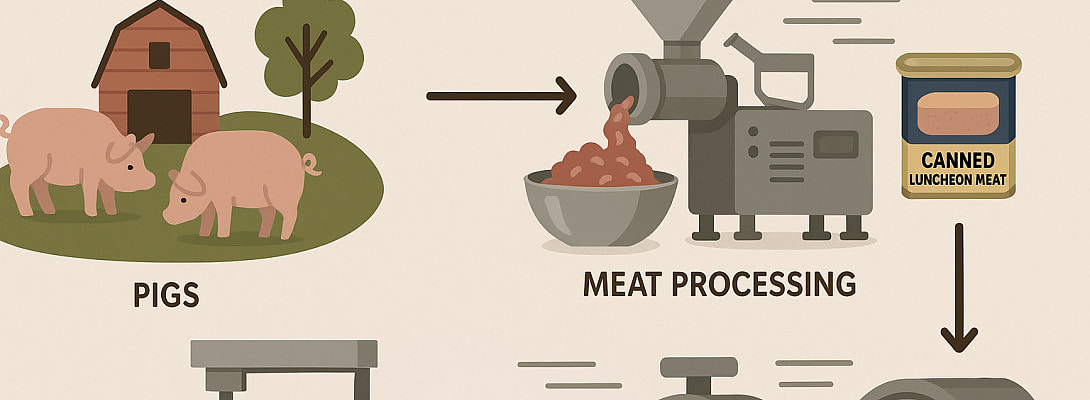
I have seen a lot of Spam here lately. People use one-liners for points or post nonsense or affiliate links without context. But what is Spam, and how is it made? Funny you should ask.
How SPAM Is Made: From Pig to Pantry
Ever wondered how that iconic blue-and-yellow can ends up on your shelf? The process is simpler than you might think, yet every step demands tight control to keep the taste and texture consistent. Let’s walk through it from farm to finished product, so the next time you slice a block for breakfast, you’ll know exactly what went into it.
The journey starts on the hog farm. Producers select lean pork shoulder and ham cuts because they bring the right balance of protein and fat. USDA inspectors check the animals and the meat for health and quality. Once approved, chilled pork travels to the processing plant, where the real work begins.
Ready to put this into action?
Start your free journey today — no credit card required.
Inside the plant, butchers trim the cuts and grind them to a coarse mince. Salt goes in early; it binds the meat proteins, holds moisture, and extends shelf life. Sugar, potato starch, and a touch of sodium nitrite follow. Sugar rounds out the flavor, starch keeps the mixture firm, and nitrite protects color and blocks harmful bacteria. Everything moves into a chilled mixer that whips the mince into a smooth pink emulsion—the distinctive SPAM texture you see when you pop the lid.
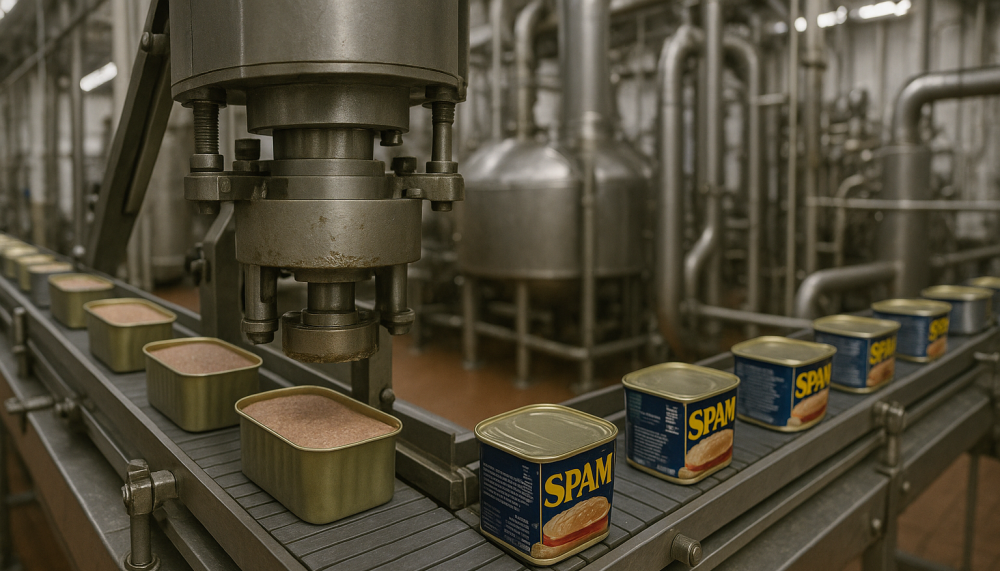
Next comes portioning. A piston-style filler shoots the emulsion into rectangular cans at high speed while pulling a light vacuum. Removing air prevents spoilage and stops the meat from oxidizing. Each can rolls under a seamer that crimps an aluminum lid to the steel body, creating an airtight double seam. Every lid gets a stamped code that tracks the batch and date.
Sealed cans enter giant pressure cookers called retorts. Steam raises the internal temperature to about 240°F (115 °C) for roughly three hours. This high-heat step kills microbes, sets the protein for that familiar loaf-like slice, and drives the final vacuum as the contents cool. Technicians monitor time, temperature, and pressure on digital controls; any deviation triggers an alarm and a hold order for the entire lot.
Once cooked, cans ride through cold showers that drop their core temperature below 90°F in minutes. Labeling machines wrap each can, packers stack them into cases, and quality staff pull random samples for sensory tests and shelf-life checks. If everything passes—that means good seal integrity, correct weight, and the signature savory aroma—the cases head to warehouses and, soon after, to stores worldwide.
From pig to pantry, the full run takes less than two days, yet the product can stay safe and tasty for years at room temperature. That shelf life, along with its salty-sweet flavor, explains why SPAM feeds campers, hurricane prep kits, and midnight snackers alike. The next time you crack a can, picture the farm, the stainless-steel mixers, and the roaring retorts behind every bite. Feeling hungry yet?
Share this insight
This conversation is happening inside the community.
Join free to continue it.The Internet Changed. Now It Is Time to Build Differently.
If this article resonated, the next step is learning how to apply it. Inside Wealthy Affiliate, we break this down into practical steps you can use to build a real online business.
No credit card. Instant access.