My Fun and Detailed Blog Creation Process Using the Wealthy Affiliate Platform




Welcome to my creative world!
I’m spilling all the secrets on how I use the Wealthy Affiliate platform to craft blogs that don’t just perform well—they shine. Whether you’re new to blogging or an experienced content creator, let’s break things down in a fun and easy-to-follow way.
I use this strategy when I’m running a blank and need a pick-me-up. One day, I tried building a blog like this, and you know what? It really made me think. I found myself enjoying the process more than I expected. So, I tried it a few more times, and it truly is fun building a blog from this hub approach.
So, grab your favorite drink and let’s get started!
Step 1: Niche Research - Finding Your Blogging Goldmine
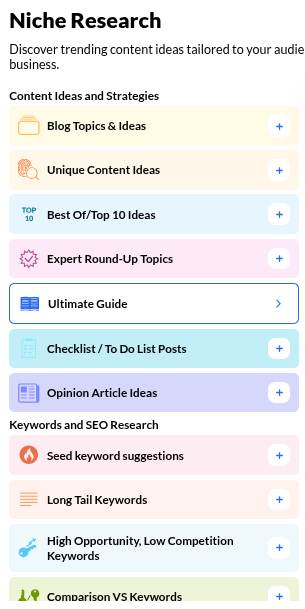
Every great blog begins with a spark of inspiration. And no, I don’t mean waiting around for a lightbulb moment. I dive in and search for it!
- Explore the Niche Research Section: I scroll through potential topics using Wealthy Affiliate’s tools like a treasure hunter scanning for gold. When something catches my eye, I know I’ve found something special.
- I look for topics that align with my passion or that I think my audience will find intriguing.
- Follow Your Curiosity: If it excites me, it’ll excite my readers. I’m not afraid to think outside the box and take creative leaps.
My thoughts: I once turned a boring topic into something engaging by adding unexpected references or fun facts. Trust me, a little creativity goes a long way.
Pro Tip: Always have a notepad or Google Doc handy to capture ideas on the fly—you never know when inspiration will strike.
Step 2: Content Ideas and Strategies - Let the Brainstorm Begin!
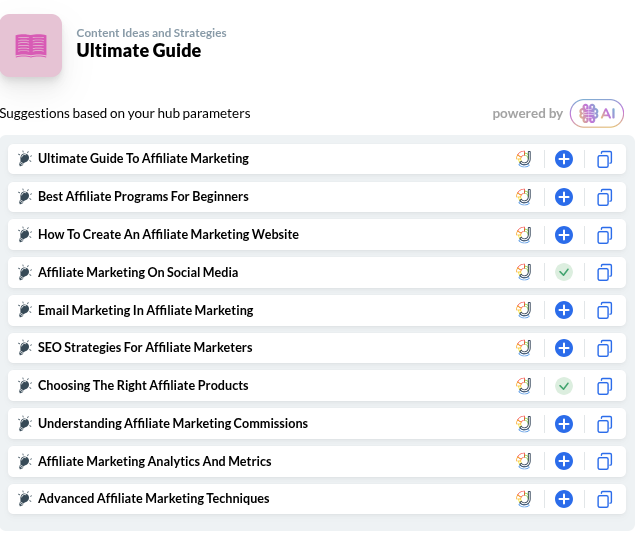
Now that I have a topic, it’s time to let my imagination run wild. This is where I throw ideas on the wall and see what sticks.
- Use the Content Ideas Tool: I type in my main keyword and explore a list of blog ideas. Some are straightforward, others are quirky—guess which ones I go for?
- Straightforward: "Affiliate marketing tips for beginners."
- Quirky: "What Bigfoot Can Teach You About Affiliate Marketing."
- Mix and Match: Sometimes, I merge two unrelated ideas to create something fresh. It’s like making a smoothie—different flavors, but it just works.
My thoughts: Mixing quirky with practical is my secret sauce. You’d be surprised how much people love unexpected combinations.
Pro Tip: Keep a running list of blog ideas. Even the ones that seem “meh” today could be gold tomorrow.
Step 3: Researching Keywords - Finding Hidden Gems
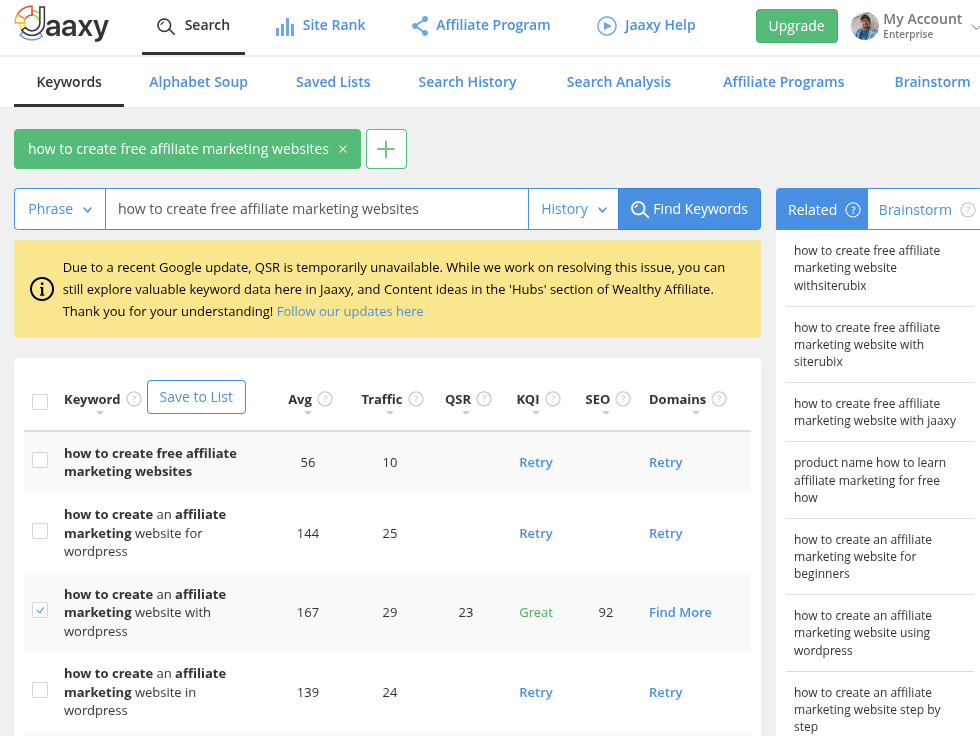
Ah, keyword research—the part where I pretend to be a digital archaeologist.
- Fire Up Jaaxy: I hunt for keywords that have good search volume but aren’t too competitive. Think of it like fishing—you want a spot with plenty of fish but not too many other boats.
- I start with broad terms and narrow down to long-tail keywords that are specific and less competitive.
- Pick 4 Winners: My blog’s success relies on picking the right bait, so I choose 4 keywords that balance volume and competition.
- Example Keywords: “How to start affiliate marketing” or “Affiliate marketing website tips.”
- QRS Reference: I know the QRS (Quoted Search Results) doesn’t matter as much anymore, but I still like to keep it in my toolbox as a reference—it’s a good way to get an idea of keyword competition.
My thoughts: Long-tail keywords are my go-to because they often lead to niche audiences who are eager for content.
Pro Tip: Long-tail keywords are like hidden trails in the forest. They’re less crowded and lead to valuable traffic.
Step 4: Refining the Blog Structure - The Blueprint
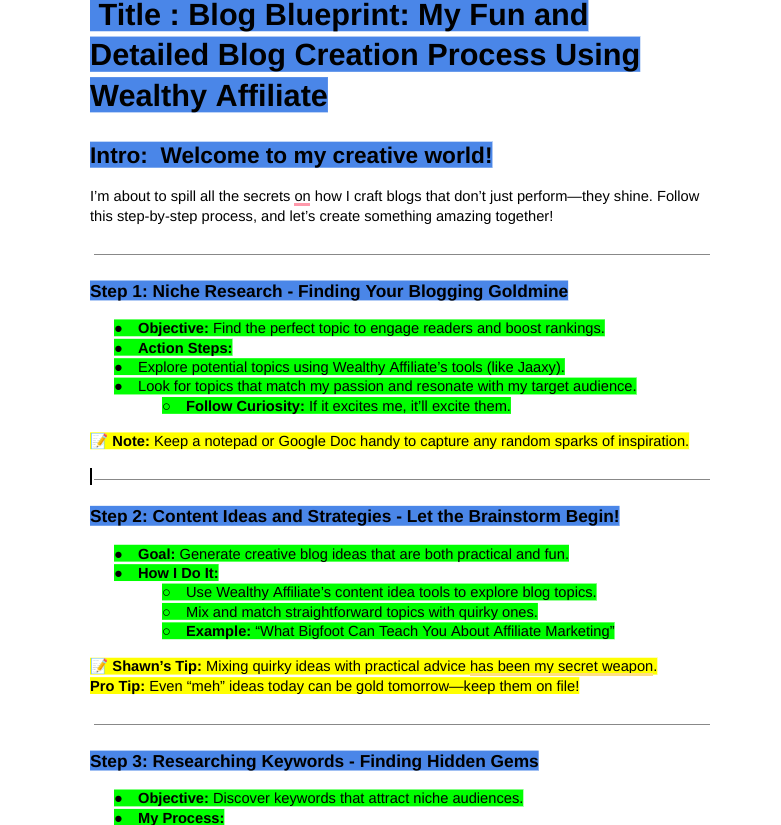
Before I start writing, I need a roadmap. Otherwise, I’ll end up rambling about Bigfoot (again).
- Subtopics and Sections: I break down the topic into digestible chunks, each answering a question or solving a problem.
- Think about what your reader is trying to learn and build sections that guide them step-by-step.
- Headings Are Your Friends: I use clear and engaging headings that act as guideposts for readers.
- My headings are like signposts in the woods—if you get lost, just follow them to the next section.
My thoughts: A clear structure saved me countless times when I was halfway through a blog and lost focus.
Pro Tip: Think of each section as a mini-adventure that ties back to your main journey.
Step 5: Picking Titles - Hooking the Reader
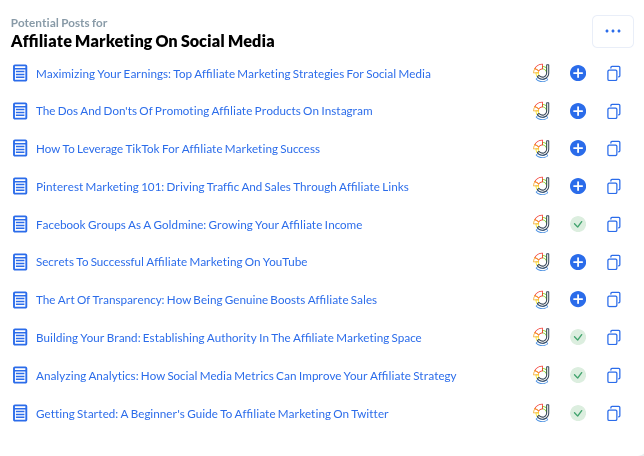
A good title is like a good headline—it’s the first thing that grabs attention.
- Brainstorm 4 Titles: I choose 4 potential titles and test which one feels the most clickable. Sometimes, I use quirky ones like, “What Bigfoot Taught Me About Affiliate Marketing.”
- I check if the titles spark curiosity, offer a benefit, or promise something valuable.
- Organize Them: I store them in Google Docs for future reference. Who knows when inspiration will strike again?
My thoughts: I once changed a boring title into something witty, and the clicks tripled. Don’t underestimate creativity.
Pro Tip: If you can make someone chuckle or go, “Wait, what?” with your title, you’re on the right track.
Step 6: Organizing Notes - My Secret Weapon
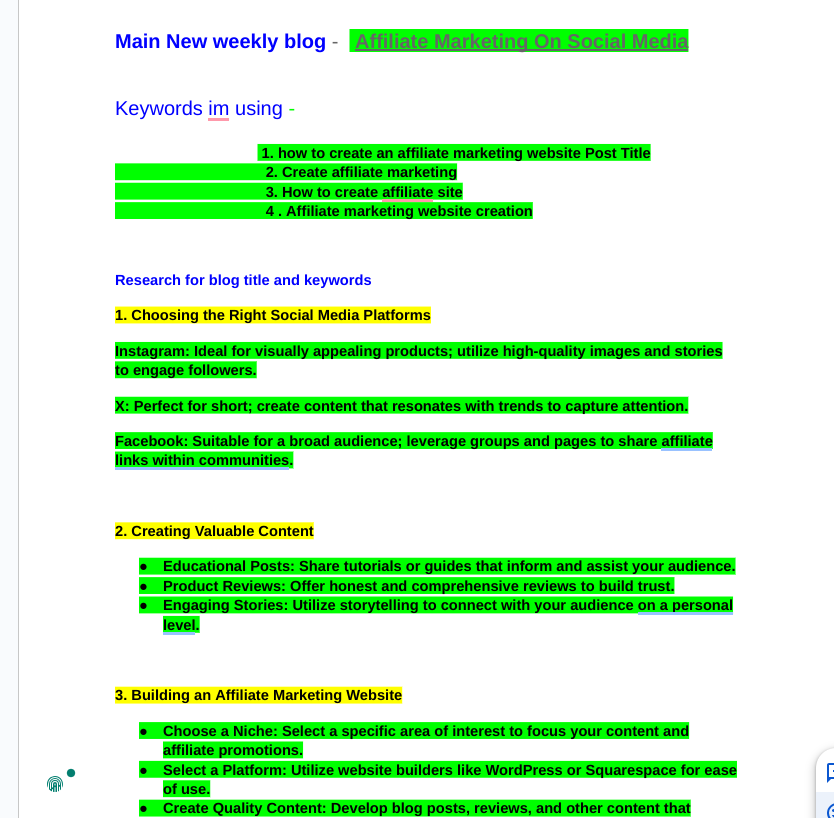
I call this stage “loading up my ammo.” Without it, I’d be shooting blanks.
- Collect All the Research: Competitor blogs, keyword lists, possible CTAs—it all goes into my Google Doc.
- I gather as much information as possible so I’m not scrambling for details halfway through writing.
- Organized Chaos: I use bullet points, color codes, and highlights to stay organized. It’s like building a survival kit before heading into the wilderness.
My thoughts: My Google Doc is my backup brain. Without it, I’d probably forget half my ideas.
Pro Tip: Spend extra time organizing notes. The more you prep, the smoother the writing will be.
Step 7: Bulk Writing Setup - Write Smart, Not Hard
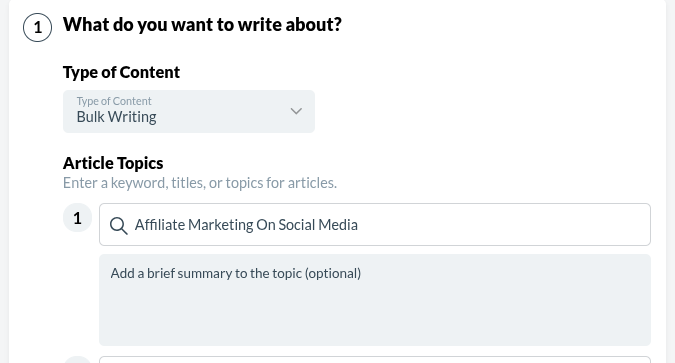
I’m a fan of working in batches. Once I’m in the zone, why stop at one blog?
- Select 5 Topics: I choose 5 blogs to work on and break them down into daily tasks.
- I prioritize topics that feel relevant or timely, so my content pipeline never dries up.
- Set Achievable Goals: I aim for small wins each day, whether it’s finishing a section or adding keywords.
- Small progress every day leads to big results.
My thoughts: Bulk writing helps me maintain momentum, and it’s a lifesaver when deadlines sneak up on me.
Pro Tip: Momentum is your best friend. Start with one win and keep rolling.
Step 8: Building the Layout in SiteContent - Ready, Set, Write
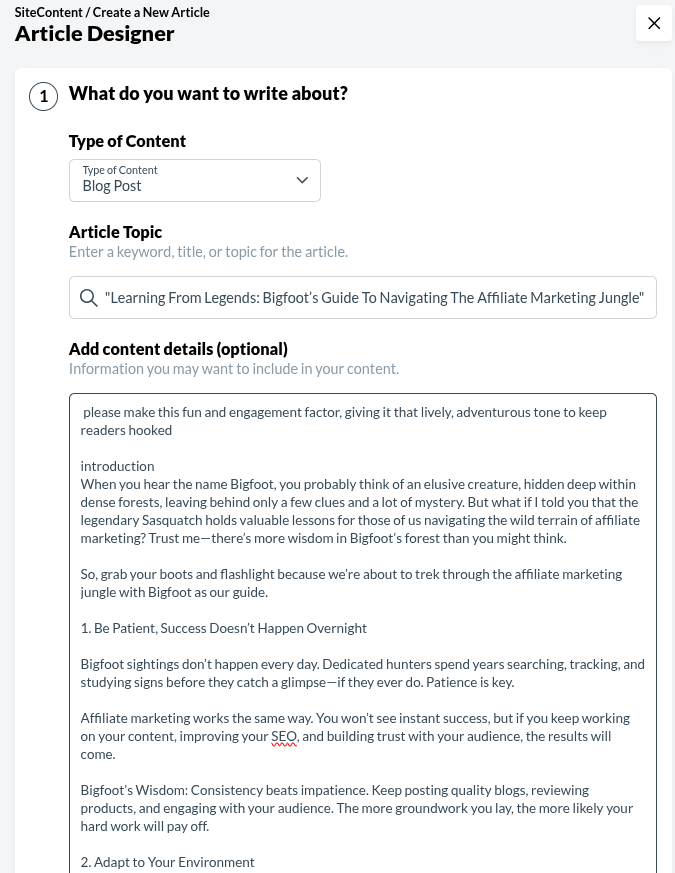
Here’s where the magic happens.
- Create a 6-Section Layout: Introduction, main points, and a conclusion. Simple and effective.
- Each section has a clear purpose and builds on the previous one.
- Fill in the Blanks: I plug in my research, making sure to naturally weave in keywords.
- This is where my creativity kicks in—I try to add personality without sacrificing clarity.
My thoughts: My first drafts are always messy, but that’s where the magic begins. Don’t fear the chaos.
Pro Tip: Don’t worry about perfection in the first draft. Just let it flow.
Step 9: Choosing the Right AI Writing Style - Let the Bots Help
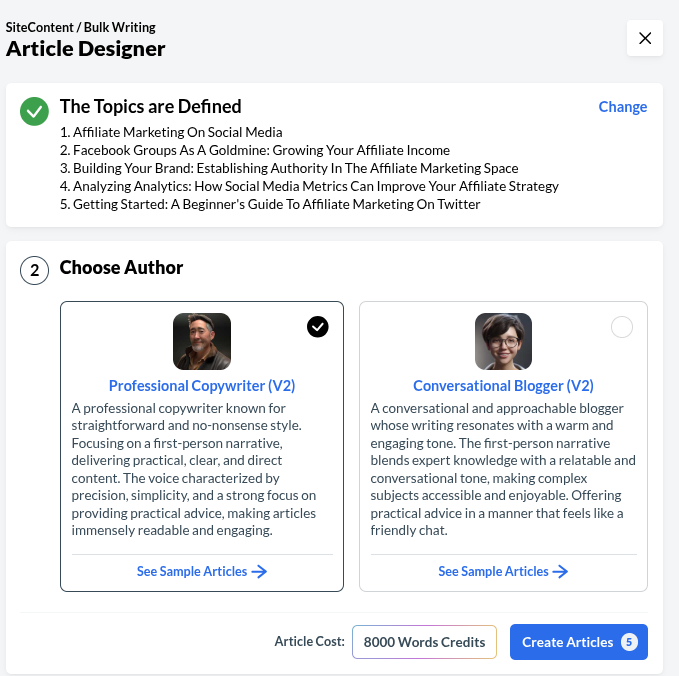
Wealthy Affiliate’s AI writing assistant is like having a co-pilot.
- Business Blogs: For professional posts, I use the “Professional Copywriter” setting.
- Storytelling Blogs: For fun, engaging posts, I switch to “Conversational Blogger.”
- The tone should match the blog’s purpose: serious for business, playful for stories.
My thoughts: AI is helpful, but your voice is what makes it unique. Don’t let the bots take all the credit!
Pro Tip: Use AI for structure, but always add your personality for that human touch.
Step 10: Reviewing and Personalizing the AI Draft
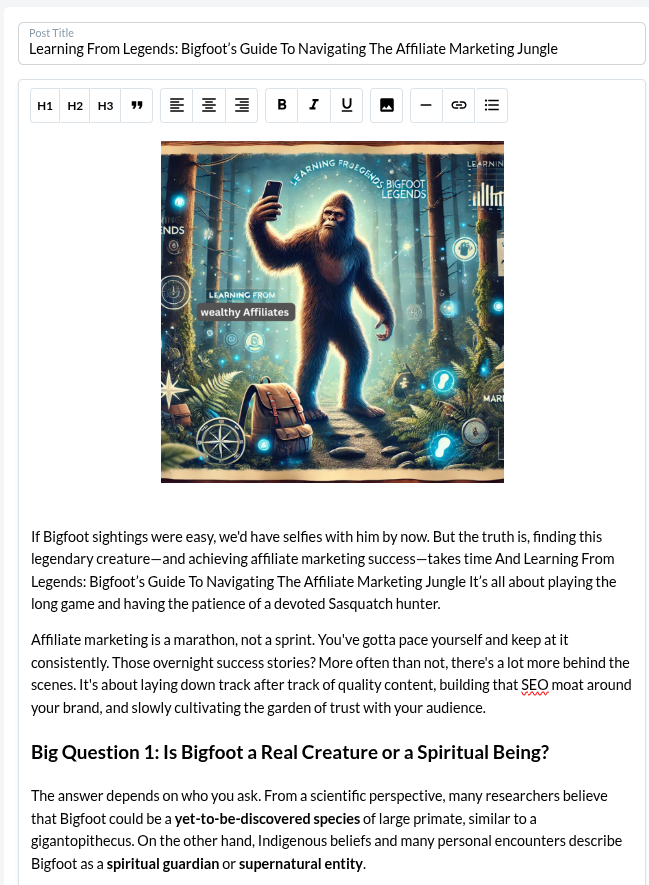
Even AI needs a human touch.
- Fact-Check Everything: Accuracy is key, especially if you’re giving advice.
- Add Your Spin: I throw in jokes, personal anecdotes, and quirky comments.
- This is where I let my personality shine through and make the blog feel authentic.
- SEO Touch-Ups: Double-check keywords, headings, and image alt text.
My thoughts: I once added a Bigfoot joke in a draft, and it became the most shared section. Be bold!
Pro Tip: Read it aloud. If it doesn’t sound like you, rewrite it until it does.
Step 11: Tracking Performance - Don’t Just Publish and Forget
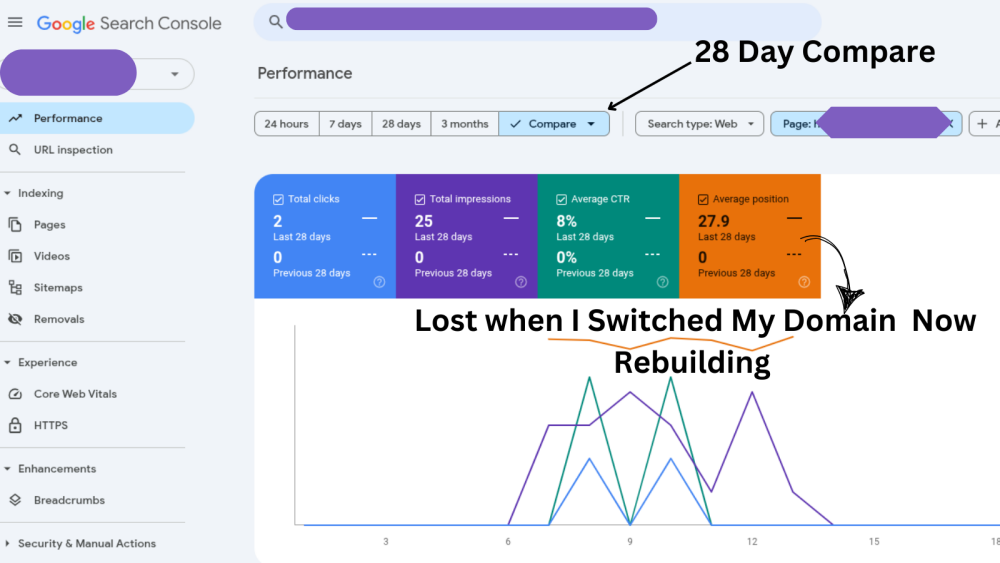
Once the blog is live, I keep an eye on its performance using Google Search Console.
- Check Metrics: I monitor clicks, impressions, and keyword rankings.
- If a section isn’t performing well, I revisit and optimize it.
- Tweak as Needed: If something’s not working, I adjust it—more keywords, better headlines, or updated information.
My thoughts: Tracking is like hunting for clues. The data tells you where to look and what to tweak.
Pro Tip: SEO is like a garden. Water it, nurture it, and it will grow.
Final Thoughts: Blogging Should Be Fun!
Yes, this process is a lot of work. But that’s what makes it rewarding. I treat each blog like a creative project, and Google Docs is my trusty backup brain when my mind wanders (which is often!).
So, remember this: you’re not just writing for search engines—you’re creating a conversation with your readers. Let your passion shine, and don’t be afraid to take risks or infuse your personality into your content. Blogging is an adventure, and each post is another step toward your goals.
Join FREE & Launch Your Business!
Exclusive Bonus - Offer Ends at Midnight Today
00
Hours
:
00
Minutes
:
00
Seconds
2,000 AI Credits Worth $10 USD
Build a Logo + Website That Attracts Customers
400 Credits
Discover Hot Niches with AI Market Research
100 Credits
Create SEO Content That Ranks & Converts
800 Credits
Find Affiliate Offers Up to $500/Sale
10 Credits
Access a Community of 2.9M+ Members
Recent Comments
14


I've gone through all the 11 steps and I got it extremely significant. The visuals and the pics are appropriate.
It's a great dedication you have exhibited here on the article. I will read it and review it for the second time too.
Blogging on W/A is advantageous. Why? It has around 3 Million community members and most of them are active ones daily.
Best,
Hey Zeruman,
Sorry I just got the notification! I really appreciate you taking the time to go through all 11 steps that means a lot. I’m glad the visuals landed well for you too.
You’re totally right about the W/A community, it’s such a solid advantage having that many active members around. Looking forward to hearing your thoughts after that second read-through too!
Thanks again stay inspired and keep creating! 🙌
Welcome To WA
Shawn

Love the process and meticulous strategy you have here Shawn!
But..... please don't expect any royalties as I may be borrowing some of your ideas moving forward! :-)
Haha, thanks, Jessie! Feel free to "borrow" as much as you want—no royalties required! I’m just glad you found the strategy helpful. We’re all in this together, so if it helps you grow, that’s a win in my book. Thanks for the support, and take care, my friend!

This process sounds super fun and exciting, Shawn!
I love how you make blogging feel like an adventure instead of just work.
Breaking it down into steps makes it way easier to handle. The mix of strategy and creativity is really cool.
I'm definitely taking notes on your niche research method.
Thanks for sharing!
Boris
Hey Boris! Yes, this is exactly how I started—it was tough finding things to write about at first. But over time, I’ve learned way more than I ever expected. To be honest, I now get most of my blog ideas from Facebook. I look at past posts with lots of likes, shares, and comments, then use that feedback to create content based on what people are actually interested in. It’s been a game-changer! Thanks for all the support!
See more comments
Join FREE & Launch Your Business!
Exclusive Bonus - Offer Ends at Midnight Today
00
Hours
:
00
Minutes
:
00
Seconds
2,000 AI Credits Worth $10 USD
Build a Logo + Website That Attracts Customers
400 Credits
Discover Hot Niches with AI Market Research
100 Credits
Create SEO Content That Ranks & Converts
800 Credits
Find Affiliate Offers Up to $500/Sale
10 Credits
Access a Community of 2.9M+ Members
Thanks for this article. I havent been able to nail down my workflow yet and I feel like I have been spinning my wheels. This helps a lot.