Permalinks, Slugs, Pages or Posts?


Published on July 20, 2015
Published on Wealthy Affiliate — a platform for building real online businesses with modern training and AI.
I've not quite been with WA long enough to do a lesson, yet, and while on "probation", I apparently can only create one blog post here in WA per day. And, I have a lot on my mind! :-)
Okay, I've assisted several folks with "Permalinks". This term can be confusing as a beginner. Don't worry, we all went through it at one time. You're not alone.
A Permalink is simply the user-friendly version of where a post or page lives. In the old days, the web address (URL) would look like this:
http://www.yourdomain.com/?p=123
(This is actually where the page/post lives in the WordPress database table)
Obviously, this is very unfriendly. So, the automatic Permalink structure uses a variable that shows up like this:
/%postname%/
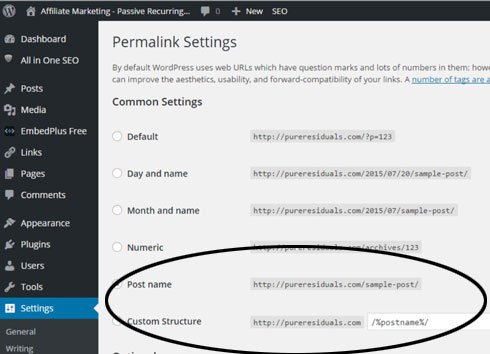
So, when a web visitor clicks on a link, the variable above will pull your post OR page title instead and make it user friendly like this:
http://yourdomain.com/wealthy-affiliate-review
The "wealthy affiliate review" likely being your "keyword". So, as you can see, this is much better for the search engines. They like to see this as it matches the search query inputted by the user.
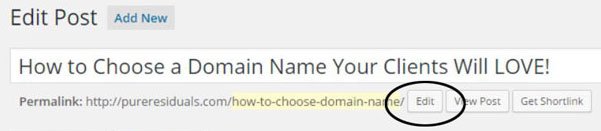
Generally, I see this when new members are creating a "page" or a "post" and somehow the permalink structure got changed. The default is as in the photo above.
IF you click on a link on your home page, post title or page link and it doesn't come up as you expected. Check your permalinks as above. Then, also check Settings > Pages and Settings > Posts to ensure you have the title of the post or page in there correctly.
There are two methods to accomplish this in WordPress.
Ready to put this into action?
Start your free journey today — no credit card required.
1. The Quick Edit feature:
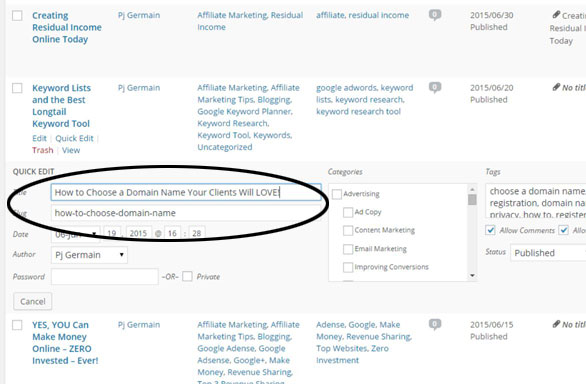
OR, the regular Edit (for posts, All Posts, then find the post you're checking and click Edit just below).
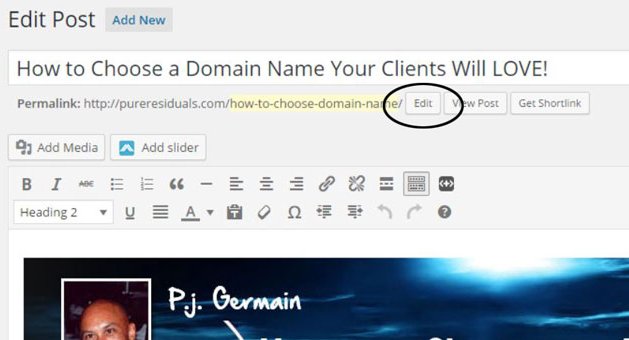
SEO TIP:
The Slug is what Wordpress actually uses in place of that variable within your Permalinks. Generally, the slug is identical to the page/post title. BUT, sometimes this messes up my menu! OR it's simply too long. So, I'll edit the slug and simply ensure it contains my keyword, while the normal title will remain long (as that is what actually show up on the page). The slug is really your permalink.
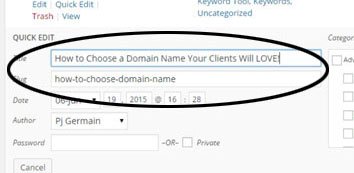
The Slug can also be edited from Quick Edit OR the regular full edit for your page or post.
Should I Create a Post OR a Page ??
Okay, there is (and always will be) confusion about Posts OR Pages. Which should I use? Which is better? Well, I know you'll love this response "it depends". :-)
Here is the bottom line on whether to create a POST or instead, create a PAGE:
- A post is dated and "time-sensitive" and a page is not.
- A post can belong to categories, tags, dates and authors and a page can not.
- You can access a post from multiple pages - its category, tag, date or author.
- A page is only accessible from wherever you link to it.
TIP: Pages and Posts differ on how they function!
There! Clear as mud, right?? LOL!
Cheers,
Pj
UPDATE as a result of some wonderful comments and questions.....
Indeed, a post is brief time-sensitive information. Think of it as an article within a newspaper.....current trends (unless you write "evergreen" content). Yes, you CAN update it, but you'll need to change the date manually as it generally keeps the creation date.
Also, you can make a post a "Sticky" as Tammy mentioned. So, it's always at the top. This is a cool way to modify a homepage and use the Sticky as an introduction.
WA ROCKS!!!
Share this insight
This conversation is happening inside the community.
Join free to continue it.The Internet Changed. Now It Is Time to Build Differently.
If this article resonated, the next step is learning how to apply it. Inside Wealthy Affiliate, we break this down into practical steps you can use to build a real online business.
No credit card. Instant access.