The Universal Language: Exploring the Infinite World of Mathematics


Published on April 27, 2023
Published on Wealthy Affiliate — a platform for building real online businesses with modern training and AI.

Introduction:
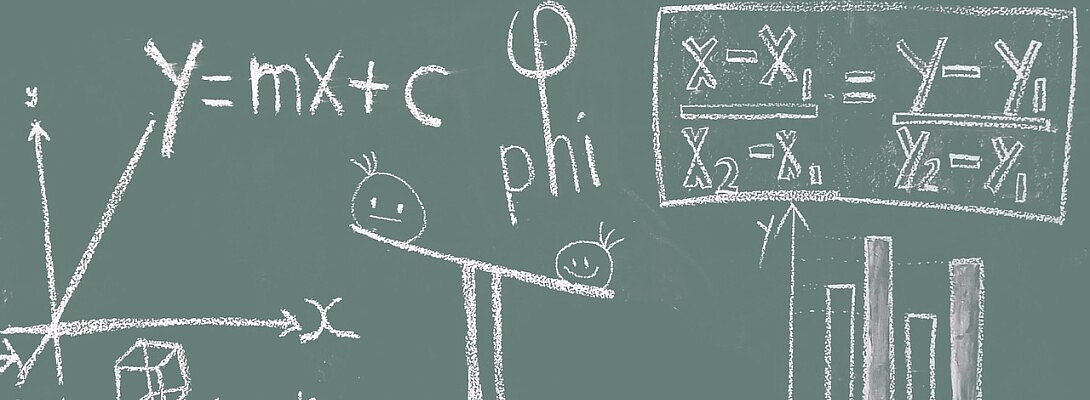
Mathematics, often called the universal language, transcends cultural, geographical, and linguistic boundaries. It is the cornerstone of science, engineering, and countless other disciplines. In this blog post, we will explore the fascinating history of math, its inherent powers and benefits, and how it unites us as a global community.

I. The History of Mathematics:
A Journey Through Time
From ancient civilisations to modern-day advances, mathematics has a rich and storied history.
- Ancient beginnings: Our mathematical journey begins in ancient Egypt and Mesopotamia. The Egyptians used arithmetic to solve practical problems, like determining the dimensions of pyramids and calculating the volume of granaries.
- Classical Greek contributions: Mathematics flourished in ancient Greece, with significant contributions from Pythagoras, Euclid, and Archimedes. They introduced geometry, number theory, and early forms of calculus.
- Indian and Arab advancements: Indian mathematicians, such as Aryabhata and Brahmagupta, made groundbreaking discoveries in algebra and trigonometry. Later, Arab scholars like Al-Khwarizmi and Alhazen continued these traditions, leading to the development of algebra and the introduction of the decimal system.
- The Renaissance: As Europe emerged from the Dark Ages, mathematics experienced a resurgence. Mathematicians like Fibonacci, Tartaglia, and Cardano made advancements in algebra, number theory, and geometry, paving the way for the Scientific Revolution.

Ready to put this into action?
Start your free journey today — no credit card required.
II. The Power of Mathematics:
Unravelling the Secrets of the Universe
Mathematics is essential for understanding the world around us. It has allowed us to:
- Explore space: Mathematics is crucial in understanding celestial bodies and their motions. Calculations derived from Newton's laws of motion have enabled space travel and the exploration of our solar system.
- Understand nature: Patterns and symmetry abound in nature, from the spiral arrangement of leaves on a stem to the intricate structure of a snowflake. Mathematics helps us analyse these patterns and understand their underlying principles.
- Develop technology: The rapid advancement of technology in the modern era heavily relies on mathematical principles. Cryptography, computer programming, and artificial intelligence are just a few examples of fields where math is indispensable.
III. The Benefits of Mathematics:
A Tool for Personal and Societal Growth
Beyond its applications in science and technology, mathematics offers numerous benefits:
- Cognitive development: Studying mathematics helps to develop critical thinking, problem-solving, and analytical skills.
- Financial literacy: A solid understanding of math is essential for personal finance, budgeting, and making informed decisions.
- Enhanced communication: Mathematics is a universal language, facilitating collaboration and communication between individuals from different backgrounds.
IV. Mathematics: The Unifying Force
Despite our diverse backgrounds and languages, mathematics serves as a unifying force, fostering a sense of global community. It connects us through shared knowledge, allowing us to build upon the discoveries of those who came before us and work together to tackle future challenges.
Here are five fun mathematical facts with examples:
- The Golden Ratio (φ): The Golden Ratio, approximately 1.6180339887, is an irrational number frequently appearing in geometry, art, and architecture. It is the ratio of two quantities such that the ratio of the sum of those quantities to the larger one is the same as the ratio of the larger one to the smaller one. For example, if you have two line segments, A and B, with A > B, then (A + B)/A = A/B = φ.
- The Monty Hall Problem: This probability puzzle is named after the host of the game show "Let's Make a Deal." In the problem, you have three doors: one hides a car, while the other two hide goats. You choose a door, and the host, who knows what's behind each door, opens another door with a goat. You are then asked whether you'd like to stick with your original choice or switch to the remaining unopened door. Surprisingly, switching doors doubles your chances of winning the car, giving you a 2/3 chance, while sticking with your original choice yields only a 1/3 chance.
- Benford's Law: This interesting law states that in many real-world data sets, the first digit d (from 1 to 9) occurs with a probability of log10(1 + 1/d). This means that the digit 1 appears as the first digit about 30.1% of the time, while the digit 9 appears as the first digit only about 4.6% of the time. This counter-intuitive result has applications in detecting fraud, as people who fabricate numbers often fail to follow Benford's Law.
- The Four-Color Theorem states that any geographical or abstract map can be coloured with just four colours so that no two adjacent regions share the same colour. It took over a century to prove this theorem, and the final proof relied on computer assistance to check thousands of possible cases.
- The Birthday Paradox: This probability theory paradox states that in a group of 23 people, there's a 50% chance that at least two share the same birthday. In a group of 70 people, the probability rises to over 99%. This may seem counter-intuitive, as there are 365 days in a year, but it's because the problem considers any two people sharing a birthday, not a specific one.
Mathematics is a powerful, universal language that has shaped human history and continues to play a vital role in our lives. By exploring its history, powers, and benefits, we can better appreciate the beauty and wonder of this truly remarkable discipline.
Share this insight
This conversation is happening inside the community.
Join free to continue it.The Internet Changed. Now It Is Time to Build Differently.
If this article resonated, the next step is learning how to apply it. Inside Wealthy Affiliate, we break this down into practical steps you can use to build a real online business.
No credit card. Instant access.