Scammers Slid into My DMs. It Didn’t End Well. For them.


Published on July 5, 2025
Published on Wealthy Affiliate — a platform for building real online businesses with modern training and AI.


This morning I got a message claiming my business page was about to be deleted for “identity theft.”
The message looked like this:
⚠️ Your Facebook page may be permanently deleted due to identity theft...
[“Review now” scam link]
Regards, Support Team © 2025
Yeah… no.
You’re really going to try that on someone who wrote a cybersecurity book?
I had a bit of fun replying:
Ready to put this into action?
Start your free journey today — no credit card required.
“Really? You’re sending this to a cybersecurity expert? You are toast.”
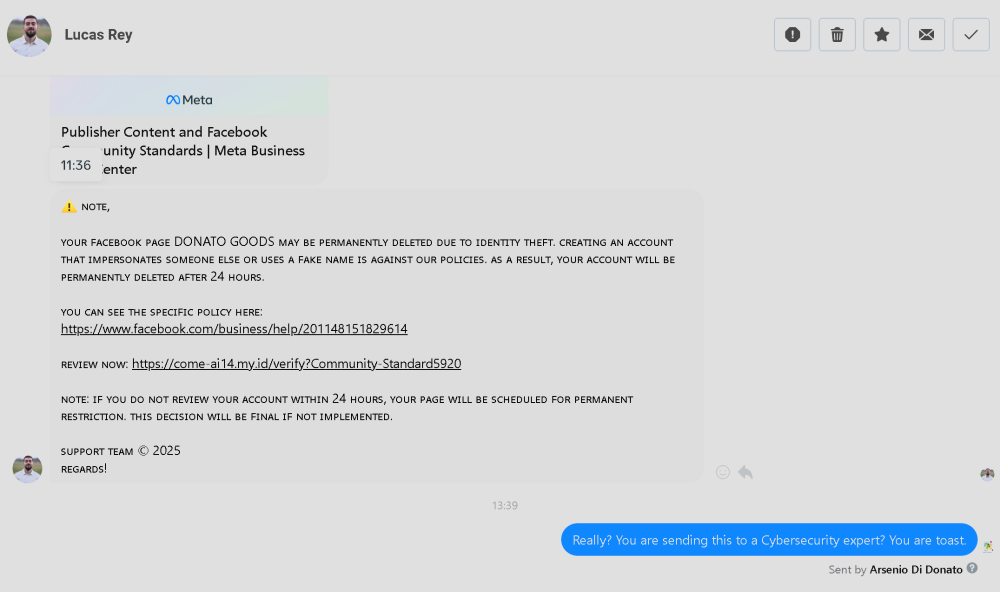 Social Engineering Hack Attempt
🔎 Here’s why this was an obvious scam:
- 🚩 The sender wasn’t Meta or Facebook — just some guy named Lucas Rey
- 🚩 The second link (the one they wanted me to click) led to a shady .my.id phishing site
- 🚩 Threats + urgency = classic social engineering
- 🚩 “Support Team © 2025”? Cute. Professional scammers need better graphic designers.
🧠 The Lesson:
Social engineering works because it feels official, scary, and urgent. Even smart people fall for it — especially when caught off-guard. It is the most effective way for "hacking" because people are always the weakest link even in the most secure systems.
But if you stay calm and think logically (or just use a VPN and spam filter), these kinds of attacks crumble.
If you’re promoting anything online — affiliate offers, services, or your own brand — you need to be alert. Scammers target creators, too.
Don’t let them use your trust as a weapon.
Stay sharp, friends.
Share this insight
This conversation is happening inside the community.
Join free to continue it.The Internet Changed. Now It Is Time to Build Differently.
If this article resonated, the next step is learning how to apply it. Inside Wealthy Affiliate, we break this down into practical steps you can use to build a real online business.
No credit card. Instant access.