Tech Repairs and Tremors: What Designers Should Know

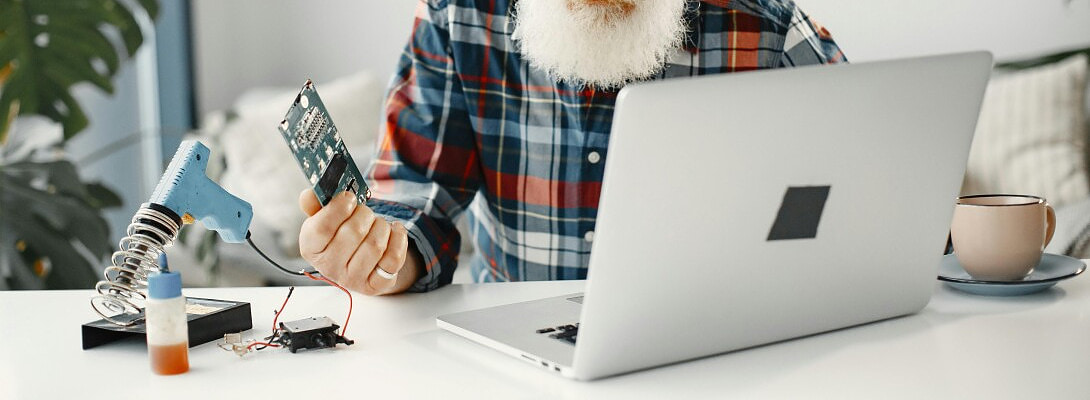


A personal look at the challenges of laptop repair with Parkinson’s and how tech can do better.
💡 Introduction: When Design Meets Reality
Replacing a laptop battery should be simple. But for those living with Parkinson’s or other conditions affecting fine motor skills, it can feel like defusing a bomb. Tiny screws, fragile connectors, and inaccessible layouts turn a routine task into a test of patience and dexterity.
I recently replaced the battery in my Dell XPS laptop. I mention Dell, not to call them out, but to show the age of my computer; it's not that old. I suspect that I would have experienced the same challenges regardless of the brand, and it reminded me just how much tech design still has to learn about accessibility.
🔍 The Hidden Challenges
- Microscrews and fragile components: Difficult to grip, easy to drop, and nearly impossible to retrieve. Of course, the first thing I do is drop one of the teeny-weeny screws that happened to be the same dark color as most of the components inside. To say it took a while to find it is a gross understatement.
- Overly compact layouts: Designers prioritize sleekness over serviceability.
- Lack of modularity: Many devices are glued shut or require specialized tools.
- No consideration for tremors or reduced dexterity: There’s rarely a “Parkinson’s-friendly” option.
🧰 Tools That Help
Here are a few tools that made the process more manageable—or could have:
- Magnetic screw mats to keep parts organized (My Electro-Static Discharge (ESD) mat has slots for parts.)
- Ergonomic screwdrivers with larger grips (I have them.)
- Magnifying lamps or head-mounted magnifiers (Could have used one looking for the wayward screw.)
- Anti-static tweezers for better control
- Pre-repair planning: watching teardown videos, laying out tools in advance (Definitely helped me.)
🧠 What Designers Should Consider
- Accessibility isn’t just software: Hardware matters too.
- Modular design: Products like the Framework laptop show it’s possible.
- Inclusive testing: Involve people with motor challenges in usability trials.
- Clear documentation: Step-by-step guides with visuals can make a huge difference.
🙌 A Call for Change
Tech should empower everyone—not just the able-bodied. If manufacturers truly want to build for the future, they need to design with empathy, adaptability, and accessibility in mind.
✍️ Final Thoughts
Living with Parkinson’s means adapting constantly. But it shouldn’t mean struggling to replace a battery. With more innovative design and more inclusive thinking, we can make tech repairs less of a battle and more of a bridge to independence. And not take four hours for a battery replacement.
Join FREE & Launch Your Business!
Exclusive Bonus - Offer Ends at Midnight Today
00
Hours
:
00
Minutes
:
00
Seconds
2,000 AI Credits Worth $10 USD
Build a Logo + Website That Attracts Customers
400 Credits
Discover Hot Niches with AI Market Research
100 Credits
Create SEO Content That Ranks & Converts
800 Credits
Find Affiliate Offers Up to $500/Sale
10 Credits
Access a Community of 2.9M+ Members
Recent Comments
2


Yes, Glen. I'm with you on this. I've had a degenerative version of Muscular Dystrophy. probably most of my life although it wasn't diagnosed until 1999. Some days are easier than others, but I constantly try to keep doing those things that I can, and often assistance can be provided with very little change.
;-)
Richard
Join FREE & Launch Your Business!
Exclusive Bonus - Offer Ends at Midnight Today
00
Hours
:
00
Minutes
:
00
Seconds
2,000 AI Credits Worth $10 USD
Build a Logo + Website That Attracts Customers
400 Credits
Discover Hot Niches with AI Market Research
100 Credits
Create SEO Content That Ranks & Converts
800 Credits
Find Affiliate Offers Up to $500/Sale
10 Credits
Access a Community of 2.9M+ Members
Great post and I totally agree with you. I have Rheumatoid Arthritis and my fingers don't alwyas work well. My pinky finger and ring finger on both hands don't bend so I can't type like a regular person or unscrew a water bottle, among many other things.
I'm glad you posted about this.