WA Advent Calendar 2025 - Wednesday 17th December



17th December, everyone and today we are being serenaded by some carol singers.
(Hope you like this one, Isabella!)
Have you ever been carol singing with a group, raising money for charity, entertaining the crowds in a busy shopping centre or singing your heart out in a '9 Lessons and Carols Service?'
There’s something magical about carol singing, I think. A group of voices in the cold December air, scarves up to their noses, breath turning to mist, somehow managing harmonies that sound far better in the moment than they ever would indoors. And that's just the dogs joining in! LOL.
On Sunday, I went to an after-show party for a show that I was recently part of and halfway through the evening, the MD sat down at the piano, and we had half an hour of impromptu carol singing. It was great fun, and we did all the favourites. And since many of the members sing in a choir, we had harmonies, bass and descants - in fact, the full works! It was magical. Apart from my friend, who's never been to church in her life and didn't know any of the words - but she put in a great performance miming along! LOL.
But where did this tradition begin?
Where Carols Really Came From
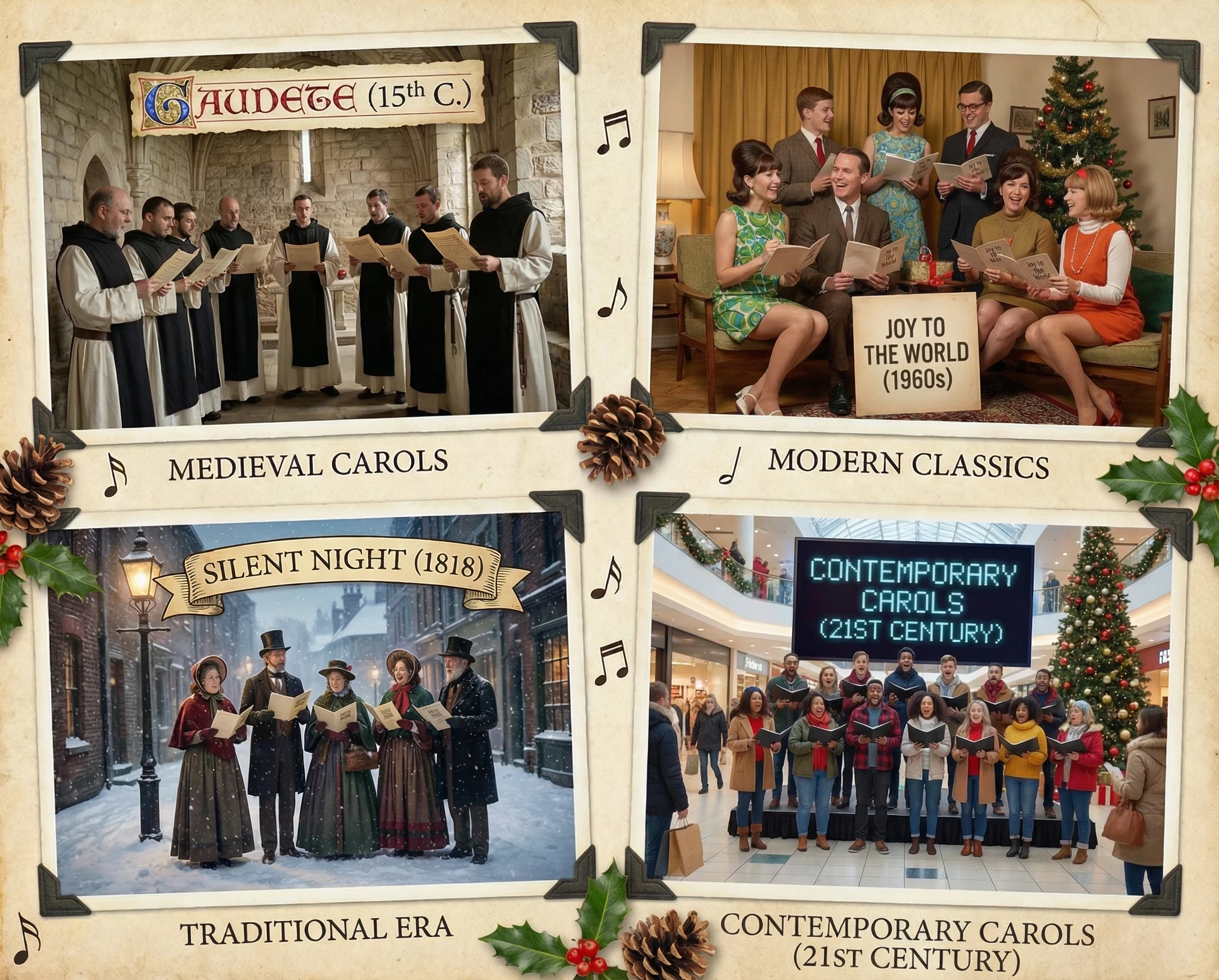
Carols didn’t start as Christmas songs at all. A carol is really defined by its refrain structure, not its subject matter — a detail English Heritage highlights. The word carol originally meant a dance or song of joy, often performed in a circle. Medieval carols were sung during all kinds of festivals, not just Christmas. It wasn’t until the late Middle Ages and into the 15th century that carols began to be firmly associated with the nativity and Christmas.
By the Victorian era, carol singing as we know it today blossomed. Many of the carols we love — O Come, All Ye Faithful, Hark! The Herald Angels Sing, God Rest Ye Merry Gentlemen — were either written, translated or popularised in the 1800s when Christmas traditions experienced a huge revival, often put down to the then Royal family who celebrated in different ways that have now become traditional.

How Many Carols Are There?
There’s no exact number, because carols vary by culture and country, but historians estimate hundreds of recognised Christmas carols worldwide, with at least 40–50 core carols regularly sung in British churches, schools and community choirs.
And every year, new ones join the mix — although they don’t always make it into the local church service unless the organist feels especially brave.
The Tradition of Carol Singing For Charity
Carol singing became popular when musicians and choirs began travelling from house to house in the 17th and 18th centuries, sharing Christmas cheer. These early carollers were called waits, and they often carried lanterns to light their way. Some even had official status in town life.
Today, carolling is more likely to involve charity collections, mulled wine, and at least one person insisting they can definitely sing the descant to O Come, All Ye Faithful. We regularly get a local Rotary Club van come around but they play piped music and have a Santa sitting in a trailer disguised as a sleigh. It fools the children, but some of us adults are a little bit older and wiser.
Nine Lessons and Carols — a Christmas Classic
One of the most famous carol traditions is the Festival of Nine Lessons and Carols, first held in 1880 in Truro Cathedral. The idea was to bring together scripture readings (“lessons”) with carols that reflect the Christmas story.
The service became world-famous when King’s College, Cambridge, began broadcasting it in 1928. Millions now listen every Christmas Eve, making it one of the most loved festive broadcasts in the world.
Personally, I don't think you have to follow any particular religion to appreciate it - I know many people who just like the nostalgia and tradition.
And it usually opens with that breathtaking solo:
“Once in Royal David’s City” — usually sung by a nervous but brilliant chorister chosen at the last moment.
Why Carols Still Matter
Carols carry nostalgia, faith, community spirit and shared memory. They’re sung in churches, schools, hospitals, care homes, supermarkets and even around kitchen tables. They bridge generations in a way few traditions do.
Most of all, carols remind us of the heart of the season — stories of hope, joy, peace and goodwill, carried forward in song. And I think that matters regardless of your religion.
You'll find many karaoke versions on YouTube so you can spice up your Christmas festivities with a good old sing song.
It doesn't matter if you’re a confident singer, a shy hummer, or someone who only joins in on “fa la la la la”, (loudly!), you’re taking part in a tradition that’s been warming winter hearts for centuries.
Which ones do you know?
These are some of the classics that appear in hymnbooks, school concerts, church services, and community choirs across the UK.
Core, universally recognised carols
- Silent Night
- O Come, All Ye Faithful
- O Little Town of Bethlehem
- Hark! The Herald Angels Sing
- Once in Royal David’s City
- God Rest Ye Merry, Gentlemen
- Away in a Manger
- The First Nowell
- We Three Kings (technically an Epiphany song)
- Good King Wenceslas (St Stephen’s Day)
- While Shepherds Watched Their Flocks by Night
- It Came Upon the Midnight Clear
- Joy to the World
- Ding Dong Merrily on High
- O Come, O Come Emmanuel (Advent)
These form the backbone of British carol services and Nine Lessons and Carols traditions.
Lesser‑Known or More Obscure Carols
These are historically significant, regionally beloved, or simply forgotten gems.
Medieval & Early Traditional Carols
- Lordings, Listen to Our Lay — 13th‑century Anglo‑Norman carol, possibly one of England’s oldest
- The Boar’s Head Carol — a 15th‑century feast song celebrating the ceremonial boar’s head
- The Coventry Carol — a 16th‑century, haunting lullaby from the mystery plays
- Gaudete — 16th‑century Latin carol, revived in the 20th century
Folk or Regional Carols
- The Huron Carol (Jesous Ahatonhia) — Canada’s oldest Christmas song, written c.1642
- The Sans Day Carol — Cornish traditional
- The Cherry Tree Carol — English/Appalachian folk ballad
- The Wexford Carol — Irish traditional, possibly 12th century
Victorian & Early Modern Curiosities
- Past Three O’Clock — based on the old London waits’ cry
- I Saw Three Ships — traditional but less commonly sung in formal services
- The Holly and the Ivy — well-known, but still technically a folk carol with pagan echoes
- The Angel Gabriel from Heaven Came — Basque origin, 19th‑century English translation
Obscure but Beautiful
- A Virgin Most Pure — 17th‑century English
- Dormi Jesu — traditional lullaby
- The Sussex Carol — revived by Vaughan Williams
- The Gloucestershire Wassail — festive but rarely sung in churches
- The King — traditional wassail song
- In Dulci Jubilo — medieval macaronic Latin/German, known but not widely sung outside choirs
What's Your Favourite Carol?
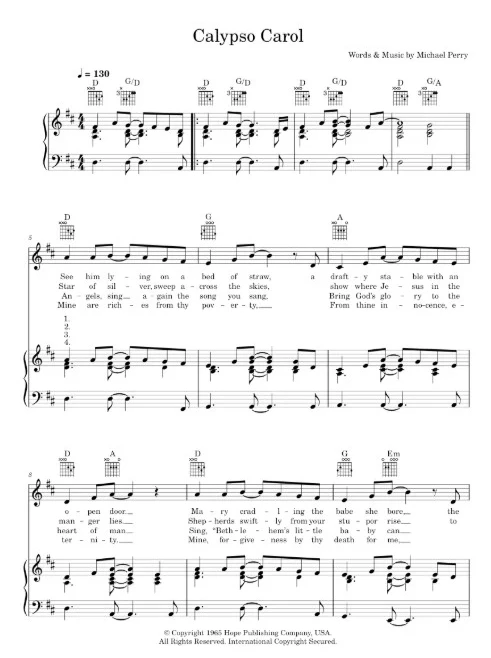
My favourite carol is called The Calypso Carol and has a funky Calypso beat which I like a lot.
Let me know your favourite carol in the comments below.
Until tomorrow...
We Three Kings will be Away in a Manger, waiting for Good King Wenceslas and a Little Donkey, near O Little Town of Bethlehem, While Shepherds Watch Their Flocks By Night!
Gail
And if you've never heard The Calypso Carol, you'll find it on YouTube with the lyrics to sing along to at: https://www.youtube.com/watch?v=Ld5XwCbY1i4YouTube
Join FREE & Launch Your Business!
Exclusive Bonus - Offer Ends at Midnight Today
00
Hours
:
00
Minutes
:
00
Seconds
2,000 AI Credits Worth $10 USD
Build a Logo + Website That Attracts Customers
400 Credits
Discover Hot Niches with AI Market Research
100 Credits
Create SEO Content That Ranks & Converts
800 Credits
Find Affiliate Offers Up to $500/Sale
10 Credits
Access a Community of 2.9M+ Members
Recent Comments
22


Great post again Gail.
My favourite is silent night. When I was in school a few centuries ago we learnt it in German and sang it in a Christmas concert. It's always stuck with me and I still know some of the German words but not all of them.
Have a good evening


Thank you, Gail. Of course I like this!!
I listened to the Calypso Carol and love it. I seem to know the tune but none of the words. I love lots and lots of English carols. I learned them all as my children were growing up.
I was brought up with many German Christmas songs. Here is one of the cheerful ones that would probably be sung if going carol singing was a tradition in Austria - rather than the more serious, quiet ones generally sung by the Vienna Boys Choir.
https://www.youtube.com/watch?v=yo_7qskYXEA&list=RDyo_7qskYXEA&start_radio=1
I know that one too! As I said, my brother-in-law's parents were German so we have had a lot of German traditions and carols over the years including Stille Nacht!
Oh yes, Stille Nacht is THE Austrian Christmas song. But I also know lots of lovely, much less well known ones. And Advent and Christmas is the time when I play all our Christmas CDs, many by the Vienna Boys Choir.


Another gem, Gail... and a dive deep into British culture and traditions, different from our continental settings... where we used to sing likewise around the 6th of January with the magi.
https://youtu.be/zLkTfBNtLZU
✨ Fleeky
Love it. That reminds me of my brother-in-law whose parents were from Germany and he has adopted a lot of their traditions.
Love the penguins too.
Thank you, Fleeky. I love your three kings carol. I know this tune - I can't remember whether it's been adopted as an English or a German children's song.
See more comments
Join FREE & Launch Your Business!
Exclusive Bonus - Offer Ends at Midnight Today
00
Hours
:
00
Minutes
:
00
Seconds
2,000 AI Credits Worth $10 USD
Build a Logo + Website That Attracts Customers
400 Credits
Discover Hot Niches with AI Market Research
100 Credits
Create SEO Content That Ranks & Converts
800 Credits
Find Affiliate Offers Up to $500/Sale
10 Credits
Access a Community of 2.9M+ Members
Lol, I'm from Trinidad, the country that created calypso (although some may disagree) and I have never heard "The Calypso Chorus" have actually forwarded it to one of our radio stations for them to play.
Interesting article on carols, In was impressed by your mention of the Huron carol not many living outside of Canada know it. Great article, very informative. Thanks for sharing, Gail ^_^
Merry Christmas
Glad you enjoyed it, Paul and do let me know if they play the Calypso Carol on your local radio. That would be great. Gail
Will do, provided that they play it when I'm locked on. ^_^