Places to see in Kyoto in a day - how I spent my day in Kyoto

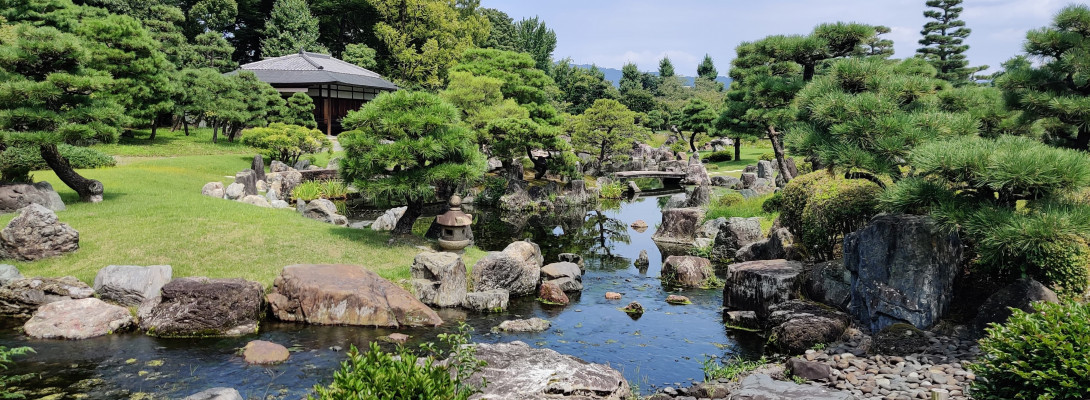


I recently spent a few days in Japan. Now, you must be wondering, how did I manage that? Indeed, this country has still its border closed due to lone tourists due to COVID. However, I am lucky enough to have a sister who lives in Japan, so I got sponsored by her (by the way, check out her profile, she just signed up!). During one of her workdays, I went to Tokyo to spend the day there. Let me show you what I visited and you may even use it as a day tour in Kyoto!
Nijo-jo Castle - witness to the glory and fall of the Tokugawa
The Nijo-jo castle, world heritage site, has been the witness both to the glory and fall of the Tokugawa and to the transitions in Japanese history.
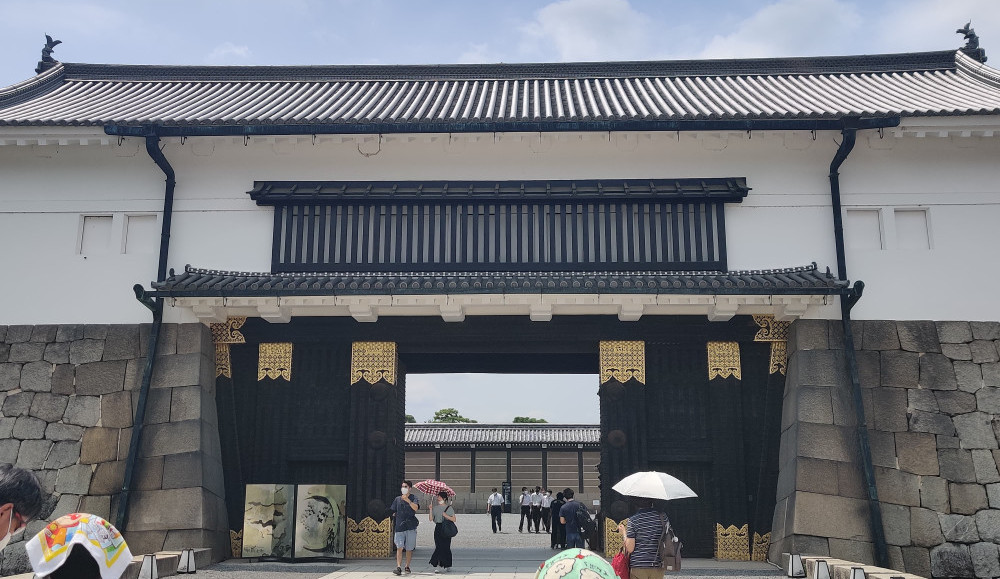
Let's start with a little bit of HISTORY to fully understand the importance this castle has held in Japan's history. It was first established 400 years ago and completed in 1603 on order of Ieyasu Tokugawa, founder and first shogun of the Tokugawa shogunate (1603-1867). The latter was the start to a long and prosperous period which was to last around 260 years. In 1600, following the Sekigahara battle, Ieyasu Tokugawa unified Japan. Three years later, he was named Seii-Taishodun (abbreviated shogun) by the emperor. He went to Nijo castle to announce it to the feudal lords, hence making the Nijo Castle the scene of the announcement of the beginning of the one of the most important periods in the country's history. The castle served as Kyoto's residence for the shogun during his very rare visits to the imperial capital. During his absence, samurais called Nijo zaiban and dispatched from Edo (present-day Tokyo) were garrisoned at the castle. In 1614, Tokugawa Ieyasu left the castle for the siege of Osaka and returned successfully, thereby ending the Line of Toyotomi who ruled Japan before the Tokugawa. Major renovations were initiated in 1624 during the reign of the third shogun Iemitsu in preparation for the imperial visit of Emperor Go-Mizuno-o in 1626. This visit served to dismantle the wealth and stability of shogunate power. In 1867, the 15th shogun Tokugawa Yoshinobu summoned vassals from 40 estates in residence in Kyoto to the Ohiroma of Nimonaru Palace to announce the end of Tokugawa rule and the return of political power to the emperor. This marked the beginning of the Meiji era, during which Japan developed very rapidly from a feudal society to a more modern democratic nation as we know it today. Nijo Castle thus served as a backdrop for ceremonies marking the beginning and end of feudal rule, as well as the starting point for the creation of the modern Japanese state. The buildings of Ninomaru Palace, Kara-mon Gate and the 400-year-old Ninomaru gardens are the only survivors of one of the golden periods of Japanese architecture and design, the early Edo era famous for its ornamental architecture and magnificent interiors. It was listed as a UNESCO World Heritage Site in 1994. 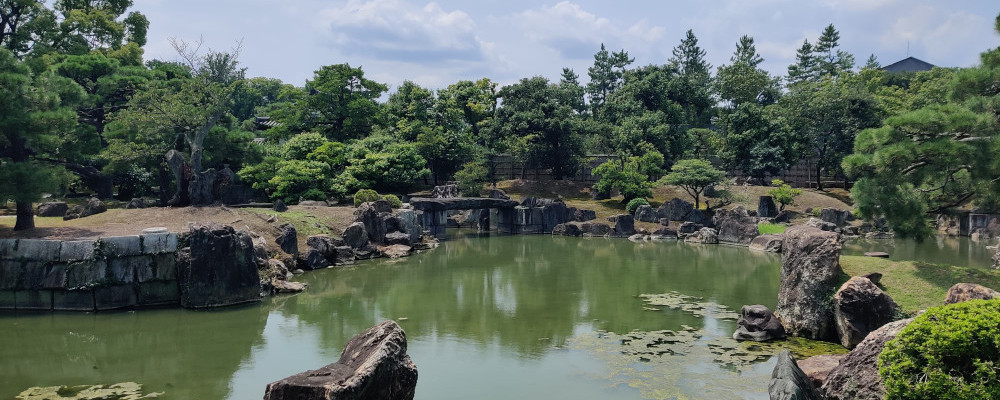
DID YOU KNOW : what is a SHOGUN? When the first samurai government was established in Kamakura in 1185, effective political power was confiscated by them, even though the emperor retained his function as head of state. The head of the Kamakura military government received the title of Seii-Taishogun, later abbreviated to shogun. This title was a very old appointment by imperial decision dating back to the 8th century and is roughly equivalent to that of generalissimo or commander-in-chief. Originally, this provisional title lasted only for the duration of military campaigns to subdue the rebel provinces in northeastern Japan. After 1192, there was a permanent position granted to the political ruler of Japan that three governments held: the Kamakura shogunate (1185-1333), the Muromachi shogunate that ruled from Kyoto (1336-1573) and the Edo shogunate (or Tokugawa, 1603-1867).
If you enjoy reading novels and would love to know more about this period and the Japanese way of thinking and traditions, I highly recommend this book (which you can easily get on amazon : the Shogun's queen)
KARA-MON GATE guards the entrance to Ninomaru Palace. The architecture of a door expressing the social elevation of its owner, we can see that of the Kara-mon which its own was of the high-ranking plan with its arched gables at the front and back of the roof, as well as with the use of cypress bark rather than bronze or tiles for the roof.


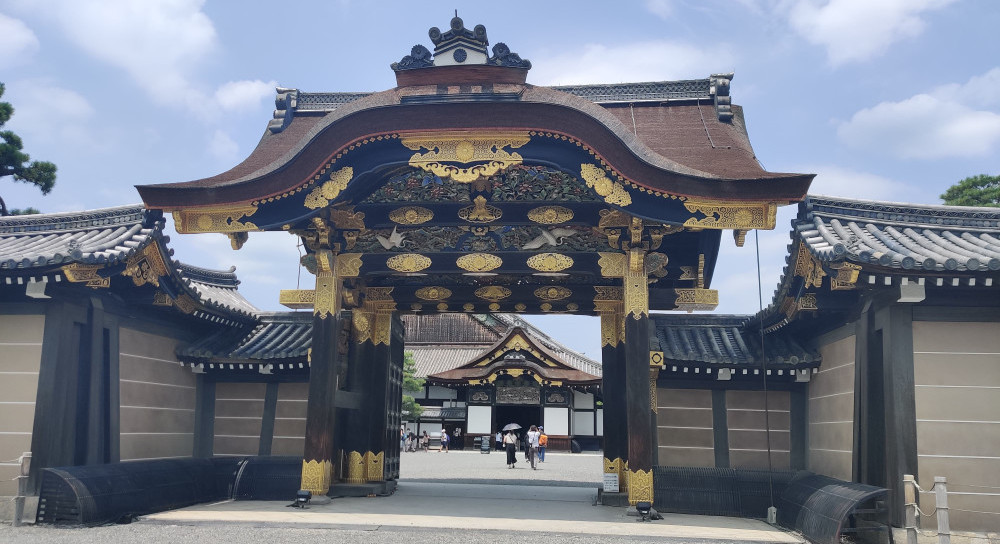
NIMONARU PALACE consists of six buildings connected and aligned along a diagonal from southeast to northwest, decorated with paintings of Matsutaka-tu (pines and eagles), tigers and leopards, highlighting the authority of the shogun, as well as cherry blossoms representing the four seasons.
ANECDOTE #1 : at the time, tigers were unknown to the Japanese, so these paintings were made on model of sketches recovered from various artists and resembling reality quite little. In addition, the Japanese thought that leopards were the young of tigers (while they are two different families).
ANECDOTE #2: shoes are to be left at the entrance : the visit is better carried out barefoot. The floor of the Ninomaru Palace seems to emit a nightingale song when it is trodden. It is the fasteners rubbing against the nails planted in the wooden beams supporting the floor that cause this sound. It is wrongly said that this mechanism was intended to signal the presence of others.
Last but not least : make a stop to make (and enjoy) your OWN mate at the Waraku-an Tea Pavilion in Seiryu-en Garden: a typical and privileged Japanese moment!

Kinkaku-ji Temple - the dawn of Kitamaya culture
Rokuon-ji, commonly known as "Kinkaku-ji" is a Zen-temple of Shokoku-ji School of Rinzai Buddhist denomination. This area used to be the Saionji family's villa. In 1397, "Yoshimitsu", the third Shogun of Ashikaga Shogunate took it over and built the Kitamaya palace centering around the golden stupa, "Kinkaku". When the Kitamaya palace was founded, it was the center of politics and culture was used to welcome the Emperors of Japan and trading partners from China (Ming). After he passed away, it became a temple according to his will. Rokuon-ji Temple garden, designated both a Special Historic Site and a Special Place of Scenic beauty, still retains the atmosphere of those days and was registered as World Cultural Heritage Site in 1994.
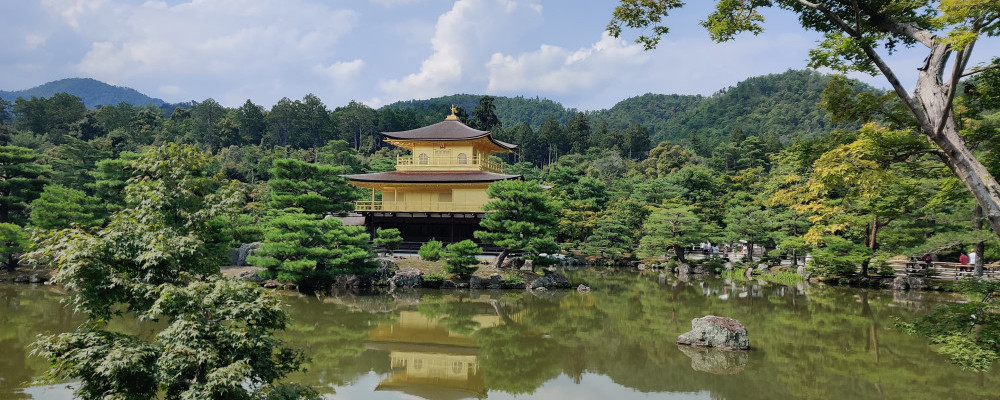
In the garden, you will come across Rikushu pine, Ashikaga Yoshimitsu's beloved pine, one of the most famous pine trees in Kyoto.
Kiyomizu-dera temple
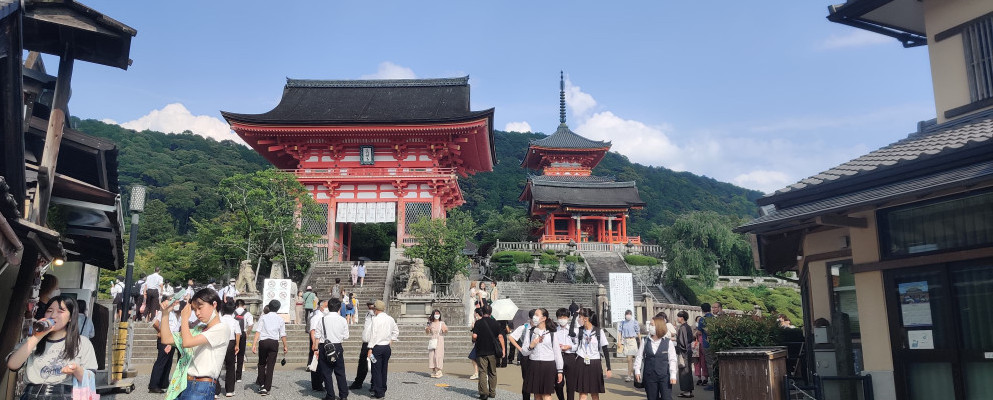
After a walk through the famous shopping alleys (Kiyomizu-michi, Ninenzaka and Sannenzaka), you will reach this gigantic Buddhist space. Be careful, these alleys will lead you thirteen meters above the ground! This temple (Kiyomizu-dera Hondo) was built in 780 and rebuilt in 1633 after a fire destroyed it.

In any season, the Kiyomizu-dera is one of Kyoto's must-sees. But twice a year, the resort organizes a special seasonal event: for sakura (cherry trees) in spring and for momiji (maples) in the fall.
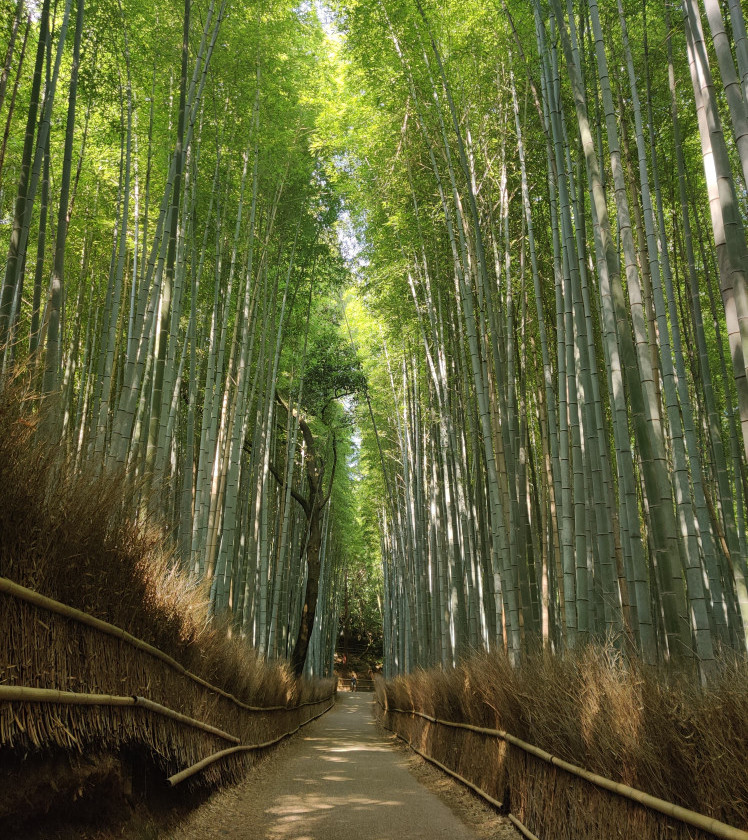
Sagan bamboo forest
The forest is a bamboo jungle (16 square kilometers in total), with a pedestrian path that passes through several temples (Tenryu-ji) and shrines (Nonomiya Jinja) that lie at the foot of the surrounding mountains. The cooling effect of bamboo (a dense ocean of green stems) relieves some of the tremendous humidity that prevails in Kyoto in July (that I can confirm!) and August. Many choses this area for their summer retreats. Moreover, the Sagano Bamboo Forest is among the Ministry of Environment's 100 Soundscapes of Japan – an innovative effort to combat noise pollution across the country.
I must recommend the detour to Iwatayama Monkey Park (after a steep climb). In this zoo, monkeys are free and tourists in a cage! You will also be able to enjoy a panoramic view of Kyoto.
Fushimi Inari Shrine
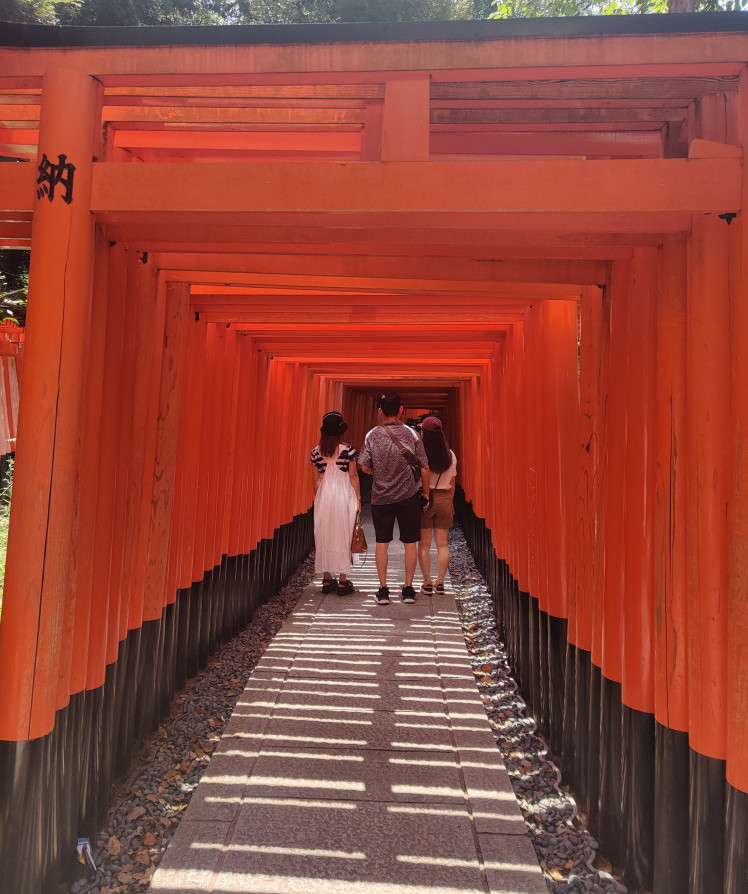
This important Shinto Shrine is located in southern Kyoto. It is dedicated to Inari, the shinto god of rice. Although the shrine buildings are impressive, this shrine is known for its thousands of vermilion torri gates. The latter make a gate-covered hiking trail bringing the visitors to the top of the mount where an incredible view can be enjoyed. Each torri gate is donated by individuals or companies. The donor's name and date of donation is written on each gate.
ANECDOTE: Foxes are believed to be Inari's messengers, hence the numerous statues.
This one-day tour enables you to visit the most famous (and touristic) attractions of Kyoto. Kyoto is one of the most traditional towns in Japan. I am planning on going back to visit the less touristic places and, being a wine fan, get to taste some wine bars. Let me know if you have any suggestions and what you thought of my day-trip!
My hotel (near the bus and train station) : Hotel M Plus
Join FREE & Launch Your Business!
Exclusive Bonus - Offer Ends at Midnight Today
00
Hours
:
00
Minutes
:
00
Seconds
2,000 AI Credits Worth $10 USD
Build a Logo + Website That Attracts Customers
400 Credits
Discover Hot Niches with AI Market Research
100 Credits
Create SEO Content That Ranks & Converts
800 Credits
Find Affiliate Offers Up to $500/Sale
10 Credits
Access a Community of 2.9M+ Members
Recent Comments
2


It looks like you are having a wonderful time! Thank you for sharing such a thorough and very informative post! The photography is awesome!
Join FREE & Launch Your Business!
Exclusive Bonus - Offer Ends at Midnight Today
00
Hours
:
00
Minutes
:
00
Seconds
2,000 AI Credits Worth $10 USD
Build a Logo + Website That Attracts Customers
400 Credits
Discover Hot Niches with AI Market Research
100 Credits
Create SEO Content That Ranks & Converts
800 Credits
Find Affiliate Offers Up to $500/Sale
10 Credits
Access a Community of 2.9M+ Members
I'm looking at these posts from newest to oldest, but I'm really enjoying them. The gardens in Japan are just amazing. Thank you so much for sharing your trip.