Uniqueness Isn't The Same As Differentiation.


Published on September 16, 2026
Published on Wealthy Affiliate — a platform for building real online businesses with modern training and AI.


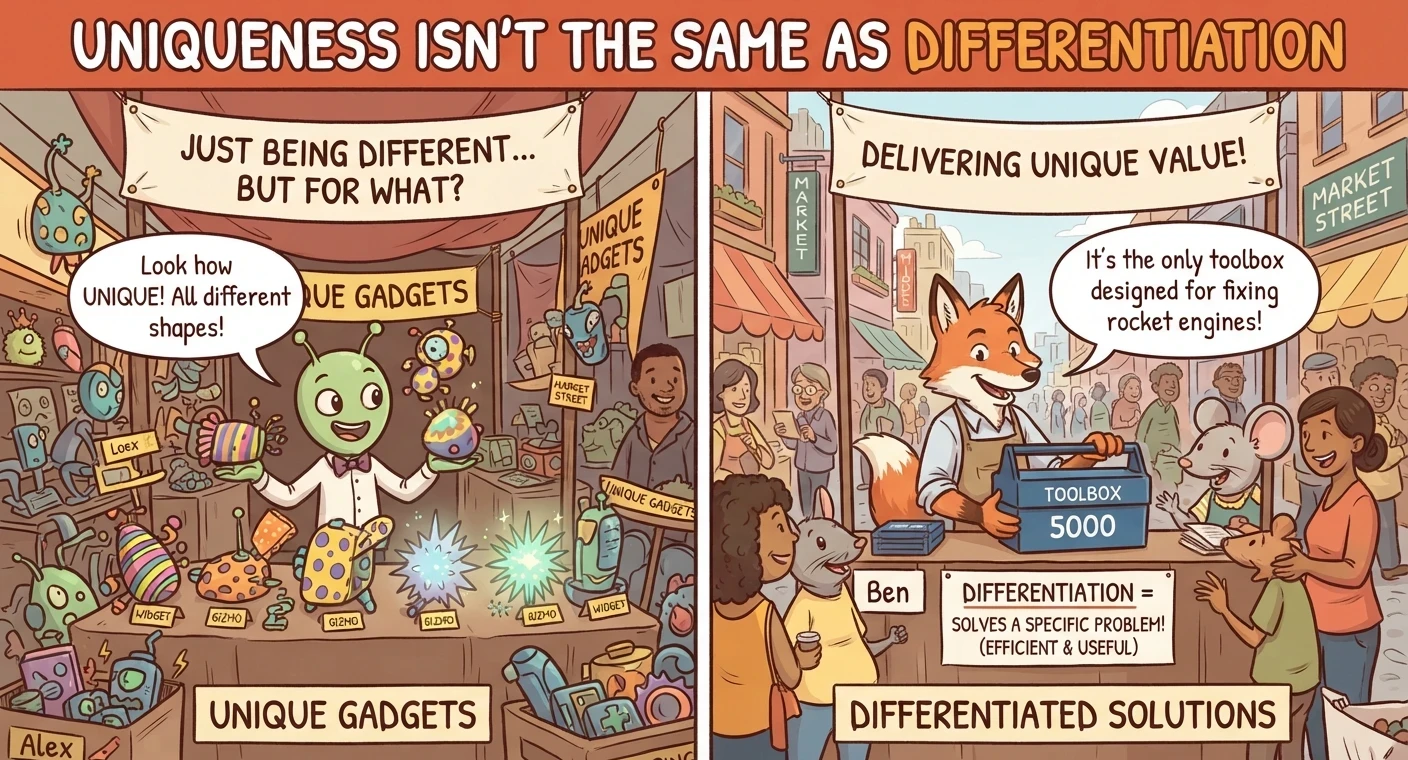
Yesterday, JD brought up something that made me stop and dig a little deeper into what I actually mean when I talk about uniqueness and differentiation.
I had been thinking about uniqueness as simply doing something nobody else is doing.
Take my ridiculous example from the previous post: an opera-singing mug.
It would probably be unique. If nobody else is selling an opera-singing mug, then technically I have created something different.
But JD made me realise something important:
Being unique doesn't automatically give someone a reason to care.
That made me think the difference between uniqueness and differentiation.
Something can be unique because nobody else has thought of it.
Differentiation, however becomes much more meaningful when the difference actually matters to the person you're trying to reach.
I really liked the idea of:
"I've seen this category before... but I never seen it offered quite like this."
That feels much more useful than saying "Nobody else does this."
Most businesses probably don't need to invent something that never existed in human history.
Ready to put this into action?
Start your free journey today — no credit card required.
They need to give the right audience a meaningful reason to notice, remember, or prefer what they offer.
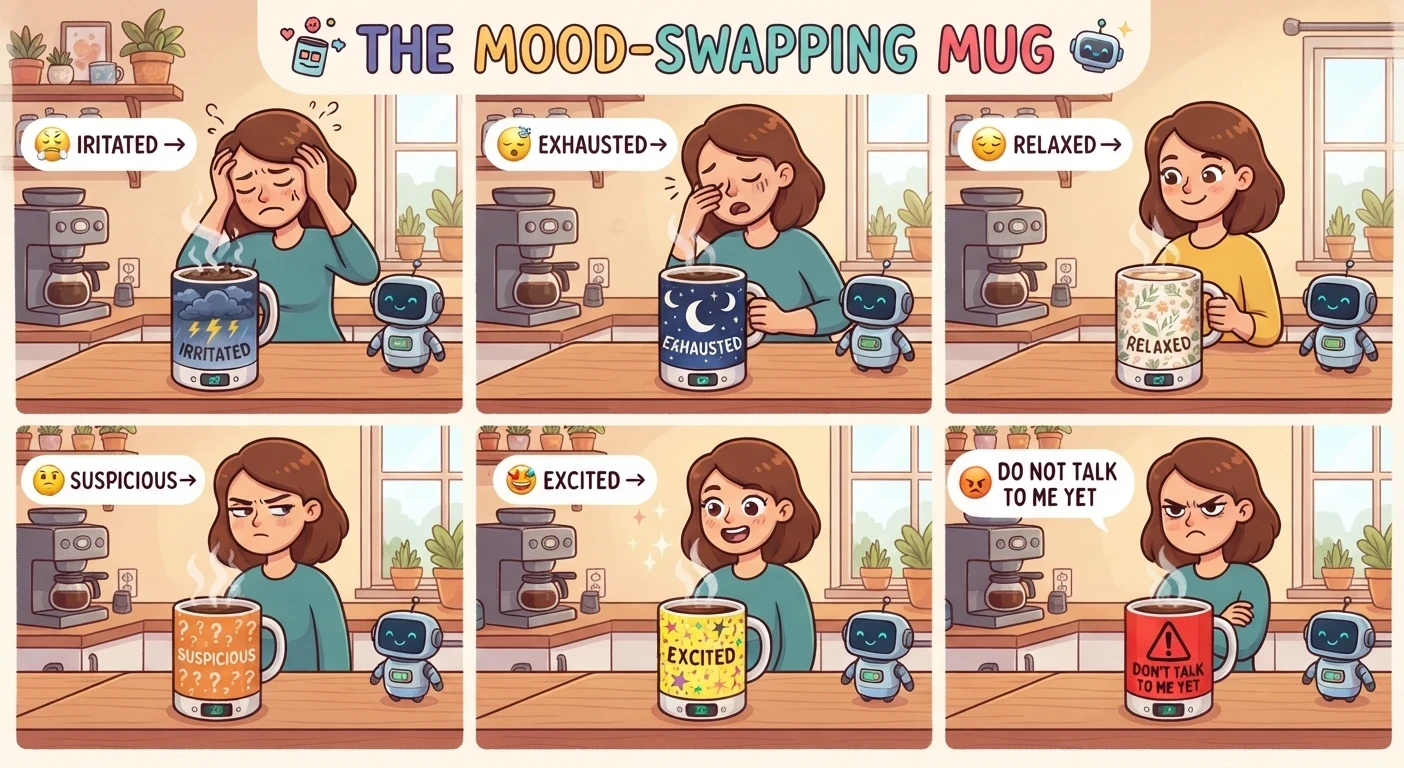
And then JD's comment about my imaginary Mood-Swapping Mug made me dig even further.
If the mug can supposedly read my facial expressions and voice to figure out my mood, what happens to that information?
If everything stays inside the mug and disappears afterwards, that's one situation.
But what if the information is transmitted somewhere? What if it's stored? What if another company can access it?
Suddenly, the feature that was supposed to make the product interesting creates another question:
Can I actually trust it?
And that made me realise that usefulness isn't always a straight line.
A product can be discoverable.
It can be different.
It can solve a problem.
But the way it solves that problem can introduce another problem.
So I'm starting to think about the chain a little differently:
Can they find it?
Is it meaningfully different?
Is the difference useful to them?
And can they trust the way it works?
That last part is especially interesting to me because it means that differentiation isn't just about adding more features.
Sometimes the most important difference is how responsibly the feature is designed and delivered.
JD's comment took what started as a silly imaginary mug and somehow turned it into a much bigger question about marketing, usefulness, differentiation, and trust.
And honestly, that's why I like these discussions.
One question can make you realise your original definition wasn't quiet finished yet.
Share this insight
This conversation is happening inside the community.
Join free to continue it.The Internet Changed. Now It Is Time to Build Differently.
If this article resonated, the next step is learning how to apply it. Inside Wealthy Affiliate, we break this down into practical steps you can use to build a real online business.
No credit card. Instant access.