The DEEPFAKE Check: A Framework for People Who Think Deepfakes Are "Cool".


Published on September 11, 2026
Published on Wealthy Affiliate — a platform for building real online businesses with modern training and AI.


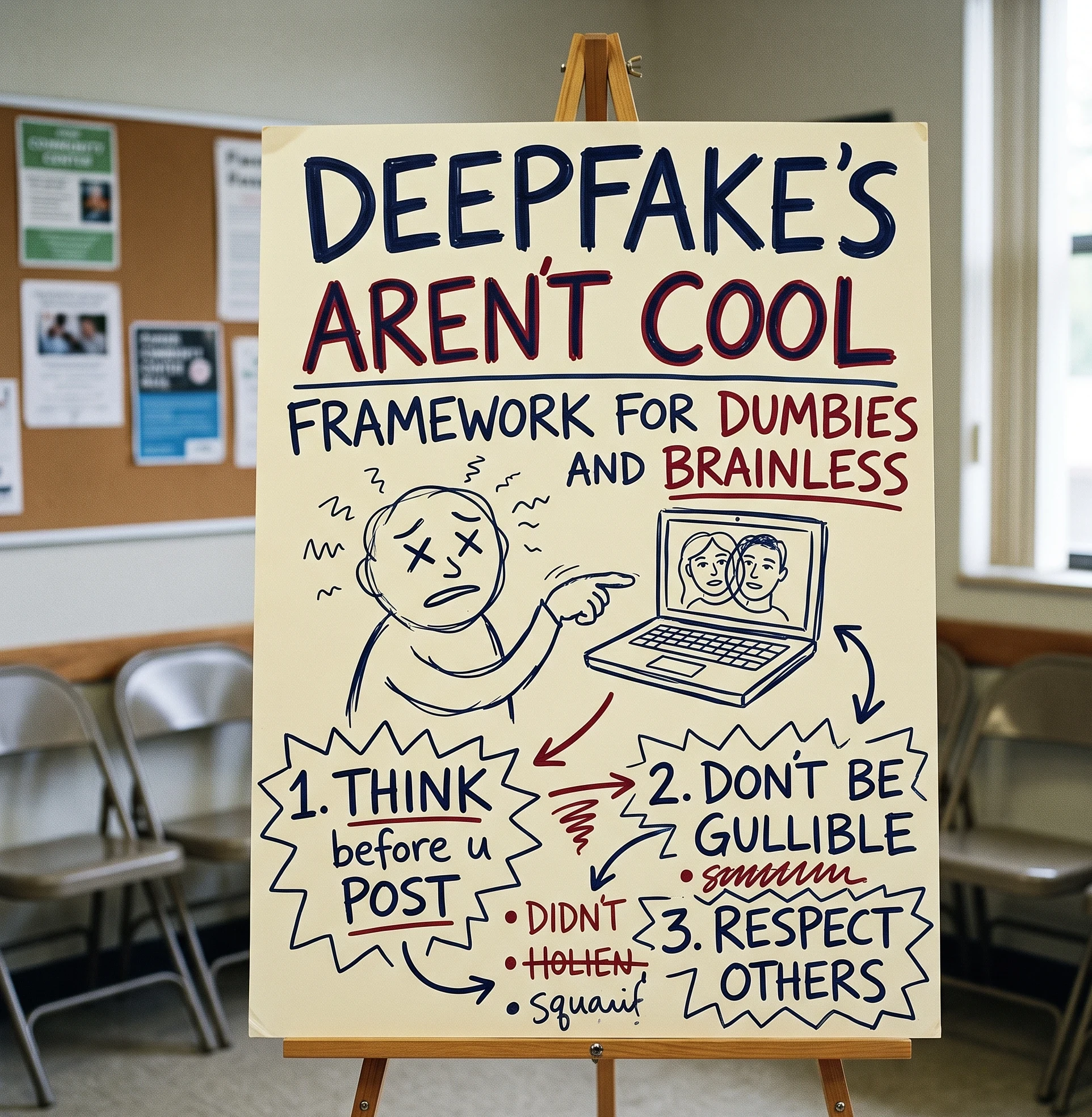
Deepfakes can be impressive.
The technology behind them is genuinely fascinating.
But somewhere between
" Wow, AI can do that?"
and
Let's put someone's face on this."
Some people apparently forgot to bring their common sense with them.
So, here's a simple framework,
If you're going to create, share, or interact with synthetic media, run through the DEEPFAKE Check first.
D = Do I Have Consent?
Did the person actually agree to having their face, voice, photograph, or likeness manipulated?
If the answer is no, Stop there.
Someone posting a photograph online isn't giving everyone permission to alter their identity.
E = Examine The Impact.
Ask yourself:
- Could this embarrass someone?
- Could it damage their reputation?
- Could it cause emotional distress?
- Could someone mistake it for someone real?
- Could it be used to harass or exploit them?
If the potential harm outweighs the entertainment value, maybe the AI button doesn't need pressing.
E = Ethics before Entertainment.
Something being funny, impressive , or technically clever doesn't automatically make it ethical.
AI gives us more creative power.
That means we also need more responsibility.
Ready to put this into action?
Start your free journey today — no credit card required.
P = Protect the Person.
Remember that there is a human being behind the image.
Their face isn't a template.
Their voice isn't a sound effect.
Their identity isn't your playground.
F= Fact-Check.
If you're consuming AI-generated media, don't immediately assume it's real.
Look for context.
Check the source.
Question suspicious images and videos.
And most importantly, don't help a deepfake spread by sharing it.
A = Ask Yourself One Question.
Would I be comfortable if someone did this to me?
If the answer is absolutely not.....
Congratulations. You have just discovered empathy.
K= Keep It Responsible.
AI-generated content can have legitimate creative uses.
Use it transparently.
Respect people's identities.
Get consent.
And think about the consequences before you hit generate.
E= Evaluate Before you Engage.
Before you like, share, repost, comment on, or help spread synthetic content, stop and ask:
Am I contributing to the problem?
Because sometimes you don't have to create a deepfake to help it travel.
The Bigger Picture.
The more steps you pass in this framework, the stronger your responsibility check becomes.
The Bottom Line.
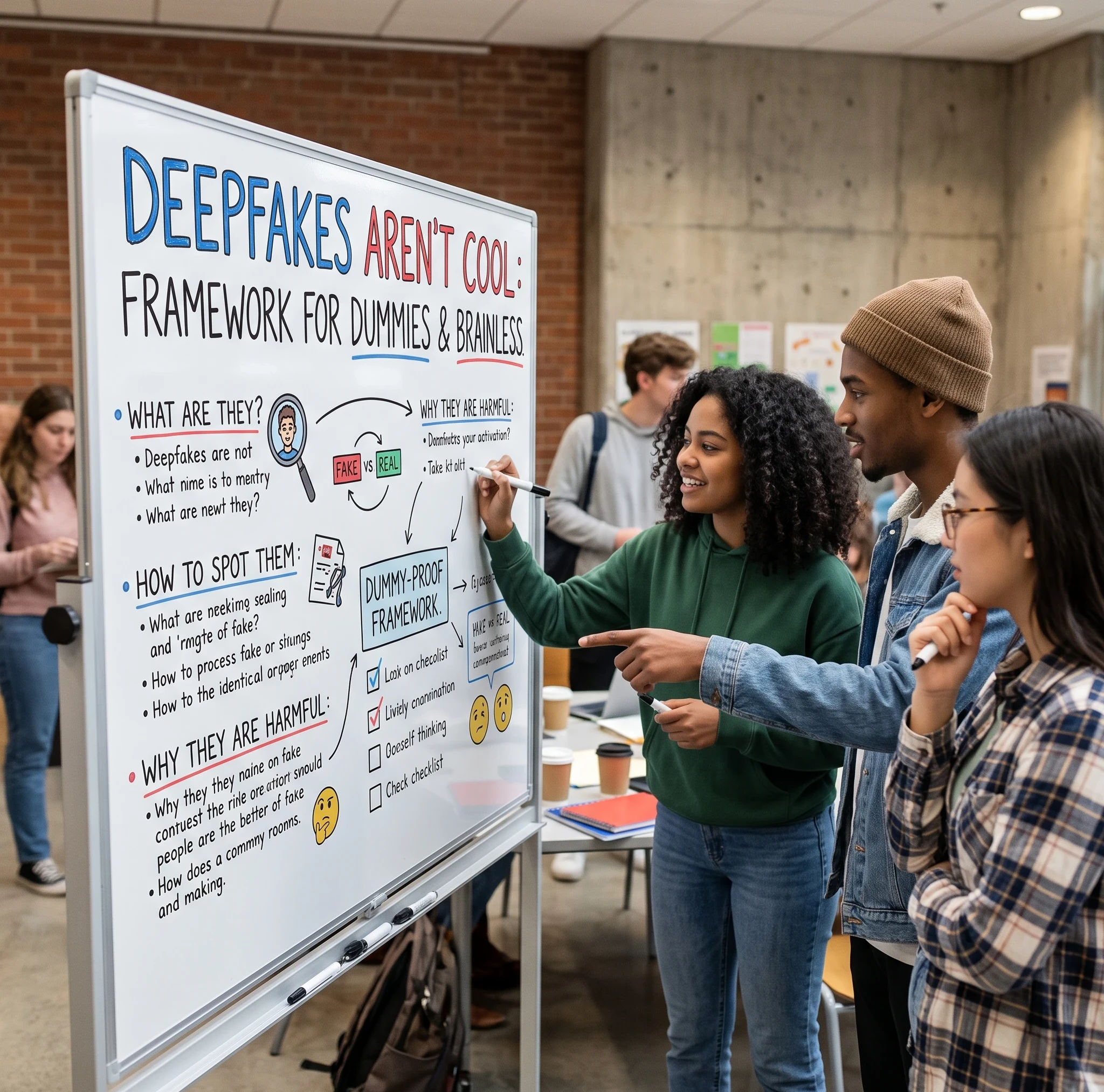
The impressive part of AI isn't that it can manipulate someone's face.
The impressive part is what humans choose to do with that capability.
AI literacy shouldn't stop at which buttons to press.
It should include knowing when not to press it.
Because technology can be incredibly advanced when the person using it is still making a very basic mistake:
"Confusing I can with I should."
Share this insight
This conversation is happening inside the community.
Join free to continue it.The Internet Changed. Now It Is Time to Build Differently.
If this article resonated, the next step is learning how to apply it. Inside Wealthy Affiliate, we break this down into practical steps you can use to build a real online business.
No credit card. Instant access.