Differentiation, Discoverability… and Usefulness?


Published on September 14, 2026
Published on Wealthy Affiliate — a platform for building real online businesses with modern training and AI.


 Yesterday, Fleeky asked me a question that made me stop and rethink something I had written in one of my posts from yesterday.
She suggested alongside Differentiation and Discoverability, there might be a third world quietly sitting beside them:
USEFULNESS.
Being found matters.
Standing out matters.
But what does what we offer actually meet a need?
And that made me question my own thinking.
Because my answer isn't simply a yes.
It depends on what the offer is and what the audience actually needs.
So rather than replying with a long comment, I thought I'd write a post about it.
And naturally, I'm going to use Off Campus as an example.
Enter Off Campus 🏒📚🎓
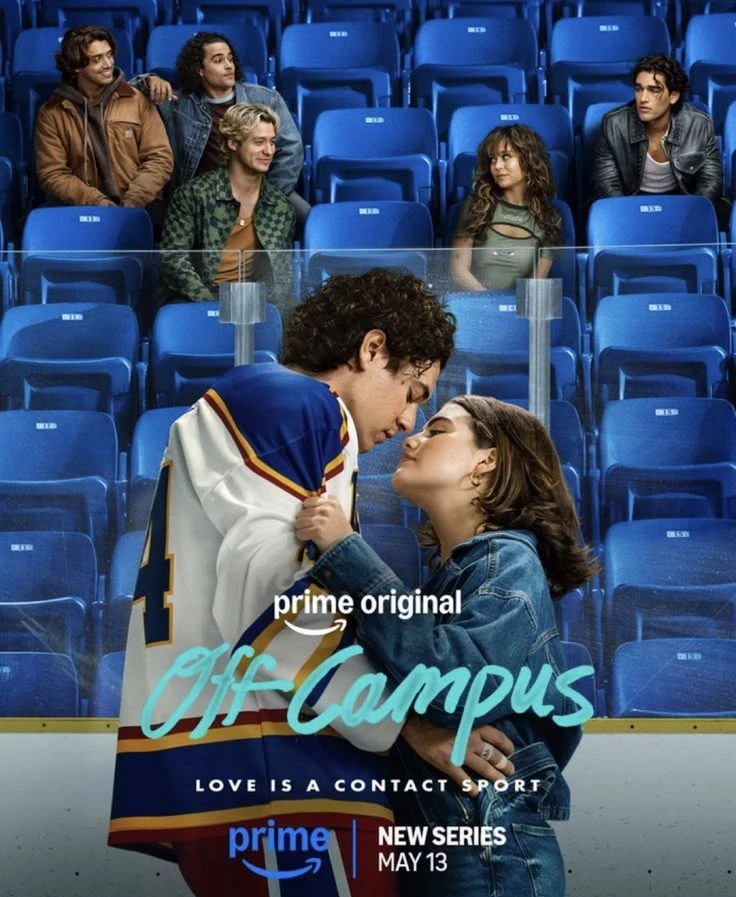
If you've been anywhere near my content for long enough then you I have an extremely investigative relationship with the Off Campus universe.
The books.
The characters.
The actors.
The adaptations.
The tiny details.
At this point, calling it "research" might be generous.
But here's where the marketing lesson comes in.
Imagine there are two websites about Off Campus.
 Website A
It publishes:
"10 Things You Didn't Know About Off Campus."
Interesting.
Maybe I click.
Website B
It publishes.
"Every Off Campus Character Explained: Books, Relationships, Adaptation Differences and Where Their Stories Continue."
Now you've got my attention.
Why?
The audience need isn't simply:
Ready to put this into action?
Start your free journey today — no credit card required.
"I like Off Campus."
It could be:
"I love this universe and I want somewhere to understand, compare, explore, and find all the details I can't easily piece together myself."
That's where usefulness enters the picture.
But Usefulness Isn't Automatically Useful.

This is part Fleeky's question made me reconsider. We can't simply say:
Audience need → usefulness → uniqueness.
Because the offer sits right in the middle.
You can identify an audience need perfectly and still create an offer that doesn't meet it.
For example:
Audience need:
"I want to understand the differences between the Off Campus books and the adaptation."
Offer:
A 500-word article that barely mentions the differences.
The audience need exists.
The topic is relevant.
But the offer isn't particularly useful.
The problem isn't the audience.
The problem is the fit between the need and the offer.
So, Where Does Uniqueness Come In?
This is where I think Fleeky's original question gets really interesting.
If an offer genuinely understands its audience and meets a specific need well, it may naturally become more distinctive.
You don't necessarily have to sit down and announce:
"Today I shall invent something unique."
Sometimes uniqueness comes from the combination of:
- The audience you understand.
- The problem or desire you've identified.
- The offer you've created.
- The way you've deliver it.
- And your own perspective.
Two people can cover exactly the same topic and still create completely different experiences.
And that's where usefulness, differentiation, and discoverability start working together.
My Takeaway.

I'm now questioning whether usefulness should simply treated as a third word sitting beside differentiation and discoverability.
I think there is another question underneath it:
Useful for whom , and useful for what?
Because being useful isn't just about producing something in isolation.
It's about creating an offer that actually matches the audience's need.
And perhaps that's why uniqueness sometimes takes care of itself.
If you understand the audience deeply enough to create the right offer for them, your perspective, positioning and delivery can naturally make that offer different.
So, my current thinking is:
Discoverability gets you found.
Differentiation gives people a reason to notice you.
Usefulness gives them a reason to stay.
And the offer connects all three.
Which brings me back to Fleeky's question:
Maybe the real marketing question isn't simply:
"Is this useful?"
Maybe it's:
"Is this the right offer for what my audience actually needs?"
Now, that is a question worth investigating.
And yes, I may have used Off Campus as an example purely because I have conducted enough unofficial detective work that universe to qualify for a small research grant.

Share this insight
This conversation is happening inside the community.
Join free to continue it.The Internet Changed. Now It Is Time to Build Differently.
If this article resonated, the next step is learning how to apply it. Inside Wealthy Affiliate, we break this down into practical steps you can use to build a real online business.
No credit card. Instant access.