How to Identify Guru Marketing Scams Before They Take Your Money


Published on March 4, 2026
Published on Wealthy Affiliate — a platform for building real online businesses with modern training and AI.


Identify Guru Marketing Scams
Online marketing attracts a certain type of personality and if you are reading this, you know who you are and what you was searching for, a way to make money online.
Some people build real businesses online. They show their work, explain their process, and admit when something fails. Their income comes from the results of that work.
Others build a business around selling the idea of success.
You have probably seen them. The ads appear on YouTube or inside social media feeds. Someone stands in front of a rented sports car or a whiteboard filled with arrows and promises. "secret method," or "hidden loophole," changed their life, and now they want to show you how to do the same.
A free webinar appears. A training series follows. Then the upsell price ladder begins.
For beginners, it can be difficult to tell the difference between a legitimate mentor and a polished sales funnel.
Knowing the warning signs helps you protect both your money and your time.
The Business Model Behind Guru Marketing
Most guru scams follow a very predictable structure.
The product is not the method. The product is the audience, this means you.
Many programs you see online claim to teach the affiliate marketing process, dropshipping, trading, or digital entrepreneurship. In reality, the instructor often makes most of their income selling courses about those topics rather than practicing them.
That difference is what I am about to point out.
A real practitioner usually earns money from a business first. Training may come later as a side activity.
A guru operation often flips that order. The course becomes the primary revenue stream, while the actual business activity remains vague or unverified.
This does not mean every course is fraudulent. Education has value when the instructor has real experience.
The warning signs appear when income claims replace the actual evidence.
Red Flag #1: Income Claims Without Proof

One of the oldest tricks in online marketing is the income screenshot.
You might see a Stripe dashboard. A PayPal notification. A blurred bank statement.
The implication is clear. Follow this system, and you will see the same numbers.
What is missing is context.
Where did the money come from?
Was it from teaching the business or from selling the course itself?
How much was spent on advertising to reach those results?
Real businesses include expenses, time, and risk. Guru marketing often shows revenue without the rest of the equation.
If someone claims extraordinary earnings but avoids explaining the full process behind them, caution is justified and should be exercised.
Red Flag #2: The “Secret Method” Pitch
Legitimate marketing strategies rarely stay secret for long.
Search engine optimization, affiliate marketing, paid advertising, and email marketing have been studied and discussed for decades. Books, case studies, and research papers document their development.
When a guru claims access to a hidden method that "only a small group" knows about, the claim deserves even more scrutiny.
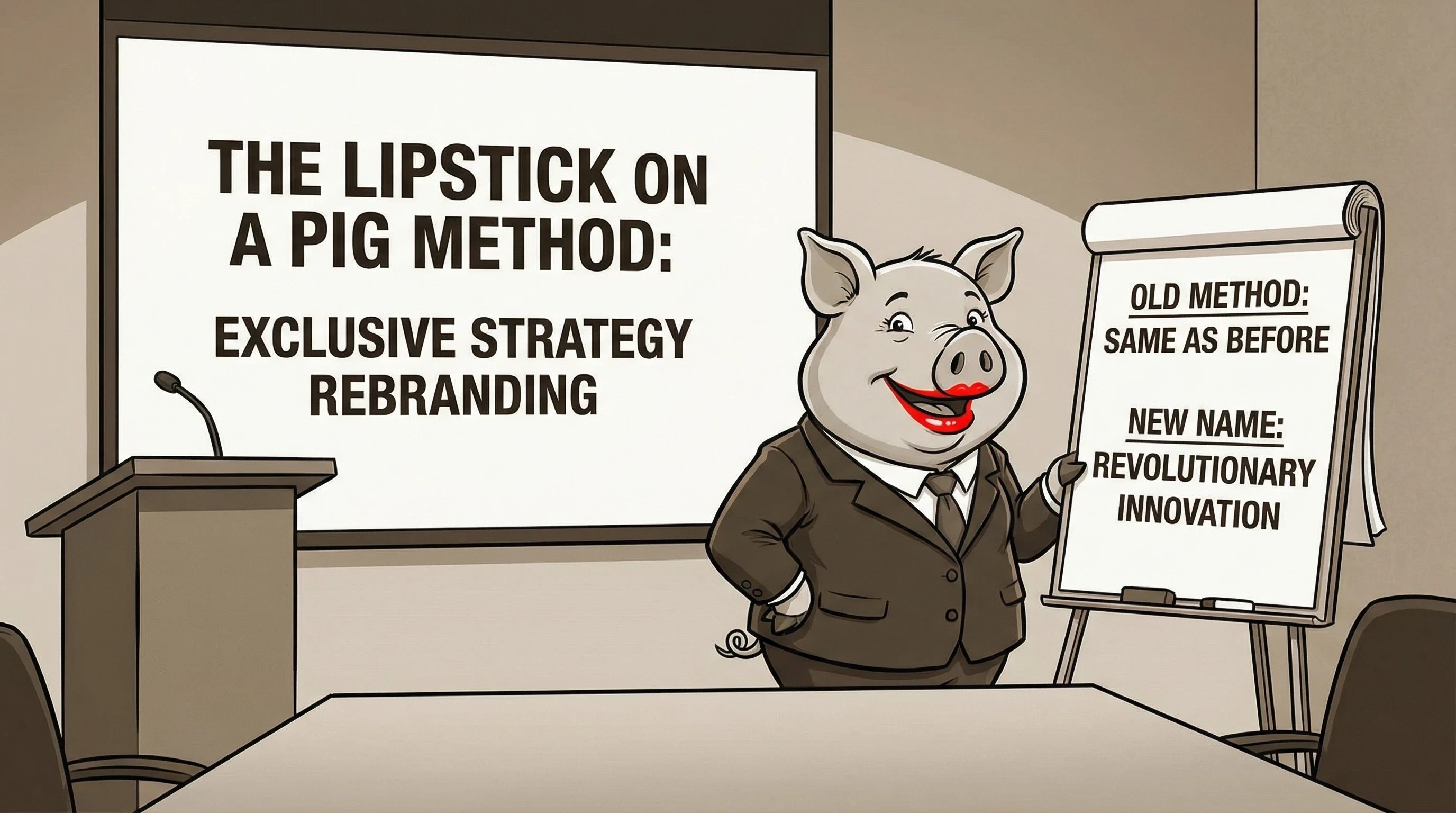
More often than not, the supposed secret turns out to be a common tactic with a new label attached.
Ready to put this into action?
Start your free journey today — no credit card required.
Rebranding familiar strategies creates the illusion of exclusivity. It also makes the course feel more valuable. You will see this on JVZoo and ClickBank all day long and on any given day! I have my personal opinion, and I call this the lipstick on a pig method.
In reality, successful marketing depends less on secrets and more on consistent work, especially in the age of intent.
Red Flag #3: Aggressive Upsell Funnels
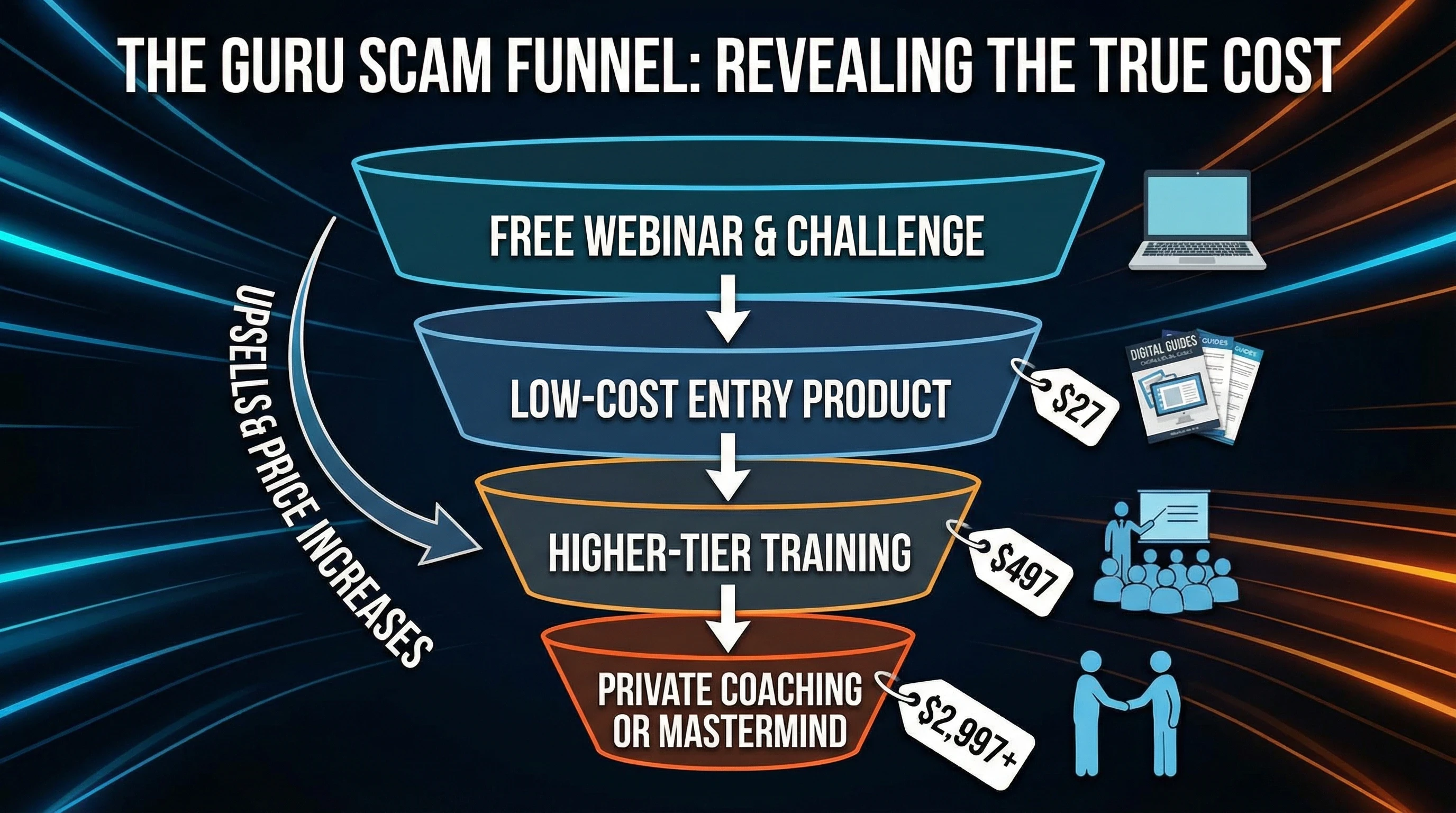
Many guru programs use a structured funnel that reveals their true cost over time.
The pattern often looks like this:
Free webinar or challenge
Low-cost entry product
Higher-tier training
Private coaching or mastermind
Each step introduces a new purchase. The price increases with every stage.
Participants sometimes discover the full cost only after they have already invested money and emotional energy into the program.
Educational programs occasionally include advanced tiers. The difference lies in transparency. A real program will be honest and show you the total cost, rather than hiding it behind upsells.
When the real price of success remains hidden behind multiple upsells, the program resembles a sales funnel more than a training environment.
Red Flag #4: Manufactured Authority

Authority can be manufactured surprisingly easily online.
Stock photos create luxury lifestyles.
Short video clips show exotic locations.
Testimonials appear from students with vague results.
None of those signals guarantees expertise.
A credible mentor usually has a visible track record. You can examine their websites, content, business activity, and professional history.
If a marketer talks about success but provides little verifiable evidence of real projects or businesses, their authority may exist only inside the sales page.
Red Flag #5: Pressure to Act Immediately

Urgency plays a powerful role in marketing psychology.
Guru programs frequently rely on countdown timers, limited enrollment claims, or statements about closing doors soon.
The goal is simple. Reduce the time available for careful thinking.
Serious educational programs rarely need artificial pressure. Their reputation and curriculum speak for themselves.
When someone insists you must act immediately to secure success, it usually benefits the seller more than the buyer.
What Legitimate Mentors Usually Do Differently
Not every educator in online marketing deserves suspicion.
Many professionals genuinely teach skills they have learned through years of practice.
The difference becomes clear when you look closely.
Real mentors explain their methods in detail. They show examples of websites, campaigns, and projects. They talk about mistakes as openly as they do about successes.
They also avoid guaranteed income claims.
Building an online business requires time, experimentation, and persistence. Anyone who presents it as a fast path to wealth is oversimplifying a complex process.
How to Protect Yourself From Guru Marketing Scams
A few simple habits can prevent expensive mistakes.
Research the instructor. Look for independent sources discussing their work.
Examine what they have built outside of selling courses.
Ask direct questions about costs, tools, and expected timelines.
Most importantly, remember that legitimate business skills take time to learn. Anyone promising immediate financial freedom likely sells a dream rather than a method.
Why This Topic Matters
The internet has made entrepreneurship accessible to millions of people.
That opportunity brings both innovation and exploitation.
New marketers often arrive with genuine ambition. They want to build something meaningful. When guru scams intercept that motivation, the result is wasted money and discouragement.
Recognizing the warning signs helps protect beginners from those experiences.
The truth is simple.
There is no "secret formula" hidden behind a paywall. EVER!
Real online businesses grow through patience, experimentation, and consistent effort. Anyone who tells you otherwise probably hopes you will buy the illusion before you notice the difference. Lucky for you that you are reading this on a Wealthy Affiliate Blog, this could be the sign of the program you were searching for.
What's Next?
Spotting these warning signs is the first step. Once you start seeing the patterns behind guru marketing funnels, they become much easier to recognize. But identifying them is only half the battle. If you truly want to push back against deceptive marketing practices, the next step is knowing where to report them so they can actually face consequences. I recently wrote a follow-up article explaining the best ways to report guru marketing scams and why it matters, which walks through the places that accept reports and how documentation helps build real cases.
Share this insight
This conversation is happening inside the community.
Join free to continue it.The Internet Changed. Now It Is Time to Build Differently.
If this article resonated, the next step is learning how to apply it. Inside Wealthy Affiliate, we break this down into practical steps you can use to build a real online business.
No credit card. Instant access.