Guru Marketing Scams: Where to Report Them and Why It Actually Matters


Published on March 5, 2026
Published on Wealthy Affiliate — a platform for building real online businesses with modern training and AI.

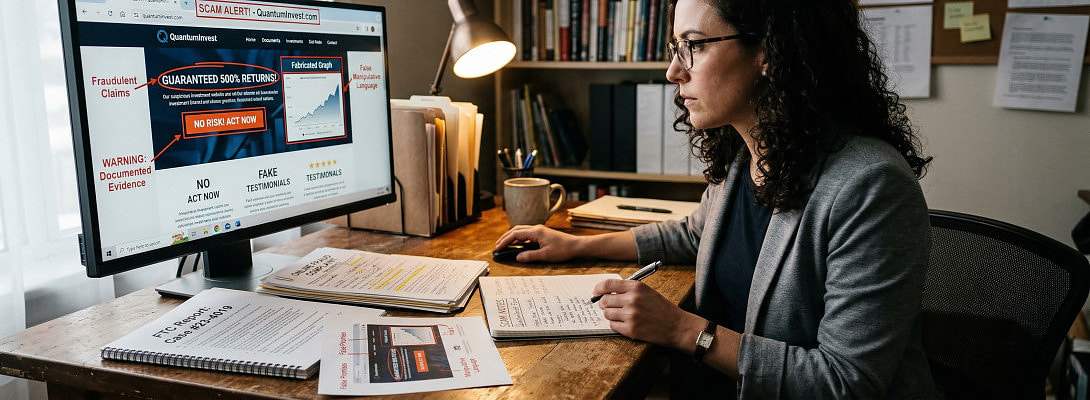
Where to Report Guru Marketing Scams and Why It Matters
If you spend enough time around the “make money online” world, something interesting starts to happen.
At first, everything looks exciting. Ads promise financial freedom. Screenshots show massive income claims. Someone with a confident smile tells you they cracked the code and are ready to show you how to do the same.
Then time passes, and patterns begin to appear.
The same rented sports cars show up in the background. The same promises about secret systems repeat themselves in slightly different wording. Funnels stretch longer than the training itself, and somehow the real secret always seems to live one payment level higher than the last.
Most people eventually recognize these guru-style marketing scams for what they are. They close the page, maybe warn a friend, and move on with their day.
If you are still learning how to spot the warning signs, I recently wrote about how to identify guru marketing scams before they take your money, which breaks down the common tactics these funnels use.
But recognizing them is only half the battle. The next step is knowing where to report them.
What Rarely Happens is The Next Step.
Reporting them.
That silence allows the same cycle to repeat itself with a new group of beginners who are simply trying to figure out how the online business works.
My Own Lesson From Inside a Guru Funnel
When I first started my online journey, I walked straight into one of these funnels.
It began with the familiar $7 entry offer. At the time, it seemed harmless enough. Seven dollars felt like a small risk if the training actually delivered what the advertisement promised. Looking back now, that first step was simply the front door to a much longer hallway.
I was not impressed with the initial product, but I followed the “master plan” anyway. Each step promised that the real value was coming next. Another upgrade. Another level of training. Another payment that would supposedly unlock the part of the system that made everything work.
By the time I realized what was happening, I had already spent a few hundred dollars chasing the promise.
At one point, I even made a single sale promoting the same funnel. At the time, it felt like proof that the system worked. Later, it became something I regret. That sale meant another person was exposed to the same frustration and disappointment I experienced.
To this day, I genuinely regret that someone else entered that funnel through a link I shared.
That experience forced me to rethink everything I believed about making money online. Instead of chasing the next shiny system, I started paying attention to how these funnels actually work and why they continue to attract people.
It also gave me a mission.
Now I speak openly about these so-called gurus and the deceptive practices many of them rely on. Not out of bitterness, but because I learned something the hard way that many beginners still need to hear.
Nothing in this space is truly free.
Success is never quick.
And nobody builds a real business overnight.
Once you understand those three truths, you stop chasing illusions and start building something real. This is the main reason I landed here at Wealthy Affiliate: the truth, community involvement, and honesty in what they sell and the information they deliver in the training.
Understanding the Difference Between Bad Advice and a Scam
Not every disappointing course qualifies as fraud. The internet is full of outdated strategies, recycled information, and instructors who are far more confident than their experience deserves. That may waste someone’s time or money, but it does not always cross the legal line.
A real scam usually involves deception at some point in the sales process.

Income claims that cannot be verified are one common example. Fake testimonials appear more often than many people realize. Screenshots of earnings are presented without context, giving the impression that those results are typical when they are anything but.
Hidden upsells are another warning sign. A program might advertise itself as a complete system, only to reveal that essential pieces require additional payments after someone is already inside the funnel.
Ready to put this into action?
Start your free journey today — no credit card required.
Pressure tactics also appear frequently. Countdown timers that reset every time the page reloads. Claims that only a handful of spots remain. Messaging designed to rush someone into a decision before they have time to think.
When exaggeration crosses the line into misrepresentation, that is where reporting becomes worthwhile.
Documentation Is the Step Most People Skip
The first thing worth understanding about reporting scams is that documentation matters more than anger.
Complaints alone rarely lead anywhere. Evidence does.
Guru marketers often edit their content once complaints begin appearing. Ads disappear. Sales pages quietly change their wording. Testimonials that looked impressive yesterday suddenly vanish.
If something seems deceptive, it helps to take a few minutes and gather proof while it still exists. Screenshots of advertisements, sales pages, and income claims can be useful. Saving the full URL of the page helps investigators trace the origin of the offer. Emails sent during the funnel and payment receipts also create a clearer record of what happened.
Think of the process less like venting and more like building a timeline.
The stronger the documentation, the easier it becomes for someone else to see the pattern.
The FTC: One of the Most Effective Reporting Channels
In the United States, deceptive marketing practices fall under the authority of the Federal Trade Commission.
Over the years, the FTC has taken action against a number of online business schemes that relied heavily on exaggerated income claims and misleading advertising.
Anyone can submit a complaint, as I did, through the FTC reporting portal at:
The form asks for basic details about the company or individual involved, the website being used, and a description of the issue. If money changed hands, the report also includes the amount involved and the payment method.
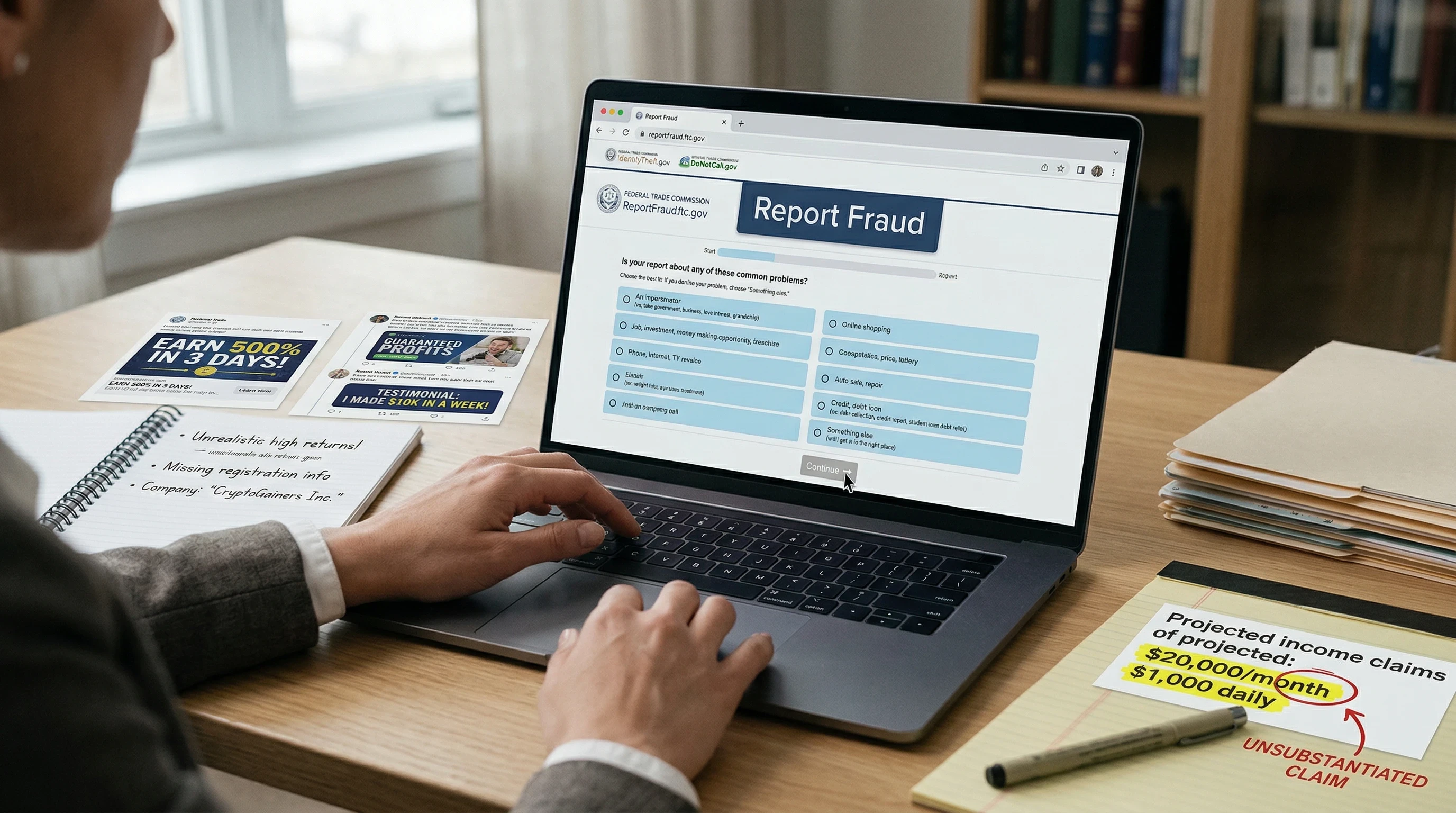
A single report rarely triggers an investigation on its own. What regulators watch for are patterns.
When dozens or even hundreds of people submit similar complaints describing the same deceptive practices, those reports begin forming a case that is much harder to ignore.
That is why reporting matters, even when the result is not immediately visible. For me, it provided a sense of relief, as at least I was able to express my views on the deception I saw.
Reporting Misleading Ads Where They Appear
Many guru marketers rely heavily on paid advertising to reach new audiences.
Platforms like YouTube, Facebook, Instagram, and TikTok allow almost anyone to launch an ad campaign promoting courses or “business opportunities.” That open system is exactly why misleading promotions appear so often. They also rely on the buying of solo ads. I refuse to admit how much I wasted there.
Fortunately, those same platforms also provide ways to report ads that contain deceptive claims.
Most advertisements include a small menu option that allows users to report misleading content. Submitting a report signals to the platform that the ad may require review.
Advertising networks track repeated complaints against specific advertisers. If enough reports accumulate, the platform may investigate the account or suspend the campaign entirely.
That kind of disruption can shut down the funnel these operations rely on.
Payment Disputes Can Have Real Consequences
Another reporting path many people overlook involves the payment processors handling the transaction.
Programs selling online courses usually rely on services like PayPal, Stripe, or credit card processing systems to collect payments.
If a product is misrepresented or refunds are denied despite clear policies, customers can dispute the charge through the payment provider. Payment processors monitor dispute rates closely because excessive complaints can indicate fraudulent activity.
Too many disputes can lead to serious consequences. Merchant accounts may be suspended, processing fees may increase, or the payment provider may terminate the account entirely.
For businesses built around aggressive funnels and fast transactions, losing payment processing can effectively shut the operation down, and rightly so.
Why Reporting Matters for the Future of Online Business
The changing internet has created incredible opportunities for people willing to build legitimate businesses. Someone with a useful idea and the patience to develop it can now reach an audience that once required massive resources to access.
Unfortunately, the same openness that creates opportunity also creates space for marketers who sell the illusion of success instead of the work required to achieve it.
When deceptive promotions go unreported, the cycle continues and repeats itself continuously. A new group of beginners enters the space, bright-eyed, hopeful, and motivated, and encounters the same polished claims that trapped the previous wave.
Reporting scams will not eliminate them overnight. What it does is push the industry toward greater accountability.
More importantly, it reinforces something many of us already understand.
Real businesses are built through patience, transparency, and consistent work. Not through hype, shortcuts, or promises of overnight wealth.

Let’s Talk About It
Have you ever run into one of these guru funnels during your own journey online?
Did you report it, or did you simply walk away and treat it as a lesson learned?
Sometimes sharing those experiences helps someone else avoid the exact same trap.
Once again, if you want to learn how to spot these traps, read my article- How to Identify Guru Marketing Scams Before They Take Your Money
Share this insight
This conversation is happening inside the community.
Join free to continue it.The Internet Changed. Now It Is Time to Build Differently.
If this article resonated, the next step is learning how to apply it. Inside Wealthy Affiliate, we break this down into practical steps you can use to build a real online business.
No credit card. Instant access.