Affiliate Alert: How Coupon Extensions Like Honey Are Draining Creators, and Why It Matters Now


Published on July 8, 2025
Published on Wealthy Affiliate — a platform for building real online businesses with modern training and AI.


Picture this scenario: you run a blog stacked with product reviews and carefully placed affiliate links. But then, at checkout, a browser extension quietly swoops in; suddenly, the commissions you counted on? Gone. That’s the reality for many creators right now, with coupon extensions like Honey stirring up major controversy. If you’ve read headlines about lawsuits and plummeting affiliate earnings, you’re definitely not the only one paying attention.
Some of the biggest figures in blogging and publishing are raising their voices, and there’s a solid reason this topic is drawing a spotlight. Time to peel back the curtain on what’s really happening behind those deal pop-ups in your browser and why it has such far-reaching effects for creators today.
What Do Coupon Extensions Really Do?
Extensions like Honey jumped into the scene to “help” shoppers save money by finding coupon codes or deals right at the checkout. Loads of people love the convenience, and honestly, who doesn’t want a discount? But underneath that layer of friendliness lurks a side effect most shoppers never realize; these tools can mess with how affiliates like bloggers or YouTubers get paid for sales they spent hours inspiring.
Here’s the catch: when someone uses a coupon extension at checkout, the extension might overwrite the affiliate tracking information (the cookie) that tells a store who referred the shopper. This is called "cookie stuffing" or "link hijacking." The extension ends up claiming the sale for itself, even though it didn’t actually do anything to bring in the customer. That instantly wipes out the original affiliate’s commission, leaving creators empty-handed.
The end result? Content creators and publishers find their earnings sliced down, with the extension taking credit for work it didn’t actually put in.
Who’s Raising the Alarm?
This subject has gotten heated, sparking class action lawsuits against extensions like Honey. Big publishers, medium-sized bloggers, and e-commerce businesses alike are pushing back, arguing that their hard-earned commissions are being funneled away by these browser add-ons.
It’s not only legal action causing a stir. As of July 2025, Honey’s active Chrome installs dropped to about 14 million, sliding from a peak of over 20 million before December 2024. That’s a noticeable dip and shows that as more creators and companies sound the alarm, everyday shoppers might be picking up on it too.
All the attention is brightening up just how complicated online revenue sharing can get. More people are asking the big question: who really deserves credit and commission—a browser extension, or the creator who took time to inspire the purchase in the first place?
How Does This Hurt You?
I’ve seen firsthand how discouraging it is to spend hours making a packed blog post or gear guide, only to find your earnings drop without a clear reason. Here’s what creators and affiliates are up against:
Ready to put this into action?
Start your free journey today — no credit card required.
- Lost Commissions: If you’re sending people into a shop through reviews, tutorials, or videos, you want to get credit for those sales. Extensions can sneak in at the last second, erasing that credit with their own affiliate code.
- Unfair Attribution: Most affiliate programs use a “last click wins” rule. So, the link clicked last gets the commission. If an extension pops up at checkout, it grabs the credit, leaving the real referrer empty-handed, even if that referral started the whole process.
- Trust Issues: When commissions vanish, it’s tough for affiliates; it also causes friction with merchants. Creators might ask for answers; merchants might wonder if their affiliate program is really worth it. This chips away at transparency and paints the whole system in a less trustworthy light.
If you’ve spotted weird drops in your commission statements lately, there’s a solid chance this new wave of coupon tools is a big part of the reason and something to keep on your radar.
How Is the Industry Responding?
The pushback isn’t just from bloggers—affiliate networks, the big tech world, and merchants are all scrambling to address this shift. Here’s what’s changing right now:
- Affiliate Networks: Some are updating policies to ban cookie stuffing and spell out how attribution should work with third-party tools. There’s stepped-up vetting and monitoring of browser extensions that add affiliate links over the top of original content.
- Browsers & Big Tech: Google and other browser giants are clamping down on what extensions are allowed to do, especially with tracking, injecting scripts, or messing with pages without clear permission. In March 2025, Chrome updated its rules to require affiliate extensions to disclose their practices and provide real value.
- Merchants: Stores are staying sharp too. Lots are double-checking how sales get tracked and blacklisting extensions that pull off these tricks. Attribution models are getting a tune-up, with "multi-touch" attribution gaining ground as a fairer way to spread out credit for a sale.
The landscape is changing, though not always as quickly as creators wish. Keeping informed helps you cut out surprises and game-plan your own defense as an affiliate or blogger.
What Can You Do About It?
It isn’t all doom and gloom. Here are some tricks and tactics that I and others find helpful:
- Review Your Analytics: Always keep an eye out for unusual drops or weird spikes in your affiliate reporting. Big changes with no clear explanation can sometimes be a clue that attribution is being hijacked.
- Check-in with Networks: Some affiliate networks let you opt into first-click or "multi-touch" attribution, which blocks a lot of last-second hijacking. If you’re unsure, ask your affiliate manager; you may uncover helpful info or options you didn’t know existed.
- Use Stronger Tracking: Look into plugins and special tracking links that break down the referral path in detail. These tools can help you track if your sales are routinely being snatched away at the last moment.
- Educate Your Audience: Let your readers know how affiliate links actually support your content. Even a quick side note in your articles or a friendly sidebar reminder sets expectations and builds a loyal base that wants to help you out.
Talking openly with your audience not only earns their trust but can also slow down the impact of these extensions by keeping your loyal supporters informed. Plus, open dialogue builds a stronger relationship; people like knowing that a simple click truly helps their favorite sites grow.
You can also team up with other bloggers to spread the word on social media or run campaigns explaining how readers’ choices at checkout make a real difference. Sharing experiences and solutions boosts awareness among both creators and shoppers alike.
Attribution: How Your Commission Gets Stolen
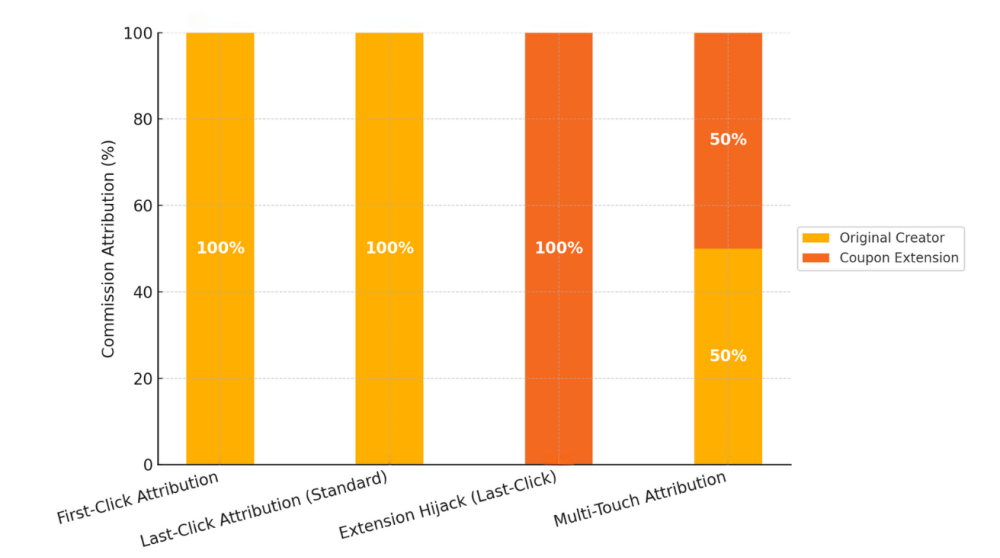
This chart breaks down who gets paid under each attribution model:
- In the first two models (“First-Click Attribution” and “Last-Click Attribution”), the original creator receives 100% of the affiliate commission.
- With “Extension Hijack (Last-Click),” a coupon extension like Honey claims 100% of the commission, leaving the original creator with nothing.
- In “Multi-Touch Attribution,” the commission is split 50/50 between the original creator and the extension, offering a fairer, shared credit.
Your Turn
As of July 1, 2025, multiple class action lawsuits, including from LegalEagle, Wendover Productions, and GamersNexus, have been combined into a single federal court case in Northern California, known as the PayPal Honey Browser Extension Litigation (Case No. 5:24‑cv‑09470). The outcome is still pending, and the stakes remain high for creators everywhere.
Have you seen surprising drops in your affiliate revenue, or noticed strange dips right after coupon extensions became popular? I’d love to hear about your experiences, especially if you’ve stumbled upon some workarounds or clever ways to keep your commissions intact.
This situation is still unfolding, so it pays to keep up with the latest news, browser updates, and changes in affiliate programs. Whenever there’s a big change, I’ll dig in, share what I find, and do my best to keep you in the loop.
Feel free to drop your stories, thoughts, or tips below. I’m always eager to swap ideas and pick up fresh strategies from fellow creators!
Share this insight
This conversation is happening inside the community.
Join free to continue it.The Internet Changed. Now It Is Time to Build Differently.
If this article resonated, the next step is learning how to apply it. Inside Wealthy Affiliate, we break this down into practical steps you can use to build a real online business.
No credit card. Instant access.