How One Pillar Post Can Create 5 Powerful Blog Articles


Published on March 15, 2026
Published on Wealthy Affiliate — a platform for building real online businesses with modern training and AI.

Creating a Content Cluster
 Over the past few months, I’ve been researching ways to make my blogs more successful. One thing that keeps appearing in modern SEO strategies is something called a content cluster.
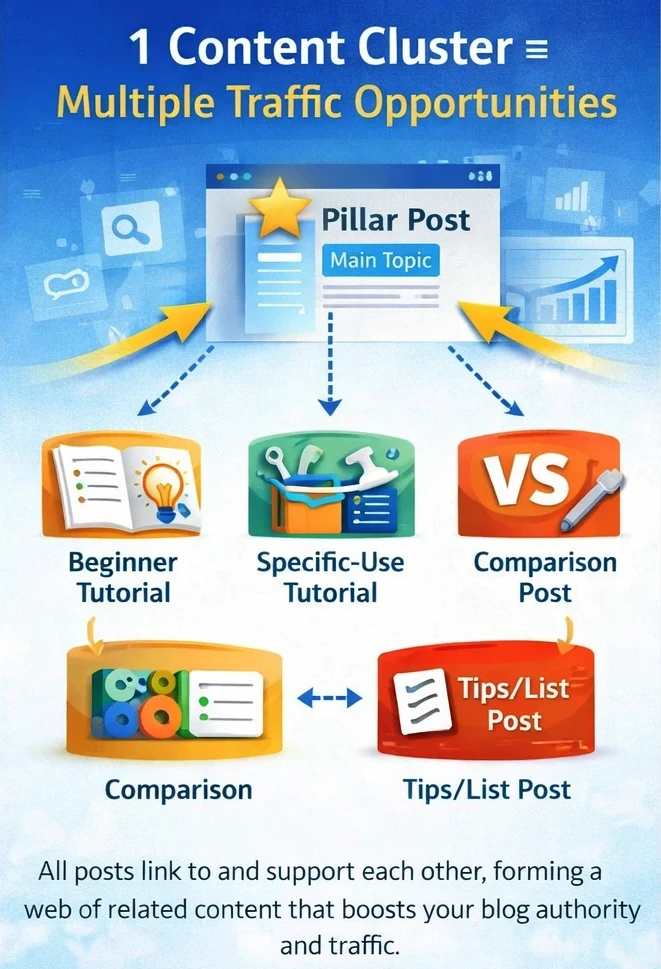
A content cluster is simply a group of related articles built around one main topic. Instead of writing random posts, you create one main article (a pillar post) and then write several supporting posts that link back to it.
This strategy helps in two important ways:
• Readers can easily explore a topic in depth
• Search engines understand your authority on the subject
In simple terms, a content cluster turns one idea into multiple opportunities for traffic.
Here is the simple 5-layer content cluster method I like to use.
Layer 1 — The Pillar Post (Main Tutorial)Everything starts with the pillar post.
A pillar post is a comprehensive article that covers a topic broadly. Think of it as the central hub of your content cluster.
The pillar post introduces the subject and then links to other articles that explain specific parts of the topic in greater detail.
For example, if your niche was blogging, a pillar article might be:
“How to Start a Successful Blog”
Inside that article you could link to supporting posts that explain individual parts of blogging.
The pillar post becomes the foundation of your cluster.
Layer 2 — Beginner Tutorials
Beginner tutorials are designed for readers who are completely new to the topic.
These posts explain the basics in a clear, step-by-step way, helping readers get started without feeling overwhelmed.
Examples might include:
• What is SEO?
• How to choose a niche
• How to install WordPress
Beginner tutorials are valuable because many people search for simple starting instructions when learning something new.
These articles often bring steady, long-term traffic.
Layer 3 — Specific-Use TutorialsSpecific-use tutorials focus on one exact task.
Instead of explaining the entire topic, these posts solve a specific problem or show how to do something step-by-step.
Examples might include:
• How to create a blog logo
• How to set up email subscriptions
• How to write your first affiliate review
These articles attract very targeted search traffic, because readers are searching for help with a specific task.
Ready to put this into action?
Start your free journey today — no credit card required.
Comparison posts help readers decide between two or more options.
These posts are especially powerful because many people search using phrases like:
• “Which is better?”
• “Tool A vs Tool B”
• “Best platform for beginners”
Examples could include:
• WordPress vs Wix
• Wealthy Affiliate vs other training platforms
• Free vs paid keyword tools
Readers searching for comparisons are often close to making a decision, which makes these posts very valuable.
Layer 5 — Tips and List PostsTips and list posts organize useful information into easy-to-scan points.
Readers love these posts because they can quickly learn helpful ideas without reading a long tutorial.
Examples include:
• 10 Blogging Mistakes Beginners Make
• 15 Ways to Increase Website Traffic
• 7 Tools Every Blogger Should Use
These posts are also highly shareable on social media, which can bring additional traffic.
How the Content Cluster Works TogetherWhen you combine these posts, something powerful happens.
Instead of having isolated articles scattered across your website, you create a structured group of related content.
The pillar post links to the supporting posts, and the supporting posts link back to the pillar article.
This creates a web of related information that:
• Helps readers explore the topic easily
• Increases time spent on your site
• Improves your internal linking structure
• Signals topical authority to search engines
Over time, this structure can help your blog rank higher and attract more consistent traffic.
Example of a Content Cluster (From My Tea Blog)To show how this strategy works in the real world, here’s an example from my tea blog.
Let’s say I want to build a content cluster around the topic “Green Tea.”
Pillar Post
The Complete Guide to Green Tea
This main article would introduce the topic and explain things like:
- What green tea is
- Where it comes from
- Its health benefits
- Different types of green tea
- How to brew it properly
Inside this pillar post, I would link to several supporting articles that explore specific parts of the topic.
Supporting Article 1
Beginner Tutorial
Green Tea for Beginners: Everything You Need to Know
Final ThoughtsOne of the easiest ways to grow a blog is to stop thinking in terms of single posts and start thinking in terms of content clusters.
With this strategy, one strong idea can turn into:
• A pillar article
• Beginner tutorials
• Specific how-to guides
• Comparison posts
• Helpful tip lists
'iNSTEAD OF CREATING ONE PICE OF CONTENT,
YOU CREATE AN ENTIRE ECOSYSTEM OF
ARTICDES AROUND A TOPIC"
And that’s how one pillar post can become five powerful blog articles that work together to grow your traffic.
Have you ever built a content cluster on your website, or is this something you might try next? I’d love to hear how others are structuring their blog content.
PRO TIP: Using a question at the end often gets more comments and interaction, which helps the post gain visibility inside Wealthy Affiliate.
So the best combo is:
- Strong statement
- Then a question
-Shirley
Share this insight
This conversation is happening inside the community.
Join free to continue it.The Internet Changed. Now It Is Time to Build Differently.
If this article resonated, the next step is learning how to apply it. Inside Wealthy Affiliate, we break this down into practical steps you can use to build a real online business.
No credit card. Instant access.