AI Prompting: Change the Angle, Change the Image


Published on July 31, 2026
Published on Wealthy Affiliate — a platform for building real online businesses with modern training and AI.

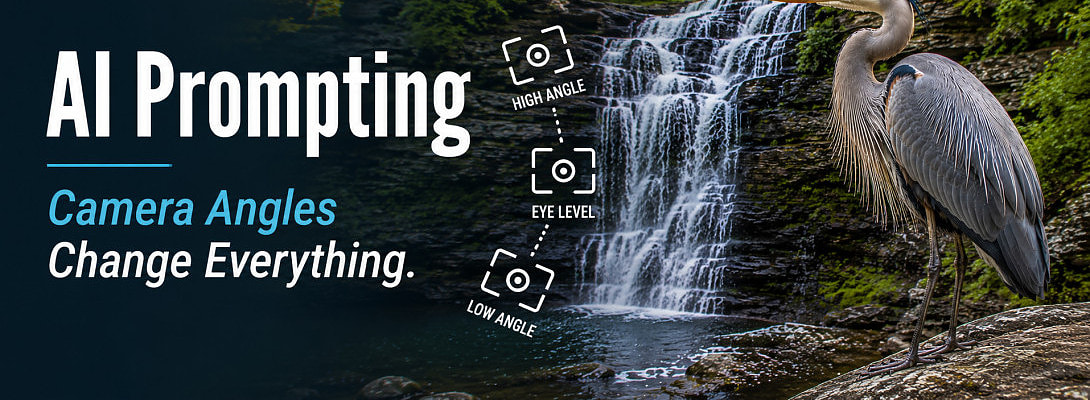
Why Camera Angles Matter
- Perspective & Scale: The angle changes how the viewer perceives size and context. A low angle makes a subject appear taller and more dominant, while a high angle makes them look smaller and more vulnerable
- Emotional Impact: Angles can evoke specific feelings. For example, a Dutch tilt (tilted camera) can create tension or unease, while an eye-level shot fosters connection and neutrality
- Storytelling: The choice of angle can guide the viewer’s attention, set the tone, and convey the subject’s relationship to the environment. A bird’s-eye view can show isolation or context, while a worm’s-eye view can make a subject seem powerful
- Composition: Angles affect balance, depth, and visual interest. Wide angles from above can include more context, while close-ups from below can emphasize details or drama
The Big Idea
Most beginners describe what they want to see.
Experienced prompt writers also describe where the viewer is standing.
That's really what angles are all about. You're telling the AI what perspective to use. The same subject can feel peaceful, heroic, intimate, or overwhelming simply by changing the angle/perspective.The angle shapes how viewers emotionally respond to an image
- high angles diminish subjects
- low angles make them appear powerful.
Even with the same lighting, you can completely change the image’s emotional tone and narrative by shifting the perspective of the scene. Experimenting with angles is the key to mastering visual storytelling
Different Angles to Consider
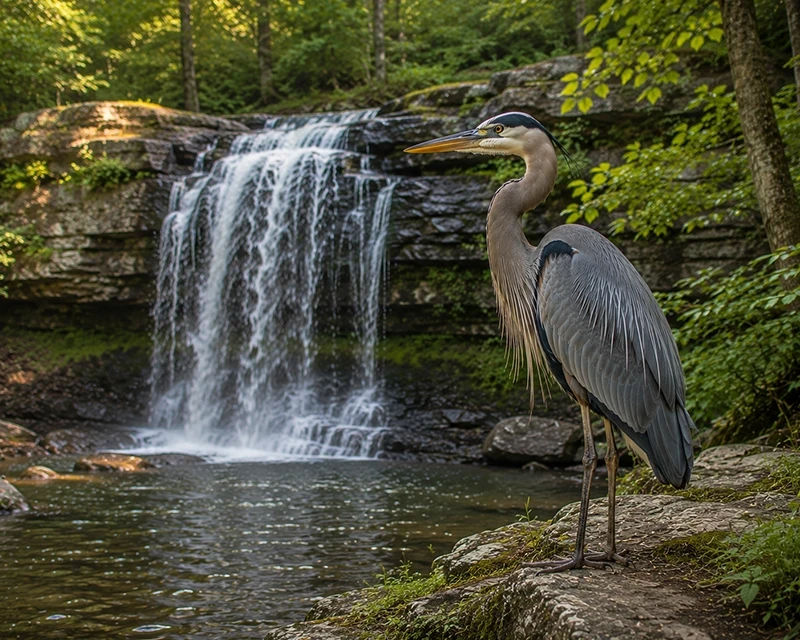
Eye Level
This is the default.
Prompt:
A majestic Great Blue Heron standing beside an Ozark waterfall, eye-level view.
Effect:
- Natural
- Comfortable
- Balanced
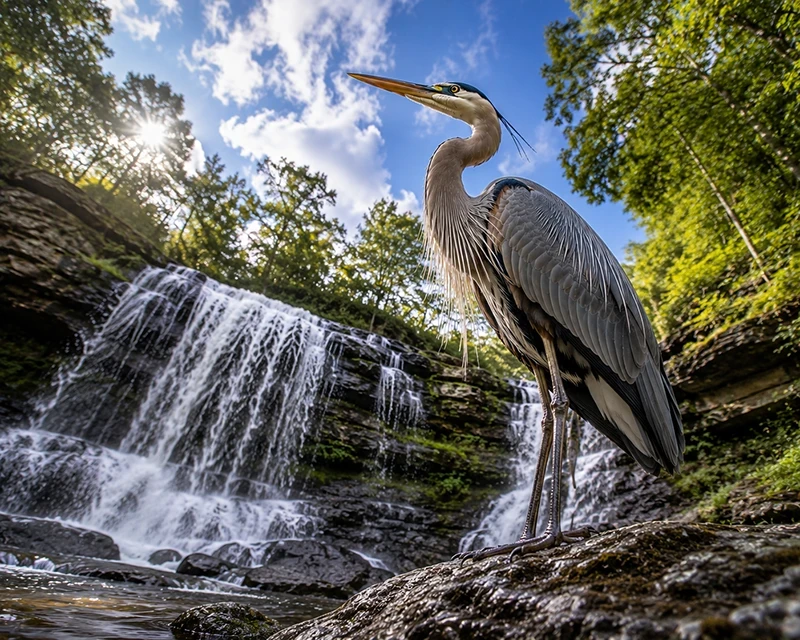
Low Angle - Camera below the subject.
Prompt
A majestic Great Blue Heron standing beside an Ozark waterfall, photographed from a low-angle perspective looking upward.
Effect:
- Power
- Strength
- Importance
- Makes subjects appear larger than life.
Ready to put this into action?
Start your free journey today — no credit card required.
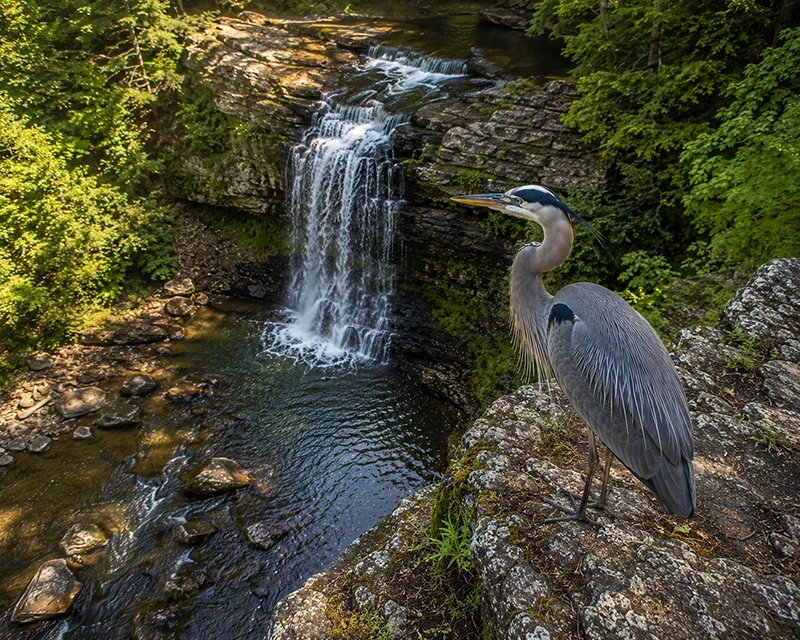
High Angle - Camera above.
Prompt
A majestic Great Blue Heron standing beside an Ozark waterfall, viewed from a high angle looking downward.
- Effect
- Peaceful
This makes the subject appear smaller and shows more of the surroundings.
Close-up - Move closer instead of farther.
Prompt
Close-up portrait of a Great Blue Heron's face, detailed golden eye, intricate feather textures, blurred waterfall background.
- Effect
- Emotion
- Detail
- Intimacy
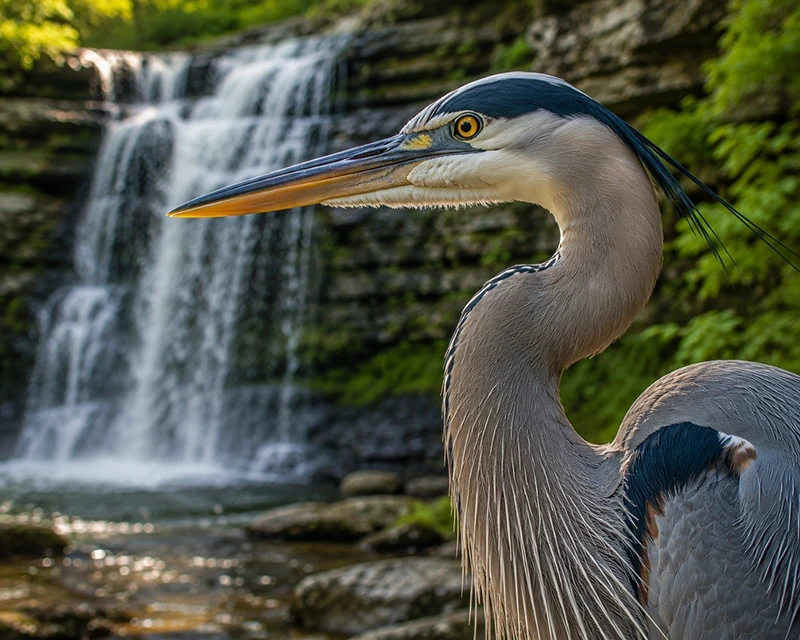
Learn From the Comparisons
I love these 4 comparisons. You just change the angle or perspective when creating your image.
- Prompt 1: A Great Blue Heron standing beside an Ozark waterfall.
- Prompt 2: Low-angle photograph of a Great Blue Heron standing beside an Ozark waterfall.
- Prompt 3: Bird's-eye view of a Great Blue Heron standing beside an Ozark waterfall.
- Prompt 4: Close-up portrait of a Great Blue Heron beside an Ozark waterfall.
Looking at the differents instantly helps you understand how angles/perspectives matter.
A little photography lesson.
When we take a photograph, we naturally move our camera to tell a story. We may kneel to photograph a flower or climb a hill to capture a sweeping landscape. And by stepping closer we can capture emotion in a portrait.
AI works the same way. By describing where the camera/your peerspective is, you're becoming the photographer instead of leaving the viewpoint to chance. That doesn't sound technical, but it teaches an important principle.
Tips For Creating a Special "Feeling"
- You can combine angles with lighting for maximum impact (e.g., “high angle shot, soft bokeh, dramatic shadows”).
- You use extreme close-ups for emotional intimacy or detail focus.
- Dutch angles help to create suspense or tension.
- Wide shots add scale in landscapes or cityscapes.
Different Angles & Prompt Keywords
There are additional angles/perspectives - heres a broader list:
- Eye Level – This is the neutral, natural perspective. Use this for portraits, product shots, everyday scenes.
Prompt: “eye level shot, at eye height, neutral angle” - Low Angle / Hero Shot – At this angle, you are Looking up at the subject which conveys power, dominance, or even heroism.
Prompt: “low angle shot, hero shot, looking up at” - High Angle / Bird’s Eye – By looking down from above, you can show scale, vulnerability, or isolation.
Prompt: “high angle shot, bird’s eye view, overhead shot” - Over-the-Shoulder – A perspective from ehind one character’s shoulder, looking at another adds intimacy or context.
Prompt: “over the shoulder shot, OTS shot, looking past shoulder at” - Extreme Close-Up – Create a tighter perspective on a detail (eye, hand, object); creates intimacy or intensity.
Prompt: “extreme close-up, macro shot, tight on face” - Dutch Angle / Tilted Frame – A diagonal tilt can be used to protray tension, unease, or chaos.
Prompt: “Dutch angle, tilted frame, canted angle” - Wide Shot / Establishing Shot – This angle shows the full environment with subject small and sets context and scale.
Prompt: “wide shot, establishing shot, full body in environment” - Aerial / Drone Shot – High above, looking down will create and epic scale and context.
Prompt: “aerial shot, drone view, looking down at landscape”
Resource Links
Final Thoughts
One of the things I'm discovering is that creating better AI prompts isn't about making them longer—it's about making them more intentional.
Something as simple as changing the camera angle can completely change the story your image tells. Without changing the subject at all, you can make an image feel more dramatic, more intimate, or reveal an entirely different perspective. As I've learned from years of photography, sometimes the best way to improve a picture isn't to move the subject—it's to move the camera.
In my next post, I'll look at another simple technique that can dramatically improve AI-generated images.
-Shirley
TIPS:
Kre8or.ai is a new, state of the art image creation tool I've recently joined and I'm loving it and its becoming one of my main tools for creating images for my online businesses and also for fun. There is a FREE TRIAL there also. If you are interested in AI image creation, give it try.
Share this insight
This conversation is happening inside the community.
Join free to continue it.The Internet Changed. Now It Is Time to Build Differently.
If this article resonated, the next step is learning how to apply it. Inside Wealthy Affiliate, we break this down into practical steps you can use to build a real online business.
No credit card. Instant access.