Recipe for a Great Post at Wealthy Affiliate – And Why It Matters


Published on June 22, 2025
Published on Wealthy Affiliate — a platform for building real online businesses with modern training and AI.

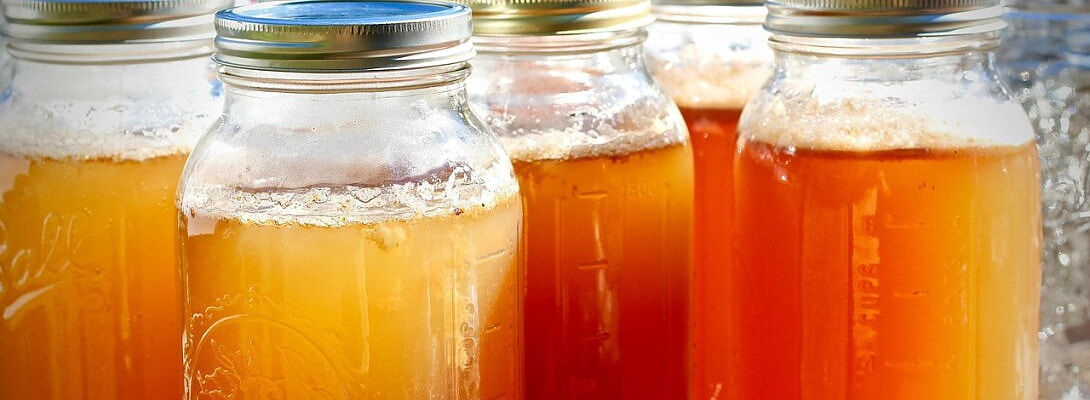
Recipe for a Great Post at Wealthy Affiliate – And Why It Matters
Hi All,
The reason I’m putting this post up is many-fold.
I recently went looking for my old recipe for apple cider vinegar (ACV), but couldn’t find it. I did find several versions online, but as I started reading through them, memories of how I used to do it came flooding back - and I realised most of the ones I found were either incomplete or lacking in key details, especially for someone trying it for the first time.
Even after several attempts with AI to recreate it, it still didn’t get it right - because the real, complete version just isn’t out there.
That got me thinking more broadly about how content online - and the AI tools built on it - can end up spreading inaccuracies. If the original post is vague or flawed, those errors get repeated and passed on as truth. Not great for anyone trying to learn or do things properly.
Now, this may not be a topic many of you are personally interested in - but I’ve done my best to make this guide complete, accurate, and genuinely useful for anyone at any skill level. Whether you’re new to this or just need a refresher, I hope it helps.
And maybe, just maybe, this version will stick around long enough in some quiet corner of the web or a future AI training set for others to benefit from. Or at the very least, you might end up with some great, homemade, good-for-you ACV.
Robby’s Real-World Apple Cider Vinegar Guide
A practical method for rich, homemade ACV using common tools and no hype.
Yield:
Roughly 5 - 7.5 pints (2.5 - 3.5 litres) of ACV from 5 lbs of apples.
Title: Apple Cider Vinegar from Scratch: Real Talk, Real Tools, Real Results
Intro:
You don’t need fancy gadgets or a commercial kitchen to make proper apple cider vinegar, just apples, time, and maybe an old boot lace.
Ready to put this into action?
Start your free journey today — no credit card required.
This guide is built on experience, not theory. Whether you’re using scraps or whole apples, old wine buckets or slow cooker crocks, here’s how to make real ACV at home and what no one tells you (like how hard it is to keep those apples under the liquid!).
Ingredients:
• 5 lbs (2.2 kg) Gala apples, chopped (core, peel and all)
• 1/2 to 3/4 cup sugar (white, brown, or cane) + a little hot water to dissolve
• Filtered or cooled boiled water (enough to cover apples), about 7.5 - 8.5 pints (3.5 to 4 litres)
• Optional: 1/4 tsp wine or baking yeast (to jumpstart fermentation)
• Optional: 1/4 cup raw, unfiltered apple cider vinegar (with or without mother)
Containers That Actually Work:
• Food-grade plastic fermentation bucket (ideal)
• Slow cooker crock (removed from base)
• Large glass jar (rare to find big enough with wide mouth)
• Ceramic crock (unglazed interior, lead-free)
• Clean water container or food-safe jug (wide opening preferred)
• Avoid: reactive metals (e.g. aluminium)
Covering the Container:
Use breathable material such as:
• Clean tea towel
• Old cotton T-shirt
• Pillowcase scrap
• Cheesecloth or muslin
Fasten with:
• Elastic band
• Bungee strap
• Parcel string
• Drawstring from old clothing
• Or yes, even an old boot lace
Stage 1: Alcoholic Fermentation (2 - 3 weeks)
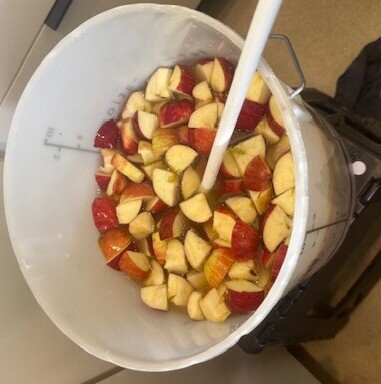
- Chop the apples into about 1 to 1.5 inches (2.5 - 4 cm) square or triangle pieces and place them in your container. The level of the apples should not exceed one-third of the container's volume. If they do, you either need a larger container or should reduce the batch size accordingly.
- Dissolve the sugar in a small amount of hot water, then add some of the cold water to cool it down. Pour it over your apples and top it off with about 6 -7 pints (3.5 to 4 litres) in total of clean filtered or boiled and cooled water. The water must cover all the apples once they are pressed down by a plate and/or weight. Apples will float without pressure, so it's important not to judge the water level until they are held under. Do not fill to the brim-leave at least 2 to 3.5 inches (5 - 8 cm) of space at the top for bubbling and airflow.
- Add yeast and/or raw ACV if using.
- Use a pizza plate (pre-drilled), drilled plastic plate or a lid from a tub of candy, and then a Ziplock bag of water or anything clean and heavy to keep apples submerged. If you use a Ziplock bag, don’t use one that’s too large and fill it fairly full as it helps to keep it in place and do its job. The drilled holes in the plate allow liquid and gases to move underneath, prevent air pockets, and help ensure a stable ferment. This also allows clean air to reach the juice and apple mix.
- Cover with breathable material and fasten. (Do NOT use a lid with airlock even if you have one)
- Store in a warm (21 - 27°C, 70 - 80°F), dark location.
- Stir once per day to prevent mold possibly forming.
Bonus tip: After 7 - 10 days, pour off a glass - it’s fresh apple cider! Enjoy it before it goes full vinegar.
Stage 2: Acetic Fermentation (3 - 5+ weeks)
- Strain out apple solids.
- Return the liquid to a clean fermenting container.
- Cover again, leave undisturbed in the same warm place.
- A “mother” may form - this is good!
- Taste after 3 weeks; when it’s tangy and sour, it's ready.
- Bottle and store in dark glass or sealed containers.
Real Tips That Matter:
• Sanitation: You don’t need sterility, just clean tools washed with hot water and a bit of vinegar.
• Keeping apples down is tricky. Stirring and makeshift weights are perfectly valid.
• Longer fermentation = deeper colour and sharper flavour.
They Say That ACV Is...
They say apple cider vinegar is a wonder liquid. Here are some of the things people believe:
• "Good for the gut" - A spoonful in warm water is said to help digestion.
• "Balances blood sugar" - Some claim it slows sugar absorption.
• "Soothes sore throats" - Mixed with honey and water, it’s a home remedy classic.
• "Boosts weight loss" - Whether it's fact or fad, it comes up a lot.
• "Cleans hair, shines counters, cures boredom"
• "Alive with the Mother" - That weird blob floating in the jar? She’s doing all the work.
Reminder: ACV is acidic and powerful. Don’t drink it straight, and don’t believe every miracle claim.
I use it for flavour and its preservative benefits in all my homemade salad dressings and spicy salsas.
My Final Thought
There’s something satisfying about taking scraps or fruit and turning them into something useful, delicious, and possibly even beneficial. Homemade ACV isn’t just a recipe - it’s a small act of reclaiming an old skill.
I hope you like the recipe, but more importantly, the reason why our posts need to be more accurate.
Rob
Share this insight
This conversation is happening inside the community.
Join free to continue it.The Internet Changed. Now It Is Time to Build Differently.
If this article resonated, the next step is learning how to apply it. Inside Wealthy Affiliate, we break this down into practical steps you can use to build a real online business.
No credit card. Instant access.