The Death of the Coder? How AI Is Rewriting Software Engineering in 2026


Published on February 27, 2026
Published on Wealthy Affiliate — a platform for building real online businesses with modern training and AI.
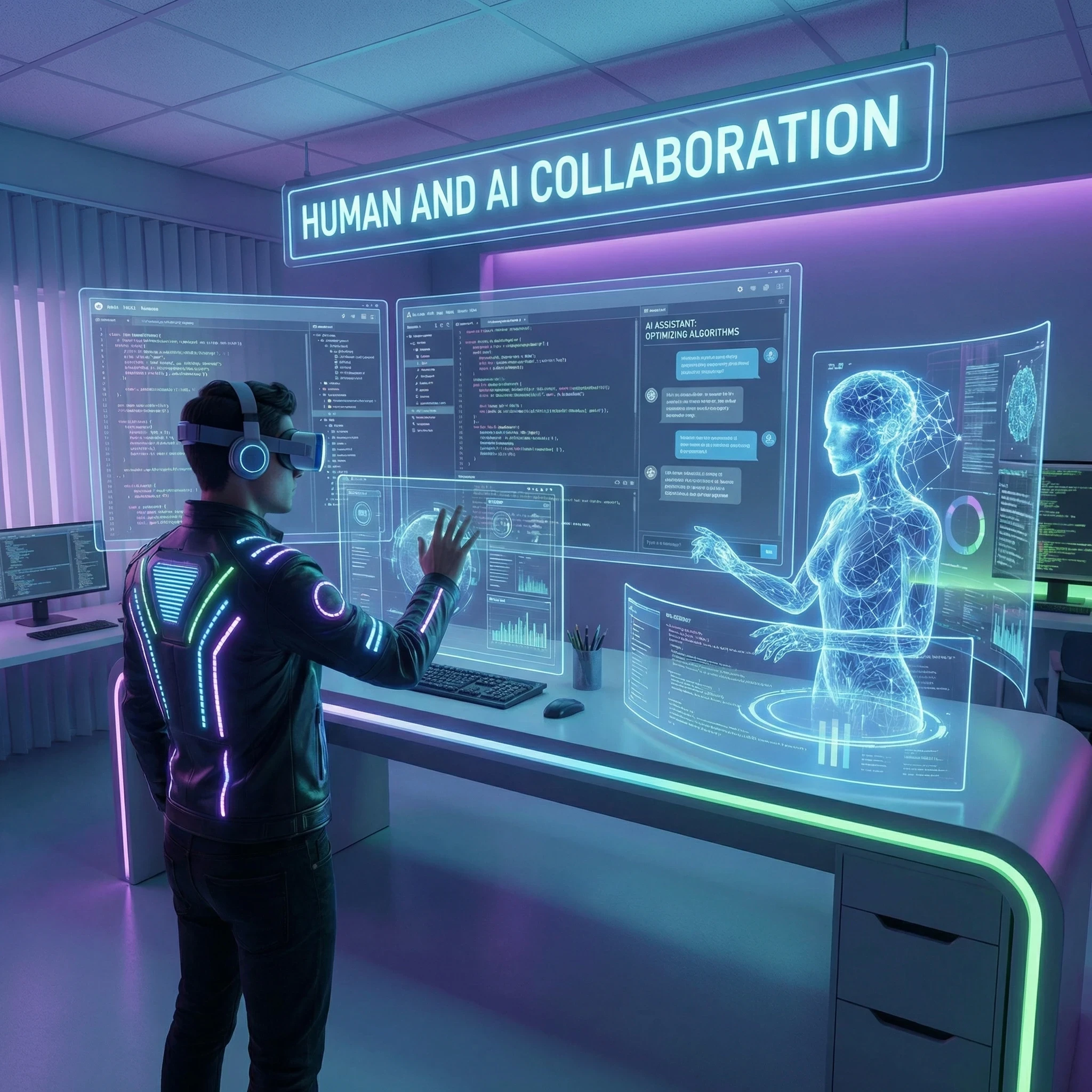
🚨 The Provocation
Let’s say it plainly, coding is no longer the moat.
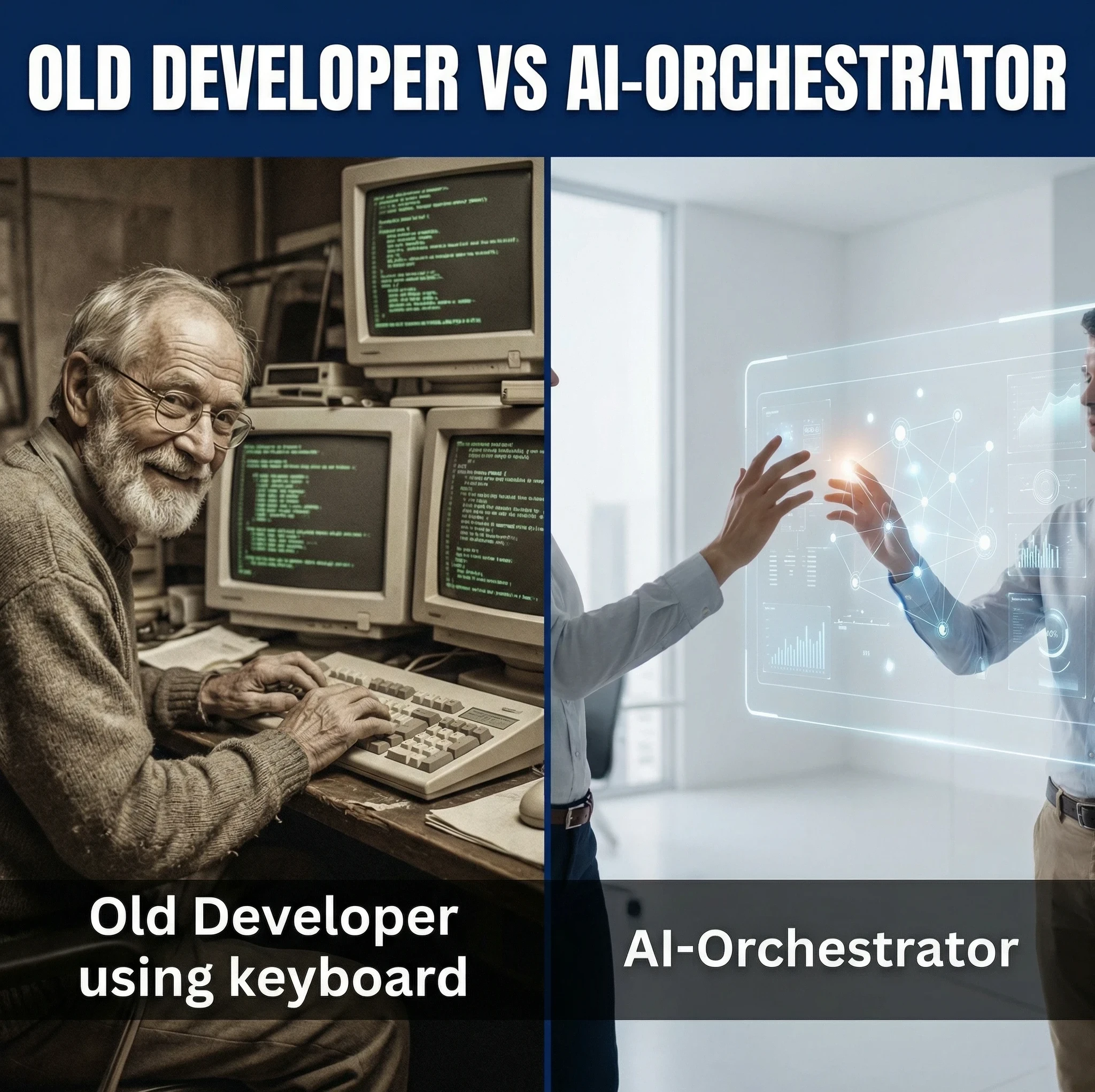
In 2026, nearly 93% of developers use AI tools monthly. The keyboard is no longer the source of power — orchestration is. The developer who once wrote every function line-by-line is now supervising machine-generated output, validating logic, and designing systems that think.
AI hasn’t “killed” software engineering, it has morphed it.
The real question isn’t is AI replacing developers?
It’s this, is the job itself being replaced — or just the part we romanticized?
1. The Evolution: From Code Writer to System Orchestrator
AI tools now generate boilerplate code in seconds. Documentation? Automated. Test scaffolding? Instant. Refactoring suggestions? Continuous.
But here’s the catch, 46% of developers actively distrust AI-generated code.
Why?
Because AI is fast but not always precise.
The result is a subtle shift in role:
Then Now
Write code Verify AI output
Build functions Design systems
Debug syntax Debug AI reasoning
Specialize narrowly Operate cross-domain
The modern engineer is becoming an expert generalist. Backend engineers can ship frontend components. Infrastructure engineers can script automation without deep domain fluency.
AI is flattening specialization, but it is raising the bar for judgment.
2. Is AI Replacing Developers?
The short answer is not exactly.
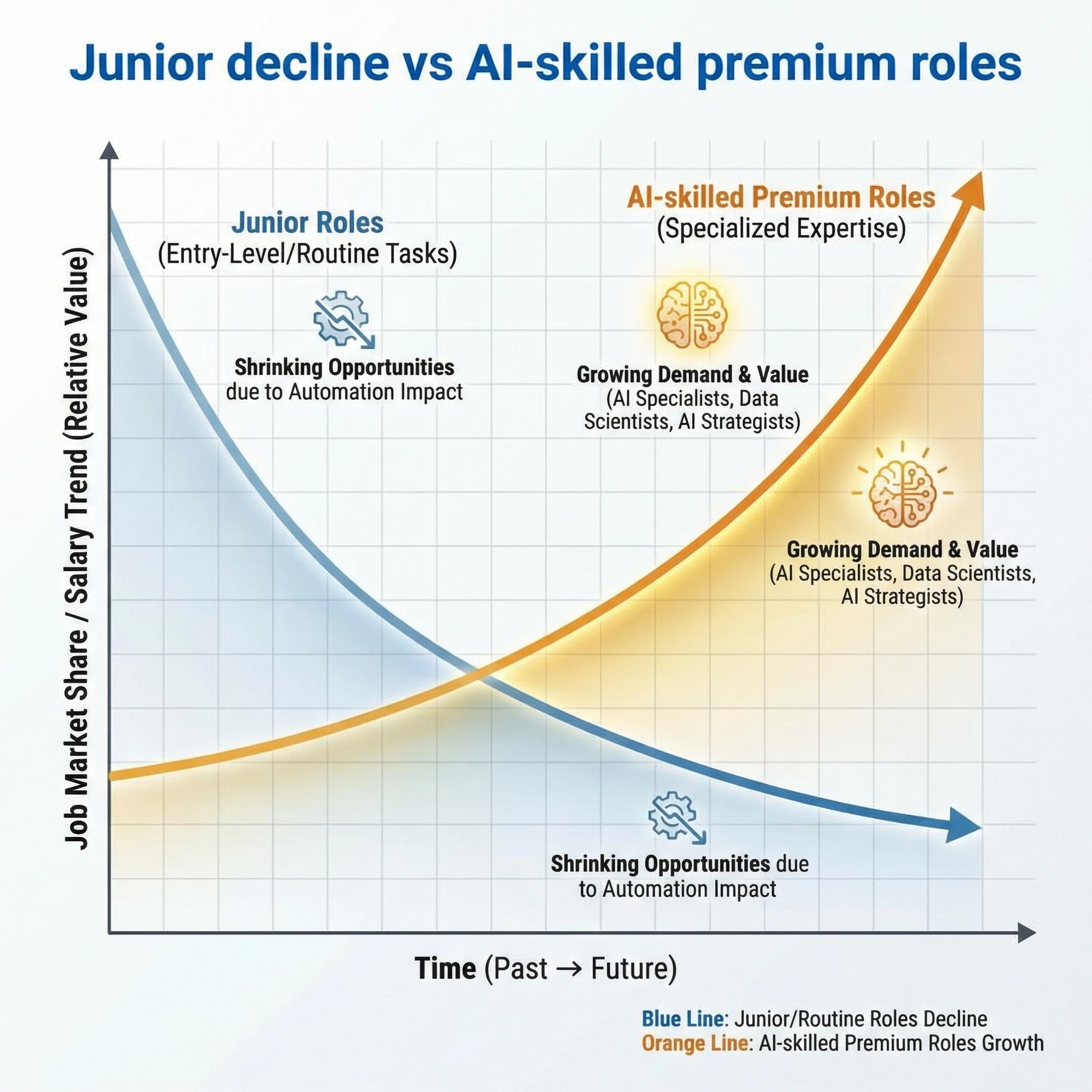
The long one is that it’s compressing the bottom and amplifying the top.
📉 Junior Developers Are Feeling It
Entry-level tasks, such as boilerplate, CRUD endpoints, test case generation are now automated.
There’s a documented 13% employment decline in early-career roles exposed to AI automation.
The apprenticeship model is shifting, if juniors used to “learn by doing,” and if AI now does the doing — how do they learn?
This is the cognitive atrophy risk, we may hollow out the very layer that once matured into senior architects.
📈 The Skill Premium Is Real
Engineers who can:
- Integrate AI models into products
- Fine-tune or orchestrate LLM workflows
- Design AI-native architectures
- Govern AI ethically
…are now commanding 25–35% salary premiums.
New job titles are emerging:
- AI Engineer
- Prompt Engineer
- AI Systems Architect
- Model Operations (MLOps) Specialist
Demand isn’t disappearing., it’s shifting upward.
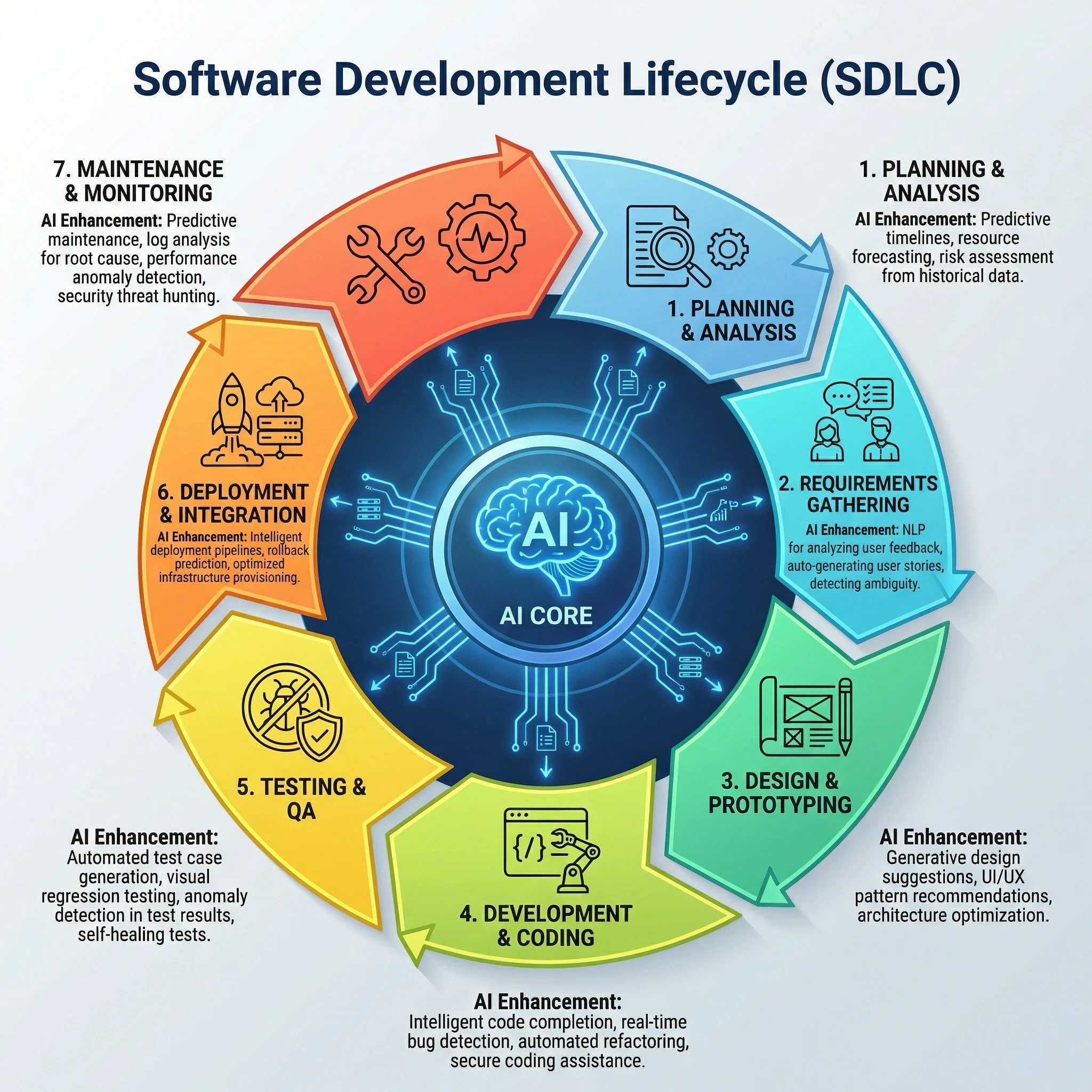
3. The SDLC Is Being Rewritten
First — what is SDLC?
SDLC = Software Development Lifecycle
The structured process used to design, build, test, deploy, and maintain software.
AI is no longer just helping with coding. It’s now embedded across the entire lifecycle:
🧠 Requirement Analysis
AI can now parse business contracts and policy documents to:
- Detect conflicting rules
- Identify missing requirements
- Auto-generate technical specifications
The human role?
Validate strategic alignment.
🧪 Testing & QA
Ready to put this into action?
Start your free journey today — no credit card required.
AI tools generate adaptive test cases and self-evolving scripts.
Result: 30–40% faster testing cycles.
The human role?
Edge-case judgment and risk modeling.
🔧 Maintenance & Operations
Agentic systems now:
- Migrate legacy COBOL to modern languages
- Monitor logs
- Trigger automated remediation
- Self-heal infrastructure
This is where systems engineering starts being transformed dramatically.
4. Is the Function Changing — or the Role Itself?
The answer is both.
The function of writing code still exists, but the center of gravity has moved.
The new hierarchy looks like this:
- Architecture & Systems Design
- AI Orchestration
- Governance & Ethics
- Code Validation
- Raw Code Writing
In 2015, raw coding was (#1) architecture and systems design
.Today, in 2026, it’s (#5) raw code writing.
5. The Big Risks Nobody Talks About
🧠 Cognitive Atrophy
If AI writes first drafts, do engineers lose foundational understanding?
We risk raising a generation fluent in prompts but weak in fundamentals.
🔐 Security & Bias
AI-generated code can embed:
- Subtle vulnerabilities
- Licensing issues
- Biased logic
- Overconfident hallucinations
Human-in-the-loop oversight is no longer optional., it’s mission-critical.
🏢 Centralization of Power
Training frontier AI models requires massive capital.
This has concentrated power among giants like:
- OpenAI
- Google DeepMind
- Anthropic
Software infrastructure is increasingly dependent on platforms few can build.
The risk?
Innovation bottlenecks and systemic dependency.
6. What Direction Will Systems Engineering Take in 2026?
Systems engineering is becoming:
🔄 AI-Native
Architectures will assume AI agents are part of the system — not external tools.
🧩 Modular & Model-Integrated
Systems will be designed around model pipelines, orchestration layers, and observability dashboards.
🤝 Human-AI Collaborative
Engineers will design guardrails for AI, not just code features.
📊 Governed by Explainability
Transparency and model auditing will become first-class engineering concerns.
In other words:
The system is no longer just technical, it’s cognitive.
7. How Engineering Leaders Are Redesigning Workflows
Forward-looking teams are:
- Shifting from sprint-based tasking to outcome-based orchestration
- Pairing developers with AI tools intentionally
- Creating AI review checkpoints
- Embedding security reviews into AI output validation
- Redesigning onboarding to emphasize architecture thinking
AI is not replacing teams, it is changing team topology.
Creating less hierarchy, but greater oversight and more system design ownership.
8. How to Upskill for AI-Driven Roles
If you want to future-proof:
For AI Engineer Roles:
- Learn model APIs and integration
- Understand vector databases
- Master prompt design and evaluation
- Study retrieval-augmented generation (RAG)
For AI Systems Architect:
- Focus on distributed systems
- Learn observability tooling
- Understand AI inference costs and scaling
- Study AI governance frameworks
For Prompt Engineering:
- Master context framing
- Experiment with chain-of-thought prompting
- Learn evaluation metrics for output reliability
And above all, double down on fundamentals.
AI amplifies good engineers, it exposes weak ones.
9. The Real Productivity Truth
Early hype suggested AI would 10x developer productivity.
Reality?
Net gains average 15–20% once your account for “rework tax” — the time spent verifying and correcting AI output.
The win isn’t raw speed, it’s leverage.
The Closing Thought
Software engineering is not dying, but the version of it built on typing speed and syntax memory is.
The future engineer won’t be the fastest coder.
· They will be the clearest thinker.
· The strongest architect.
· The sharpest validator of machine logic.
So, here’s the uncomfortable question:
If AI can write the code…what exactly are we bringing to the system?
Share this insight
This conversation is happening inside the community.
Join free to continue it.The Internet Changed. Now It Is Time to Build Differently.
If this article resonated, the next step is learning how to apply it. Inside Wealthy Affiliate, we break this down into practical steps you can use to build a real online business.
No credit card. Instant access.