Facebook at a Crossroads


Published on September 27, 2018
Published on Wealthy Affiliate — a platform for building real online businesses with modern training and AI.
Facebook is at a crossroads right now.
Make no mistake: Facebook is certainly now as vulnerable as they have been in many years.
They are amid a tumultuous time for the platform with the still looming effects of a federal investigation from recent months, forcing change in the company’s privacy sharing policies, and now suffering the loss of their co-genius founders of their owned Instagram platform.
They are losing steady customers, as their user growth has been slowing consistently: The platform added 22 million daily active users globally during the most recent quarter, compared to 41 million during the same period last year.

That is a 46% decline in growth. Not good.
Furthermore, new social competitors such as WebTalk are swiftly rising.
What is a social media behemoth to do?
Hopefully for its own survival, not what one of its early predecessors did.
Abram's Folly
Jonathan Abrams, a Canadian computer program, founded Friendster in March 2002. The site started in a basement with ten friends and went live that same month. It grew to a several hundred within a few weeks and built up to over 3 million users by early 2003. He could have gone down as one of the most successful tech founders in history.
By July 2003, Friendster grew to over 4 million users. However, the CEO noticed they were losing members as they could not keep up with demand. In addition, the platform was having long load time issues. Abram's remembers, "Most companies look forward to growing, we dreaded growth cause we couldn't keep up with our users."
However, this would be far from Abram's biggest blunder.
Ready to put this into action?
Start your free journey today — no credit card required.

In April 2003, Friendster was approached by Google, who offered to buy Friendster for $30 million. Abrams simultaneously was being courted by venture capital firms Kleiner, Perkins, Caufield, and Beyers, and Benchmark Capital of Silicon Valley who were both offering $13 million to take an equity position.
Abrams faced a major decision. Either to take funding from one of the major venture capital firms from Silicon Valley, or to be bought by Google. Google offered $30 million to buy out Friendster, but Abrams ultimately turned the offer down.
Abrams subsequent turn down of Google’s offer would prove to be Abram's ultimate downfall. Friendster's decision to stay private instead of selling to Google in 2003 is considered one of the biggest blunders of Silicon Valley.
By early 2004, Friendster was stumbling while My Space was rising, The Friendster users who no longer had patience for their slow servers migrated to MySpace.
By late 2004, it was all but over.
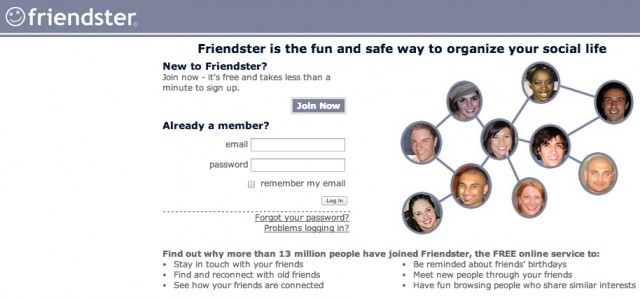
However, this was not Friendster’s ultimate cause of failure. That was caused by a then 19-year old Harvard dropout who with a small team was building an all-college networking site out of Harvard University.
The sky was falling down on Friendster. Meanwhile there was a juggernaut ready to take over. And soon even MySpace would become victim to its dominance.
In a bizarre twist of irony and under different circumstances, the same fate could happen to Facebook.
The Juggernaut

The Facebook-Friendster model is a classic example of how a 2nd and 3rd competitor to market cab become the market leader. In early 2003, Friendster dominated the early days of social media. However, by early 2004 its light was quickly fading.
Meanwhile, as Facebook was growing, it copied the best attributes of Friendster then expanded upon them. And later to add insult to injury, bought 19 of its social media patents.
Ultimately, Friendster sowed the seeds of its own failure by not fully understanding the subtleties of social media and its ever-changing landscape when it mattered most to its own existence.
The Facebook -Friendster compete model is the perfect example of how a “copycat” takes over and goes on to become the market leader.
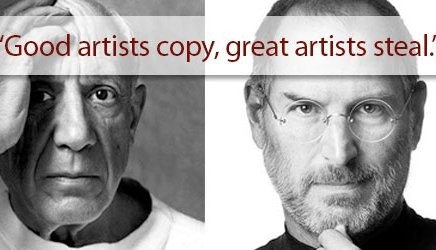
Once again as Picasso once said ( and later Steve Jobs paraphrased), “It takes a good artist to copy, but a GREAT artist to steal.”
So if you have a great idea but think someone else has already taken it and are not first to market, remember “first to market” rarely becomes the market leader in the field.
First to market rarely succeeds, 2nd or third wins the charm.
And the bigger they are, the harder they fall.
Thanks for reading, and I hope to hear your comments.
Cheers,
Kaju
Share this insight
This conversation is happening inside the community.
Join free to continue it.The Internet Changed. Now It Is Time to Build Differently.
If this article resonated, the next step is learning how to apply it. Inside Wealthy Affiliate, we break this down into practical steps you can use to build a real online business.
No credit card. Instant access.