How to Find Search Intent for Your Site


Published on May 8, 2026
Published on Wealthy Affiliate — a platform for building real online businesses with modern training and AI.

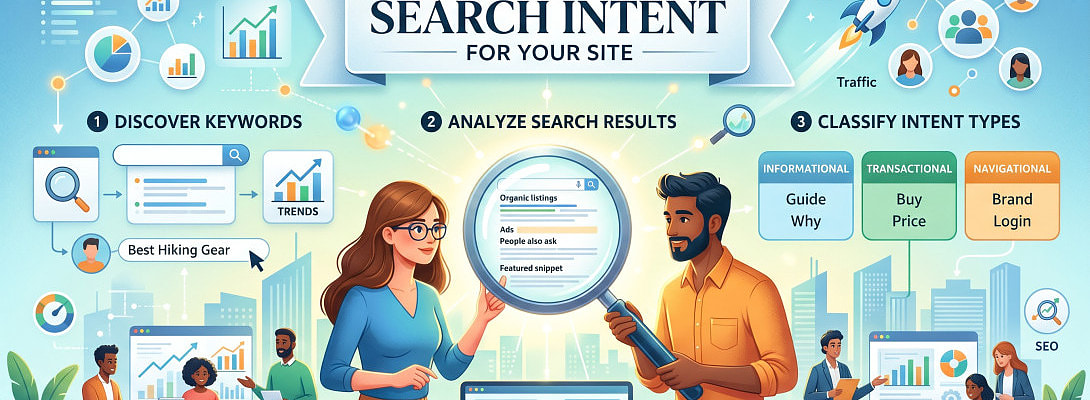
Most online searches begin with a task in mind. Perhaps you want to know the best cordless vacuum for pet hair, or locate a bakery nearby that makes gluten-free cakes. The reason people search for something is what experts call search intent. If you want your website to grow, you need to know exactly what your audience is looking for.
Understanding intent can help you improve your SEO and content strategies. This makes it easier for the right people to find your pages. Smart intent marketing improves your search visibility and turns visitors into customers.
What is Search Intent?
Simply put, search intent is what someone is looking for when they type in a search engine. It’s the ‘why’ behind the words they type. The 'what' of a search is easy to spot, but the most interesting part is the 'why'. Someone who searches for "yoga for beginners" may want a free video to follow or may want to find a local studio to join. Someone searching for “hiking boots” may be trying to compare different brands or trying to find a coupon code to purchase a pair now.
Search engines care about which links people click. Over time this helps the search engine learn what people are actually looking for. That means better, more helpful results for all searchers.
Why Intent Drives SEO
When you have a site, you want people to see it. And that is why SEO is such a big part of marketing. It helps to rank your website higher in search engines like Google or Bing.
Choosing the right keywords is a huge part of SEO. You might title a blog post “How to Choose the Best Mountain Bike” to align with what people type. But intent is more than just words. It’s about understanding what the user wants to accomplish.
For example, a landscaping company may list their city on the homepage to attract people searching for local help. On another page, they might list “lawn mowing,” “tree pruning,” and “garden design” to attract people who need specific services. Knowing the "why" allows you to write better content for your customers.
Search Intent in the Age of AI
Search is being transformed by AI tools such as ChatGPT or Google’s AI Overviews. People now use AI chatbots to plan trips, compare products or get quick answers. AIO (Artificial Intelligence Optimization) is a new way to help these AI tools discover your site. If your content is descriptive and clear, an AI may summarize your page or recommend your product to a user.
Your pages need great info to help AI find you. For a product page, don’t just list the name. Add size, weight, price and why it’s better than others.
5 Types of Intent
Most searches are in one of those five categories. As a user learns more, their search becomes more specific.
- Informational: The user wants to learn something. Examples: "how to fix a leaky faucet" or "what is sourdough starter."
- Commercial: The user is thinking about buying and is researching. Examples: “best electric toothbrushes” or “top-rated coffee beans.”
- Navigational: The user is looking for a particular brand or page. Examples: “Netflix login,” “Starbucks menu.”
- Transactional: The user is ready to do or buy right now. Examples: “buy pizza online”, “coupon for Nike shoes”, or “sign up for gym membership”.
- Local: The user wants something in his/her own locality. Examples: “dentist in Seattle,” “best tacos near me,” or “plumbers in Miami.”
How to Identify Search Intent for Your Site
Paid SEO tools can help you find keywords and boost your website content. But you can also determine search intent for free. Looking at search results and seeing what people want is a great way to plan your content without spending money on expensive tools.
1. Identify Your Target Audience
Ready to put this into action?
Start your free journey today — no credit card required.
Your on-page content needs to speak directly to the people you want to reach. If you’re a book editor, for example, your language should be custom-designed for authors. When you narrow your niche, you can match your content more precisely to the search terms your audience uses.
Consider the user journey, what does a lead need to know before they hire you? A good strategy balances your content mix between sales pages (for people ready to buy) and educational blog posts, such as “How to Choose the Right Editor,” to draw in people who are still in the research phase.
2. Dive Into Your Website Analytics
Your website stats will tell you exactly how visitors are engaging with your site. Don’t guess; look at your actual performance:
- Search Terms: What are the exact words that are bringing people to your website?
- Dwell Time: Which pages are keeping readers on longest?
- Top Landing Pages: Which pages do your visitors most often enter your site on?
These numbers tell you how good your content is satisfying search intent. Most of the time, if a page isn't performing to its full potential, it's because there's a content gap, or the content just doesn't match what the user was looking for.
3. Analyze the Competition
Check out the top ranking sites in your niche. You don’t want to copy them, but you want to know the content benchmarks search engines like to see.
- Look at their headers and keywords to see what topics they write about.* Find "missing" pages on your site that your competitors put priority on.
- See how their content answers user questions.
4. Audit Search Results
Find your main keywords and see the actual SERP (Search Engine Results Page) layout. Check out the "People Also Ask" boxes and see what kinds of sites are ranking.
If your competitors are outranking you, it’s a signal you need to refresh your metadata and body content. It also helps you discover low-hanging fruit, such as niche keywords with low competition that you can quickly claim a front-page position for by producing more helpful, targeted content.
How to Optimize Search Intent for Your Site
Once you know which keywords and intent are driving people to your site, it’s time to audit your website content. You have to ensure that each page has a definitive answer to people who are finding you through search engines or AI tools.
1. Match Your Content Format to Intent
Ensure your page layout makes it easy for the user to find what they need. For example, a landing page for a product is best served with clear photos and text that explains the benefits.
If you provide a service, include client case studies or a portfolio to demonstrate that you can solve their unique problems.
2. Answer Related Questions
Don’t just write about topics. Use header tags (H2s, for example) to answer common questions, like, “How much does a custom website cost?”
Including a FAQ section is a great way to satisfy informational intent and help search engines discover your answers.
3. Consider the User’s Context
Remember why you’re searching. A customer might be shopping for a cheap replacement, or a high end gift. Create your marketing copy to address their needs and feelings in the moment.
4. Focus on User Experience (UX)
Good formatting is an important SEO best practice. Make your services easy to find with bullet points and short paragraphs. This keeps readers engaged and makes it easier for AI and search bots to index your content.
5. Optimize Title Tags & Meta Descriptions
These short snippets are the first thing people see in search results. Your meta description has to show how you satisfy their intent. For example, use “compare our rates” to impress the users who are ready to make a transactional move.
6. Use Social Media to Expand Reach
Now search engines are showing posts from sites like Instagram. When you add SEO keywords to your social captions, it becomes easier for new people to find your brand and click through to your website.
Share this insight
This conversation is happening inside the community.
Join free to continue it.The Internet Changed. Now It Is Time to Build Differently.
If this article resonated, the next step is learning how to apply it. Inside Wealthy Affiliate, we break this down into practical steps you can use to build a real online business.
No credit card. Instant access.