Visual Search SEO: How to Rank Images on Google Lens and Image Search


Published on April 28, 2026
Published on Wealthy Affiliate — a platform for building real online businesses with modern training and AI.

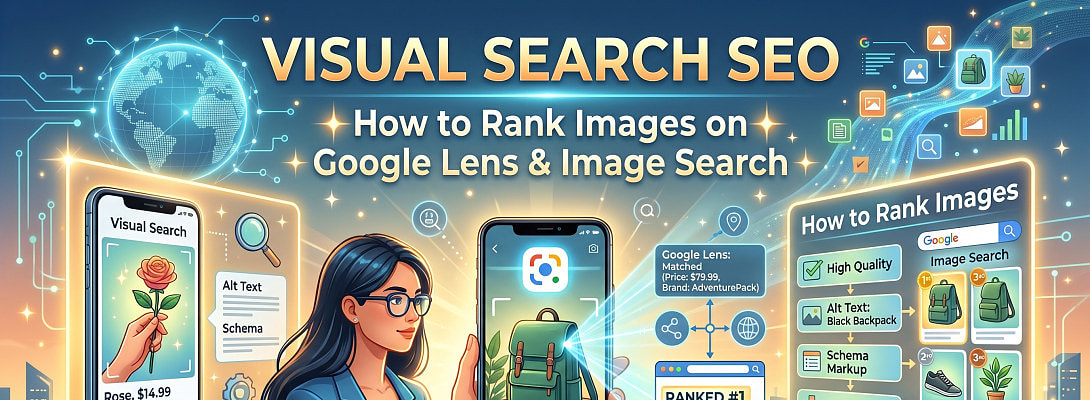
Search has come a long way from just typing keywords into a box. Right now, users can scan any object with their smartphone and get an answer right away. This shift is really changing how we look at SEO. If you’re only focusing on text, you are missing out on a lot of traffic.
With tools like Google Lens, people don’t even need to type. They can just scan a pair of shoes, a plant, or even a building, and Google finds the right websites for them. This isn't a trend for the future—it's happening right now, with millions of these searches every month. Images aren't just visual assets anymore. They are a major way for people to find your content.
Understanding How Visual Search Works
If you want an image to rank at the top of the search results, you need to know how search engines rank visual content. Google isn't seeing the image the way you see it. Instead it uses AI to find colours, shapes and patterns in the file and tells us what the specific image shows.
Google also gathers clues from the file name and placement of your images, using these specific details to file your content appropriately to display it to your target audience. When you upload an image of a brown leather office chair, Google scans the image file with its AI and recognizes what the image really is. But the process doesn't stop there.
Google also checks the text on your page against the images and their metadata to ensure they match. Your site is much more likely to rank higher in the search results if your written and visual content are perfectly in sync. Having a great visual isn't the only thing that matters for visual search SEO. It's important to ensure that the picture's setting is appropriate.
The Growth of Visual Search
People want to find information online in ways that are faster and more natural. It takes time to type out a search query, but taking a picture is almost instant. This change is especially important in fields where visuals are the main focus because it lets people find what they need with just one click.
Consider industries like shopping, home decor, travel, or food. People in these fields usually know what they want because they've seen it, not because they've read about it. Visual search fills in that gap, making it much easier to go from finding a product to buying it. It also has to do with trust. People tend to believe what they can see with their own eyes. A clear picture takes away the "guessing game" that text can make.
Visual search is a great way to get high-intent visitors—those who know exactly what they want and are ready to click.
The Foundation: Begin with Quality
You need to start with the basics before you try any SEO tricks. Using the same stock photos as everyone else makes your website look like hundreds of other pages. This makes it hard for Google to see you as an expert in your field.
You need original content, like your own product photos, custom graphics, or screenshots, to really stand out. Unique pictures are more useful to your readers and can help your search engine rankings.
Ready to put this into action?
Start your free journey today — no credit card required.
The quality of the image is also very important. A blurry or dark photo won't do well, even if your on-page SEO is perfect. Your pictures need to be clear and sharp so that your site looks professional to your visitors.
Why Original Pictures Win
- Be Different: Using your own photos instead of the same old stock photos gives you a big edge over your competitors.
- Build Trust: Your readers will know you're a professional who cares about quality if you use high-quality, clear images.
- Help Google: Search engines can crawl and rank your content much more easily if it has unique visuals.
What File Names and Alt Text Do
Now that you have great visuals, the next step is to make sure that search engines can crawl and index them correctly. Giving your image files descriptive names is the easiest trick. Google doesn't know anything about a file with the name "IMG1234.jpg". "Brown-leather-office-chair.jpg," on the other hand, makes it clear what the main idea is before the page even loads.
Alt text has the same purpose but is even more important. These are words that help search engines and screen readers tell people who can't see the picture what it is. Descriptive and natural alt text is what you want. Instead of just adding keywords, your goal is to give a clear description of the picture.
Images Rank in Context
A common mistake is to assume that images rank on their own. Google rarely ranks an image without looking at the page it’s published on. The text around your image is very important because headings, captions, and body paragraphs help explain what the image means.
For example, if you are writing about office furniture and you have an image of a chair, then your content and image are aligned. On the other hand, problems may arise from inconsistencies between the image and the context. This means that SEO content and visual elements should be combined effectively. This way you’re sending a strong message to search engines.
Speed and Performance Still Matter
If your website is slow, even the best image will struggle to rank. Page speed is a ranking factor and images are often the biggest contributors to slow loading times. Big uncompressed images can have a big impact on performance - especially on mobile devices. This is even more important as most visual searches are done on smartphones.
Using modern formats such as WebP and compressing images without losing quality can make a noticeable difference. The faster your page, the better the user experience, the lower the bounce rate, the higher the chance of your content ranking well!
Structured Data and Discoverability
Another optimization level is structured data. This is a way to give search engines additional information about your content in a format they can easily process. When used correctly, structured data can help Google understand the purpose of your images.
For example, if your image is on a product page, adding product schema can improve how that image is displayed in search results. This is particularly useful for e-commerce websites, where the visual search often directly impacts the buying decisions. The more specific you are with your content, the easier it will be for search engines to match it with the right queries.
Optimizing for Google Lens Specifically
It's one thing to rank in a regular image search, but tools like Google Lens add another level. Lens puts a lot of emphasis on how similar things look and how relevant they are to the real world. That means that your pictures should not only be technically perfect but also clearly show things that anyone can recognize.
If your image has a clean background, good lighting, and a clear subject, Google will likely show it in its visual search results.
Conclusion
Visual search SEO starts with generating good, original images, and then supporting them with clear and relevant context. As tools such as Google Lens continue to grow, images are becoming more than just design elements. They are becoming assets for searches.
Treat your images as part of your SEO strategy, rather than an afterthought, and you put yourself in a much stronger position to capture traffic from a channel that is still underutilized by many. And that’s where the real opportunity is right now.
Share this insight
This conversation is happening inside the community.
Join free to continue it.The Internet Changed. Now It Is Time to Build Differently.
If this article resonated, the next step is learning how to apply it. Inside Wealthy Affiliate, we break this down into practical steps you can use to build a real online business.
No credit card. Instant access.