A Digest Of 7 Posts This Last Week That I Found Interesting


Published on March 10, 2026
Published on Wealthy Affiliate — a platform for building real online businesses with modern training and AI.

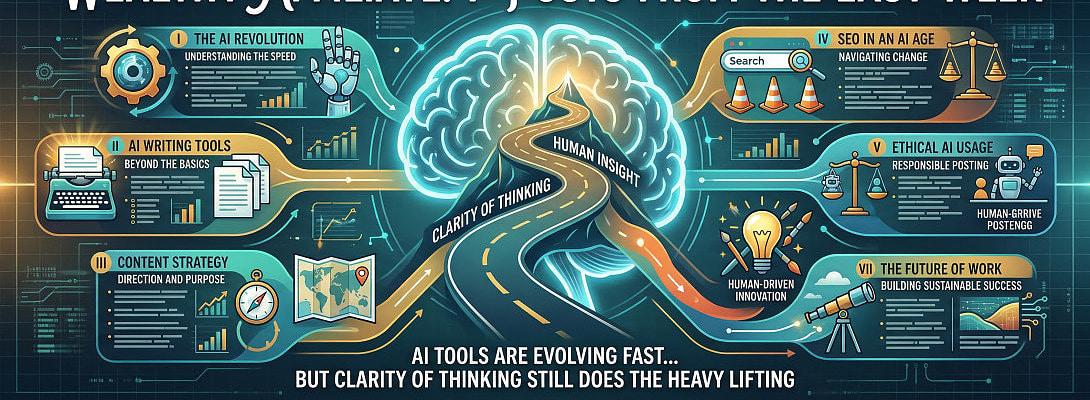
Intentional Thinking in an AI-Accelerated World.
This week’s standout posts to me share a common thread: tools are evolving fast, but clarity of thinking still does the heavy lifting.
1. Constraint Prompts That Prevent AI Nonsense
By Michael (TheAmazingMG)
Michael tackles one of the most common frustrations with AI tools: confident‑sounding output that quietly drifts into nonsense. Rather than blaming the model, he reframes the problem as a lack of constraints. When prompts are vague, AI fills the gaps with plausible but unreliable content.
He walks through how constraint‑based prompting changes that dynamic. By explicitly defining boundaries such as scope, assumptions, exclusions, tone, and verification requirements, the AI is forced to operate within a narrower, more accountable frame. The result is output that is slower, more deliberate, and far more usable.
What makes the post especially valuable is that it aligns AI use with human thinking rather than replacing it. Constraints don’t limit creativity; they protect intent. They ensure the tool supports clarity instead of amplifying uncertainty. In that sense, the post quietly echoes a broader theme we’ve seen recently at WA: tools are only as good as the thinking that governs them.
Takeaway for creators: AI works best when it is treated as a disciplined assistant, not an improviser. Clear constraints reduce noise, preserve accuracy, and keep responsibility where it belongs, with the human using the tool.
https://my.wealthyaffiliate.com/theamazingmg/blog/constraint-prompts-that-prevent-ai-nonsense
2. The Pyramid of OLD Jobs is Dying.
By Kyle
Kyle’s post sparked one of the most thoughtful comment threads we’ve seen in a while. What began as a discussion about the decline of traditional job structures quickly evolved into a deeper conversation about agency, unfinished ideas, and what actually matters in an AI‑accelerated world. Members shared candid reflections on abandoned projects, shifting priorities, and the realisation that creation is no longer the hard part, direction and execution are. The discussion captures a community actively recalibrating how it thinks about work, value, and independence.
What creators are realising: Ideas are abundant. Execution, focus, and market awareness are where the real work now lives.
https://my.wealthyaffiliate.com/kyle/blog/the-pyramid-of-old-jobs-is-dying
3. How Wealthy Affiliate Transformed My Business Life and Expanded My Skills
by Paul Chetwyn(PaulChetwyn)
Paul offers one of the clearest, most grounded explanations of what Wealthy Affiliate actually provides, not as a sales pitch, but as someone who has used the platform to rethink and expand his business strategy. His story begins with a simple goal (building a website for his tropical fish business) and evolves into a broader shift toward global digital entrepreneurship, especially in response to economic changes in the Caribbean.
What’s inside
- A practical breakdown of WA’s training, tools, and hosting ecosystem
- How AI, SEO, WordPress, and content marketing fit together for beginners
- The value of community support when learning digital skills
- A compelling vision for introducing WA to more people in the Caribbean
Why it’s great for new members: Paul writes with clarity and calm authority. Newcomers will find this post reassuring because it shows the platform through the eyes of someone who returned with purpose, applied the training, and saw tangible growth in both skills and mindset. It’s a reminder that timing matters and that WA is most powerful when you’re ready to build something real.
4. The Problem Solver Framework for Creating High‑Demand Content
By Eric Cantu(EricCantu)
Eric has been on a strong run this week, publishing eight short, focused video trainings that zero in on practical content creation and AI‑assisted workflows. Rather than trying to cover them all, this one stood out as a solid foundation piece especially for members still wrestling with what to write and why it should matter.
The Problem Solver Framework reframes content creation around a simple but powerful idea: start with real problems, not keywords.
Eric walks through:
Ready to put this into action?
Start your free journey today — no credit card required.
- Identifying genuine user pain points
- Turning those problems into content people actively search for
- Using AI as a thinking partner, not a shortcut
- Creating content that naturally aligns with products and solutions
It’s a calm, structured approach that helps remove guesswork and keeps content grounded in real demand.
Why it’s useful for members: This framework works whether you’re brand new or already publishing. For beginners, it provides clarity and direction. For more experienced members, it’s a reminder that high‑performing content still starts with understanding the reader, not chasing trends.
This is one of eight short video trainings Eric shared this week, covering niche validation, content planning, and AI workflows. If you found last week’s 2‑Minute Profitable Niche AI Test helpful, this series is a natural next step.
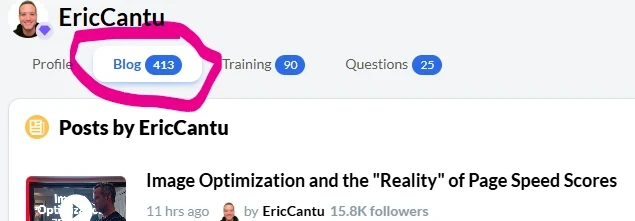
You can find all of Eric Cantu’s short video trainings he posted this week from his blog page inside his profile page.
5. How to Turn Expertise Into a Sustainable Online Business in 2026
By Israel(Israel17)
Israel tackles a question many members quietly wrestle with: how do you turn what you already know into something that lasts? Rather than chasing trends or quick wins, this post focuses on building a business around real expertise, adaptability, and long‑term thinking especially in a rapidly changing digital landscape.
What the post explores
- Identifying and positioning your existing skills and experience
- Building authority through content, not hype
- Using AI and modern tools to scale intelligently
- Creating a business model designed for longevity, not burnout
Israel frames 2026 not as a distant future, but as something we’re already preparing for — and that mindset shift alone makes this a valuable read.
Why it’s useful for members: For newer members, this post helps reframe expectations early: success isn’t about shortcuts, it’s about alignment between skills, audience, and systems. For more experienced members, it’s a timely reminder to keep evolving and building with intention.
6. Why Content Quality Beats Keywords in 2026
By Monica Alten(MonicaAlten2)
In a short but timely post, Monica cuts through a common misconception: that success still comes from chasing keywords first and worrying about quality later. Her message is simple, and increasingly relevant, quality content is what earns trust, engagement, and long‑term visibility.
Monica reminds us that:
- Search engines are getting better at recognising value
- Readers stay for clarity, usefulness, and relevance
- AI and SEO tools work best when supporting strong ideas, not replacing them
It’s a calm nudge back toward fundamentals.
- write for people,
- solve real problems,
- and let the optimisation follow.
Why it fits this digest: After Paul’s orientation, Eric’s frameworks, and Israel’s long‑term thinking, Monica’s post acts as a grounding note. It reinforces that no matter how tools evolve, the core principle remains unchanged: quality wins.
https://my.wealthyaffiliate.com/monicaalten2/blog/why-content-quality-beats-keywords-in-2026
7. Why the Right Prompt Matters When Using AI
By Shirley Dawson(SDawson0001)
Shirley’s post offers a practical, real‑world look at how prompt libraries can support content creation and, just as importantly, why the way we phrase prompts matters. Rather than presenting AI as a magic solution, the post shows how results improve when instructions are clearer and more intentional.
What it illustrates
- How prompt libraries can speed up ideation and structure
- The impact of specificity and context in AI prompts
- Why vague prompts often lead to generic output
- The importance of refining prompts over time
Some of the examples could be tighter or more explicit, but that actually reinforces the core lesson: prompting is a skill, not a one‑click shortcut.
Why it’s useful for members: For newer members, this post demystifies AI and encourages experimentation without pressure. For more experienced users, it’s a reminder that better prompts lead to better thinking and better results.
https://my.wealthyaffiliate.com/sdawson0001/blog/loving-the-prompt-libraries
Closing Thought
Across this week’s posts, a quiet pattern emerges. Tools are getting faster. AI is becoming more capable. Ideas are easier to generate than ever. But the work that really matters hasn’t changed.
Clarity still comes first. Direction still matters. And the responsibility for thinking, choosing, and building remains human.
Whether it’s setting better constraints, solving real problems, refining prompts, or focusing on quality over shortcuts, the common thread is intentionality. The creators who thrive aren’t the ones chasing every new tool — they’re the ones using tools in service of clear thinking and meaningful work.
That’s a reassuring place to be.
Any thoughts?
Cheers
Geoff
Share this insight
This conversation is happening inside the community.
Join free to continue it.The Internet Changed. Now It Is Time to Build Differently.
If this article resonated, the next step is learning how to apply it. Inside Wealthy Affiliate, we break this down into practical steps you can use to build a real online business.
No credit card. Instant access.