Constraint Prompts That Prevent AI Nonsense


Published on March 2, 2026
Published on Wealthy Affiliate — a platform for building real online businesses with modern training and AI.

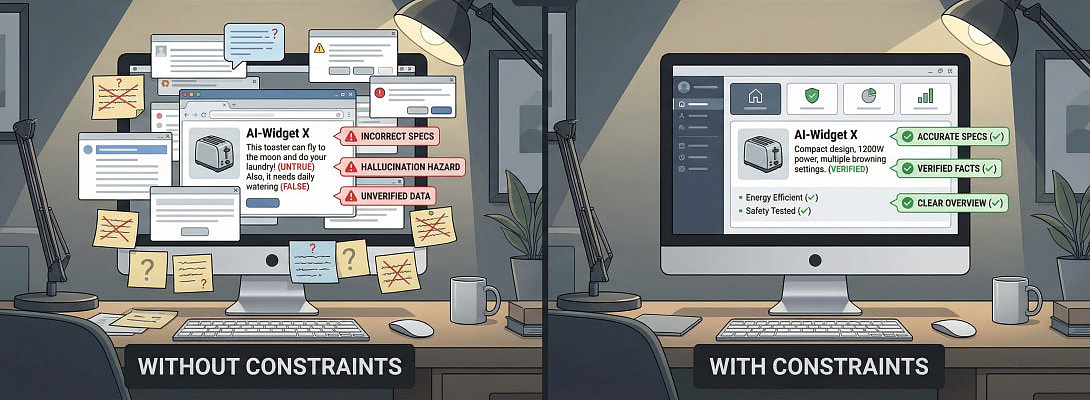
Prevent AI Nonsense
If you’ve used ChatGPT for affiliate content, I can almost guarantee you have run into this issue.
You ask for a product comparison, and seconds later, it delivers a clean, confident answer.
During your "editing" process of copying and pasting, you skim over the answer you got, say it looks great, and post away.
The next day, while working on another post, you decide to return to the previous day's content for a phrase to link to, and you notice that it mentions an obvious feature that doesn’t exist.
Everything looked solid at first glance. The formatting was sharp. The tone sounded certain. But the facts could not carry water in a bucket.
The issue isn’t carelessness. GPT is designed to be helpful, and it does exactly as you instruct it within its means. When important details are missing, it fills gaps with what seems likely. That guesswork is what produces AI nonsense, and most prompts unknowingly invite it.
Why Typical Prompts Lead to Invented Details
A common prompt looks like this:
Write a review of this product and explain why it’s a good choice for beginners.
It seems reasonable, but if you didn’t provide real product details, GPT will create them to complete the task. Not out of deception, it is doing what it thinks is right and following the instructions you gave it.
That’s how affiliate content ends up with:
- features that aren’t real
- specs borrowed from similar products
- claims no manufacturer made
Credibility doesn’t collapse all at once. It erodes through small inaccuracies that readers eventually notice. This is something you should have caught during editing, but alas, GPT said it was true, so why doubt it?
The Constraint Prompt Fix
Instead of only telling GPT what to do, try telling it what it cannot do.
By doing this, you’re setting boundaries and removing its permission to guess.
Ready to put this into action?
Start your free journey today — no credit card required.
Try this:
Write a beginner-friendly overview of this product using only the details provided below.
If information is missing, do not assume.
List up to three questions needed to complete the overview.
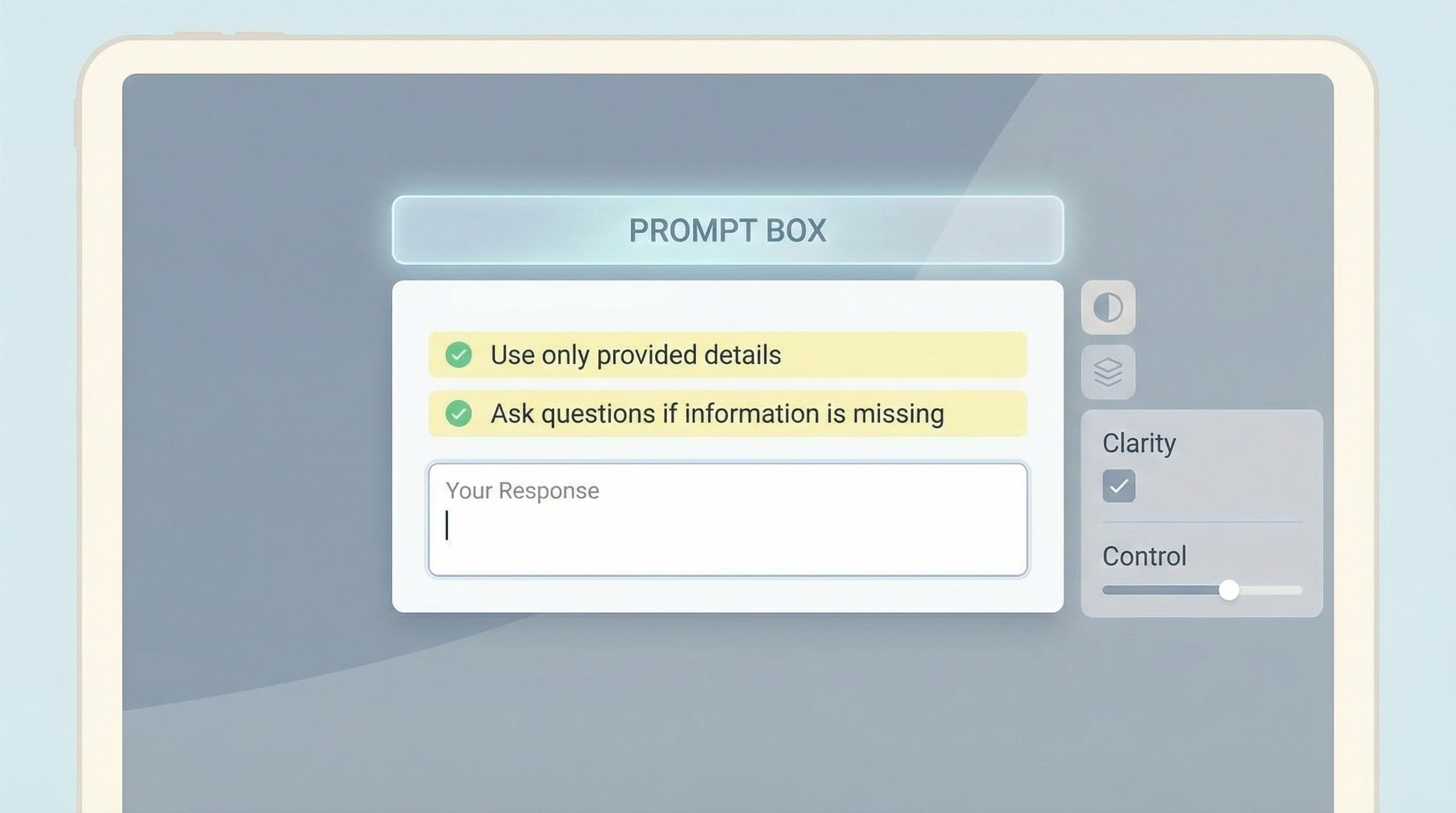
This changes the behavior immediately.
- No more guessing.
- No more invented features.
- A clear separation between known facts and missing details.
And if it thinks is cannot provide these, It starts asking questions and begging for help.
Example in Practice
Imagine you’re reviewing a fishing sonar unit and only provide:
- Screen size
- Battery type
- Target species
Without constraints, GPT may add GPS, mapping, or depth ranges.
With constraints, the response changes:
To complete this overview, I need clarification on:
– Maximum depth range
– Whether GPS mapping is included
– Ice fishing compatibility
Now you see what’s missing before you publish, and that’s not a setback. It’s quality control.
What Changes After You Use This
The results start to show up immediately.
- Your content becomes more precise.
- Readers have fewer reasons to question your claims.
- You spend less time correcting invented details.
Over time, this builds trust. Readers learn that what you publish holds up when they verify it themselves. That kind of consistency is golden and more valuable than any clever phrasing or persuasive language.

Now, to address the other issue. You need to check all information you get from ANY AI model. You need to edit all of the content you get from it and make it your own. And people do check; if they see hints of obvious AI, they usually bounce to the next article.
Try This Today
Take any one article you have already created with AI.
Run this prompt:
Review the article below. Identify statements that may rely on assumptions or missing information. List what needs verification.
The results will more than likely shock you. It may look and sound great, but it usually reveals mistakes or false information instantly.
It did for me, but fixing those gaps turns a decent post into something reliable, and reliability is what keeps readers returning, clicking your links, and paying attention when you recommend something.
I am serious, you need to try this, the results will shock you.
Share this insight
This conversation is happening inside the community.
Join free to continue it.The Internet Changed. Now It Is Time to Build Differently.
If this article resonated, the next step is learning how to apply it. Inside Wealthy Affiliate, we break this down into practical steps you can use to build a real online business.
No credit card. Instant access.