WA Advent Calendar 2025 - Wednesday 24th December - Christmas Eve



Happy Christmas Eve, everyone
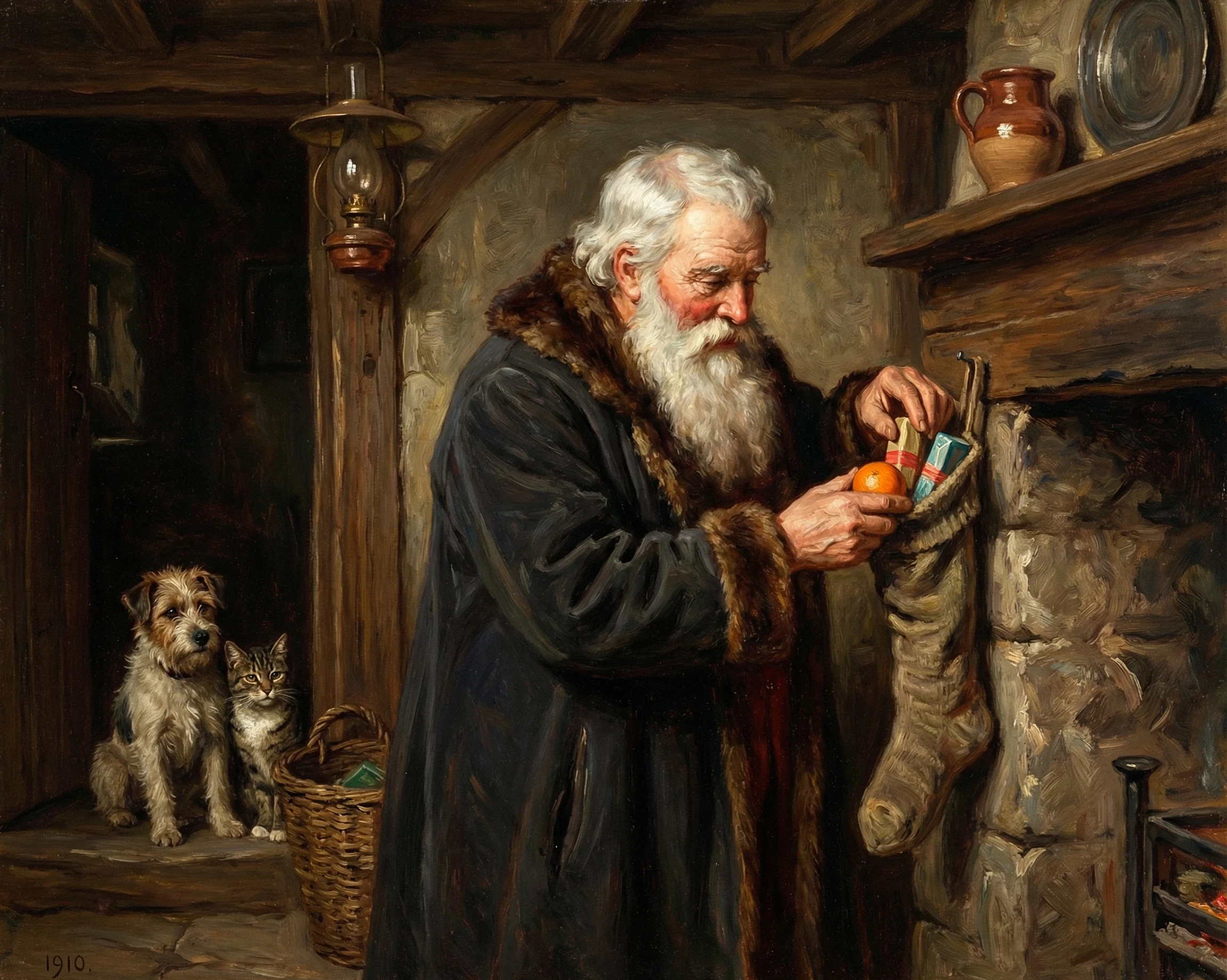
Have you been good? Are you on the nice list or the naughty list? You all know what I'm talking about. For today in our Advent calendar, we have Father Christmas (or Santa, as many of you know him in the States).
I know that today is the official start of Christmas for many people, and there will be presents and dancing around the tree later. For us in the UK, we normally celebrate on the 25th as the birth of Jesus, so we open presents on Christmas Day (25th), but it's different for many people. In Spain, the tradition is to open the majority of presents on Twelfth Night, known as Día de los Reyes Magos (Three Kings'Day), which is 6th January.
There will be one last Advent calendar post tomorrow, but for today, our penultimate post is about Father Christmas.
Father Christmas: The Story Behind the Man in Red
In modern times, Father Christmas has become one of the most celebrated and recognisable figures of the festive season, especially for those who have no particular religious belief but who celebrate Christmas as a cultural festival. Whether you imagine him as a kindly old man in green robes, a jolly fellow in red with a sleigh full of toys, or a symbol of generosity and joy, he has travelled a very long way to reach the version we know today.
Where Father Christmas began
In the UK, Father Christmas began as a very different figure from the Santa of modern films. As early as the 15th century, he appeared in English midwinter celebrations as the spirit of feasting and good cheer. He was not a gift-giver at first, but more of a personification of the festive season – a tall, bearded man in green or brown robes who encouraged merriment and good company.
If you've read "A Christmas Carol" by Charles Dickens, then the Ghost of Christmas Present is very similar to the first versions of the character, promoting good cheer and feasting, and in the book, he is depicted in long, green robes.
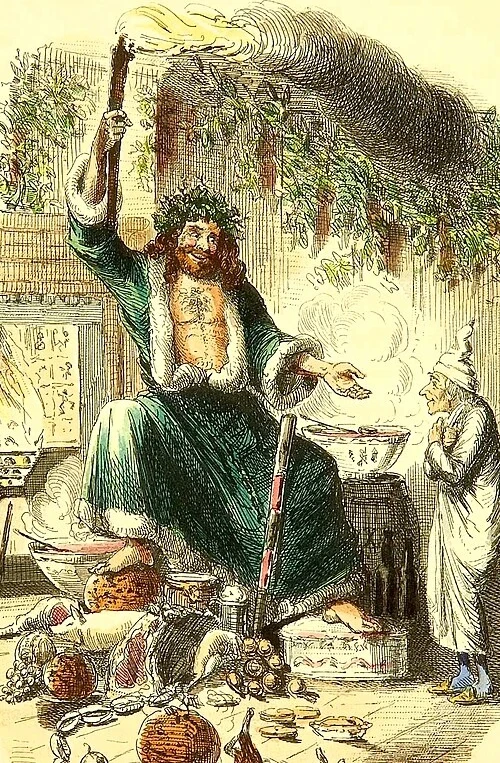
By John Leech (1843) - A Christmas Carol, by Charles Dickens (illustration from first edition), Public Domain, https://commons.wikimedia.org/w/index.php?curid=45672829
The idea of a magical bringer of gifts came later, shaped by several traditions which became blended together across Europe.
St Nicholas: The generous bishop
Much of what we associate with Father Christmas comes from St Nicholas of Myra, which we learned about on the 5th and 6th of December as 6th December is St Nicholas Day. He was a real fourth-century bishop known for his kindness and secret gift-giving. Stories about him helping children and the poor spread across Europe, especially in the Netherlands, where he became Sinterklaas, a kindly saint who arrived by boat and travelled on horseback.
When Dutch settlers carried this tradition to America, Sinterklaas slowly transformed into Santa Claus. Over the centuries, he became rounder, jollier and increasingly associated with children’s gifts rather than adult feasting.
When the two characters became one
By the Victorian era, British Father Christmas and American Santa Claus began to merge. Victorian writers, illustrators and magazines created a version that blended generosity, festivity and storytelling. Illustrators such as Thomas Nast helped shape the modern red-suited image, while early Coca-Cola advertisements in the 1930s cemented the look we know today. The red colour matched their branding perfectly and they wanted to promote their drinks in the winter since it had really only been associated with warm summer days.
On their website about their history, they say:
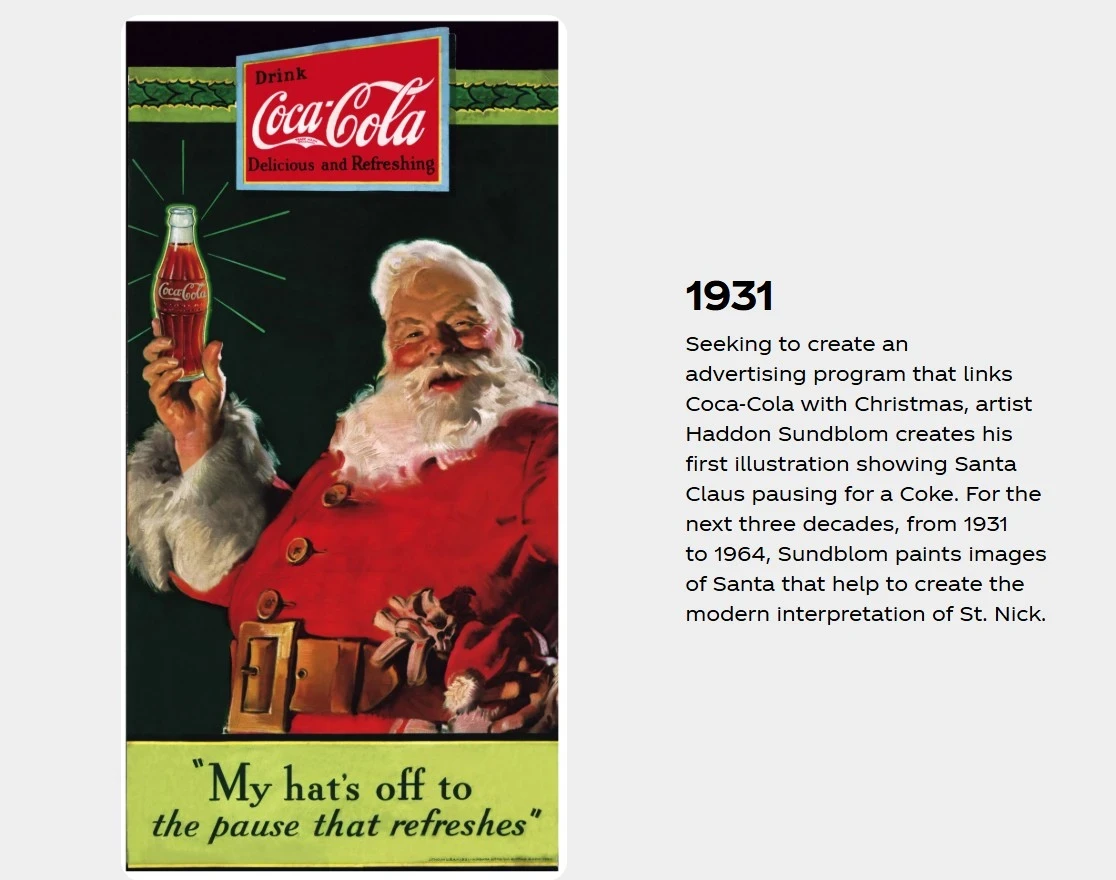 See the full history at: https://www.coca-colacompany.com/about-us/history#1930s,
Father Christmas aliases around the world
Different cultures have their own magical gift-bringers, including:
• Père Noël in France
• Weihnachtsmann in Germany
• Jultomten in Sweden
• Ded Moroz (Grandfather Frost) in Russia
• Sinterklaas in the Netherlands and Belgium
• Hoteiosho in Japan, a kindly Buddhist monk-like figure
• Papá Noel across much of Latin America
• Christkind or Christkindl in parts of Austria and southern Germany, traditionally a gift-giving angelic child
Each version reflects local traditions and beliefs, yet all share the same themes: generosity, hope and the simple joy of giving.
What name do you use in your country if not listed above? Let me know in the comments.
And what about the chimney problem?
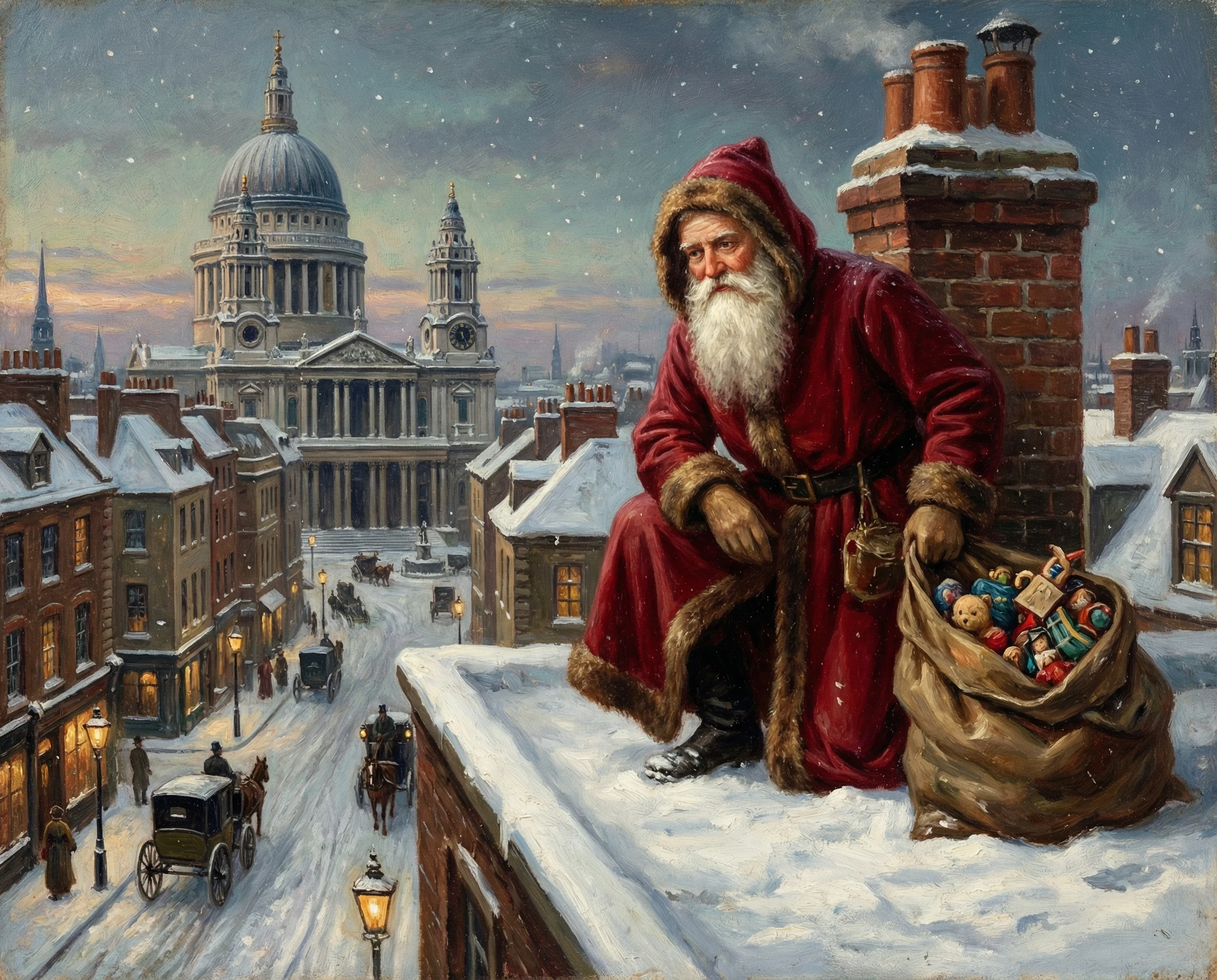
Traditionally, Father Christmas came down the chimney and left presents by the fireplace, which seemed plausible to Victorian children when all houses had chimneys and open fires. But of course, in modern times, when very few houses have chimneys, one question pops up in almost every primary nativity, school rehearsal or Christmas warm-up game: “But how does Father Christmas get in if we don’t have a chimney?”
Happily, Father Christmas has kept up with the times.
In some households, he uses a magic key that only works on Christmas Eve, a tradition that has become wonderfully popular with families who want to keep the story alive without worrying about modern architecture. Others say he simply walks through locked doors as gently as a snowflake, or that the sleigh carries a sprinkle of stardust that lets him slip through the smallest crack in a window frame. And in the film, "Arthur Christmas", he is helped by thousands of elves who drop from a spaceship using ninja-style tactics!
However he arrives, the important part hasn’t changed, which is the sense of wonder, the excitement of surprises, and the joy of waking up to find that somehow, against all odds, he made it.
Why Father Christmas still matters
Whether you picture him on a sleigh with reindeer, walking through snowy woods, or climbing down an impossibly narrow chimney, Father Christmas carries something timeless. He reminds us of the magic of childhood, the kindness we show each other at this time of year and the sense that wonder still exists, even in a world that moves too quickly.
The details may change from country to country, but the heart of the story stays the same: someone is always willing to bring a little light, a little joy and a little hope into the darkest days of winter. And whether they bring you a satsuma or an iPad, our hearts should be grateful.
Now there is a whole debate out there about whether we should be instilling our children with fantasies which we know to be untrue, but let's leave that for another time.
For now, let's enjoy the magic, and the mystery... and I, for one, still love to believe!
Happy Christmas Eve to all. I hope Father Christmas will pay you a visit.
Gail
Join FREE & Launch Your Business!
Exclusive Bonus - Offer Ends at Midnight Today
00
Hours
:
00
Minutes
:
00
Seconds
2,000 AI Credits Worth $10 USD
Build a Logo + Website That Attracts Customers
400 Credits
Discover Hot Niches with AI Market Research
100 Credits
Create SEO Content That Ranks & Converts
800 Credits
Find Affiliate Offers Up to $500/Sale
10 Credits
Access a Community of 2.9M+ Members
Recent Comments
8


Thank you, Gail.
If we take away all of the faery tales and such, and only teach them adult stuff. Then they will only be small adults and the perpetrators will be guilty of stealing their childhoods.
That is a sin worse than letting them believe something until they learn a different truth.
But whoever says that Santa Claus \by any name isn't real. They must be a cold hearted and lonely person.
In the words of all the children that kept Tinkerbell alive when she saved Peter from the poisoned cup.
I BELIEVE, IBELIEVE!
JD


The fat man in the red suit 😂😂😂😂😂that's what we call him.
Have a great Christmas Gail and thanks for the advent calendar. It's been really good getting to know the history behind all the different things associated with Christmas.
Thanks, Peter. I'm so pleased you liked it. I think you'll like the one tomorrow too. All the best waiting for the 'fat man in the red suit'.
See more comments
Join FREE & Launch Your Business!
Exclusive Bonus - Offer Ends at Midnight Today
00
Hours
:
00
Minutes
:
00
Seconds
2,000 AI Credits Worth $10 USD
Build a Logo + Website That Attracts Customers
400 Credits
Discover Hot Niches with AI Market Research
100 Credits
Create SEO Content That Ranks & Converts
800 Credits
Find Affiliate Offers Up to $500/Sale
10 Credits
Access a Community of 2.9M+ Members
We call him Santa Claus. I really like Christkindl. It is almost like saying Child Christ.
MAC.
That's lovely.