Why Does HUBS Suggest Low-Traffic Keywords? Understanding LSI and Long-Tail Keywords in SEO


Published on October 5, 2024
Published on Wealthy Affiliate — a platform for building real online businesses with modern training and AI.

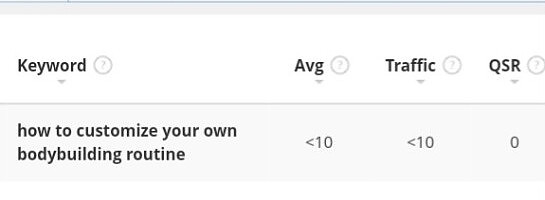
If you’ve been navigating the world of keyword research in Wealthy Affiliate, you’ve likely encountered some confusion, just like I have. In this post, I want to share my experience trying to reconcile the keyword advice I’ve received with what I’ve seen in practice. Along the way, I’ve come up with a theory that may explain why HUBS suggests low-traffic keywords—and why focusing on traffic may no longer be as important as we once thought.
The Search for Clarity: My Journey So Far
When I first started using WA’s training and tools like the Keyword HUBS, I expected clear guidance on how to choose the best keywords for my niche. The training says to look for keywords with good traffic and low QSR (Quoted Search Results) to optimize your chances of ranking. Simple enough, right?
But here’s where the confusion started: when using the HUBS tool, I kept finding suggested keywords with low QSR (great!) but traffic below 10. This left me wondering: Why are these low-traffic keywords being recommended if we’re supposed to aim for higher traffic numbers? Was something being overlooked?
The Metrics from Core Training
In Kyle's training video, he does not mention a specific traffic target. However, in the article associated with that video, three specific metrics are highlighted for keyword selection:
- QSR Under 50: The lower the competition, the better, and ideally, aim for QSR below 50.
- Some Traffic (ideally 30+ searches): The article suggests aiming for at least 30 searches per month for each keyword.
- Grammatical Sense: The keyword must make sense grammatically, so users and search engines understand the content.
The fact that Kyle’s video doesn’t mention a specific traffic number raises the possibility that his recommendations have shifted over time, but the article hasn’t been fully updated to reflect this.
Understanding LSI and Long-Tail Keywords
One possible reason for this shift could be the growing importance of Latent Semantic Indexing (LSI) and long-tail keywords in SEO.
Ready to put this into action?
Start your free journey today — no credit card required.
- LSI keywords are contextually related terms that help search engines understand the content of a page. This means your content can rank for multiple related terms, not just the specific keyword you’re targeting. For example, if you write about "bodybuilding for beginners," search engines might also rank your content for phrases like "beginner muscle-building tips" or "how to start bodybuilding."
- Long-tail keywords are more specific, often longer search phrases with lower search volume but less competition. The beauty of long-tail keywords is that even though a single long-tail keyword may have low traffic, your content can rank for several related terms (thanks to LSI), which adds up to more traffic overall.
This leads to a key idea: the traffic for a single long-tail keyword might not be as important as it once was because you're more likely to rank for a combination of terms. As a result, focusing on the traffic of one specific long-tail keyword might be too narrow, if not outdated, in today’s SEO landscape.
Addressing the Confusion: My Theory
Here’s my theory: LSI and long-tail keywords have made the original focus on traffic largely irrelevant and too complicated to calculate meaningfully. When you’re optimizing for a long-tail keyword, it’s not just about the traffic of that single keyword anymore—it's about the cumulative traffic you gain from all the related terms that LSI helps search engines pick up on.
So, if you’re like me, feeling frustrated about constantly seeing low-traffic keywords in HUBS, it might be time to rethink the way we view traffic. The truth is, even if the traffic for one keyword is low, the combination of LSI and long-tail keywords could mean that the traffic comes from a broader pool of related searches, not just the one keyword.
A Possible Explanation: The Algorithm and Early Sites
It’s also possible that the HUBS algorithm is deliberately designed to recommend low QSR keywords for newer or less authoritative sites. Early on, your site might lack the authority to compete for high-traffic, high-competition keywords. By focusing on low-competition keywords, you're more likely to rank quickly and begin building authority.
As your site grows and becomes more authoritative, the algorithm might shift to suggest more competitive keywords with higher traffic, once your site has the authority to compete. In this sense, the algorithm is working as intended—helping your site build a foundation before taking on more competitive terms.
My Concrete Advice: Keep It Simple
While I could be wrong, here’s the approach that I now believe makes the most sense:
- Focus on QSR: As long as the keyword has a low QSR (under 50), go for it. The low competition will help you rank more easily, even if the traffic seems low at first.
- Trust the Algorithm: HUBS may be showing low-traffic keywords for a reason—likely to help you rank more quickly and build authority early on.
- Don’t Overthink Traffic: It’s difficult to calculate the total traffic from all possible combinations of related terms through LSI. Trying to estimate traffic for long-tail keywords alone may not be meaningful anymore. Instead, focus on creating valuable content that covers related topics.
- Continue Creating Long-Form Content: Write high-quality, long-form content that naturally includes related LSI keywords. Over time, this will help you capture traffic from a wider range of searches.
Suggesting an Update for Training
Given these observations, I think Kyle’s training could benefit from an update that reflects the role of LSI and long-tail keywords. Specifically:
- Shift away from traffic as the primary metric: The training should clarify that QSR may be the more important metric in today's SEO, especially for new sites.
- Explain how LSI and long-tail keywords work: By focusing on LSI, the training can better explain why the traffic for one specific keyword may no longer be as important as we once thought.
- Simplify the strategy: A focus on low competition (QSR) combined with content that naturally uses LSI and long-tail keywords could be a clearer and more effective approach.
Final Thoughts
If you’ve been feeling confused like I was, just know you’re not alone. The current advice can feel contradictory, but by focusing on QSR, trusting the algorithm, and embracing LSI and long-tail keywords, you can still make progress.
What are your thoughts? Have you experienced similar issues with keyword research in WA? Let’s discuss in the comments!
Share this insight
This conversation is happening inside the community.
Join free to continue it.The Internet Changed. Now It Is Time to Build Differently.
If this article resonated, the next step is learning how to apply it. Inside Wealthy Affiliate, we break this down into practical steps you can use to build a real online business.
No credit card. Instant access.