Write Evergreen Blog Posts That Keep Paying AdSense Rent


Published on February 18, 2026
Published on Wealthy Affiliate — a platform for building real online businesses with modern training and AI.


Have you ever created a post, watched traffic spike for a week, and then had it all fade away as if it never happened? I have had those "what the hell" moments, too. The initial activity is exciting, but once people stop reading, AdSense stops paying the bills, and you get discouraged.
My rental property covers its own costs every month, and I want my website to do the same. That's why I like the idea of AdSense rent. It's a steady AdSense income stream that shows up month after month from the same posts, like a solid tenant. Evergreen content usually won't blow up overnight, and that's the point. It continues to earn because it's reliable.
In this post, I hope to teach you a simple long-game system: choose evergreen topics with stable demand, write in a way that matches search intent and keeps people reading, then maintain those posts so traffic holds up for years.
Choose Evergreen Topics That Bring Steady Traffic and Advertiser Demand
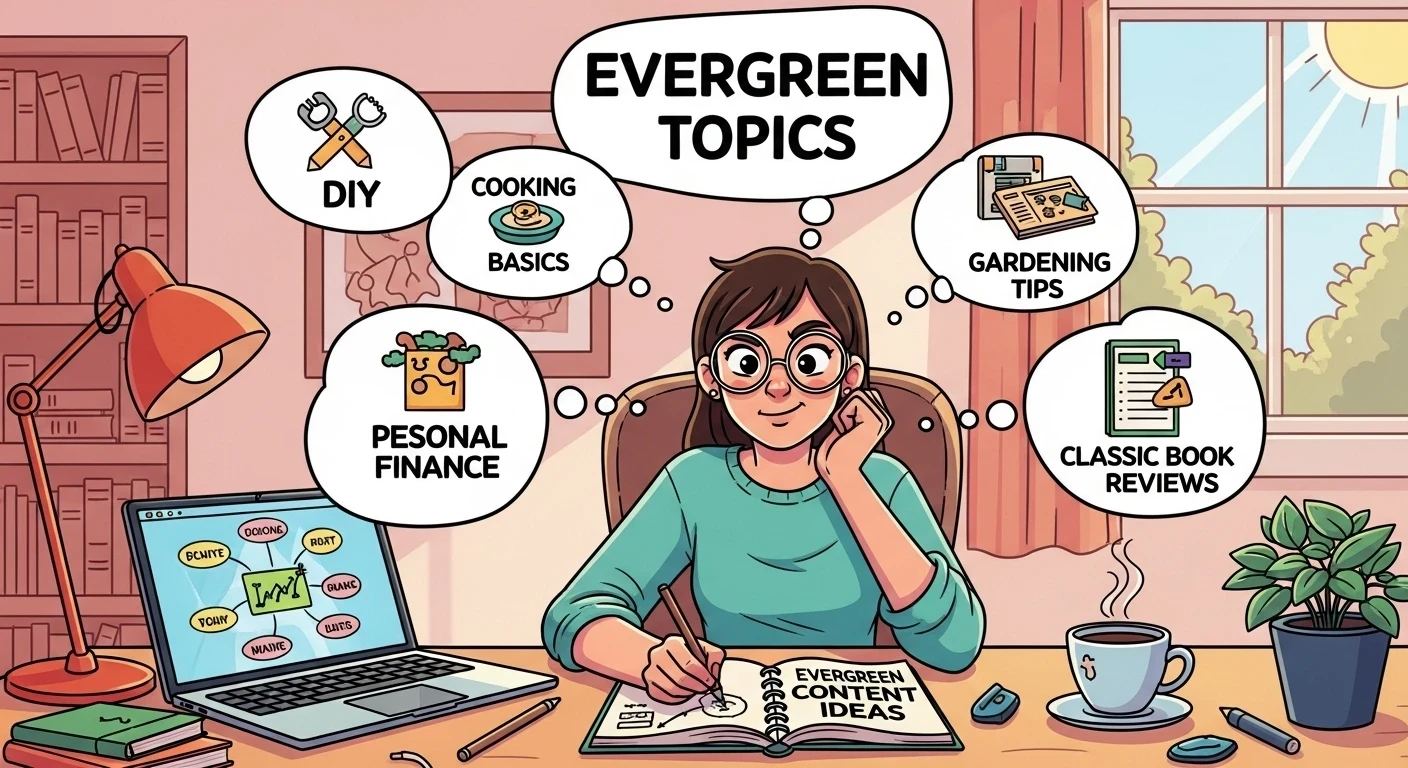
An AI-created illustration of a blogger planning evergreen topics that can attract steady readers over time.
Let me take a moment to define exactly what an Evergreen Topic is. An evergreen topic is a theme, subject, or piece of content that remains relevant, useful, and accurate for readers over a long period, consistently attracting traffic regardless of current trends, seasons, or news cycles.
Evergreen topics sound boring until you see what they can do for your traffic. They bring in people who are already looking for help, and that steady flow is what AdSense likes.
The trick is to stop chasing what's trending right now. Instead, aim for questions people keep asking every year. Those questions and searches don't care if you're tired, busy, or on vacation. They just keep happening over and over again.
Here are a few evergreen angles that show up in almost any niche:
- How-to posts that solve a common problem (how to start composting, how to clean a cast-iron pan, how to calm a new puppy at night).
- Beginner guides for people starting something from scratch (a beginner's guide to budgeting, knitting, home workouts, sourdough starter).
- Comparisons by category, not by model (best email marketing tools for small businesses, gas vs electric lawn mowers, acrylic vs oil paint).
- Definitions and explainers (what is a credit score, what is a capsule wardrobe, what are backlinks).
- Simple checklists (move-in checklist for renters, camping checklist for families, pre-trip car inspection checklist).
Notice what's missing? Breaking news, drama, and tiny updates. Evergreen content works because it matches a repeating need. If a topic helps someone solve a problem in February 2026, it should still help in February 2028 and beyond.
Advertiser demand matters too. Some topics attract higher-value ads because businesses pay more to reach those readers. You don't need to obsess over it, but it's smart to notice patterns. Personal finance, insurance, home services, software, and career topics often attract strong ad competition. Still, the best money comes from staying in a lane you can write about clearly for years.
A good evergreen topic feels like a well-worn tool. People keep picking it up because it keeps working.
What I am about to share took me 2 years to learn the hard way. I can only imagine just where I'd be today if I had known this 2 years ago, so pay close attention. ~TheAmazingMG
Use The Evergreen Test Before You Write: Will this matter in 2 years?
Nowadays, before I draft a single paragraph, I run a fast "two-year test." It takes about a minute and saves hours of writing posts that never get seen.
Use this quick checklist:
- Avoid dates and deadlines (unless the date is the topic, like tax due dates).
- Avoid news and platform drama (updates, scandals, algorithm panic).
- Avoid rapidly changing product models (especially "best phone of 2026" style posts).
- Prefer timeless problems (saving money, sleeping better, fixing something, learning a skill).
- Prefer skills and principles (how to plan meals, how to write a resume, how to choose running shoes).
A quick rewrite example:
- Dated: "Best Instagram Strategies for 2026"
- Evergreen: "Instagram Basics for Small Businesses (Posts, Reels, and Captions That Still Work)"
The second title can survive changes because it focuses on fundamentals, not a moment in time.
Pick Keywords With Stable Demand, Not Trendy Spikes
Stable demand simply means people search for it every month, not only during a hype wave that may spike with a passing influencer. Trends can be fun, but they're like fireworks in that once lit, they pop fast. Evergreen keywords are like porch lights at Motel 6; they're not exciting, but they stay on.
In the words of Tom Bodett: We'll leave the lights on for you! ~ Motel 6
Google Trends is great for a quick sanity check. If a term spikes hard and drops to zero, be careful. If it stays fairly steady (even if it's not huge), that's often a better bet for AdSense rent.
Ready to put this into action?
Start your free journey today — no credit card required.
Next, build one main keyword and a small set of supporting questions. For example:
- Main keyword: "how to start a budget"
- Supporting questions: "what budget categories should I use," "how much should I save," "how to budget with irregular income," "simple budget example," "best budgeting mistakes to avoid"
That gives you a natural outline. It also helps you write in a way that feels complete without stuffing the same phrase everywhere.
Take note! If the post sounds weird when you read it out loud, the keyword use is probably too heavy.
Write The Kind of Evergreen Article That Google Ranks, and Readers Finish
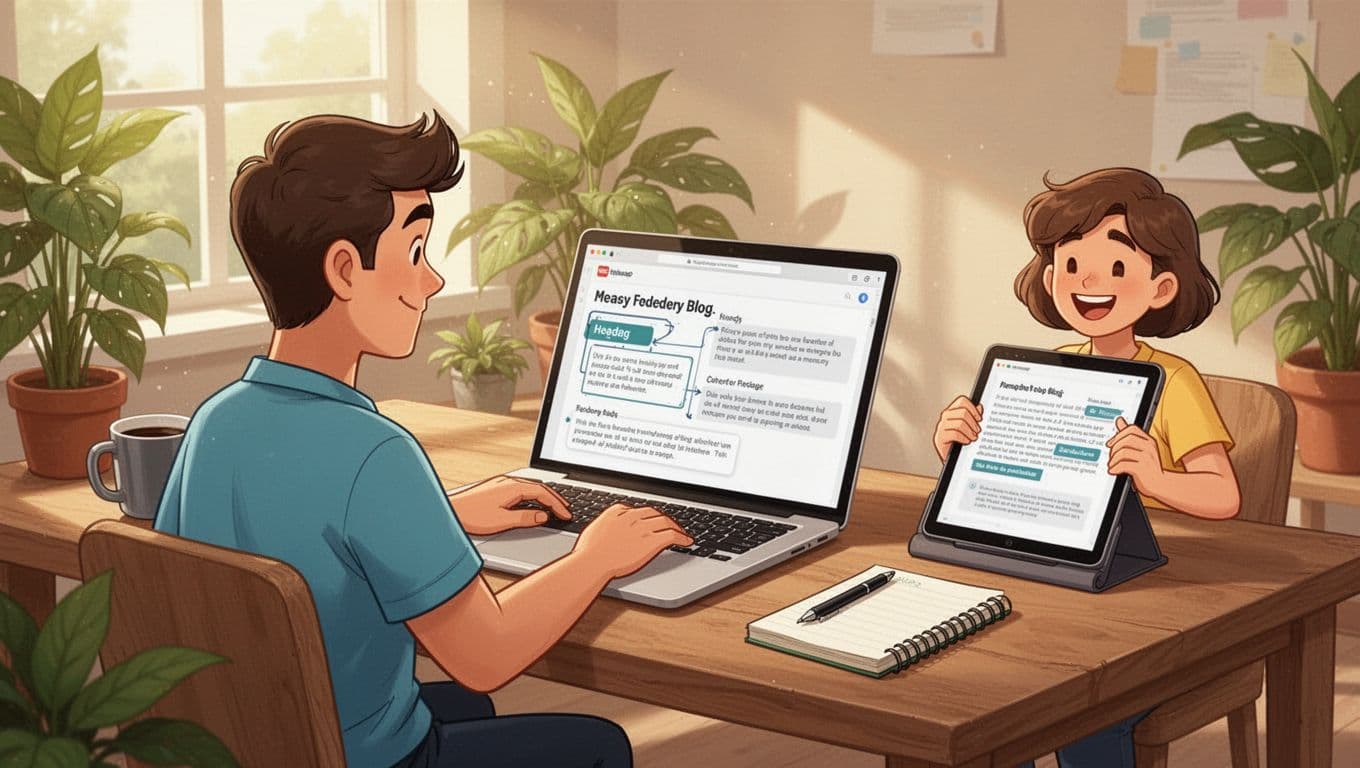
An AI-created illustration of a writer structuring a post for easy reading and strong engagement.
Evergreen posts don't earn because they exist. They earn because people stay, read, and feel helped. That usually means better engagement, greater trust, and more opportunities for readers to visit other pages.
I used to write as if I were trying to impress a teacher. Long openings, slow build, tons of throat clearing. I think you know what I mean here: choose a topic and fill the article with crap to fill space so that I sound like I know what I am talking about (aka FLUFF).
Over time, my bounce rate revealed the harsh truth. People want answers and not fluff.
Start With A Clear Promise, Then Answer Fast
A simple opening pattern that works is: hook, promise, proof.
- Hook: Say the problem in plain words.
- Promise: Tell them what they'll be able to do after reading.
- Proof: Show what you'll cover (and keep it tight).
In the first 100 words, make three things obvious: who it's for, what it solves, and what's coming next. Then give a quick, skimmable summary so the hurried reader doesn't leave. Want an example? Reread the opening to this article.
Or another example of what you can do, right after the intro, you might add a short list like:
- What makes a topic "evergreen"
- How to choose stable keywords
- A layout that keeps readers scrolling
- A simple update routine
It's not fluff. It's a map for your readers to follow.
Build A Scannable Layout That Keeps People Reading
If evergreen content is the house, then the structure is the floor plan. Without it, people get lost in the carnival funhouse word salad you created and walk out.
Here's a mini template you can reuse:
- Short intro with a fast answer near the top
- Clear H2 sections for the big ideas
- H3 sections that answer the main questions
- Short paragraphs (1 to 3 sentences)
- A few bullets only when they truly help
- A short FAQ near the end for extra long-tail searches
Also, add at least one visual when it helps. Their eyes naturally gravitate toward images, so placing them near important points helps a lot!
Screenshots, simple diagrams, or illustrations can slow readers down in a good way. Write descriptive alt text so search engines and readers using screen readers understand what the image is about.
Finally, plan internal links like you're being helpful, not sneaky. Point to a related post that solves the next problem.
If someone just learned how to start a budget, their next question might be how to track expenses or how to cut grocery costs. When readers take that next step, your session depth goes up. The more pages viewed usually means more ad impressions over time.
If your post answers the search quickly, readers relax. Then they're more willing to keep reading.
Keep Posts Earning For Years With Simple Updates and Smart Content Maintenance
Here is my final point. Evergreen content is not set and forget. I learned that the hard way after watching "good" posts slowly slide down the results page.
A light refresh keeps your content accurate and keeps it competitive. In most niches, a 6 to 12-month check is enough. If your topic changes faster (like software), you may need to review more often.
Mental note: If your evergreen topic is AI, first, you are brave, and second, prepare to update it weekly, as the information and topic are evolving daily! Evergreen AI content would be a tough nut to crack. If you manage to do it, let me know how you did it!
Ensure the content passes the Two-Year Test I mentioned earlier.
If and when you update a title and meta description, keep the same URL if the topic is still the same. That way, you don't throw away any history the page has built.
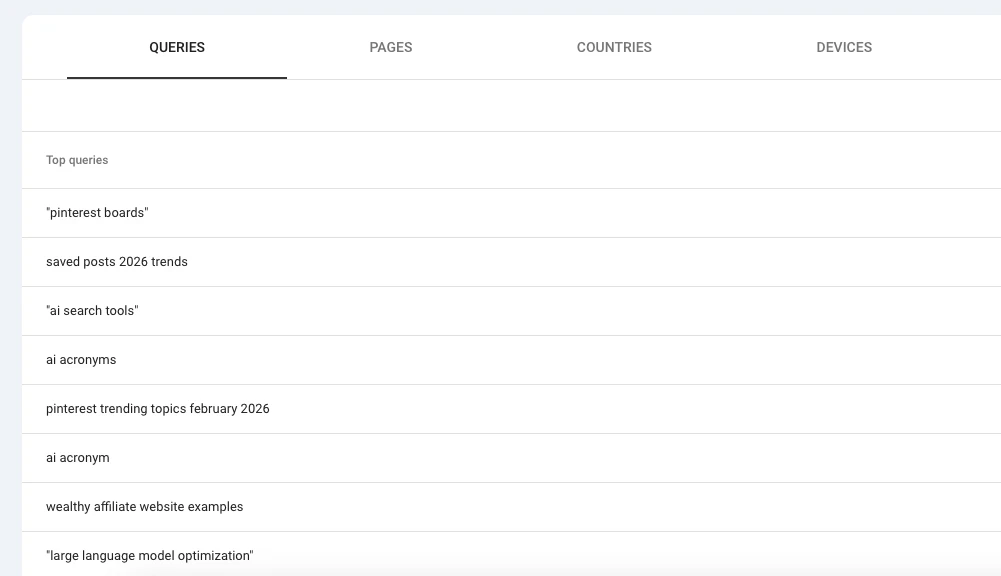
Fix broken links, swap old screenshots, and tighten confusing sections. Also, look at Google Search Console queries to see what people typed before they clicked. Those phrases are free hints for missing subtopics. Below is an example of what people typed to reach your content. In this case, mine.
A Simple Refresh Routine You Can Repeat Every 6 to 12 Months
- Check clicks and rankings, then pick the top posts to refresh first.
- Update outdated facts, steps, and tool recommendations.
- Add a missing section if readers keep asking the same question.
- Improve the title and meta description to earn more clicks.
- Fix broken links and add one or two new internal links if relevant.
- Add 1 to 2 fresh examples that make the advice easier to use.
- Update the publish date only if your site policy allows it and it's honest.
Build a Blog That Pays You Every Month
Evergreen posts that keep paying AdSense rent come from a simple system: choose timeless topics with stable demand, write for search intent and readability, then maintain posts with light updates. That's it. No explosions or grand fanfare are required, just consistency.
If you want an easy starting point, build a foundation of 3 to 5 evergreen posts first. Track which ones earn and hold rankings, then write more like those.
Pick just one topic today, run the two-year test, and outline it with one main keyword plus a few supporting questions. What's the first "rent-paying" post you're going to write? Let me know below, and if you need help, ask a question. We are here to learn, and I hope this helped.
Share this insight
This conversation is happening inside the community.
Join free to continue it.The Internet Changed. Now It Is Time to Build Differently.
If this article resonated, the next step is learning how to apply it. Inside Wealthy Affiliate, we break this down into practical steps you can use to build a real online business.
No credit card. Instant access.