Why Search Intent Matters More Than Keywords


Published on March 27, 2026
Published on Wealthy Affiliate — a platform for building real online businesses with modern training and AI.


Search Intent Isn’t What You Think
Search intent sounds simple: merely match what someone typed, give them the answer, and you are done. That is how most people approach it. I did too, for a while.
Then you start noticing something. Two pages can target the same keyword and get very different results. One ranks and converts. The other just sits there. The same topic, some of the same basic information, yet a totally different outcome.
That is where the real lesson starts to show up, and what I hope to teach you today.
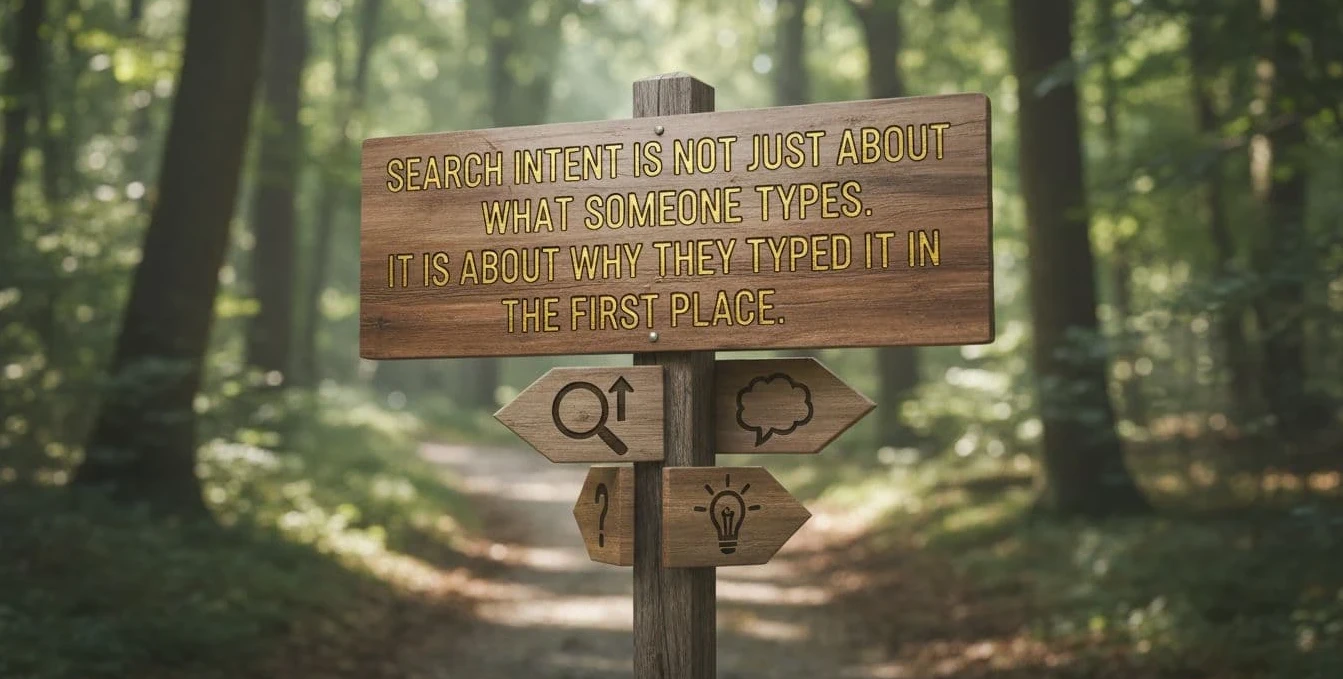
Search intent is not just about what someone types. It is about why they typed it in the first place. That reason can often be messy, incomplete, or even slightly hidden. If you only respond to the surface, your content feels technically correct but forgettable.
Once you start looking for the reason behind the search, everything changes. Your writing gets sharper. Your examples feel more relevant, and your content no longer feels like it was written just to exist.
Most training will teach you the categories. Informational. Navigational. Transactional. Those are useful, sure. But they do not capture the full picture of intent.
Search intent is about moments.
Every search comes from a small decision happening in real time. Someone is stuck, curious, cautious, or ready to act. The words they type are only a rough signal. Sometimes they hide what the person actually wants.
Take something simple, like the best running shoes. On the surface, it looks transactional. Someone who is ready to buy.
But that is not always true.
Sometimes it is hesitation. Someone is thinking about getting into running but is unsure if they should even start. If your content just lists products, you miss that completely. If you speak to the hesitation, you win their trust.
That is where most content quietly fails.
It answers the query, but not the person. It delivers information without resolving the tension behind the search. Your page looks complete, yet it does nothing.
What surprised me was when I really started paying attention.
Ready to put this into action?
Start your free journey today — no credit card required.
Search intent is not fixed.
It can change while someone is reading your content.
A visitor can land on your page curious and leave ready to take action. Or they can land ready to buy, only to leave confused because something felt off. Your content is not just matching intent. It is shaping it.
That changes how you should approach everything.
Instead of asking, “What does this keyword mean?” start asking, “What is this person going through right now?” Take a brief walk in their shoes.
- Are they unsure?
- Are they comparing options?
- Are they looking for reassurance before making a decision?
When you can answer these questions, your content stops feeling bland and generic.
You naturally remove friction and guide the reader forward. You make the next step feel obvious instead of forced.
This is where a lot of beginners get messed up.
They follow the training, pick keywords, and they write posts. But something feels off because they are writing for the keyword, not for the person behind the search and their intent.
If you shift that focus, even slightly, your results start to change.
Your posts feel more natural, and your message lands better. Your content starts doing what it was supposed to do in the first place.
The lesson here is not complicated, but it is easy to ignore.
If you chase keywords, you will always be one step behind. There will always be more content, more competition, and someone willing to say the same thing a little louder than you.
If you focus on intent, you step into a different lane, and you shift gears into overdrive.
You are no longer trying to match words. You are trying to understand a person in a specific moment and help them move forward.
That is harder, and it takes more thought. Sometimes you have to slow down and really think about what is behind a search.
But this is where content starts to work in your favor.
Not because it ranks, but because it connects with your reader.
And once it connects, everything else gets easier.

I would rather help five people who read my content and convert than thousands of readers who take no action.
So next time you sit down to write, pause for a second.
What is your reader actually trying to figure out?
Answer that, and you are no longer just creating content.
You are building something people trust.
Share this insight
This conversation is happening inside the community.
Join free to continue it.The Internet Changed. Now It Is Time to Build Differently.
If this article resonated, the next step is learning how to apply it. Inside Wealthy Affiliate, we break this down into practical steps you can use to build a real online business.
No credit card. Instant access.