The Biggest AI Mistake Beginners Make When Using AI for Content


Published on March 20, 2026
Published on Wealthy Affiliate — a platform for building real online businesses with modern training and AI.


Artificial intelligence has made creating content easier than ever before.
You can ask any AI tool to write a blog post, generate an image, draft a social media caption, or even outline an entire website. In seconds, you have something on the screen that looks like a Mona Lisa.
For someone new to online business, it can feel almost magical.
And that is where the biggest mistake begins.
The mistake is believing that AI replaces thinking and does all of the work for you.
Many beginners open an AI tool, type a short prompt like “write a blog post about affiliate marketing,” copy the result, publish it, and assume they are now creating content the same way experienced creators do.
On the surface, it may look productive. Words are being generated quickly, pages are filling up, and their site is growing.
But underneath that speed, something so very important is missing.
Direction.

AI can look polished at first glance, but that doesn’t mean it solves the right problem
AI is very good at producing language. It can organize ideas, structure paragraphs, and explain common topics. What it cannot do is understand the purpose behind your content unless you provide it with proper guidance.
Without direction, AI produces what I would call average internet content; others would call it cookie-cutter content.
It reads fine, and it may sound reasonable. But it rarely answers a specific problem in a meaningful way. It simply reflects patterns that already exist across thousands of other articles. Hence, cookie-cutter content.
Search engines are becoming better at recognizing this kind of material. More importantly, readers can feel the difference as well and will usually let you know immediately by clicking away from your articles. Content that lacks real insight from real people often feels generic, even when the writing itself is polished.
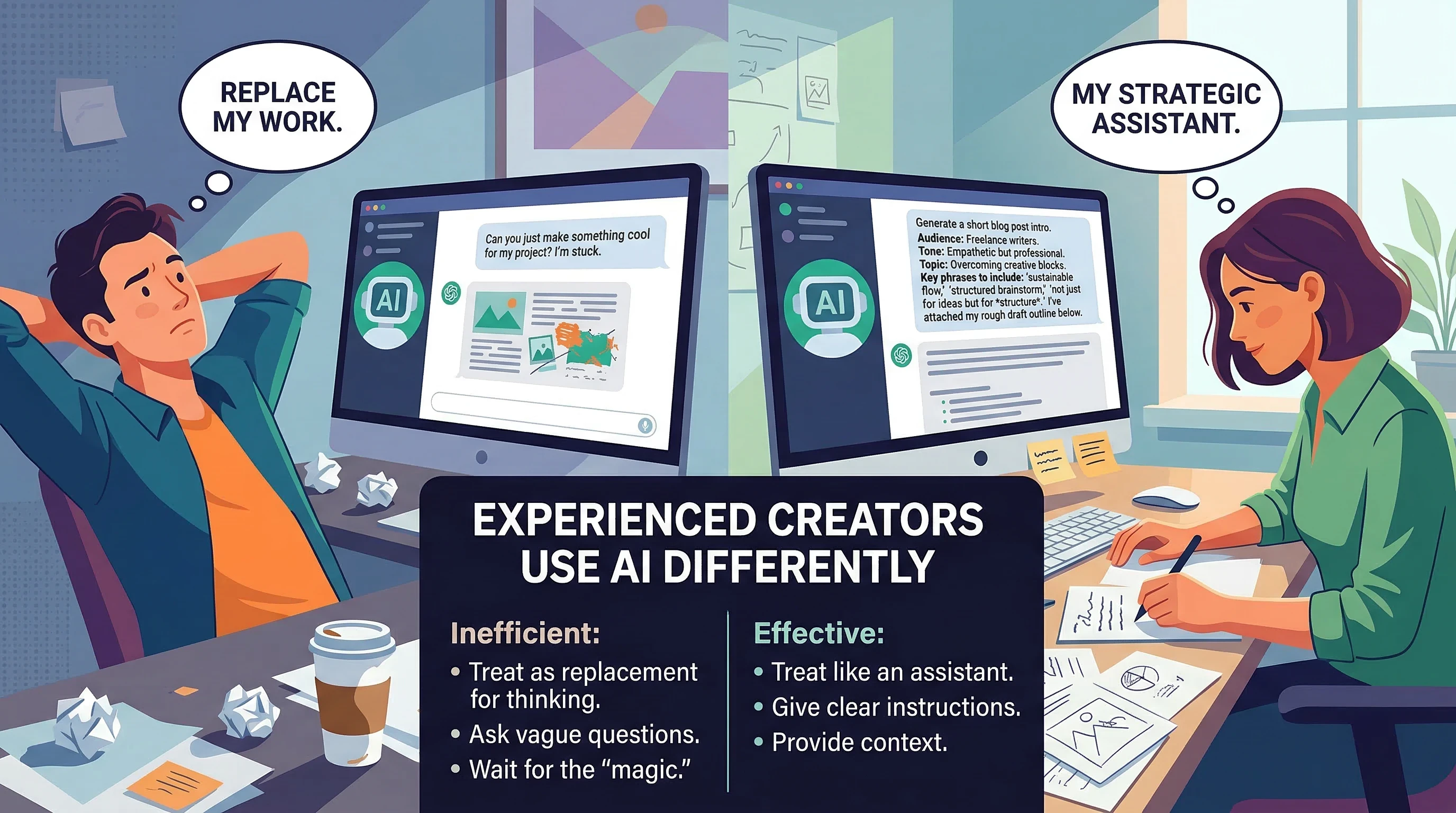
That is why experienced creators use AI differently.
They do not treat it like a replacement for thinking. They treat it like an assistant.
Ready to put this into action?
Start your free journey today — no credit card required.
Instead of asking vague questions, they give AI clear instructions.
They provide context.
They ask for outlines first. They refine prompts. They review what comes back and adjust it. Sometimes they rewrite sections entirely to better fit their own voice.
The AI speeds up the process, but the human still provides the direction.
Think of it like this.
AI can help you build the house faster, but someone still has to decide what the house should look like.
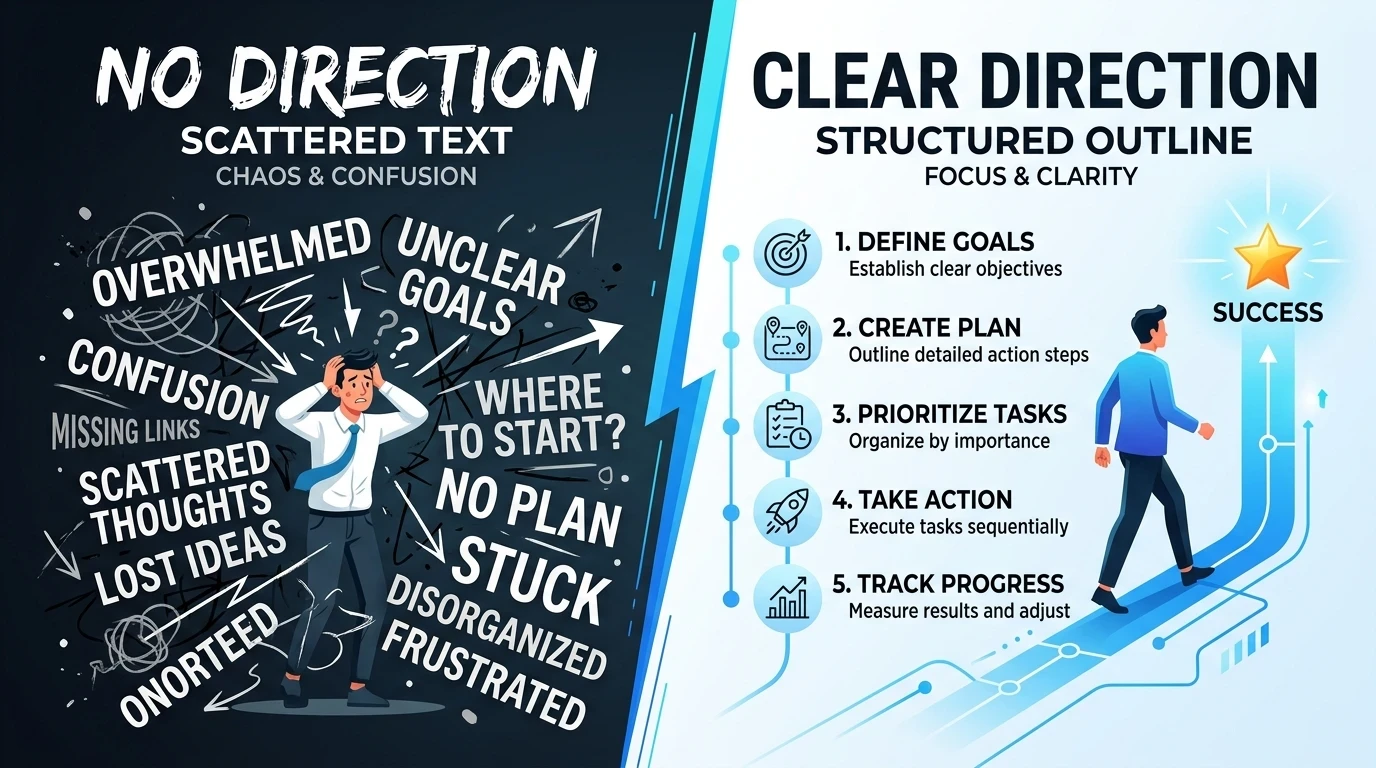
The difference between content that fills space and content that actually helps
Another mistake beginners make is trusting the first response too much. AI tools are trained on large datasets, and while they are often accurate, they can also repeat outdated ideas or oversimplify advice. Another issue is that if it cannot find something to answer a question, it can make something up that sounds natural to it. (aka Filler/Fluff)
That is why editing matters.
Good creators read what AI produces and ask simple questions:
- Does this actually answer the reader’s question?
- Is this information accurate?
- Does it sound like something I would say?
- If the answer is no, they refine it.
Ironically, this extra step is what separates useful AI-assisted content from the kind that disappears into the back roads of the internet that no one wants to travel on.
The real advantage of AI is not that it writes for you.
The advantage is that it helps you think faster.
It helps you organize ideas, explore angles you might not have considered, and move from concept to finished piece much more quickly than before.
But the creator still decides what matters.
And that is why the biggest AI mistake beginners make is simple.
They let the tool lead the process instead of leading it themselves.
They themselves become the sheep and allow other creators to play the role of the wolf.
When you flip that relationship around and use AI as a guide, an assistant, and sometimes even a brainstorming partner, the results become much more interesting.
Not just faster content.
Better content, and you become the wolf.
When I first started experimenting with AI tools, I totally trusted the output far more than I should have. It looked polished, so I assumed it was good enough. After a while, I realized the real value came from editing, guiding, and sometimes rewriting parts of it entirely. I realized that providing value over filler content was the way to go. Even if it meant slowing down. I am talking about less content, but when I do publish, better content with context that serves the reader.

The real value of AI shows up during editing, not the first draft
Now, I'm curious how others are approaching this.
When you started using AI for content, did you trust the first output, or were you already refining it right away? Also, do you honestly do a full edit, or are you merely trusting the junk AI can produce on its own? Let me know below.
Share this insight
This conversation is happening inside the community.
Join free to continue it.The Internet Changed. Now It Is Time to Build Differently.
If this article resonated, the next step is learning how to apply it. Inside Wealthy Affiliate, we break this down into practical steps you can use to build a real online business.
No credit card. Instant access.