AI vs. Authentic Content: The Surprising Lesson My Analytics Taught Me


Published on June 26, 2026
Published on Wealthy Affiliate — a platform for building real online businesses with modern training and AI.

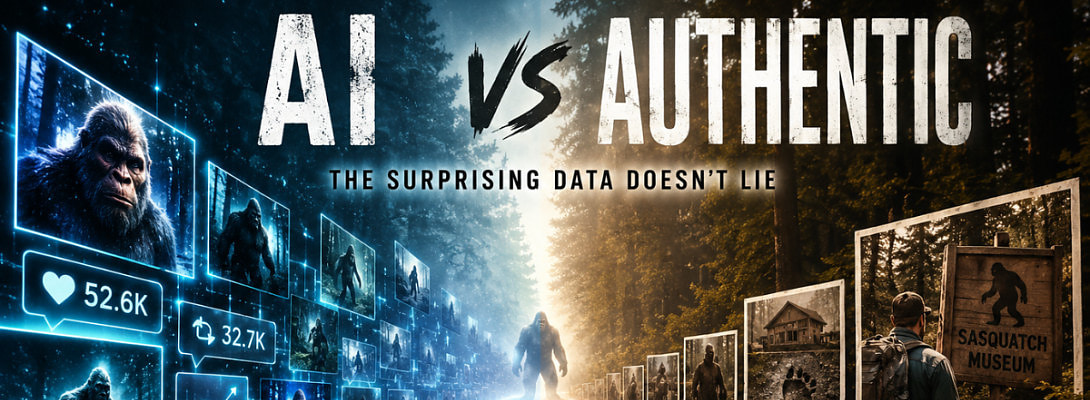
If you've spent any time building an online business over the last couple of years, you've probably heard the same advice repeated over and over again. Be authentic. Be yourself. Stop relying on AI because people only want real content. As someone who has spent years building a brand around real-world experiences, I believed that advice. My Wildfoot Explores brand isn't built from sitting behind a computer screen all day. It's built from thousands of miles on the road, visiting museums, researching folklore, meeting with Indigenous communities, writing books, taking photographs, and documenting my own experiences. Naturally, I assumed that the more authentic my content became, the better my results would be.
What happened over the last month completely challenged that assumption.
Rather than listening to opinions, I decided to look at the numbers. I opened Facebook, Pinterest, and my website analytics and compared AI-generated artwork against real photographs, documentary-style reels, and long-form blog content. I wasn't trying to prove AI was better than authentic content. In fact, I expected my authentic work to outperform everything else because it represented real effort, real travel, and real experience. Instead, the data painted a completely different picture.
The Facebook Numbers Were Impossible to Ignore
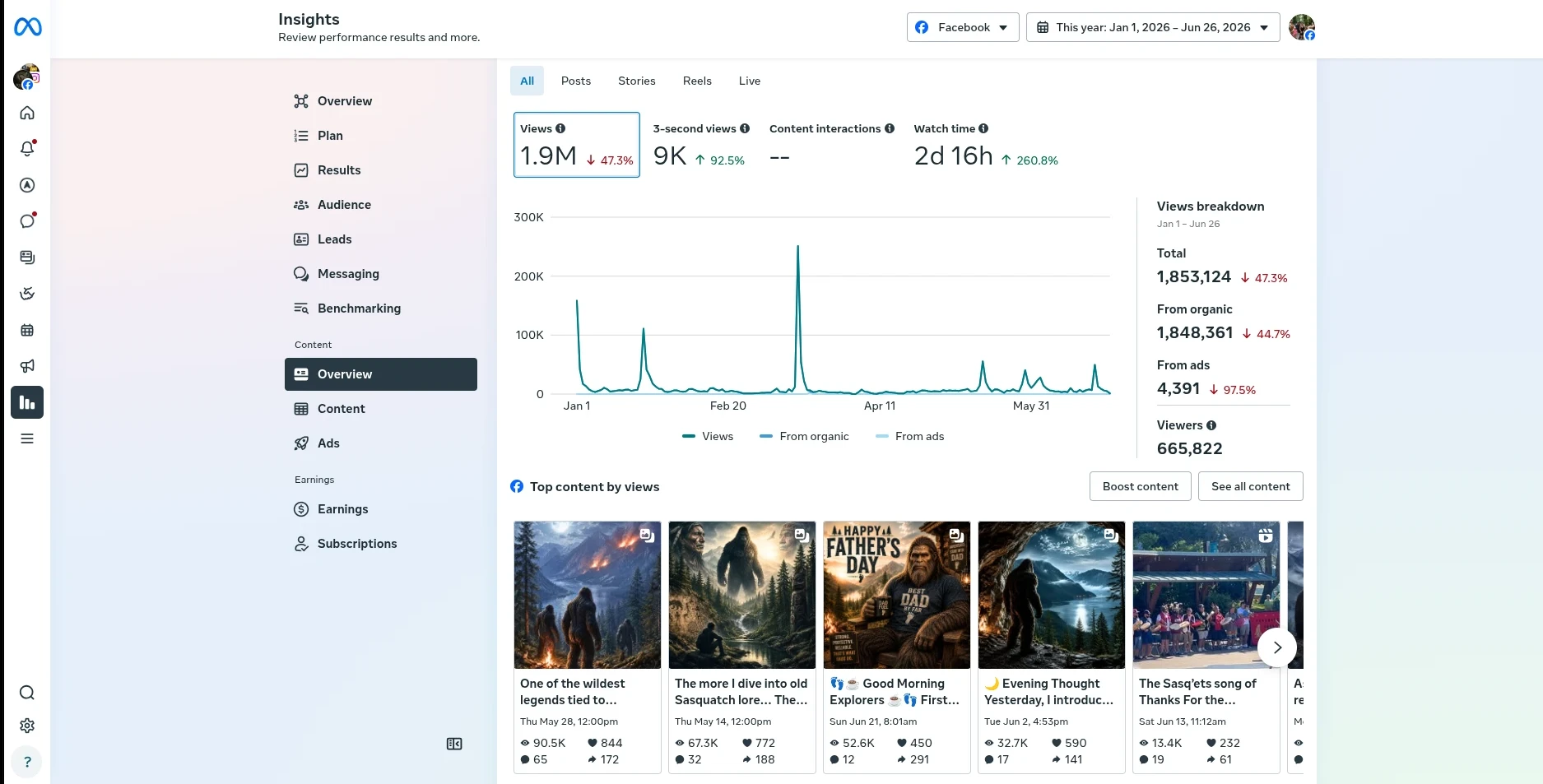
The first thing I looked at was my Facebook analytics. One of my AI-generated Father's Day images reached an incredible 52,600 people. It generated 761 interactions, including 450 reactions, 12 comments, and an incredible 291 shares. Those shares immediately caught my attention because shares are one of the strongest signals Facebook receives. Every time someone shares your post, they're introducing your content to an entirely new audience, and Facebook recognizes that behavior by continuing to distribute the post.
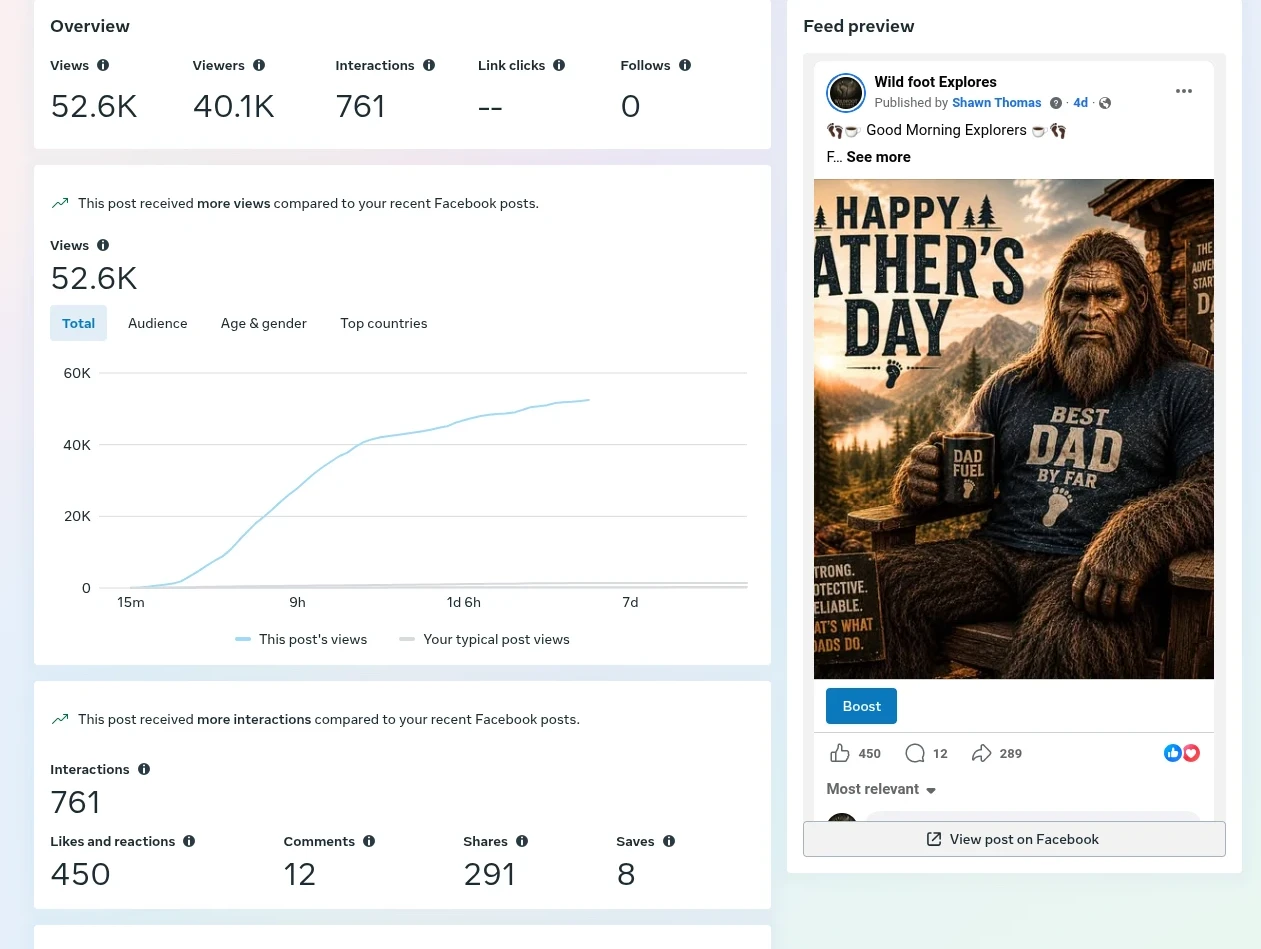
At first, I honestly thought I had simply created one image that happened to go viral. Every creator experiences that once in a while, so I wasn't ready to draw any conclusions. Instead, I continued digging through the rest of my analytics to see whether there was a consistent pattern or whether this was simply one lucky post.
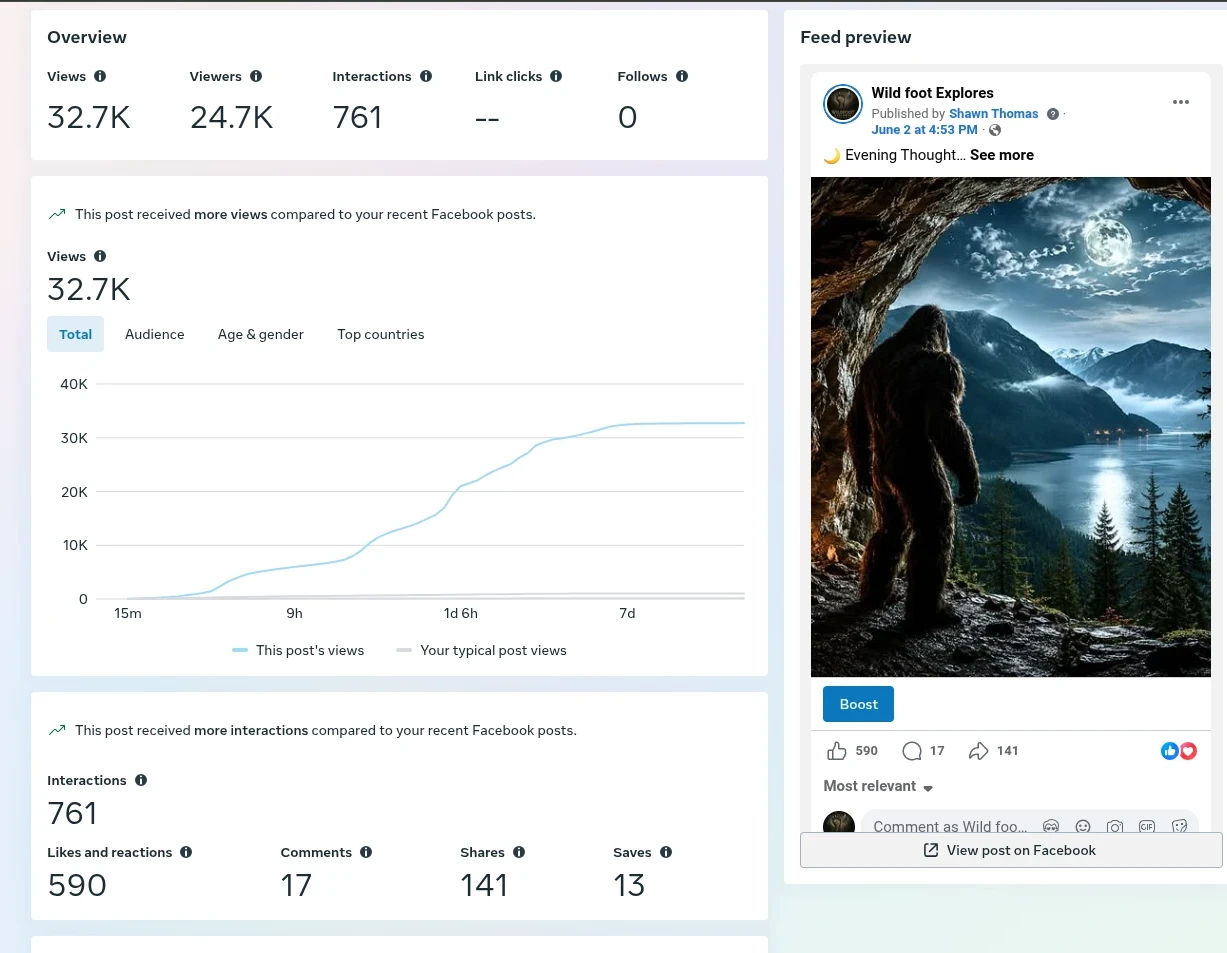
The next AI-generated image told almost the exact same story. This post reached approximately 32,700 people while producing another 761 interactions. It generated 590 reactions, 30 comments, and another 141 shares. Suddenly this wasn't looking like luck anymore. Two completely different AI images had produced outstanding results, and both had significantly outperformed much of my other content. At that point, I stopped asking whether AI was responsible and started asking what those images were doing differently that caused people to stop scrolling.
Then I opened the analytics from one of the posts that meant the most to me personally. During my recent trip to Harrison Hot Springs, I visited the Harrison Sasquatch Museum, documented the experience, photographed exhibits, and shared one of the most meaningful research trips I've completed in years. That post represented thousands of miles of driving, genuine field research, conversations with local people, and experiences that simply cannot be recreated with artificial intelligence. Yet the post reached only about 5,800 people and generated a fraction of the engagement that my AI artwork received.
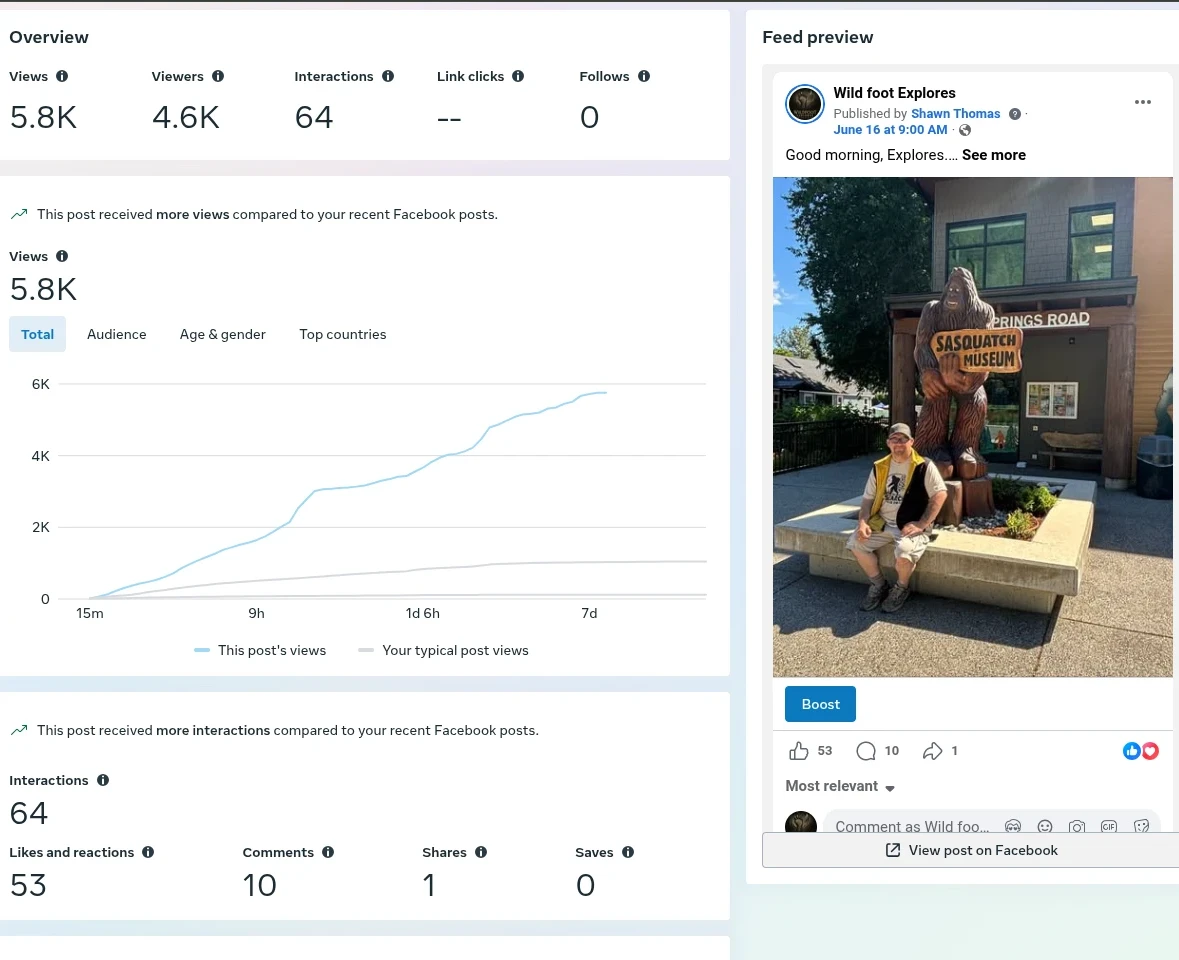
That was the moment I realized I needed to stop looking at this emotionally and start looking at it objectively. The content I valued most wasn't necessarily the content my audience was stopping to look at.
The Indigenous Reel Taught Me Another Lesson
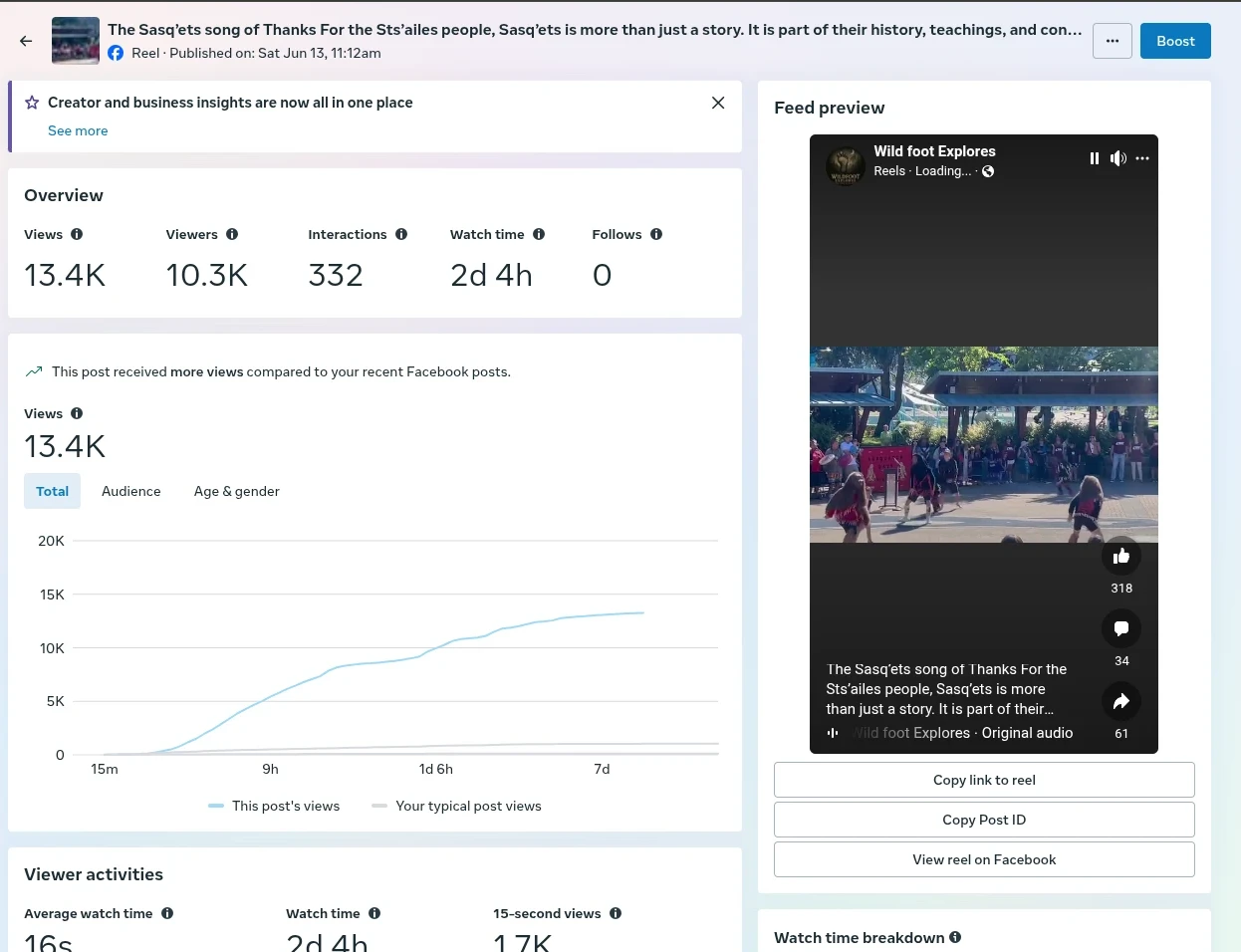
One of the pieces of content I was most excited to publish was a reel featuring an authentic Indigenous cultural performance from Harrison. There was nothing artificial about it. It was real people, real traditions, and a genuine experience that I felt privileged to witness. I honestly believed that if any piece of content was going to resonate with my audience, this would be the one.
The reel performed reasonably well, reaching roughly 13,400 views, but once again it fell well behind the AI artwork. That doesn't mean people didn't appreciate the cultural significance of what they were watching. I believe it highlighted something much more important. Most people scrolling through Facebook had no emotional connection to that moment because they weren't there to experience it alongside me. Without context, it became another video in an endless feed of content competing for attention.
That realization changed the way I think about social media. Sometimes we become emotionally attached to our own experiences because we lived them. Our audience doesn't automatically share that same emotional investment. They first need a reason to stop scrolling before they ever discover why that moment mattered.
Pinterest Confirmed Exactly the Same Pattern
I initially wondered whether this was simply Facebook behaving like Facebook. Social media platforms all operate differently, so perhaps another platform would tell a completely different story. That's when I opened my Pinterest analytics.
To my surprise, I found almost the exact same trend.
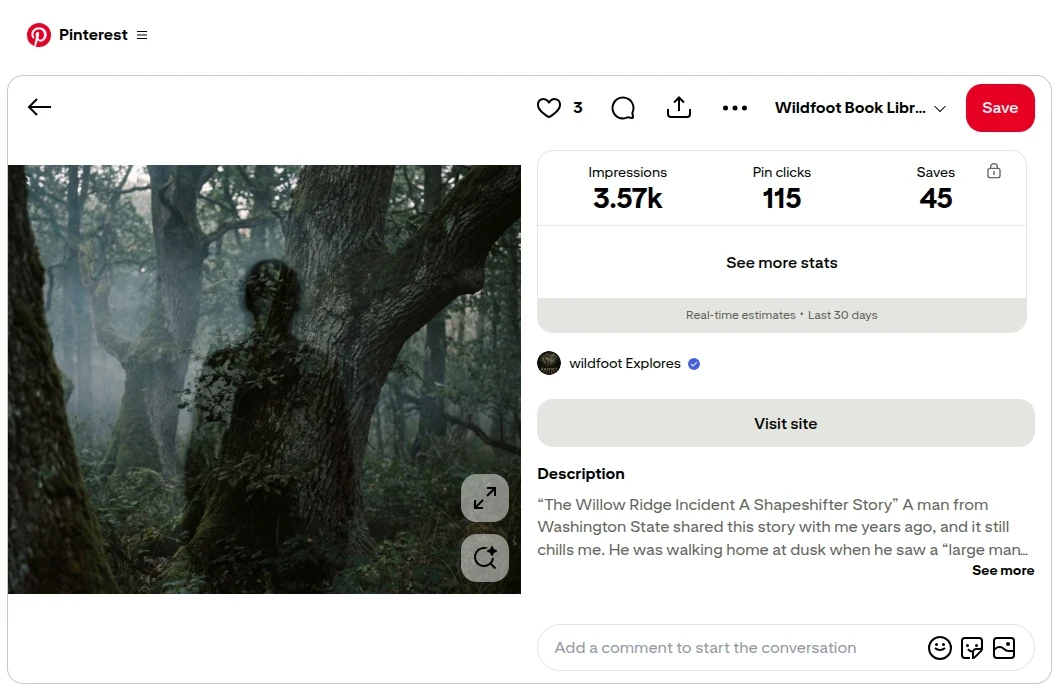
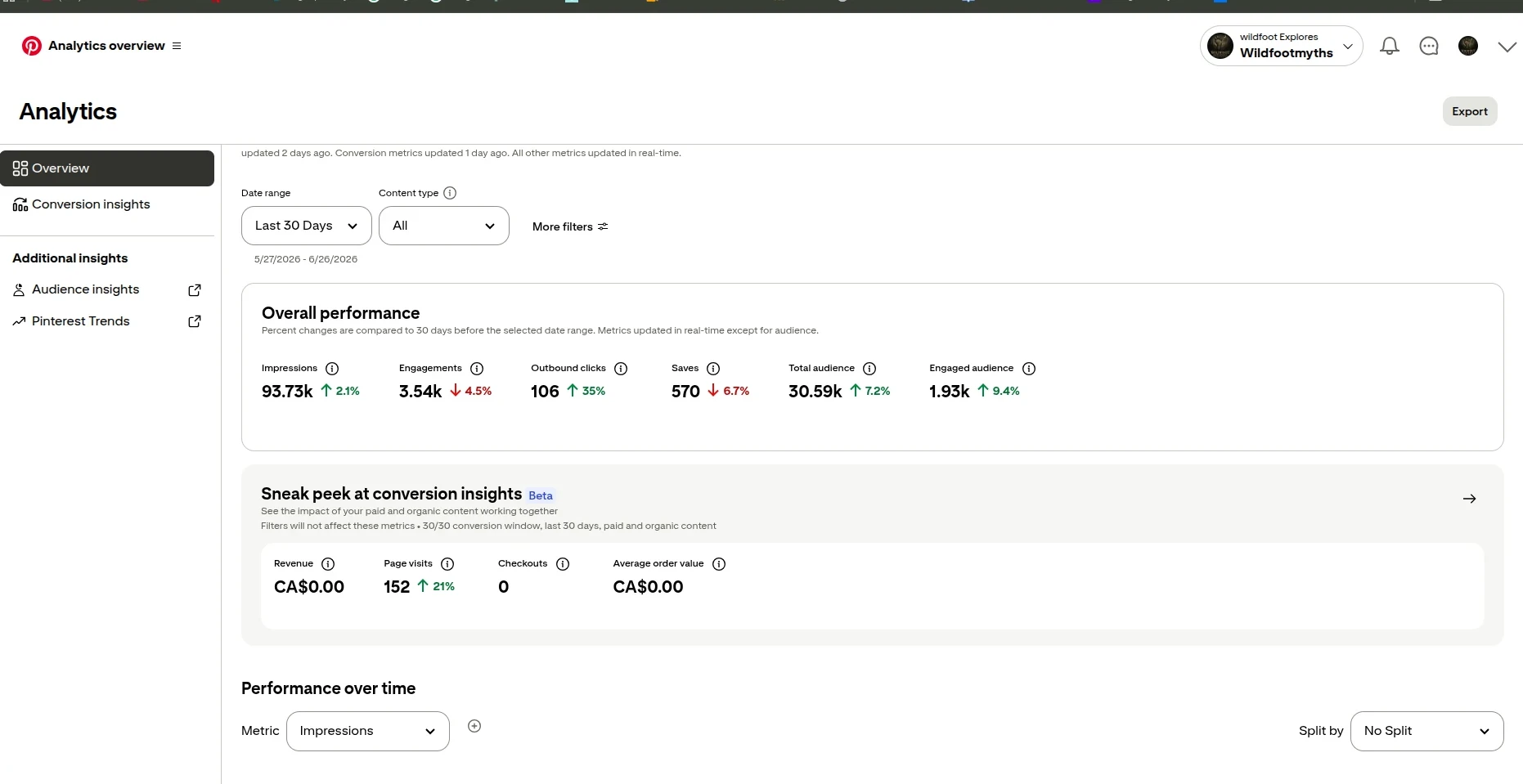
One AI-generated pin produced approximately 3,570 impressions, 115 outbound clicks, and 45 saves. Those are excellent numbers because Pinterest users don't simply like content. They save it to collections they want to revisit later. Every save increases the likelihood that the content will continue circulating long after it was first published.
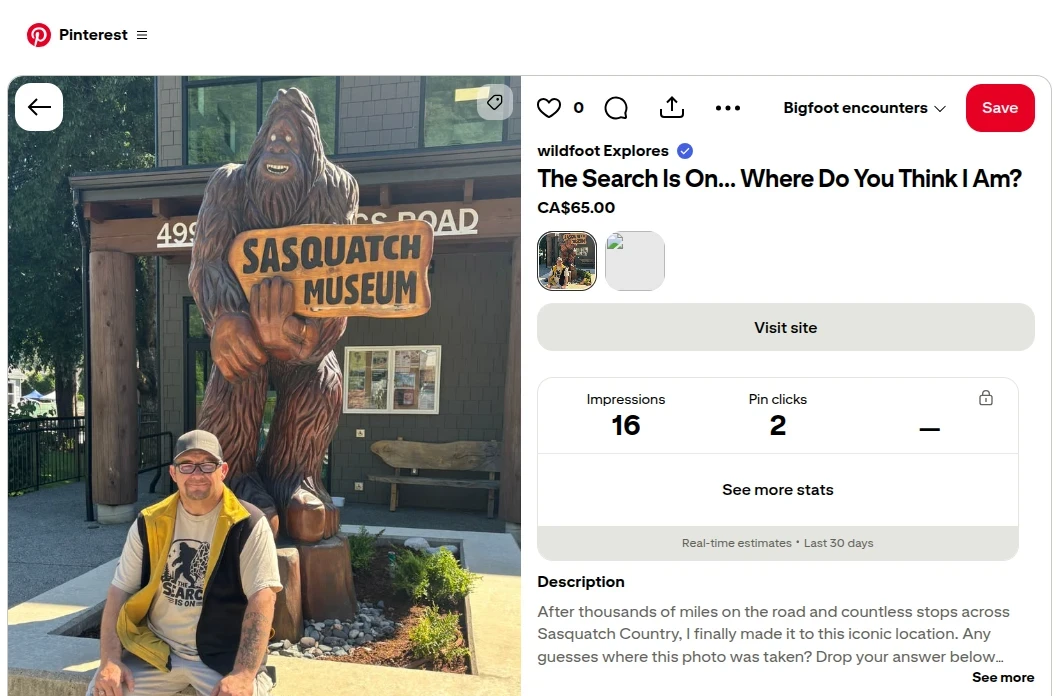
Then I compared those numbers to one of my authentic documentary-style images. That pin managed only 16 impressions and produced just two clicks. The difference was staggering. The same creator was publishing the content. The same niche was being targeted. The only significant difference was how the content immediately captured attention.
When two completely different platforms begin showing the same pattern, it's difficult to dismiss the results as coincidence.
The Real Lesson Isn't About AI
After studying these analytics for several days, I came to a conclusion that honestly surprised me.
I don't think AI is outperforming authentic content because people love artificial intelligence.
I think AI is outperforming authentic content because it creates an emotional reaction almost instantly.
A well-designed AI image functions much like a movie poster. Within a fraction of a second, it tells a complete visual story. A giant Sasquatch holding a coffee mug immediately creates curiosity and humor. A mysterious creature standing beneath a full moon overlooking a forest instantly creates mystery and wonder. Before someone has read a single word of the caption, their brain has already processed the emotion the image is trying to communicate.
Now compare that to a real photograph of me standing beside a museum display. To me, that photograph represents years of research, thousands of miles driven, meaningful conversations, and an unforgettable experience. To someone who has never heard of Wildfoot Explores, it's simply a man standing beside a display they know nothing about. The emotional connection hasn't been established yet.
Ready to put this into action?
Start your free journey today — no credit card required.
That doesn't make authentic content less valuable.
It simply means authentic content often requires context before its value becomes obvious.
What This Means for Bloggers and Affiliate Marketers
I believe there is an important lesson here for everyone building an online business.
We spend enormous amounts of time focusing on writing quality articles, improving our SEO, researching keywords, and producing valuable information. All of those things remain incredibly important because they build authority and trust over time. However, none of that work matters if people never stop long enough to discover it.
Your featured image matters.
Your headline matters.
Your thumbnail matters.
Your introduction matters.
These elements are not replacing quality content. They are earning your content the opportunity to be seen.
As affiliate marketers, we sometimes become emotionally attached to the effort behind our work. We know how many hours were invested into creating an article or producing a video. Our audience doesn't see that effort. They make a decision within seconds based entirely on what appears in front of them. Understanding that reality has changed the way I think about content creation.
AI Isn't Replacing Authenticity
Ironically, this experiment hasn't convinced me to abandon authentic content. If anything, it has reinforced why authentic experience is still the foundation of everything I create.
Artificial intelligence can generate a beautiful image in seconds, but it cannot replace years of learning. It cannot replace genuine field research. It cannot replace real conversations, museum visits, personal photographs, or firsthand experience. Those are things that still belong to the creator.
What AI appears to do exceptionally well is open the front door.
It captures enough attention to earn the click.
Once someone enters your website, watches your video, or reads your article, AI has already completed its job. From that point forward, it is your knowledge, your experience, your personality, and your credibility that determine whether someone stays.
Final Thoughts
Before I wrap this up, I want to share a couple of screenshots from my own analytics because I think they add an important layer to this discussion.
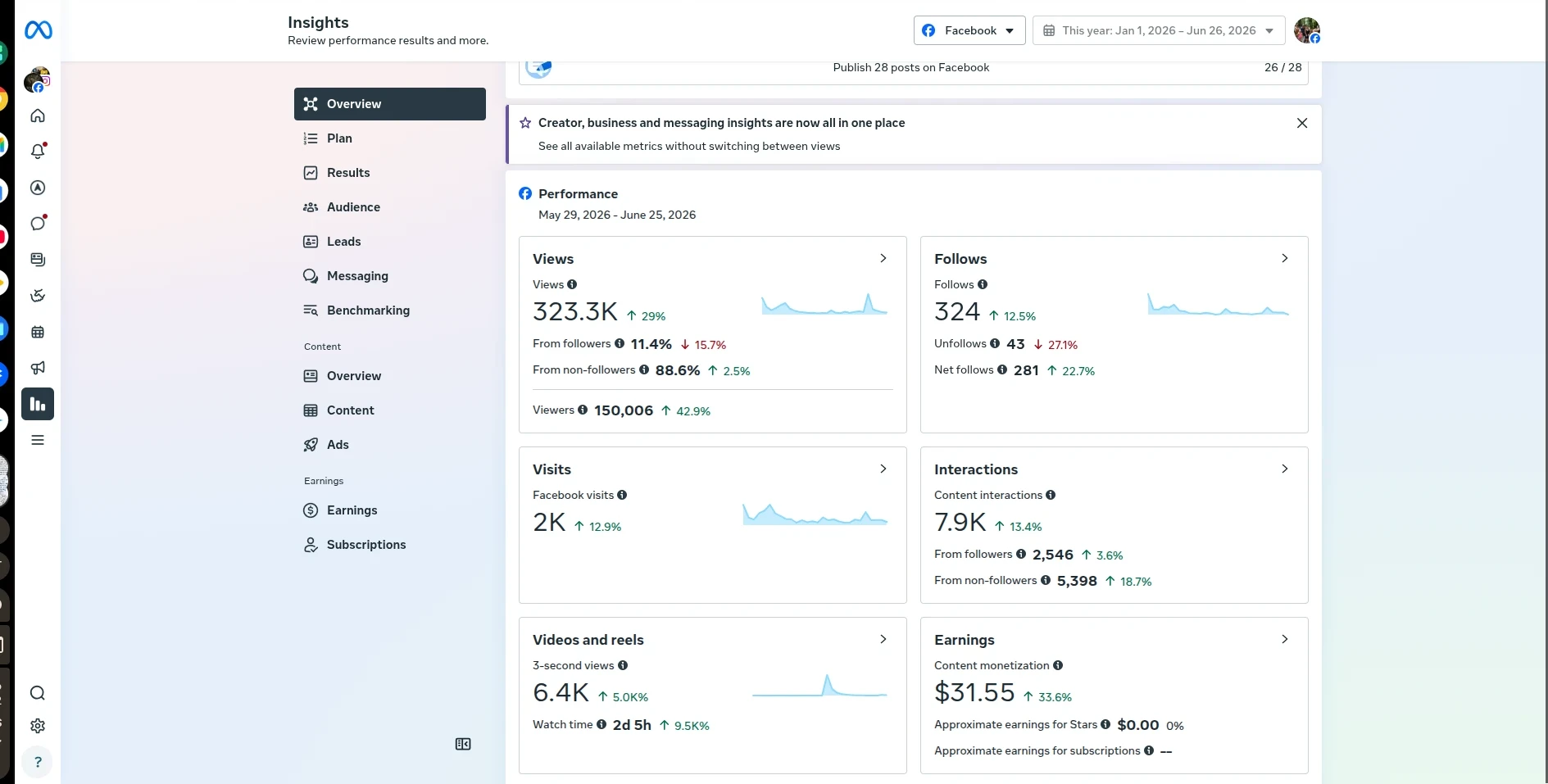
The first screenshot is from my Facebook page. Over the last 30 days alone, the page has generated more than 323,000 organic views, reached over 150,000 individual viewers, produced nearly 8,000 interactions, and even generated $31.55 in content monetization. Looking at those numbers, I have to respect what the analytics are telling me because this isn't theory anymore. This is real data from a page that has accumulated nearly 1.9 million views this year.
The interesting part is how those numbers were achieved.
For the majority of this year, my page has been driven by AI-generated artwork paired with my own writing and ideas. Those posts consistently reached larger audiences, generated more shares, and produced the engagement that continues to grow the page. Then I started listening to all the advice circulating online. I kept hearing that creators needed to move away from AI, become more personal, show more behind-the-scenes content, use real photographs, and focus on authentic experiences. It sounded like solid advice, so I decided to do exactly that.
The problem was, my analytics didn't agree.
The real photographs from my museum visits, the Indigenous cultural content, and the documentary-style posts that took me hours to create simply didn't perform anywhere near the AI-assisted content. The very content I expected to become my strongest performers became some of my weakest, while the AI posts just kept gaining momentum.
That honestly caught me off guard because it completely contradicted what I had been hearing from so many marketing experts. Instead of seeing authentic content outperform AI, I watched the exact opposite happen on my own page. That's the reason I decided to write this article. I'm not interested in repeating popular opinions. I'm interested in understanding why the data keeps telling a completely different story.
The second screenshots are from Pinterest, and the pattern is almost identical. AI artwork consistently produces more impressions, more outbound clicks, and more saves than my authentic photographs. Pinterest users seem to respond to emotional visuals long before they respond to documentary-style content. Whether I personally like that or not really doesn't matter because the numbers continue telling the same story over and over again.
What really caught my attention, though, wasn't just Facebook or Pinterest. It was what happened right here on Wealthy Affiliate.
When I publish AI-focused articles with eye-catching images, they generally perform well and receive solid engagement. Then I spent nearly six hours writing one of the most personal and authentic blogs I've published in quite some time. I carefully selected my photographs, thought through every paragraph, and genuinely believed it was one of my better pieces of work. Instead of seeing my Wealthy Affiliate ranking improve, I actually watched it move from 77 to 111.
Now, rankings fluctuate, and I'm certainly not claiming that one blog alone caused that change. What it did do was force me to stop and look much deeper into my analytics. The timing made me curious enough to compare everything I had been publishing across every platform I use.
That simple decision ended up changing how I think about content creation.
The funny part is that it takes me roughly an hour to create an AI-assisted blog from start to finish. My last fully documented article took me close to six hours to write. I had to organize photographs, think about the wording, decide how to present the story, edit everything together, and make sure it represented the experience as accurately as possible. I genuinely believed that kind of effort would produce stronger results.
Instead, my analytics kept pointing me in the opposite direction.
For years we've been told to stop using AI, be more authentic, be yourself, and let your real experiences shine. I don't disagree with those ideas. In fact, I believe authentic experience is still the foundation of every successful brand. What I struggle with is that my own data doesn't support the claim that authentic content automatically performs better.
So here's where I leave this conversation.
Am I missing something?
Are my analytics telling an incomplete story?
Is there another explanation for why AI-generated content consistently outperforms my real-world photography across Facebook, Pinterest, and even, to some degree, here on Wealthy Affiliate?
I'm genuinely asking because I'm an analytics guy. I spend hours studying my numbers, looking for patterns, testing different approaches, and trying to understand why content succeeds or fails. I'm not interested in opinions that simply repeat what everyone else says. I'm interested in evidence.
Right now, my evidence keeps pointing in one direction.
If someone can look at these analytics and explain why I'm interpreting them incorrectly, I'd honestly love to hear that perspective because I'm always willing to learn.
Until then, I'll continue using AI as part of my content strategy because, based on everything I've measured, that's where the results are. My real-world experiences, my research, and my writing will always remain the heart of my business, but if AI is the tool that gets people through the front door, then that's the tool I'm going to keep using.
The numbers don't have opinions.
They simply tell the story. Well time to get back to trucking
Have a great day Shawn
Share this insight
This conversation is happening inside the community.
Join free to continue it.The Internet Changed. Now It Is Time to Build Differently.
If this article resonated, the next step is learning how to apply it. Inside Wealthy Affiliate, we break this down into practical steps you can use to build a real online business.
No credit card. Instant access.