AI Prompting: Image Composition – Why Some AI Images Instantly Grab Your Attention


Published on August 5, 2026
Published on Wealthy Affiliate — a platform for building real online businesses with modern training and AI.

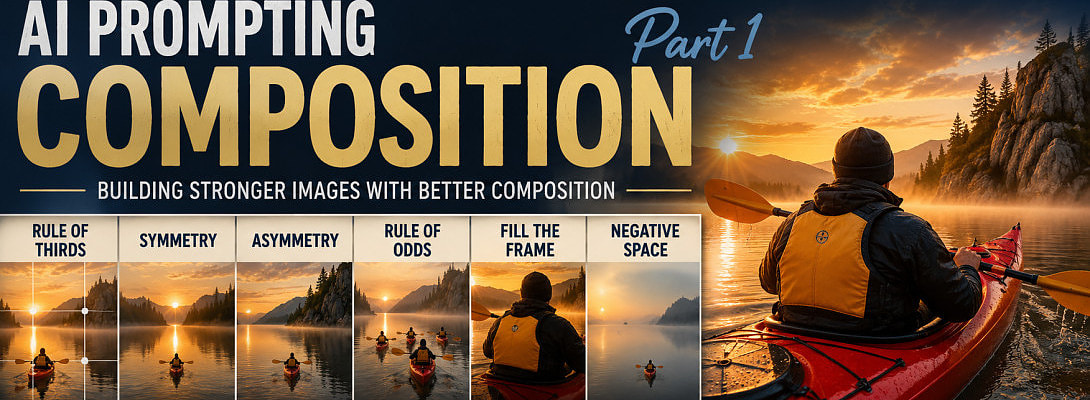
Introduction
In the first two articles in this series, we explored how lighting changes the mood of an image and how camera angles change the viewer's perspective.
Now it's time to look at another skill that separates ordinary AI-generated images from truly memorable ones: composition.
Composition is simply the arrangement of everything within your image. Think of it as deciding where to place your subject, how much space to leave around it, and how to guide the viewer's eyes through the scene. Two images can use the same prompt, the same lighting, and even the same artistic style, yet one feels balanced and engaging while the other falls flat. More often than not, the difference is composition.
The exciting news is that today's AI image generators understand many of the same composition techniques that photographers, painters, and filmmakers have used for generations. Once you learn these principles, you can include them directly in your prompts and give the AI much clearer artistic direction.
In this article, we'll explore five of the most important composition techniques that every AI creator should know. In Part 2, we'll cover six additional techniques that will help you guide the viewer's eye and create even more powerful images.
By the end of this lesson, you'll begin seeing every image—not just AI-generated ones—with a more artistic eye.
NOTE: AI doesn't replace artistic principles—it responds to them. The better your understanding of those principles, the better your prompts become.
Our Starting Image
To demonstrate the composition techniques in this lesson, I'll use the same AI-generated landscape throughout the article.
The image began with one of my own landscape photographs and was enhanced with AI to create a peaceful sunrise scene. By using the same image for each example, you'll be able to see exactly how changing the composition changes the impact of the final result. This will be our reference image throughout this lesson.
As we work through each principle, notice how your eyes naturally move around the image. Great composition isn't about following a rigid set of rules—it's about guiding the viewer's attention and creating a more engaging visual experience.
In this article, we'll explore the first five artistic composition tools that can dramatically improve your AI-generated images.
Before we start, look at image shown below. It is actually teaching far more than Rule of Thirds.
Where did your eyes go first?
If your eyes naturally moved from the sunrise to the kayak and then around the landscape,
you've just experienced the power of composition.
That's almost a visual journey through the scene.
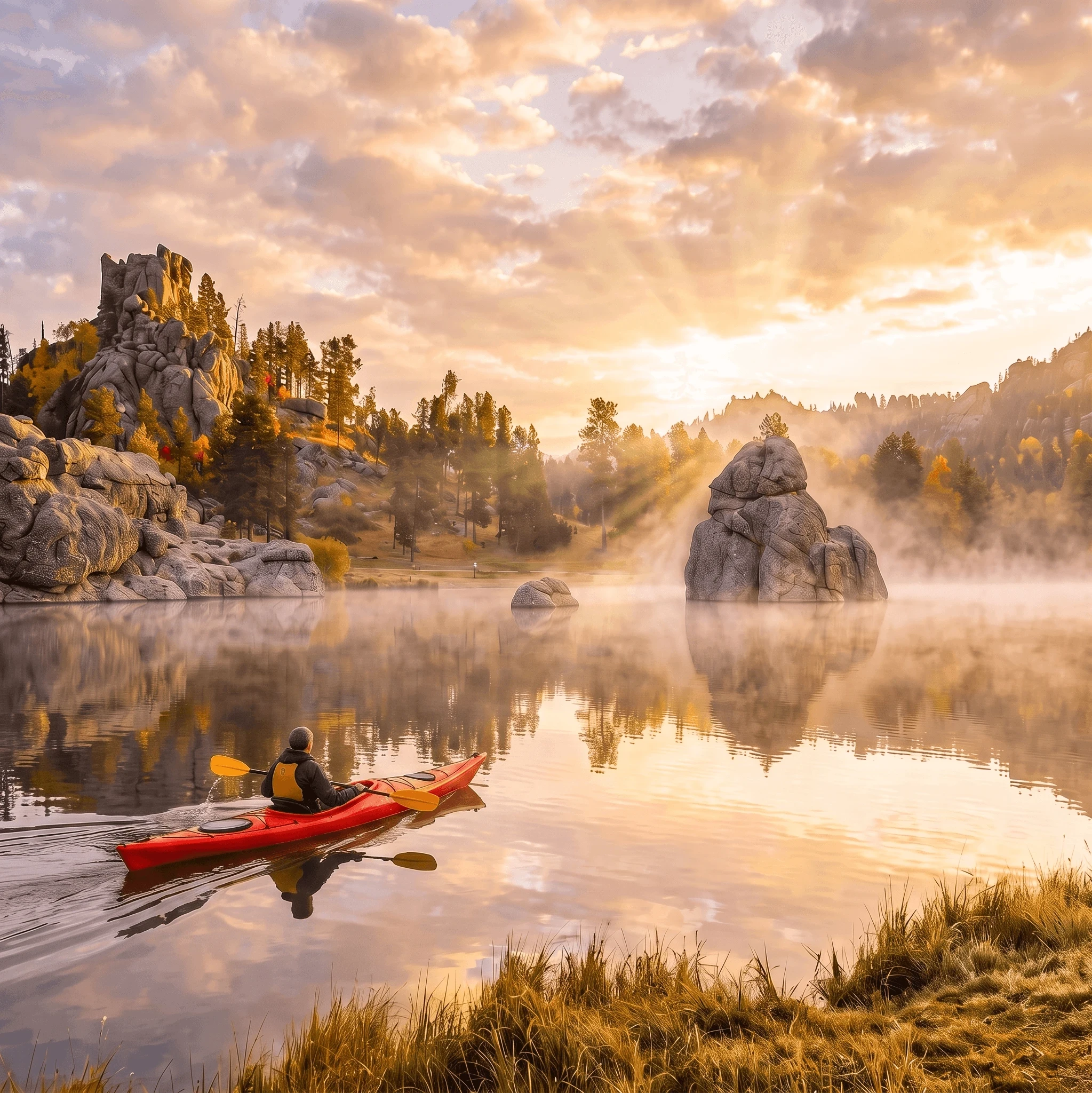 Reference Image.
1. Rule of Thirds
What Is the Rule of Thirds?
The Rule of Thirds is one of the simplest and most effective composition techniques in photography, painting, and filmmaking. Imagine dividing your image into nine equal sections by placing two equally spaced horizontal lines and two equally spaced vertical lines across the frame. Instead of placing your main subject directly in the center, position it near one of the four points where these lines intersect. These intersection points naturally attract the viewer's eye and create a composition that feels balanced and engaging.
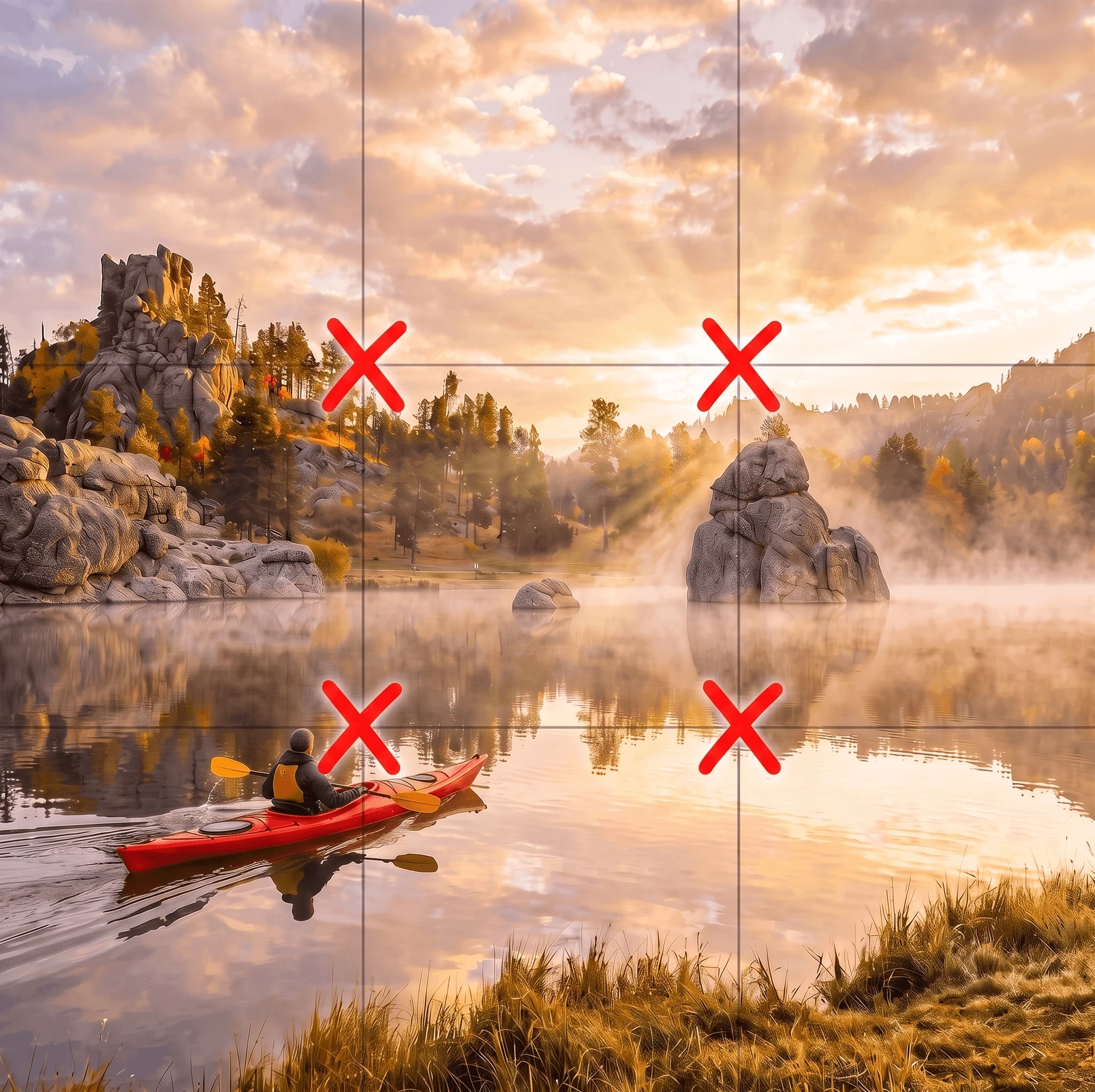 Rule of Thirds Overlay. The four X's identify the Rule of Thirds intersection points. Notice how the kayaker is positioned near the lower-left intersection, creating a balanced composition while allowing the surrounding landscape to remain an important part of the story.
Look where the eye travels.
- The bright sunrise
- The large rock formation
- The red kayak
- The reflections
- The dramatic granite tower on the left
In our reference image, notice how the bright red kayak is positioned near the lower-left intersection rather than in the middle of the lake. The result feels natural and invites your eyes to explore the entire landscape instead of stopping in the center.
Why Does It Work?
Our eyes naturally explore an image rather than focusing only on its center. Placing an important subject near one of the Rule of Thirds intersections creates visual balance while allowing the surrounding landscape to provide context and tell the rest of the story.
Rather than looking like a snapshot, the image feels thoughtfully composed.
Using the Rule of Thirds in AI Prompts
Modern AI image generators understand composition surprisingly well. Instead of simply asking for "a kayaker on a lake," you can guide the AI by describing where the subject should appear within the frame.
Words and phrases such as:
- Rule of Thirds composition
- subject positioned on the lower-left Rule of Thirds intersection
- off-center composition
- balanced landscape composition
- cinematic framing
all help the AI create a stronger visual arrangement.
Example Prompt
A peaceful mountain lake at golden sunrise with soft morning mist drifting across the water, dramatic clouds, warm golden light, crystal-clear reflections, and a lone kayaker in a bright red kayak positioned on the lower-left Rule of Thirds intersection. Photorealistic, cinematic landscape photography, balanced composition, ultra-detailed.
What to Notice
Look at the image again.
The kayaker isn't the largest object in the scene. The granite formations, trees, and sky all occupy much more space.
Yet your eyes are naturally drawn to the kayaker first.
That's the power of good composition.
The kayak becomes the visual anchor, while the surrounding scenery provides depth, atmosphere, and context. Your eyes then travel through the landscape, making the image feel both balanced and immersive.
Pro Tip
The Rule of Thirds is a guideline, not a rule. Some of the world's most memorable photographs intentionally place the subject in the center. Learn this technique first, then don't be afraid to break it when it better serves your artistic vision.
Rule of Thirds – Kayaker in the lower-left intersection.
2. Symmetry
What Is Symmetry?
Symmetry occurs when both sides of an image closely mirror each other. It creates a sense of order, balance, and harmony that immediately feels pleasing to the eye. Symmetry can be found in architecture, mountain reflections, forests, bridges, and even the human face.
One of the easiest ways to create symmetry in landscape photography is with perfectly calm water. When a lake reflects the sky, trees, or mountains, the reflection becomes almost a mirror image of the scene above it.
In our reference image, imagine the lake becoming completely still, producing a flawless reflection of the sunrise, clouds, rock formations, and shoreline.
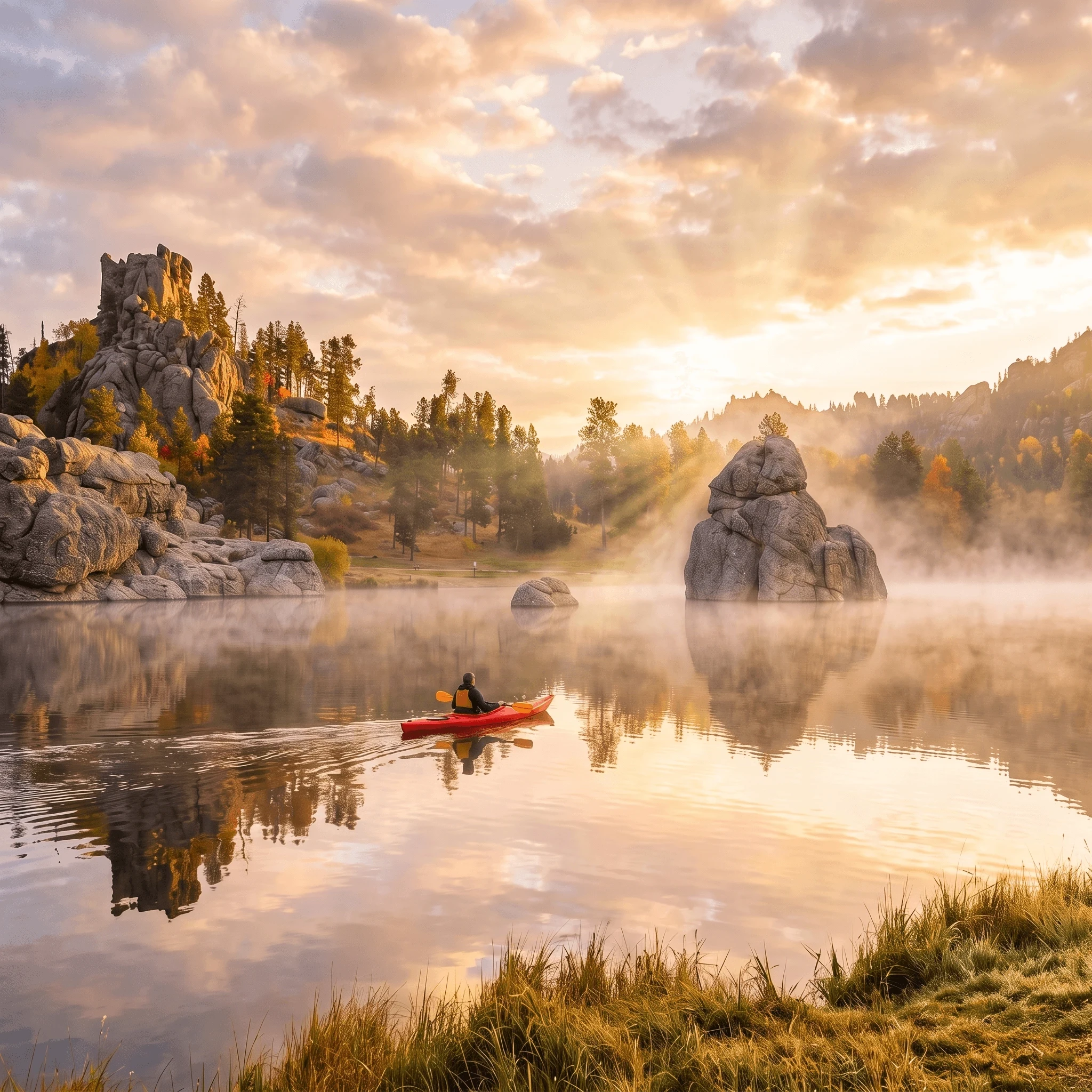 Image: Symmetrical version with a calm glass-like reflection".
Why Does It Work?
The human brain naturally enjoys patterns and order. Symmetrical compositions create a feeling of stability, peace, and perfection because both halves of the image work together as a unified whole.
That's one reason reflections on quiet lakes are so captivating—they create two images that complement one another, encouraging the viewer to pause and take in every detail.
Using Symmetry in AI Prompts
Most modern AI image generators understand symmetry when you describe it clearly.
Helpful prompt phrases include:
- symmetrical composition
- perfect mirror reflection
- calm glass-like lake
- balanced composition
- mirror-image reflection
- still water
- tranquil symmetry
Example Prompt
A peaceful mountain lake at sunrise with perfectly still, glass-like water reflecting the colorful sky, dramatic granite formations, evergreen forest, and lone kayaker. Perfect mirror reflection, symmetrical composition, cinematic landscape photography, ultra-detailed, photorealistic.
What to Notice
Unlike the Rule of Thirds example, your eyes are no longer drawn immediately to the kayaker.
Instead, you first notice the beautiful reflection stretching across the entire image.
The kayak now becomes part of a much larger story rather than the single focal point. The overall scene feels calm, peaceful, and almost timeless.
Pro Tip
Perfect symmetry is powerful—but don't overuse it.
Sometimes introducing one small difference, such as a bird flying overhead, gentle ripples on the water, or a slight breeze in the trees, creates a more natural and believable scene while preserving the overall feeling of balance.
Try It Yourself
Take one of your favorite landscape prompts and simply add:
- perfect mirror reflection
- glass-like water
- symmetrical composition
Compare the result to the original image. Notice how the mood changes from dynamic and adventurous to peaceful and serene.
3. Asymmetry
What Is Asymmetry?
Unlike symmetry, where both sides of an image mirror one another, asymmetry creates balance by using different visual elements instead of identical ones.
The two sides of the image are not the same, yet the composition still feels stable because the visual "weight" is carefully distributed. A large object on one side might be balanced by several smaller objects, a bright area of light, dramatic clouds, or a distant mountain.
In our reference image, the kayaker occupies the lower-left portion of the frame, while the towering granite formations, glowing sunrise, and open water balance the opposite side. Although the scene isn't symmetrical, it still feels harmonious.
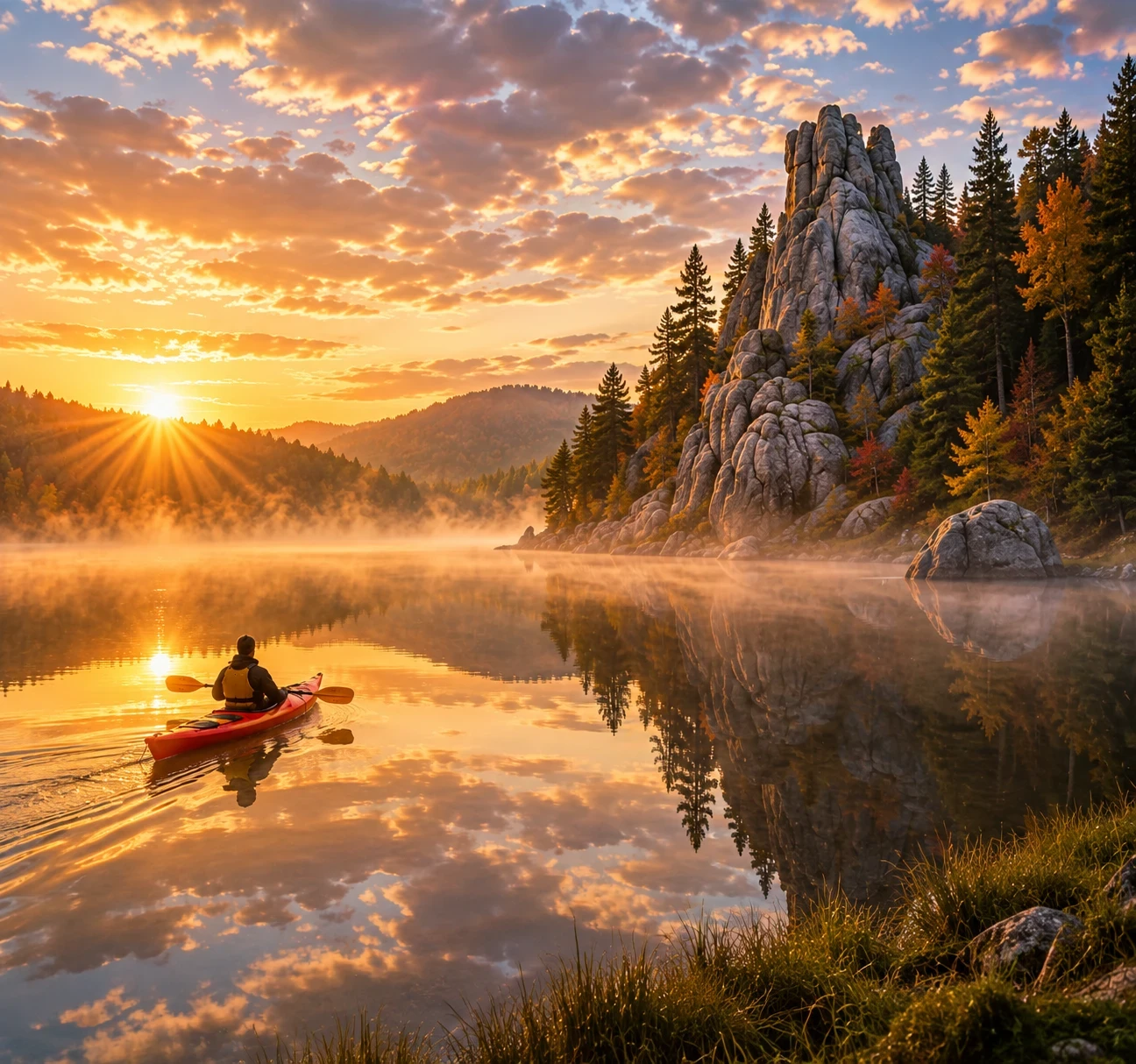 Image: An asymmetrical composition where the kayaker, sunrise, and towering granite formations create visual balance without being identical.
Why Does It Work?
Asymmetrical compositions often feel more natural and dynamic because they resemble the way we experience the real world.
Very few landscapes are perfectly balanced.
Instead, our eyes move from one area of interest to another, discovering new details as we explore the scene. This creates a sense of movement and visual storytelling that keeps viewers engaged longer.Asymmetry
Using Asymmetry in AI Prompts
Modern AI image generators understand many terms that encourage asymmetrical compositions.
Helpful prompt phrases include:
- asymmetrical composition
- visual balance
- off-center subject
- dynamic composition
- cinematic framing
- balanced landscape
- environmental storytelling
Example Prompt
A peaceful mountain lake at sunrise with soft morning mist, glowing golden light, dramatic granite formations, and a lone kayaker positioned toward the lower-left of the frame. Large rock formations and open water balance the composition. Asymmetrical composition, cinematic landscape photography, ultra-detailed, photorealistic.
Ready to put this into action?
Start your free journey today — no credit card required.
What to Notice
Notice how your eyes don't stay in one place.
They move naturally from the kayaker to the towering rock formations, across the glowing mist, and finally toward the brilliant sunrise.
Each part of the image helps balance another part, creating a composition that feels active without becoming chaotic.
Pro Tip
Asymmetry isn't about making one side empty and the other crowded.
The goal is visual balance, not identical balance.
Ask yourself:
Does the image feel stable, even though the two sides are different?
If the answer is yes, you've created a successful asymmetrical composition.
Try It Yourself
Take one of your favorite landscape prompts and experiment with moving your main subject away from the center.
Add phrases like:
- asymmetrical composition
- off-center subject
- dynamic visual balance
Then compare the result with a symmetrical version of the same scene.
Which one better tells the story you want your image to communicate?
4 Rule of Odds
What Is the Rule of Odds?
The Rule of Odds suggests that an odd number of subjects—such as three, five, or seven—often creates a more pleasing and engaging composition than an even number.
Why?
Because an even number naturally encourages the viewer to divide the image into equal pairs. An odd number makes the eye move around the composition, creating a stronger sense of interest and visual flow.
You'll often notice this principle in nature photography, floral arrangements, still-life paintings, and wildlife images. Three birds on a branch, five flowers in a bouquet, or three boats on a lake often feel more balanced than two or four.
In our reference scene, imagine replacing the single kayaker with three kayakers spaced naturally across the lake. Your eyes no longer settle on one subject—they move from one kayak to the next while still appreciating the surrounding landscape.
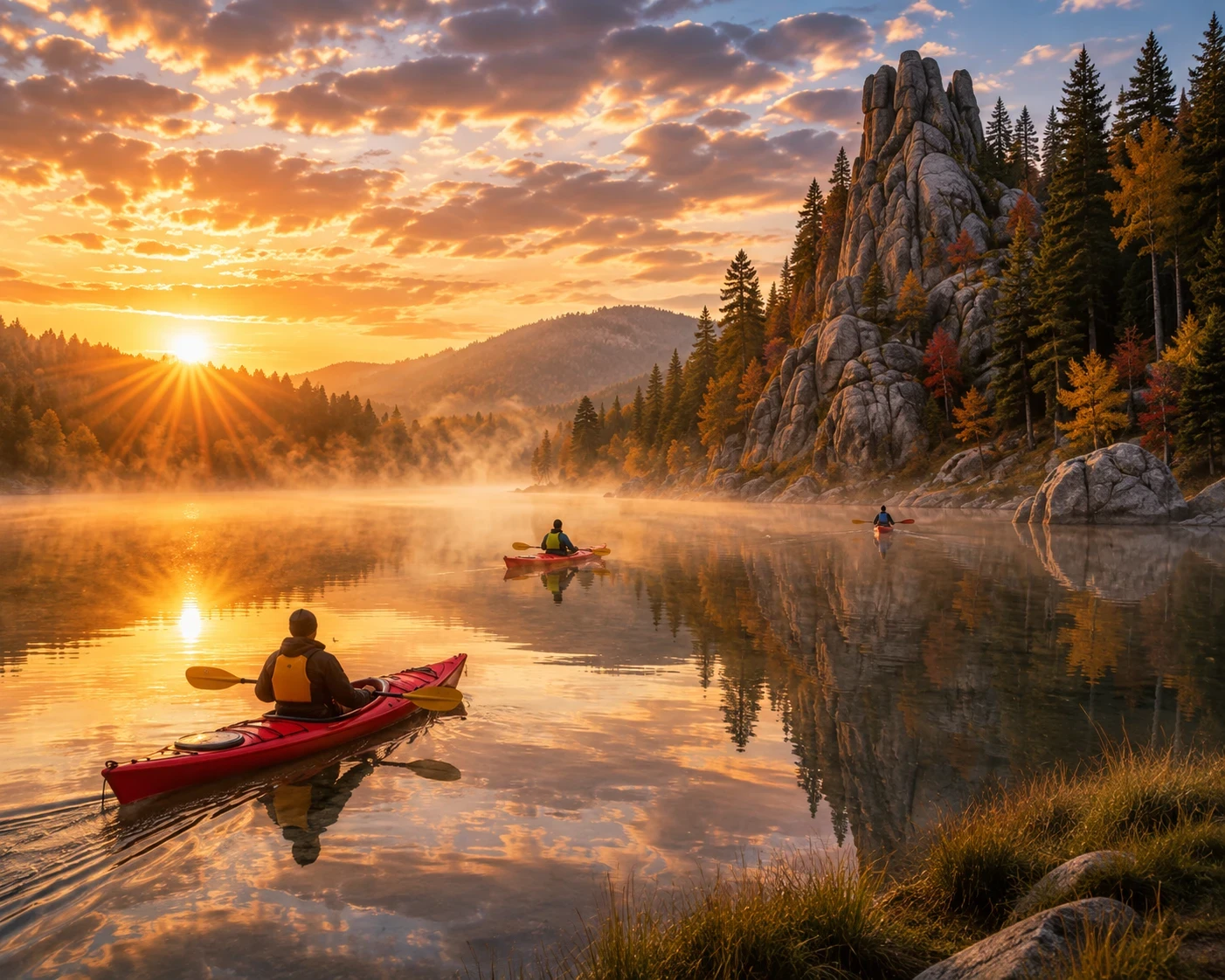 Image: Three kayakers naturally spaced across the lake create visual rhythm and demonstrate the Rule of Odds.
Why Does It Work?
Our brains naturally look for patterns.
With two identical subjects, we tend to compare one with the other.
With three subjects, there is no single obvious pairing. Instead, our eyes continue exploring the image, creating a stronger feeling of movement and visual interest.
Odd numbers encourage the viewer to stay with the image longer.
Using the Rule of Odds in AI Prompts
Many AI image generators respond well when you specify the number of important subjects.
Helpful prompt phrases include:
- three kayakers
- three birds in flight
- group of five wildflowers
- odd-number composition
- natural grouping
- balanced visual grouping
Example Prompt
A peaceful mountain lake at sunrise with golden morning light, soft drifting mist, dramatic granite formations, crystal-clear reflections, and three bright red kayakers naturally spaced across the water. Rule of Odds composition, balanced landscape, cinematic photography, ultra-detailed, photorealistic.
What to Notice
Notice how your eyes travel from one kayaker to another instead of stopping at a single focal point.
The three kayakers create a gentle visual rhythm that encourages your eyes to travel naturally through the scene, while the surrounding landscape provides balance and context.
Even though there are more subjects, the image still feels organized rather than cluttered.
Pro Tip
The Rule of Odds works best when the subjects aren't perfectly aligned or evenly spaced.
Give each subject a slightly different position or distance to create a more natural, believable scene.
Try It Yourself
Take one of your favorite prompts and compare these versions:
- One kayak
- Two kayaks
- Three kayaks
Which composition feels the most natural?
Then try the same experiment with birds, trees, flowers, or people.
5 Fill the Frame
What Is Fill the Frame?
Sometimes the most powerful composition isn't about showing more—it's about showing less.
The Fill the Frame technique encourages you to move closer to your subject (or crop tighter) so it becomes the dominant element in the image.
Rather than allowing the viewer's attention to wander across a large landscape, the composition focuses almost entirely on the subject and its details.
In photography, this often means physically moving closer with your camera or using a telephoto lens. In AI image creation, you simply describe a tighter composition in your prompt.
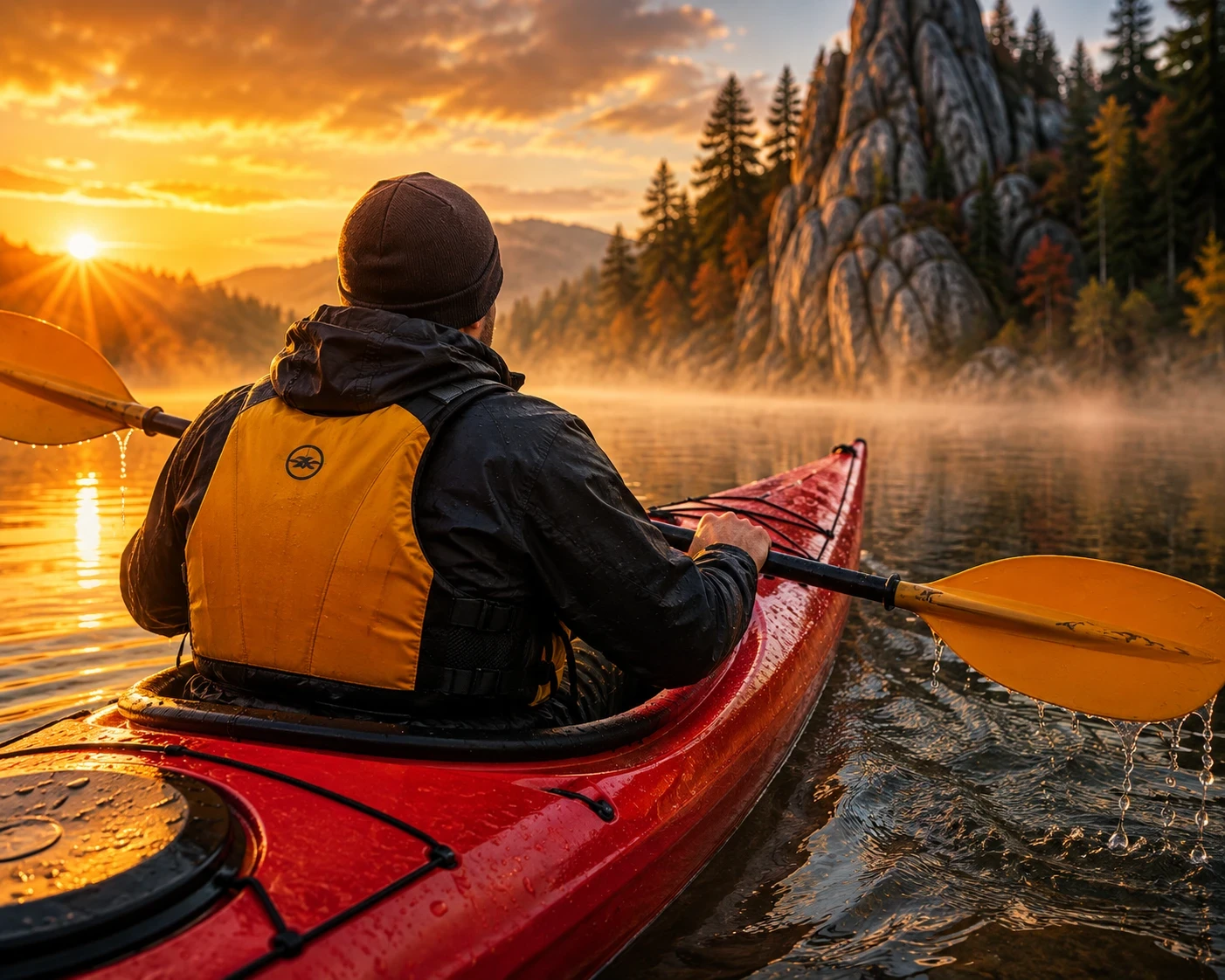 Image: Close-up of the kayaker filling most of the frame, with only enough background to provide context.
Why Does It Work?
When your subject fills most of the frame, distractions disappear.
The viewer immediately notices details such as expressions, textures, colors, and movement that might otherwise be overlooked.
Instead of appreciating the landscape first, the viewer connects directly with the subject.
This technique creates a stronger emotional connection because there is little competition for the viewer's attention.
Using Fill the Frame in AI Prompts
Helpful prompt phrases include:
- fill the frame
- close-up composition
- tight crop
- subject dominates the frame
- environmental portrait
- detailed foreground subject
- intimate composition
Example Prompt
A close-up view of a lone kayaker in a bright red kayak gliding across calm morning water. The kayaker and kayak fill most of the frame while soft golden sunrise light, mist, and distant granite formations provide only enough background to establish the setting. Fill-the-frame composition, photorealistic, cinematic, ultra-detailed.
What to Notice
Notice how your attention never leaves the kayaker.
The paddle, kayak, reflections, clothing, and water become the story.
The surrounding landscape still contributes to the image, but it now serves as a supporting role rather than the main attraction.
Pro Tip
Filling the frame doesn't mean cutting off important parts of your subject.
Leave just enough breathing room so the composition feels intentional rather than cramped.
Try It Yourself
Create three versions of the same prompt:
- Wide landscape
- Medium composition
- Fill-the-frame close-up
Compare how each image changes the mood and emotional impact.
6 Negative Space
What Is Negative Space?
Negative space is the empty or open area that surrounds your main subject. While it may seem like "unused" space, it actually plays an important role in composition by drawing attention to the subject rather than competing with it.
Instead of filling every part of the image with detail, negative space gives the viewer's eyes room to rest. It creates a sense of simplicity, calm, and openness while helping the main subject stand out.
In our reference image, the lone kayaker occupies only a small portion of the frame. The vast expanse of mist-covered water and open sky surrounds the kayak, emphasizing both the beauty of the landscape and the feeling of peaceful solitude.
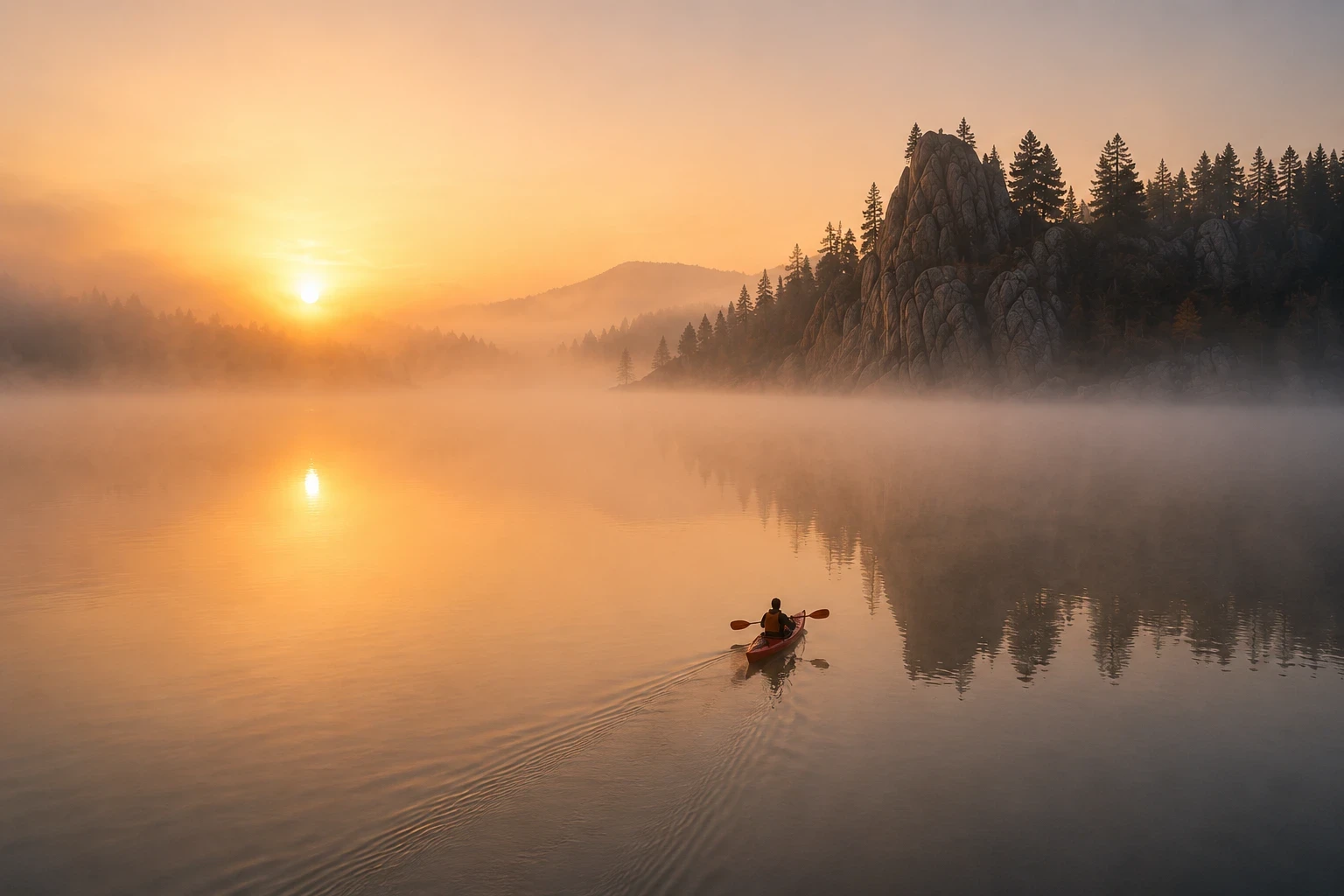 Image: A lone kayaker surrounded by the vast, misty lake, demonstrating the power of negative space.
Why Does It Work?
Negative space removes distractions.
By surrounding your subject with open space, you immediately make it the center of attention without making it larger.
Negative space can also communicate emotion. Depending on the scene, it can create feelings of peace, isolation, freedom, mystery, or awe.
In this image, the large area of open water and soft morning mist helps the viewer appreciate the quiet stillness of the moment.
Using Negative Space in AI Prompts
Helpful prompt phrases include:
- negative space composition
- minimalist composition
- subject surrounded by open space
- vast open water
- expansive sky
- isolated subject
- peaceful simplicity
- cinematic minimalism
Example Prompt
A lone kayaker on a vast, mist-covered mountain lake at sunrise. The kayak occupies only a small portion of the frame, surrounded by calm open water, soft golden light, drifting fog, and distant granite formations. Negative space composition, minimalist landscape, peaceful atmosphere, photorealistic, cinematic, ultra-detailed.
What to Notice
Notice how your eyes immediately find the kayaker, even though it is one of the smallest objects in the image.
The surrounding open space doesn't make the subject feel insignificant—it actually makes it feel more important.
The empty lake creates a feeling of quiet, solitude, and immense scale, allowing you to imagine yourself alone on the peaceful morning water.
Notice how simply changing the composition changes the emotional message of the image. The same lake, sunrise, and kayaker now tell a completely different story.
Pro Tip
Negative space doesn't have to be completely empty.
Fog, reflections, calm water, snow, clouds, or soft skies can all serve as beautiful negative space while still adding atmosphere and depth to the image.
Try It Yourself
Take one of your favorite landscape prompts and create two versions.
- One filled with foreground objects and details.
- One with a single subject surrounded by open space.
Compare the two images.
Ask yourself:
Which one feels more peaceful? Which one tells the stronger emotional story?
Conclusion
Over the course of this lesson, we've used the same lake, the same sunrise, and the same kayaker to explore six different composition techniques.
- Yet each version told a different story.
- The Rule of Thirds created balance.
- Symmetry created harmony.
- Asymmetry created movement.
- The Rule of Odds added visual rhythm.
- Fill the Frame created intimacy and action.
- Negative Space created a feeling of peace, solitude, and scale.
- The remarkable thing is that we never changed the subject—we only changed the composition.
That's the true power of composition. Great artists, photographers, and filmmakers understand that composition isn't simply about arranging objects within a frame. It's about deciding how you want your viewer to experience the scene.
The same subject can tell many different stories.
As you create AI images, don't just ask yourself:
"What do I want in the picture?"
Also ask:
"How do I want someone to feel when they look at it?"
Your answer to that question will often determine the composition you choose.
Coming Next...
In Composition Part 2 of this series, we'll explore additional composition techniques that help guide the viewer's eye through an image, including:
- Leading Lines
- Rule of Space
- Framing Within the Frame
- Golden Triangle
- Center Eye Dominance
- Foreground, Middle Ground, and Background
These techniques will help you create AI images that feel even more dynamic, immersive, and professionally composed.
Your AI Composition Challenge
Before moving on to Part 2, try this simple exercise.
Using the same prompt, create six different versions of the same scene by changing only the composition.
Experiment with:
- Rule of Thirds
- Symmetry
- Asymmetry
- Rule of Odds
- Fill the Frame
- Negative Space
Then compare the results.
Notice how each composition changes the mood, the story, and the emotional impact—even though the subject remains the same.
You may be surprised to discover that the composition, more than any other element, determines how your audience experiences your image.
-Shirley
TIPS:
Many of the images and examples you’ll see throughout the series are created using Kre8or.ai, the AI image creation tool available here at Wealthy Affiliate. If you’d like to experiment with your own AI images, you can try Kre8or here: you can try out Kre8or.ai now for FREE: https://kre8or.ai Check out my profilfe there under my handle "windswepttale".
Share this insight
This conversation is happening inside the community.
Join free to continue it.The Internet Changed. Now It Is Time to Build Differently.
If this article resonated, the next step is learning how to apply it. Inside Wealthy Affiliate, we break this down into practical steps you can use to build a real online business.
No credit card. Instant access.