Mahatma Gandhi: A Guiding Light for All Humanity


Published on April 10, 2023
Published on Wealthy Affiliate — a platform for building real online businesses with modern training and AI.

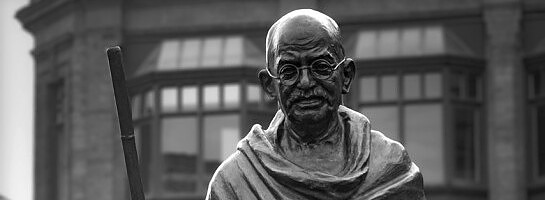
From time to time some people come to the world whose leadership and philosophy change the whole world. Those who appear in the darkness with torches of light. Those who compose the message of human welfare with all their life. Mahatma Gandhi is just such a man. By standing for peace, he set a different example in the world.
He was the founder of the non-violence doctrine and the Satyagraha movement. Through non-violent movement, he united the whole of India and awakened the consciousness of people against autocracy. And with that, he took people towards truth and justice, towards democracy and humanity. He is the great hero of India's freedom struggle. He is the father of the Indian nation.
Gandhi was one of the sources of inspiration for freedom seekers all over the world. Wherever in the world he heard the cry of oppressed people, he ran to that place. Not only in Africa but everywhere in Calcutta, Noakhali, he was a guide for peace-loving people. Today's article is written about the legendary Mahatma Gandhi.
He was born on 2nd October 1869 in Porbandar, Gujarat in a Hindu family. His real name was Mohandas Karamchand Gandhi. Although he is better known as Mahatma Gandhi. His father Karamchand Gandhi was the Dewan of Porbandar and his mother Putlibai was a daughter of the Pranami Vaishnava clan. After birth, Gandhi grew up as a child in his native Porbandar. And there began his primary education.
He received the best education of his life from the ideals of his mother and the Jain-influenced environment of Gujarat. Non-violence towards living beings, vegetarianism, fasting for self-purification, and mutual tolerance of different religions and communities were therefore imbibed by him long ago.
In 1883, when he was only 13 years old, he suddenly married Kastubhai, a 14-year-old girl chosen by his parents. However, the marriage did not mean anything special to him at that time, his life partner Kastubhai was just his playmate. Later in their married life, Gandhi and Kastubhai gave birth to four sons.
Mahatma Gandhi was not very bright as a student. He spent most of his student life in Porbandar and Rajkot. He received his primary education in history, geography and mathematics from a local school in Rajkot.
Then somehow passed the matriculation examination from Samaldas College, Bhavnagar, Gujarat. After that, Gandhi had a strong desire to go Abroad and study barrister.
But as his family were all vegetarians and conservatives, no one initially agreed to allow him to go to London, fearing that the son might completely forget the rules of the clan by going there. After his elder brother allowed him to study, Mahatma Gandhi went to University College London to study law on 4 September 1888 at the age of 18.
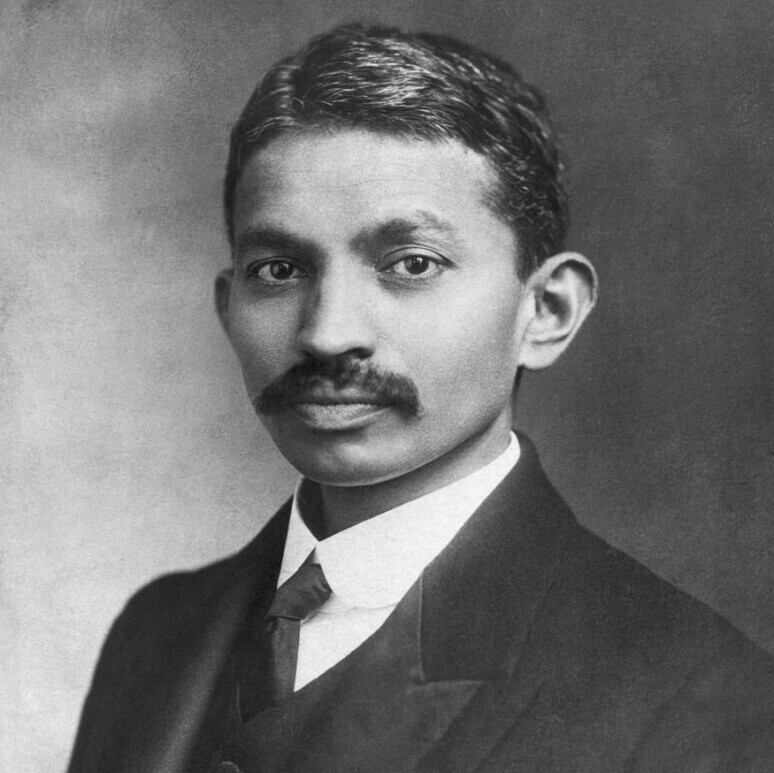
His later life in London was influenced by his vow to stay in India. But going there, he did not stop himself from practicing any kind of virtue. Apart from studying, he excelled in dance. During his stay in London he avoided non-vegetarian food.
This vegetarianism is not only according to the words of the mother, but after studying enough about the vegetarian lifestyle, he takes vegetarianism out of sheer interest.
Then after some time he also joined Sangh and was elected as a member of its executive committee. After that, the local branch of the organization also circulated. This experience of his later life is very useful in organizational activities.
Then Mahatma Gandhi returned home from London. After returning home, Gandhi had to work hard to get a job as a lawyer. Then in 1893, he went to South Africa to work as a lawyer at the invitation of his grandfather Abdullah. South Africa changed Gandhi's life dramatically.
Ready to put this into action?
Start your free journey today — no credit card required.
After moving there, he was subjected to discrimination against Indians and skin color. Despite having a valid first-class ticket, one day he was forced to move from a first-class compartment to a third-class compartment in a Peter Martinsburg train just because he was an Indian.
Also while traveling in a stagecoach he was beaten by a driver because he refused to get on the footboard to make room for a European passenger. He had to suffer more on the way, he was even expelled from the hotel. These events later played a key role in turning the tide of social activity. Aided in the movement to eradicate racism, prejudice, and injustice against Indians.
Indians did not even have the right to vote in South Africa. He remained in the country for a few more days to raise the bill for the realization of this right. Although the purpose of the bill was not achieved, this movement made the Indians of that country aware of their rights. Then in 1894, he founded the Natal Indian Congress. Through this organization, he mobilized the Indians there politically.
After returning from a brief visit to India in January 1897, a white mob attempted to assassinate him. But still, Gandhi did not make any complaint against them. Then he returned to India on January 9, 1915, to fight for the rights of deprived Indian people in Africa for a long time.
Gandhi's first achievements in life came through the Champaran protests of 1918 and the Kheda Satyagraha. The British introduced an exploitative tax in the midst of a severe famine and tried to raise it. This made the situation very unstable. Right away he gathered local volunteers and built an ashram for the villagers and soon after he established a hospital and school.
Later he led organized protests and agitations against the landlords. They then forbade raising the rate of revenue and suspended its collection until the end of the famine. It was during these protests that people happily gave Gandhi the titles of Bapu (Father) and Mahatma (Wise Heart).
In December 1921, Mahatma Gandhi became the executive of the Indian National Congress. Under his leadership, Congress adopted the new constitution keeping the goal of Swaraj in mind. Gandhi's weapon against injustice was always peaceful resistance and non-cooperation movement.
His movement gained great popularity at that time and people from all walks of life participated in it. Later, on March 10, 1922, he was sentenced to six years in prison for crimes against the state, but he was released after two years of the sentence.
Gandhi's lack of a unifying personality led to rifts within the Indian National Congress. During the Hindu-Muslim non-violent movement, there was a breakdown in amity.
To resolve these disputes, he tried to bridge the gap and for this reason, he went on a three-week hunger strike in the autumn of 1924.
In December 1928, Gandhi demanded at the Calcutta Congress that the British government grant India Dominion status, otherwise threatening full independence along with a new policy of non-violence. He then started a new satyagraha campaign against the imposition of tax on salt.
In March 1930 for this reason, he organized a salt walk to Dandi and along with 78 companions walked 400 km from Allahabad to Dandi from 12th March to 6th April to make salt with his own hands. Thousands of Indians accompanied him on this journey. The British arrested 60,000 people in retaliation.
But it was one of his most successful movements against British rule. This movement later led to the Gandhi-Irwin Pact in 1931. Gandhi was invited to London for a round table meeting. He alone represented the Congress there.
In 1942, Mahatma Gandhi started the Quit India Movement directly against the British rulers. He was arrested again on August 9 of the same year and detained at the Aga Khan Palace in Pune. This movement stopped in late 1943 when the British promised to grant independence to India. India got independence later in 1947.
After independence, Mahatma Gandhi used to hold prayer meetings every morning and evening. All religions were discussed there, in which hundreds of people participated. Like every day on January 30, 1948, Gandhi was preparing for the evening prayer meeting.
At that very moment, Nathuram Godse fired three pistol shots at his chest from close range, killing Mahatma Gandhi on that day. Even after so many years of his death, the whole world still remembers this great leader with respect.
So, this is a short biography of this great being who will be forever remembered his activities in a peaceful way. Gandhiji knows one one way and this is the way of peace and love because he always said war and bloodshed not going to give you any desired result.
If the world has to prosper and bring permanent peace and happiness their is only one way.
We Indians and the whole world today admires him for his selfless simple lifestyle and create a positive impact in the history of mankind.
Alright, hope you know something about this great being and either way it will give you a positive vibe in your life.
Wish you all wonderful people all the good wishes and happiness in life.
Preetam
Share this insight
This conversation is happening inside the community.
Join free to continue it.The Internet Changed. Now It Is Time to Build Differently.
If this article resonated, the next step is learning how to apply it. Inside Wealthy Affiliate, we break this down into practical steps you can use to build a real online business.
No credit card. Instant access.