The Vinedresser of En-Gedi


Published on September 5, 2026
Published on Wealthy Affiliate — a platform for building real online businesses with modern training and AI.

A story of small beginnings, patient growth, and the harvest that comes to those who serve before they seek to be seen
The Boy Who Wanted a Big Field
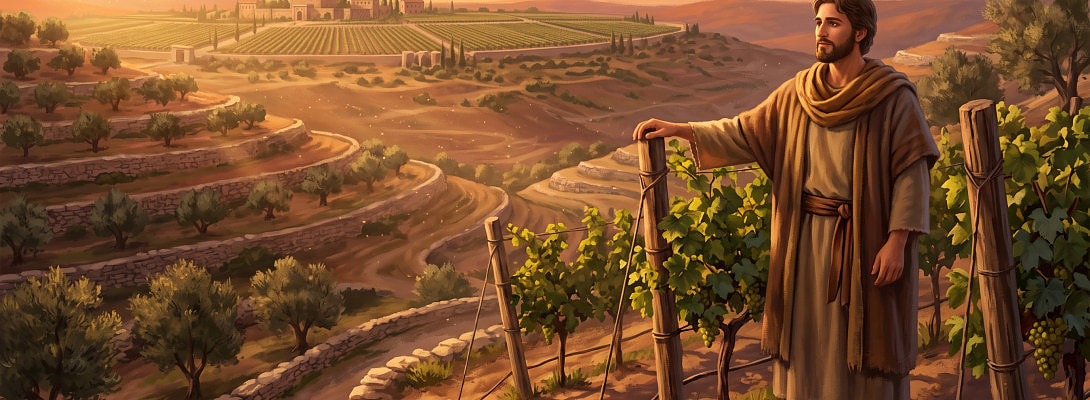
In the hill country south of Jerusalem, in a town called En-Gedi where the rock split open and let a spring run down toward the Salt Sea, there lived a young man named Simeon.
Simeon's father had left him three things: a small terraced plot no bigger than a courtyard, a rusted pruning hook, and a stubborn hope that he could become the finest vinedresser in Judea.
The trouble was, Simeon had never actually grown anything. But he had heard things from traders, from wandering teachers, from anyone who passed through with an opinion. He had heard about soil composition and irrigation angles and the seventeen phases of the moon that supposedly mattered for planting. He filled his head with all of it and planted nothing, because he was quite sure that a man should be an expert before he dared put a single seed in the ground.
Meanwhile, weeds grew in his empty plot. Impressively. As if they, at least, understood something about action that Simeon did not.
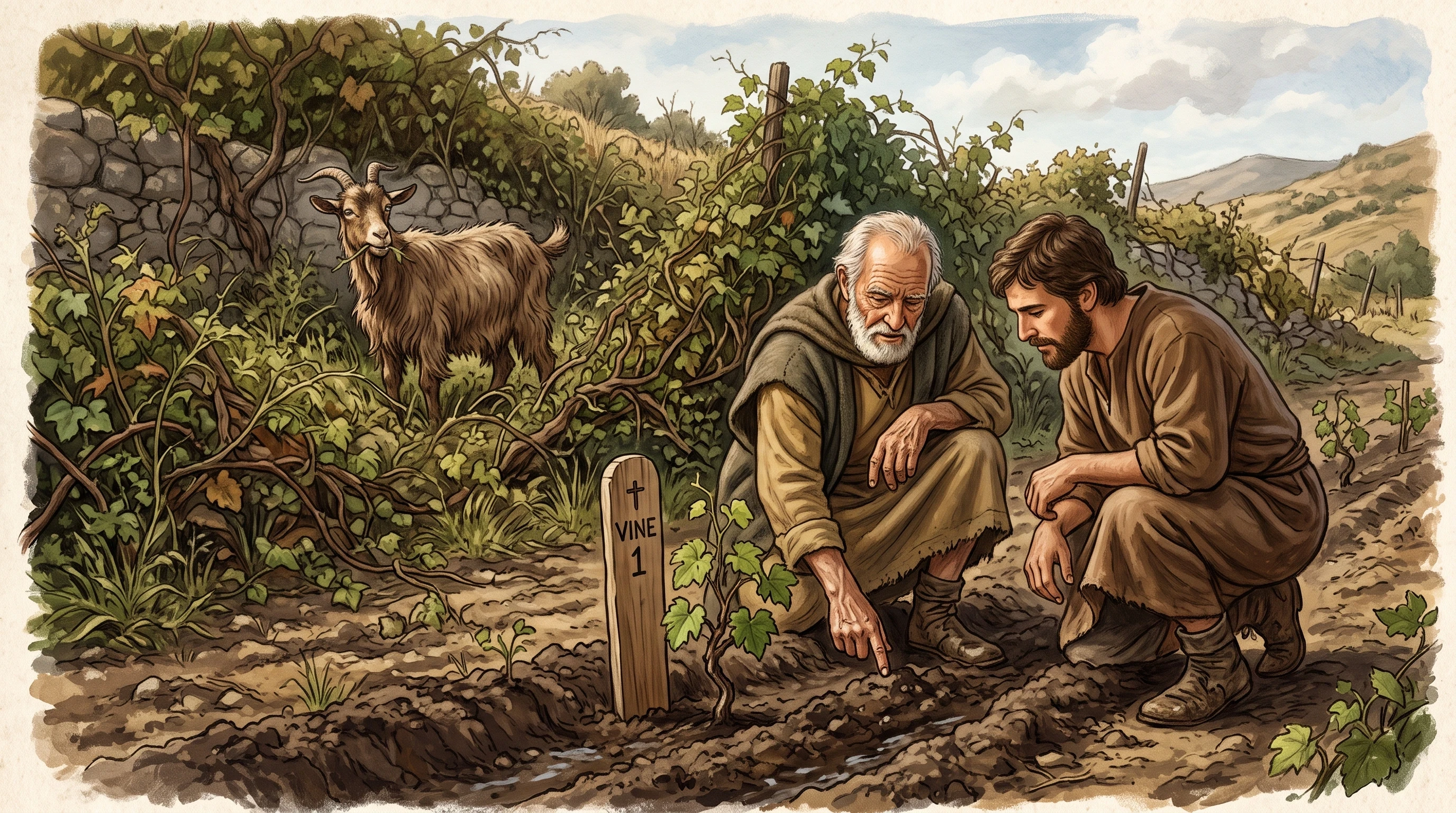
One morning, an old vinedresser named Ezra found him sitting at the edge of his terrace, arms crossed, glaring at the dirt as though it had personally wronged him.
"Are you cursing the ground, or courting it?" Ezra asked. "I'm studying it," Simeon said, with the dignity of a man who has learned twelve new words for soil and used none of them. "I want to understand everything about vinedressing before I begin. I don't want to fail."
Ezra sat down beside him with the creak of a man who had pruned ten thousand vines and buried two wives and outlived most of his opinions about being right the first time. "Simeon," he said, "you cannot understand a vine by staring at dirt. You understand a vine by planting one, watching it disappoint you, and planting the next one better."
The Field of Everything, and the Furrow of One Thing
Simeon, embarrassed, decided to prove himself. That very week he marched to the market and bought seed for every kind of grape the merchants sold, sweet ones, sour ones, wine grapes, table grapes, sun-grapes and shade-grapes and scattered them across his entire terrace at once, calling it, grandly, "My Vineyard of Grapes."
It came up as a tangle. Vines strangled other vines. Roots fought roots. Nothing had room to become anything. A goat wandered through it one afternoon, took one confused bite, and left looking personally offended.
Ezra came to inspect the disaster, stroking his beard to keep from laughing.
"You planted 'grapes,'" he said. "Everyone plants grapes. The great estate of Lord Malachi over the ridge has forty acres of 'grapes' and forty servants to tend them and a reputation that took thirty years to build. You cannot out-grape Lord Malachi in your first season, boy. You will only exhaust yourself trying."
"Then what do I plant?" Simeon asked, close to despair.
"Something small enough to actually finish," Ezra said. "Not 'grapes.' Try: sweet green grapes, easy on old teeth, ripe before the Feast of Weeks, grown for the widows on the east road who cannot chew the tough ones from the valley market."
Simeon blinked. "That's absurdly specific."
Ready to put this into action?
Start your free journey today — no credit card required.
"That's why it will work," Ezra said. "Nobody else is growing that. There is no competition in a furrow that specific, only a widow, walking to market, who finally finds exactly what her teeth can manage. Win her first. Then win the next furrow. A boy who wins ten small furrows eventually owns a field. A boy who tries to own the field on day one owns nothing but tangled weeds and a very tired goat."
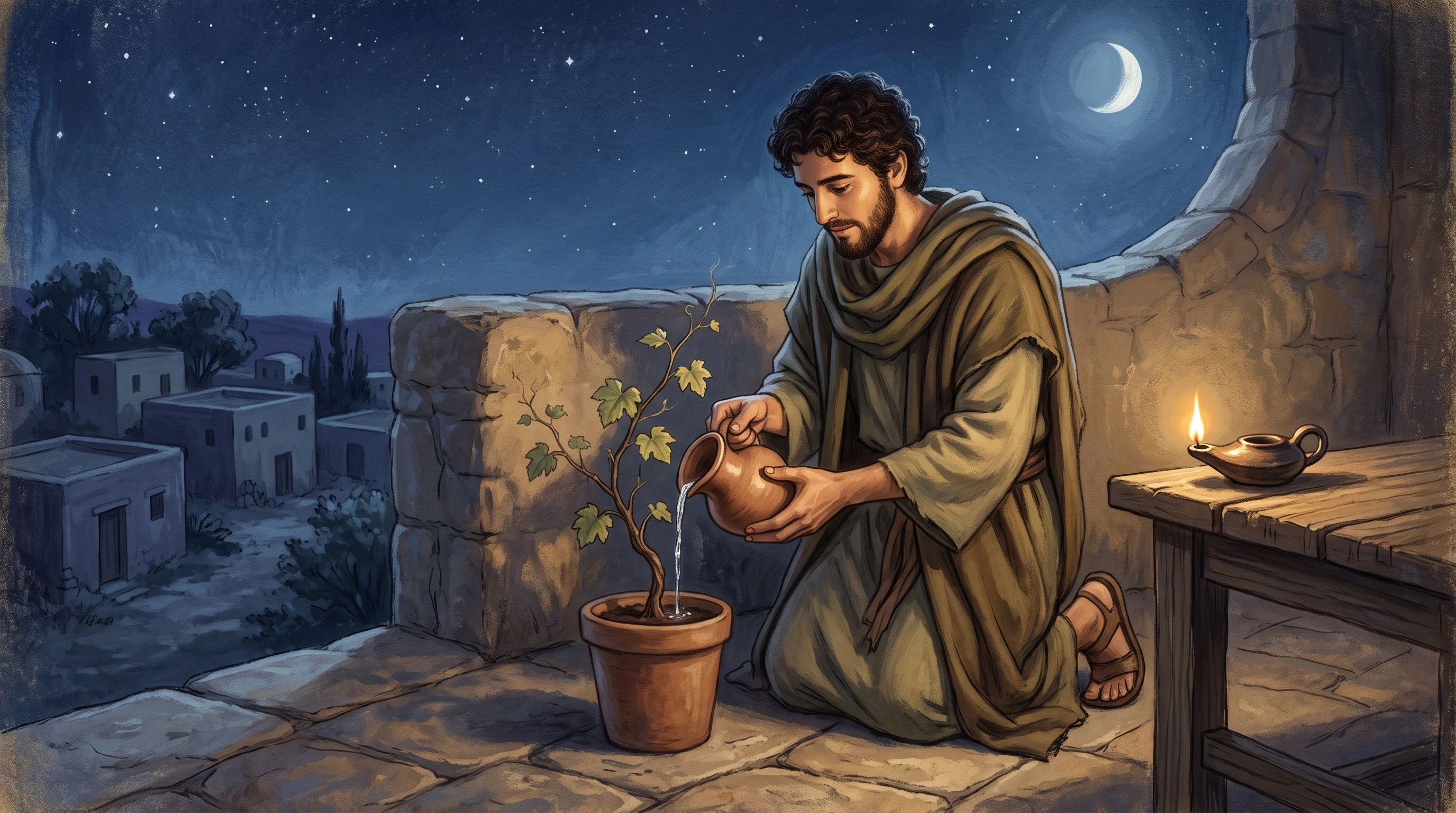
So Simeon tore out his tangle and planted one small, specific furrow. Then, when it took, another. Then another, each one aimed at a single, particular need, not the whole wide word "grapes."
The Terrace, the Trellis, and the Long Wait
Simeon's furrows grew, but they grew crooked, sprawling over each other in the dark like they were embarrassed to be seen. So Ezra taught him to build trellises, straight wooden frames that gave each vine a clear line to climb, sunlight to reach, and room to be understood at a glance by anyone walking past.
"A vine that a shepherd can look at and immediately know what it's offering," Ezra said, "will always be chosen over a vine that makes him guess."
Simeon trellised his furrows in tidy rows, each one clearly labeled with a small stake: sweet, early, easy to chew. Short, clear rows. No wild tangles. A traveler could walk by, understand exactly what was there, and take what he needed without having to hack through anything to find it.
Then came the part Simeon hated most: waiting.
He had done everything right, small furrow, clear trellis and still, nothing happened. No merchants came. No reputation spread. He walked to his terrace every single morning, sometimes twice, to check if the town had somehow noticed him overnight. It had not.
"You planted three weeks ago," Ezra said one evening, finding him crouched over a vine, muttering at it. "The roots are still deciding whether to trust the ground. You cannot shout a vine into growing faster. You can only stop digging it up to check."
"How long?" Simeon groaned. "Long enough that you'll want to quit right before it was about to work," Ezra said. "That's not a curse on you, boy. That's just how roots are. New ground takes longer to earn trust than old ground. It isn't personal. It's just true."
The Vine He Almost Tore Out
There was one furrow, the widow's grapes, the very first one that seemed to be an utter failure. Weeks passed. It stayed small, pale, unimpressive next to its younger siblings. Simeon, humiliated, prepared to rip it out and start fresh somewhere else, the way he'd abandoned a dozen half-formed ideas before.
Ezra stopped his hand.
"You planted this one with the least understanding and the most hope," he said. "Don't throw it away because it's slow. Improve it. Add compost where the soil is thin. Prune back what's crowding it. Give it better support. A vine you tend twice grows stronger than a vine you plant six times and abandon each time."
So Simeon, grumbling, did the unglamorous work, not planting something new, but returning to the tired old furrow and making it better. He added richer soil. He trimmed the wild growth choking its base. He adjusted the trellis so it finally caught the morning sun instead of hiding in a neighbor's shadow.
Three weeks later, it was the first furrow to bear fruit and it bore more than any of the others.
The Question That Changed Everything
By harvest season, word had reached the east road: there was a small terrace in En-Gedi growing the sweetest, gentlest grapes an old woman's teeth could ask for. The widows came. Then their neighbors came, curious what all the fuss was about. Then a trader stopped, tasted one, and asked to buy the whole row.
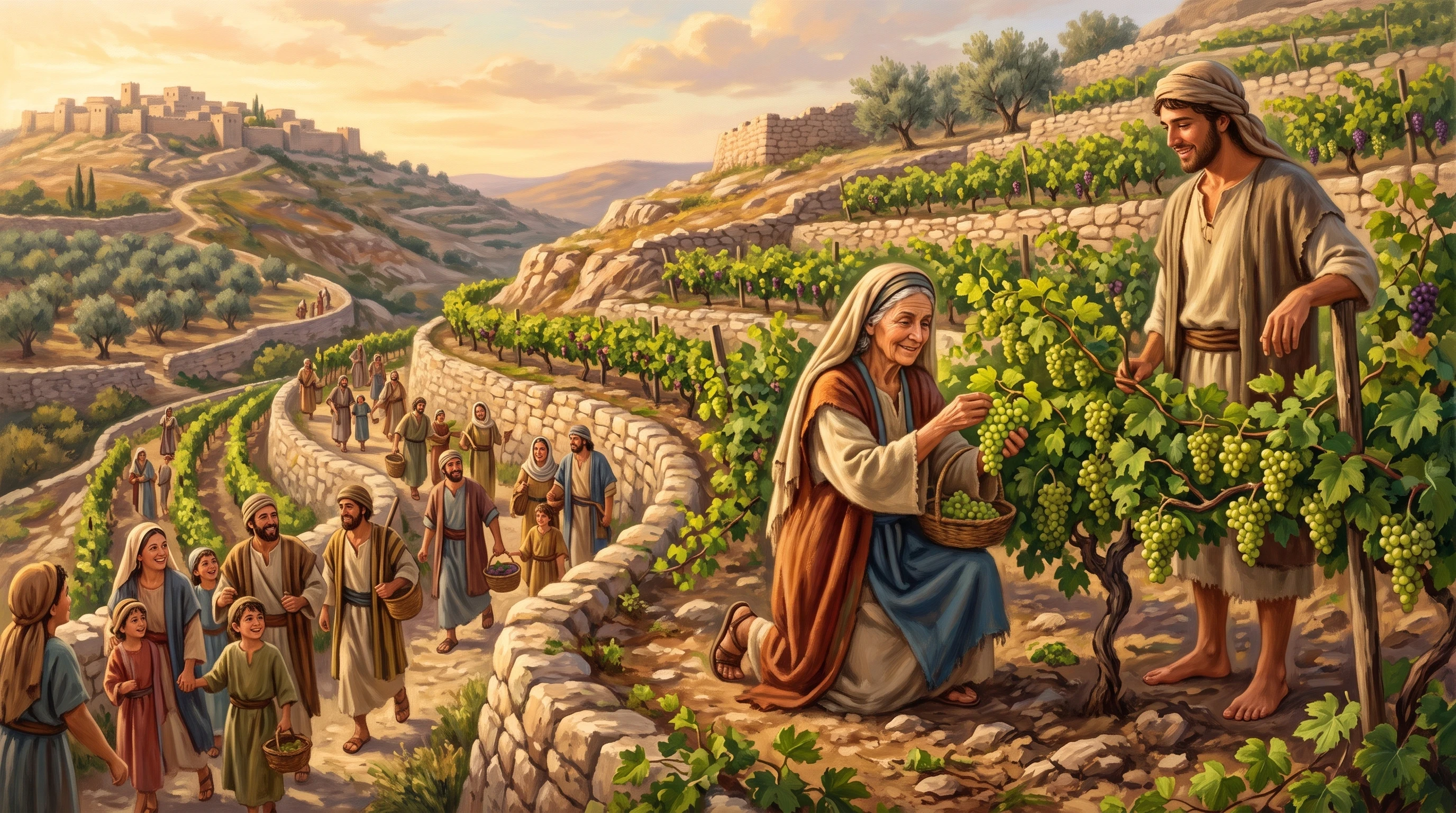
Simeon, dizzy with his sudden little fame, ran to Ezra. "They're finally noticing me! What should I plant next to get even more attention?"
Ezra didn't answer right away. He picked a grape, ate it slowly, and finally said:
"Wrong question, boy. You didn't succeed because you chased attention. You succeeded because a widow on the east road needed grapes she could actually eat, and you gave her exactly that, better than anyone had bothered to. "
Simeon looked out over his small terrace, no longer a tangle, no longer empty dirt, but a dozen clear, well-tended rows, each one aimed at a real person with a real need.
He had never become an expert. He still didn't know the seventeen phases of the moon. But he had learned the only thing that actually mattered: plant small, plant clear, tend patiently, improve rather than abandon, and grow it for someone, not merely to be seen.
Start small. Win small. Then grow.
Share your thoughts on the lessons you learn from the story.
— Paul
Share this insight
This conversation is happening inside the community.
Join free to continue it.The Internet Changed. Now It Is Time to Build Differently.
If this article resonated, the next step is learning how to apply it. Inside Wealthy Affiliate, we break this down into practical steps you can use to build a real online business.
No credit card. Instant access.