The Potter of Hollowbrook


Published on September 20, 2026
Published on Wealthy Affiliate — a platform for building real online businesses with modern training and AI.

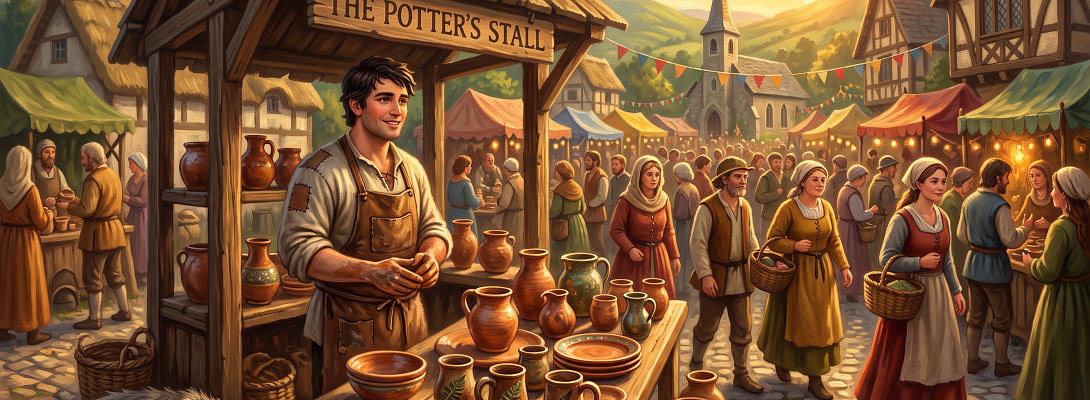
Long ago, in the hollow between two green hills, there was a village called Hollowbrook, known far and wide for its market day. Traders came from every road to sell their wares, bread that steamed in the cold morning air, ribbons dyed the color of sunsets, and fish so fresh they still seemed to be thinking about swimming.
Among these traders was a young potter named Doran, a broad-shouldered fellow with clay permanently wedged under his fingernails and a laugh that could be heard three stalls away. Doran made the finest pots in the hollow, bowls round as harvest moons, jugs that never leaked a drop, and mugs with handles shaped like little curled ferns.
Every market day, people crowded around his stall. They turned his pots over in their hands. They admired the glaze. They said things like, "Doran, this is remarkable work," and, "I have never seen a handle so clever."
And then they walked away.
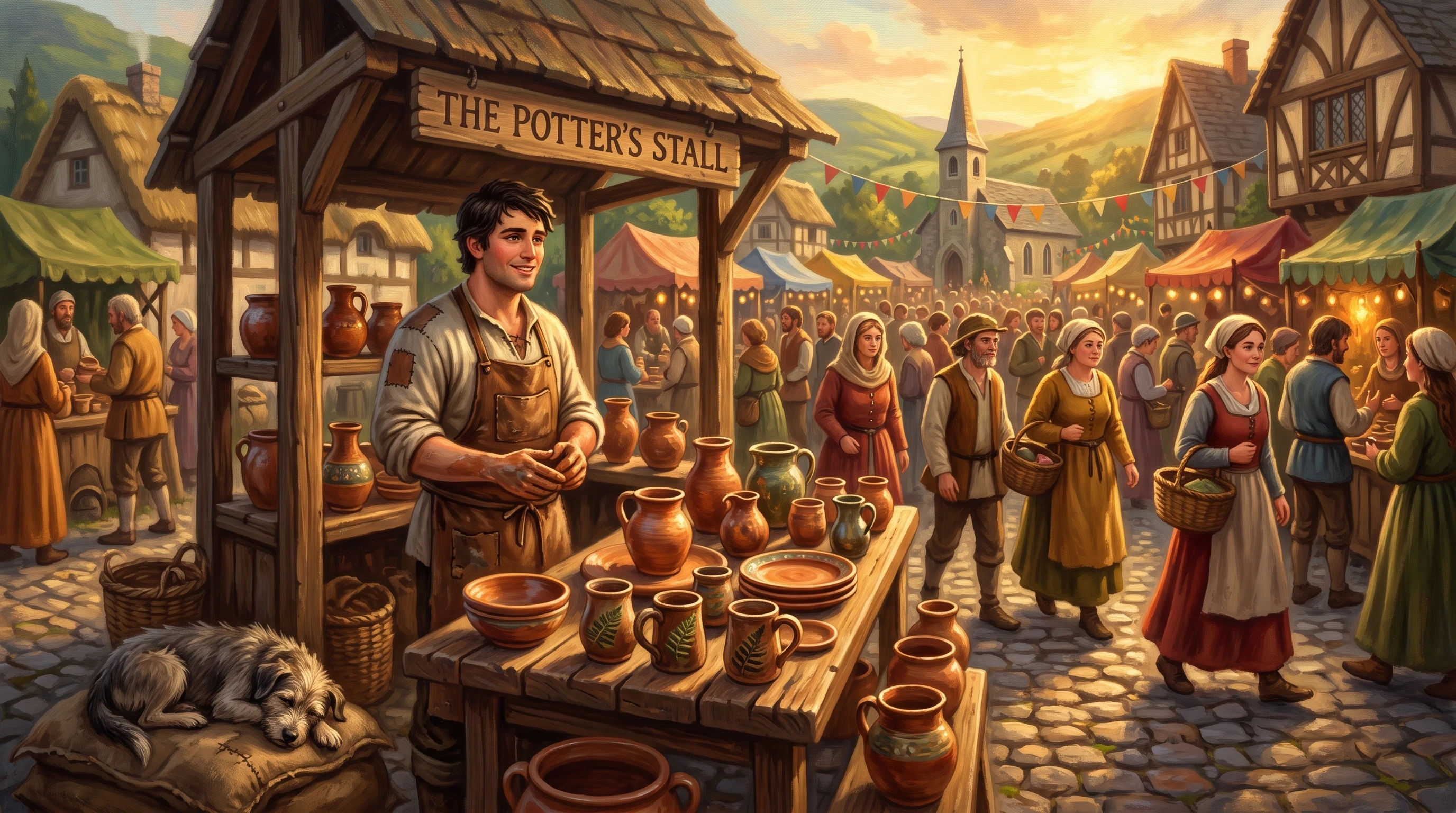
Week after week, the same thing happened. Crowds came. Crowds admired. Crowds left. By evening, Doran would sit among his unsold pots, counting the coins he hadn't earned, and mutter to his old three-legged dog, "Biscuit, I have more admirers than a peacock and fewer customers than a haunted well."
The Innkeeper's Advice
One evening, Doran carried his troubles to Old Ansel, who kept the village inn and had, over sixty years, watched every kind of trader rise and fall.
"You have plenty of visitors," Ansel said, refilling Doran's cup with cider, "but no way back to them. A person walks past your stall, admires your work, and vanishes into the crowd like smoke up a chimney. Once they're gone, you have no thread to pull them back."
"What thread would that be?" asked Doran.
"Something small," said Ansel, "that they carry away with them — and that reminds them of you long after market day ends. And more than that — a way for you to find them again, instead of hoping they wander back on their own."
The Mistake of Asking Without Giving
Doran, being an eager sort, tried this the very next market day. He stood at his stall and called out to every passerby:
"Tell me your name and your village, and I shall remember you always!"
People blinked at him. A few gave slightly worried smiles and hurried on. One elderly woman patted his arm and said, "That's very sweet, dear," in the tone one uses for a child who has just declared he will marry the moon.
By the end of the day, Doran had collected exactly three names, two of them his cousins.
"You asked for something," Ansel said that night, shaking his head, "without offering anything in return. Nobody hands over a thread for nothing. You must give first."
The Clay Whistle
Ready to put this into action?
Start your free journey today — no credit card required.
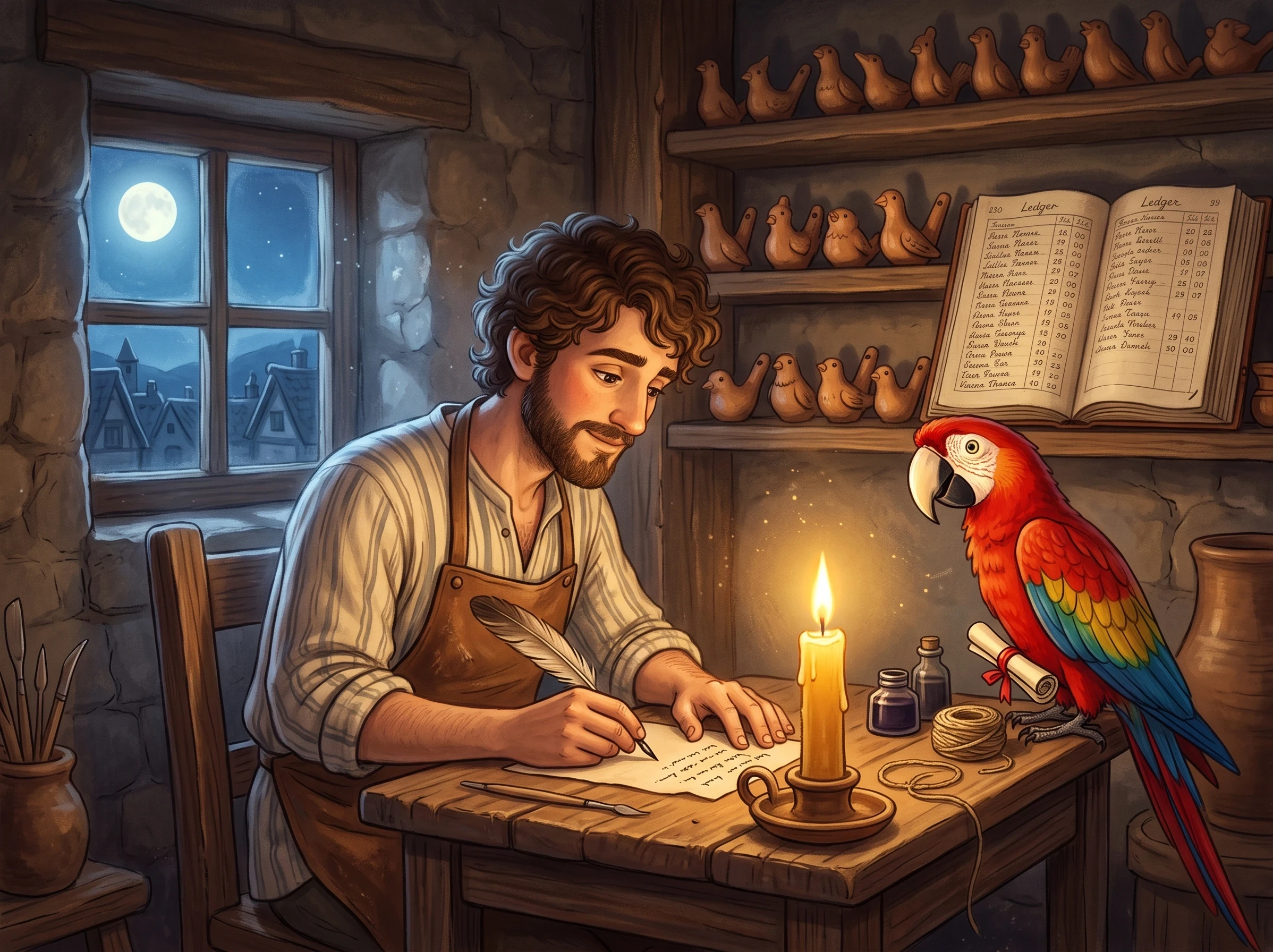
So Doran set to work. That week, using his smallest scraps of clay, he shaped dozens of tiny whistles in the form of hollow-birds, the little brown larks that nested in the hollow's hedgerows. Each one, when blown, made a cheerful, warbling toowheet that could make even the grumpiest turnip farmer smile.
On the next market day, Doran set out a simple wooden sign:
"Free hollow-bird whistle for anyone who leaves their name and village — so I may send you word of new pots, and a story or two besides."
It was simple. It was clear. And it promised something a child or a grandmother could equally enjoy.
By midday, a line had formed. Farmers, weavers, the miller's twin daughters, even the suspicious old woman from before, all left their names, delighted with their small clay birds, tooting them as they wandered off through the market like a parade of tone-deaf songbirds.
Doran's ledger, which had held three names, now held forty-seven.
Too Many Letters, Too Little Care
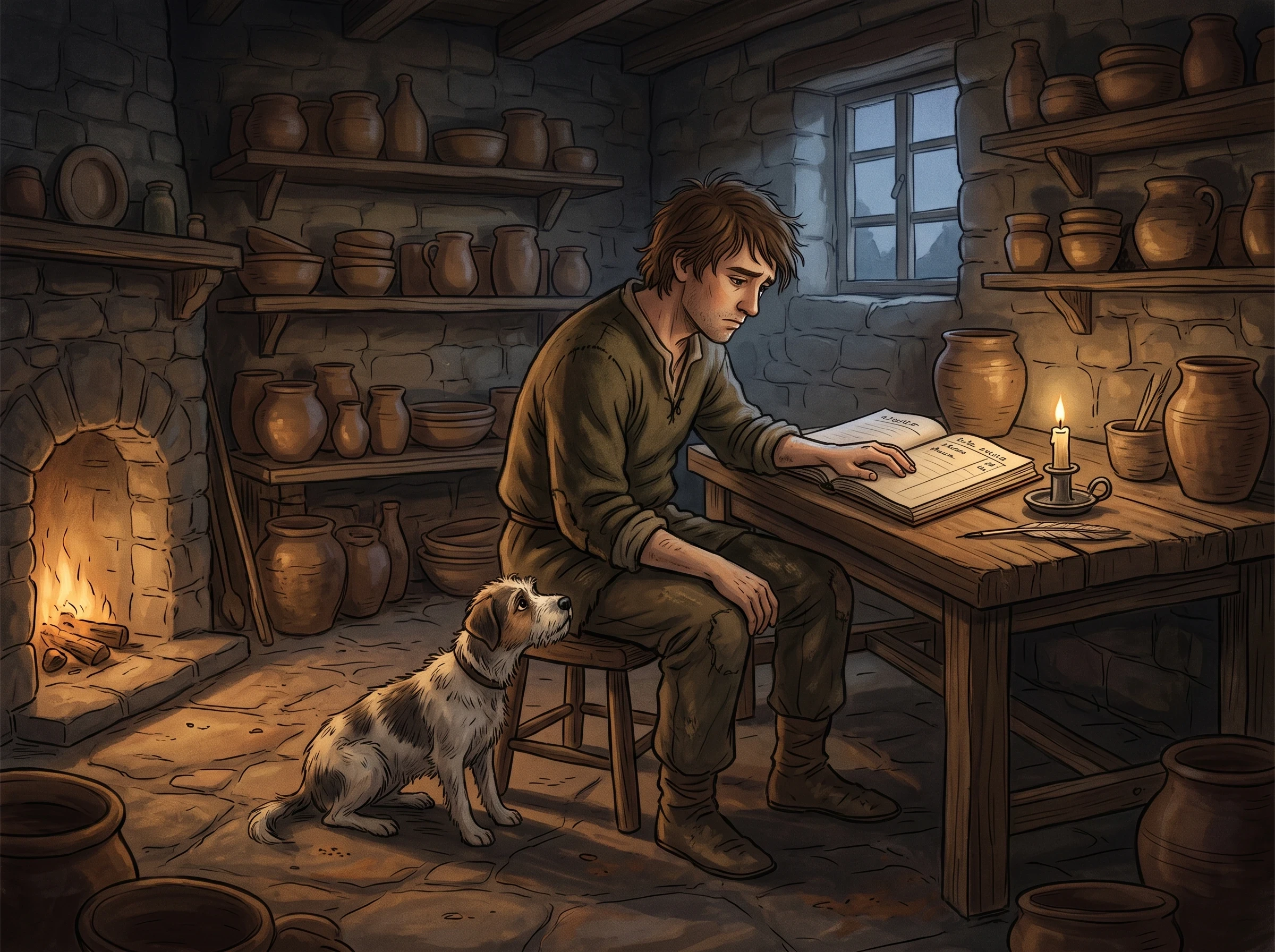
Flush with success, Doran made his second mistake. He hired the village's fastest messenger, a sharp-eyed parrot named Cricket, who could carry small scrolls tied to her leg, and began sending letters to everyone on his list.
Every single day.
"Buy my mugs!" "New bowls in stock!" "Special price today only!"
Cricket grew exhausted flying back and forth, and the villagers grew weary of scrolls stuffed under their doors. Soon, people were tossing Doran's letters straight into their kindling baskets without even unrolling them.
"You have found your thread," Ansel told him, not unkindly, "and now you're using it to strangle people instead of stay connected to them."
Letters Like Conversations
Doran took a breath, and started again, this time with patience.
He wrote to his list only once a week. His first letter to each new person was warm and unhurried:
"Thank you for stopping by my stall. I hope your hollow-bird whistle brings you a smile on a dull afternoon. Here's a little trick for caring for clay pots so they never crack in winter…"
He shared small things about himself, too, the day his kiln had cracked and filled the whole street with smoke, the winter he'd spent three months learning to mix a blue glaze that kept turning out the color of swamp water, the pride he felt the first time a stranger complimented a pot without knowing Doran had made it.
He recommended, gently, the woodcutter who sold him his finest ash for glazing, and the weaver whose cloth made the best pot-wrappings for travelers, not because they paid him, but because they were good, and his readers trusted him enough to believe it.
Slowly, the tone of the letters changed. People began replying. "Doran, my mug from you is still my favorite thing in the house." "When is the next market day? I want to bring my sister."
The Harvest of Patience
Not everyone bought a pot right away. Some stayed quiet on his list for months, simply reading his letters, tooting their little clay whistles now and then, feeling, without quite knowing why, that they knew this potter, and liked him.
Then, come the autumn fair, something remarkable happened. Dozens of the names in Doran's ledger arrived at his stall, not as strangers, but as old friends. The miller's twin daughters bought matching bowls. The suspicious old woman bought six mugs "for my whole quarrelsome family." Even people who had never once visited his stall in person walked up, whistle in pocket, and said, "I feel as though I already know you."
Doran's little list of forty-seven had grown, slowly and honestly, into hundreds, not because he had shouted the loudest, but because he had stayed.
The Moral, as Old Ansel Told It
Years later, when Doran had grown gray at the temples and taught a dozen young potters of his own, he would tell this story to any beginner who complained that visitors came and never returned.
"A crowd," he would say, "is like wind through the market, it comes, it stirs the dust, and it's gone by evening. But a list, cared for gently, is like a garden. You cannot shout a garden into blooming. You water it. You give it sun. And in its own good time, it feeds you for years."
And somewhere in Hollowbrook, if you listen closely on a quiet evening, you might still hear the faint, cheerful toowheet of a little clay bird, carried in someone's pocket, a small reminder that they, too, once left their name with a potter who never forgot them.
Share this insight
This conversation is happening inside the community.
Join free to continue it.The Internet Changed. Now It Is Time to Build Differently.
If this article resonated, the next step is learning how to apply it. Inside Wealthy Affiliate, we break this down into practical steps you can use to build a real online business.
No credit card. Instant access.