The Lanternkeeper of Thistlemoor


Published on September 14, 2026
Published on Wealthy Affiliate — a platform for building real online businesses with modern training and AI.

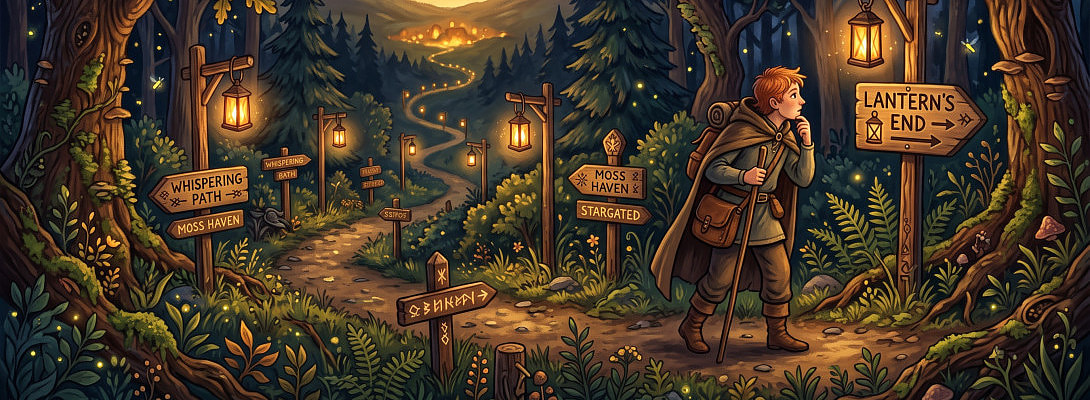
In the days when maps were still drawn by hand and roads were only rumors until someone walked them, there lived in the village of Thistlemoor a young orchard-keeper named Wren Emberwood.
Wren's family had tended a hidden orchard tucked behind Hollow Ridge for three generations. The trees there grew the sweetest amberpears in the whole valley, plump, golden, and so fragrant that bees would hum louder just passing by. But there was a problem, and it was not the fruit.
Nobody came.
Wren would climb to the top of the ridge every morning, shading his eyes, watching the empty trade road far below. Not a single traveler turned up the path toward the orchard. Not one cart. Not even a curious goat.
"I have built something wonderful," Wren said to his grandmother one evening, staring at baskets of unsold amberpears, "and no one in the world knows it exists."
His grandmother, old and unhurried, only smiled. "Then you haven't built a road yet, child. You've only built an orchard."
The Wayfinder's Riddle
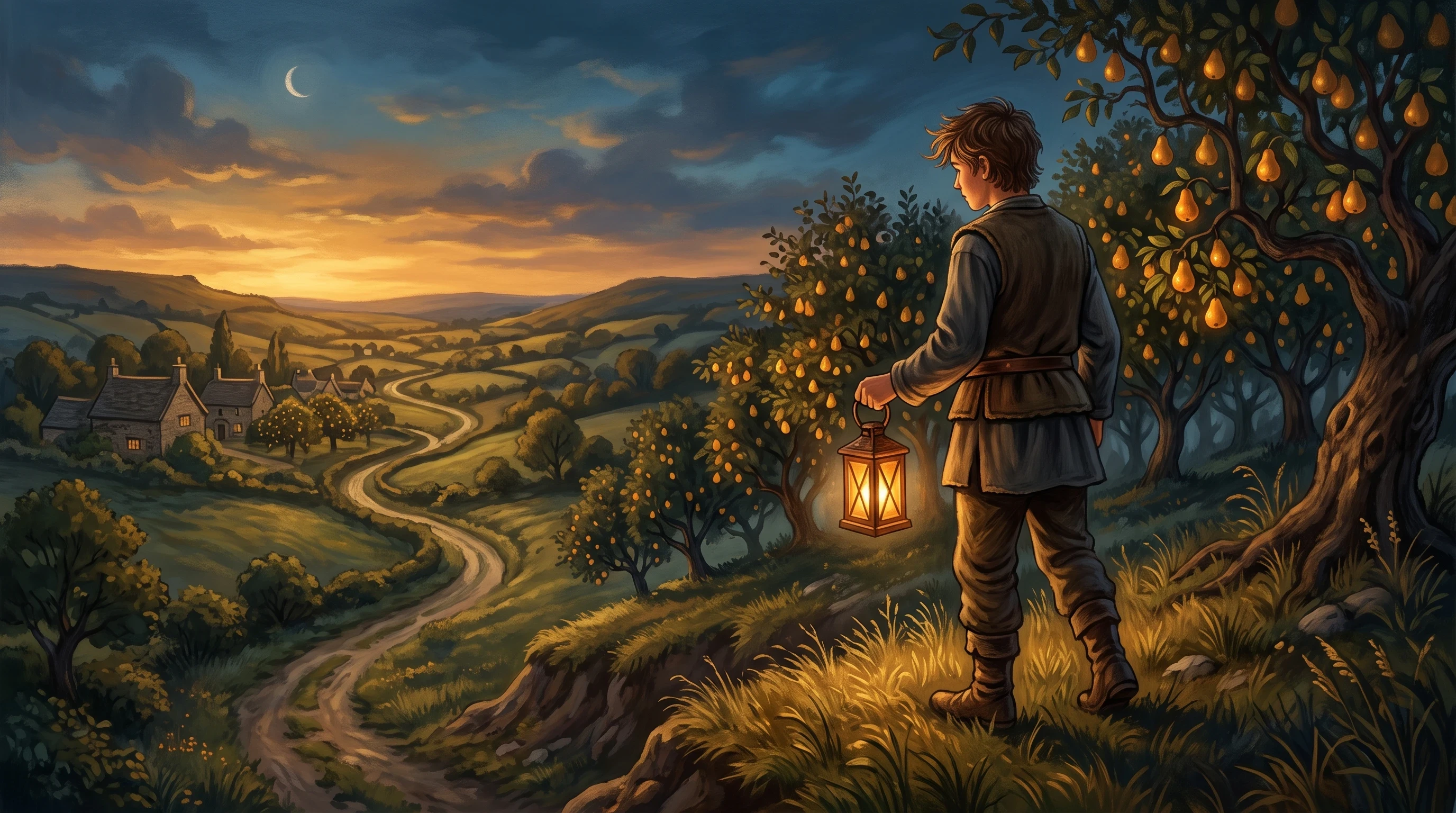
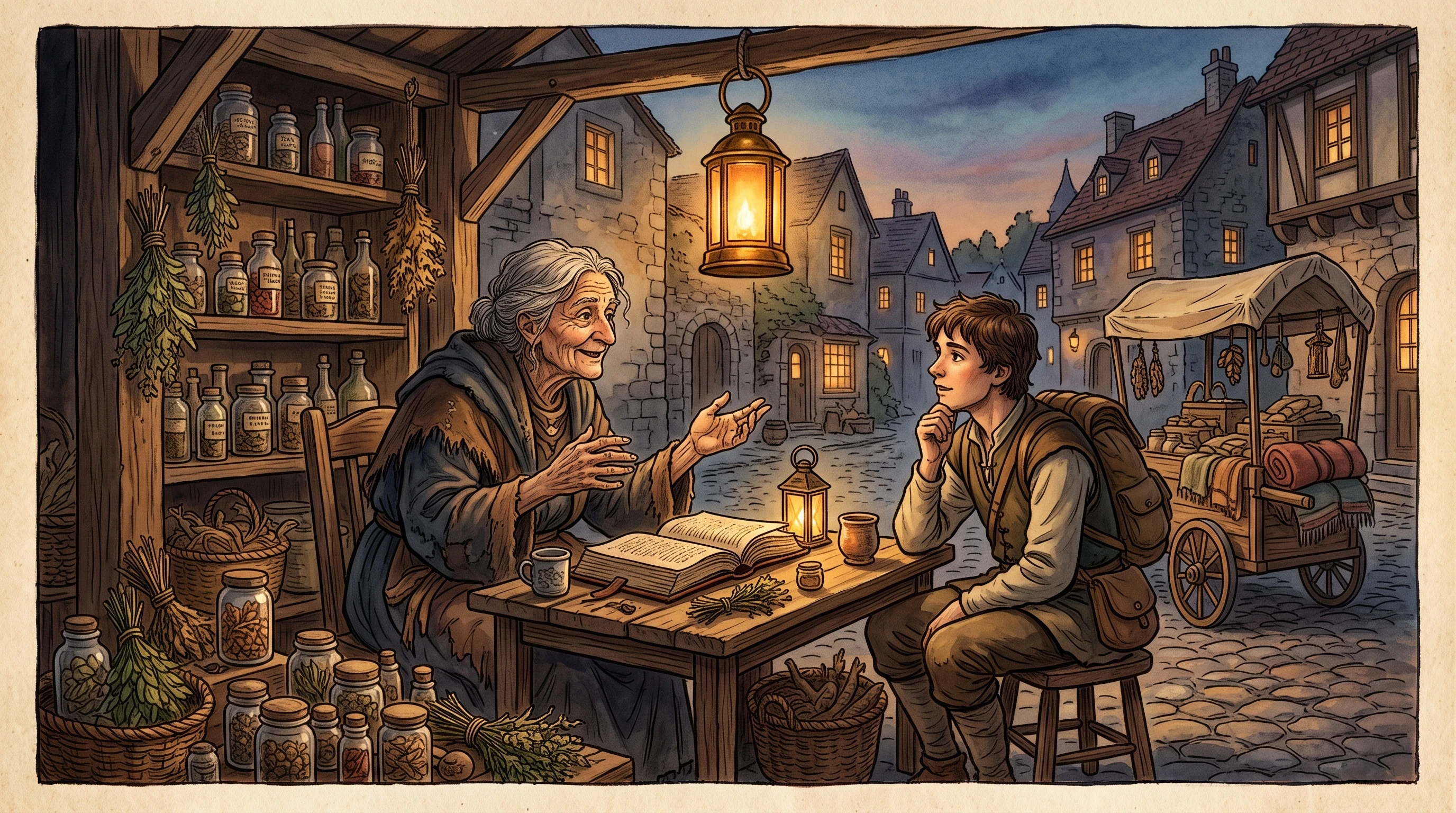
Desperate, Wren sought out Old Magda, the village's legendary wayfinder, a woman who had once charted every goat-path, riverbed, and shortcut in three counties. She lived in a crooked cottage stacked floor to ceiling with maps, and she rarely took visitors seriously unless they'd already tried and failed at something.
"I want travelers to find my orchard," Wren announced. "Tell me the fastest way to bring the whole trade road to my door."
Old Magda laughed so hard her spectacles fogged up.
"Boy," she said, "you don't bring the road to you. You go and stand where the road already wants to go."
She unrolled a map and tapped it firmly. "Travelers don't wander randomly, Wren. They ask questions before they ever take a step. 'Where can I find shelter before nightfall?' 'Which path avoids the marsh?' 'Is there water before the next village?' If you want to be found, you must answer the questions they are already asking, not the ones you wish they'd ask."
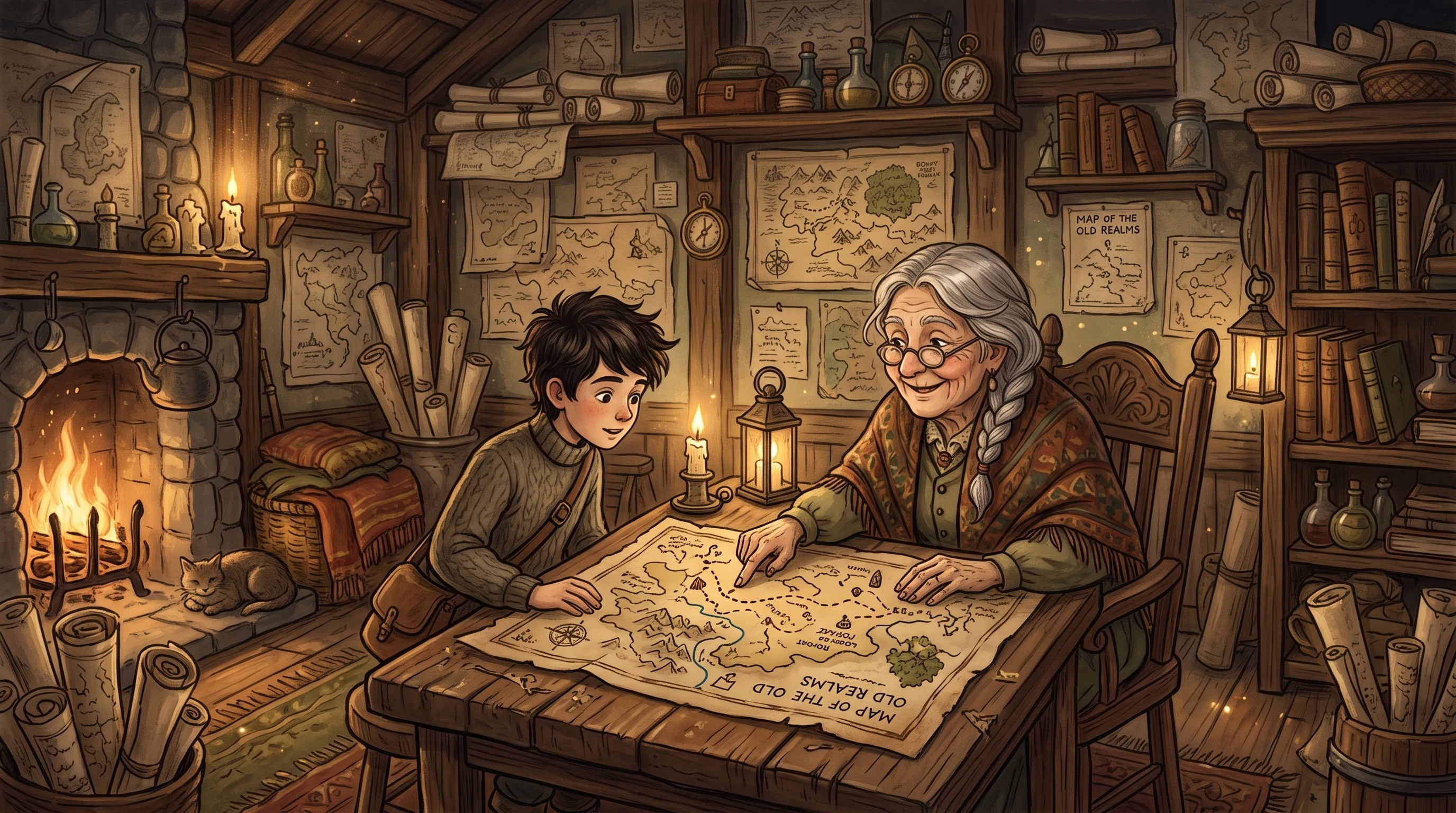
So Wren stopped dreaming up grand signs that shouted "BEST AMBERPEARS IN THE VALLEY!", signs nobody was looking for, and instead began carving small, humble markers that answered real traveler questions:
"Shortcut to avoid the marsh — this way." "Fresh water and shade, quarter mile ahead." "Safe resting spot before dark."
Only, tucked beside each one, a small carving of an amberpear.
The Season of Silence
For weeks, nothing happened.
Ready to put this into action?
Start your free journey today — no credit card required.
Wren checked his signposts daily, hoping for footprints in the dirt. Most mornings, there were none. He began to wonder if Old Magda had made a fool of him.
"I put up the signs," he complained, "and still no one comes!"
Old Magda didn't even look up from her tea. "Did you expect the whole valley to turn onto your path the very first night you lit a single lantern?"
"...Maybe," Wren admitted.
"Roads are not built by wishing," she said. "They are worn in, footstep by footstep, by people who don't even know they're building anything at all. Trust takes longer to earn than effort takes to spend. A new path always looks empty right before it becomes well-worn. That is simply the shape of the thing."
The Lanterns of Thistlemoor
Wren decided that if travelers needed time to notice his signs, he would make it impossible to miss them forever. Every single evening, rain, wind, or frost, he walked the trade road and lit small lanterns beside each marker, then returned home to carve one more sign for tomorrow.
His neighbors thought him strange. "One lantern won't light a road," they teased.
"No," Wren agreed. "But forty nights of lanterns might."
He did not stop at one sign, or ten. Some evenings he was so tired his hands shook while carving, but he kept going, a sign for the fork in the river, a sign for the steep bend, a sign for the old stone bridge. Each one small. Each one useless alone. But together, they began to form something no single sign ever could: a trail of light that travelers could actually follow, one glow leading to the next.
One evening, a tired merchant, having read the marker about safe resting spots, followed the lanterns up the ridge out of pure curiosity, and left the next morning with a satchel full of amberpears and a story to tell in the next village.
Sharpening the Signs
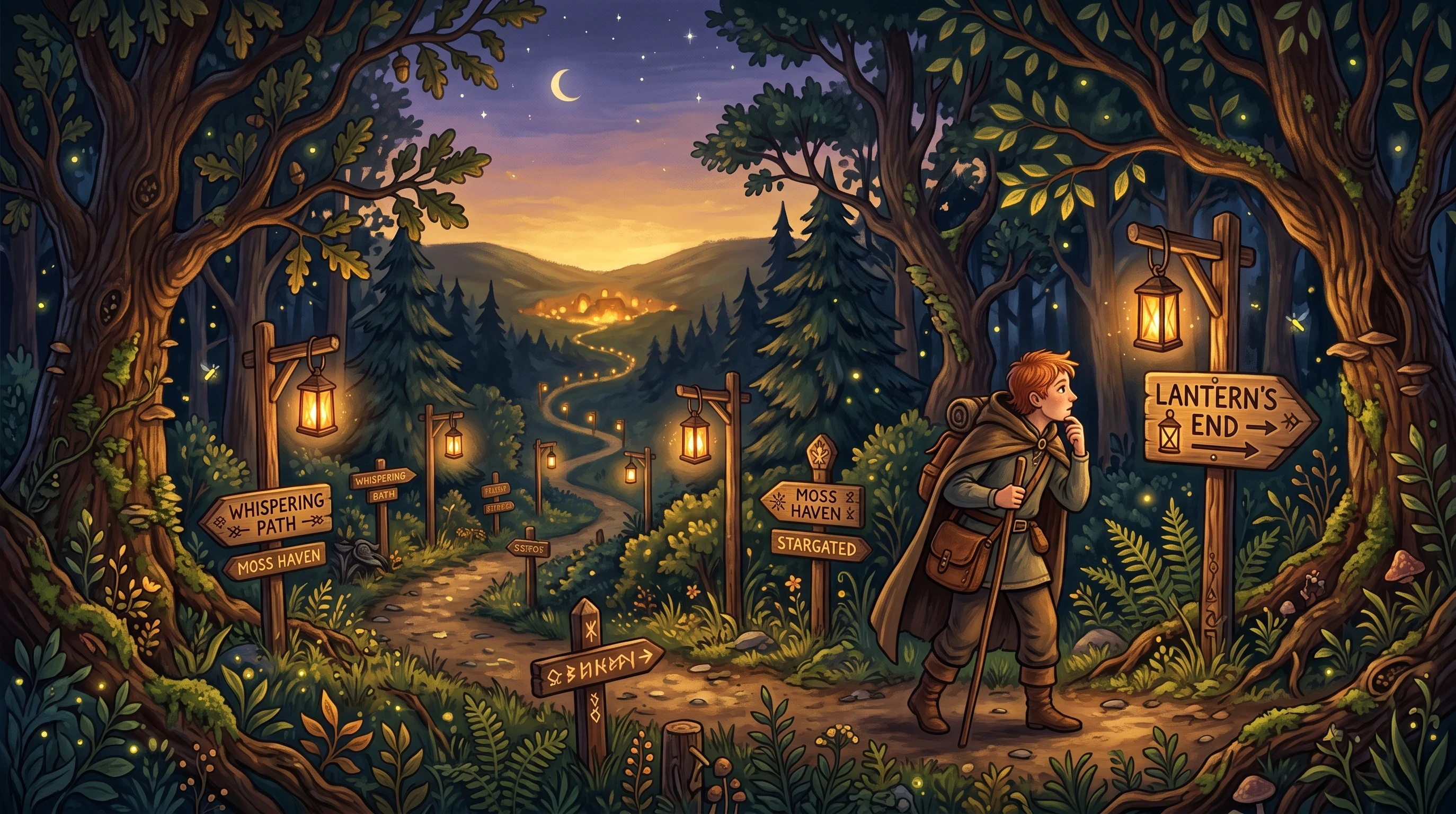
Not every sign worked. Some travelers walked right past the early ones, squinting in confusion, Wren's first attempts were, frankly, terrible. The letters were cramped. The directions unclear. One sign he'd carved in a hurry pointed travelers toward the marsh instead of away from it, which he only discovered after a very muddy, very unimpressed traveler stomped up to complain.
Instead of sulking, Wren went back and fixed it. He repainted faded letters. He made the directions plainer. He replaced clever phrases with clear ones. Old signs that had drawn no one before began, after a little polishing, to draw travelers at last.
"A dull tool sharpened is still worth more than a clever one left rusting," his grandmother reminded him.
Counting Footprints
Old Magda taught him one more trick, not magic, just attention. Each morning, Wren counted footprints in the dirt near each sign. Most days: two. Some days: five. Some days, discouragingly: none at all.
But he wrote every number down anyway, in a little leather book, because Old Magda insisted: "You cannot see a river rising by staring at one drop. You must watch the water level over many moons."
Slowly, so slowly he almost didn't notice the numbers crept upward. Two footprints became six. Six became fifteen. On the morning he counted thirty, he sat down on a rock and simply laughed with disbelief.
The Road That Grew Itself
Seasons turned. What began as a lonely, overgrown goat-path became something the whole valley now called "The Amberpear Trail." Merchants routed their journeys through it on purpose. Children in Thistlemoor grew up thinking the lantern-lit road had always existed.
Wren rarely told the whole story anymore, of the silent mornings, the muddy complaints, the nights his arms ached from carving, the seasons when nothing seemed to be happening at all. Visitors only saw a thriving trail and assumed it had sprung up overnight, the way a river looks eternal to anyone who never saw its first trickling spring.
Old Magda, visiting one final time before she grew too old to travel, stood at the ridge and looked down at the well-worn road glowing faintly with lantern light in the dusk.
"You didn't build a shortcut, Wren," she said. "You built a road. And roads outlive the ones who wear them in."
The Moral Passed Down in Thistlemoor
To this day, when a young orchard-keeper or merchant in Thistlemoor grows discouraged that no one is coming, the elders tell them Wren's story, and end it always the same way:
"Answer the questions travelers are already asking. Light your lantern even on the nights no one seems to be walking. Sharpen your signs instead of abandoning them. Count your footprints, even when there are only two. The road will not appear in a season, but it will appear. Keep lighting the lanterns. The travelers are coming, even now, even if you cannot yet see them on the path."
— End —
Share this insight
This conversation is happening inside the community.
Join free to continue it.The Internet Changed. Now It Is Time to Build Differently.
If this article resonated, the next step is learning how to apply it. Inside Wealthy Affiliate, we break this down into practical steps you can use to build a real online business.
No credit card. Instant access.