Google Finding, Crawling, and Indexing (Or Not) - The Understanding You Need


Published on January 12, 2026
Published on Wealthy Affiliate — a platform for building real online businesses with modern training and AI.

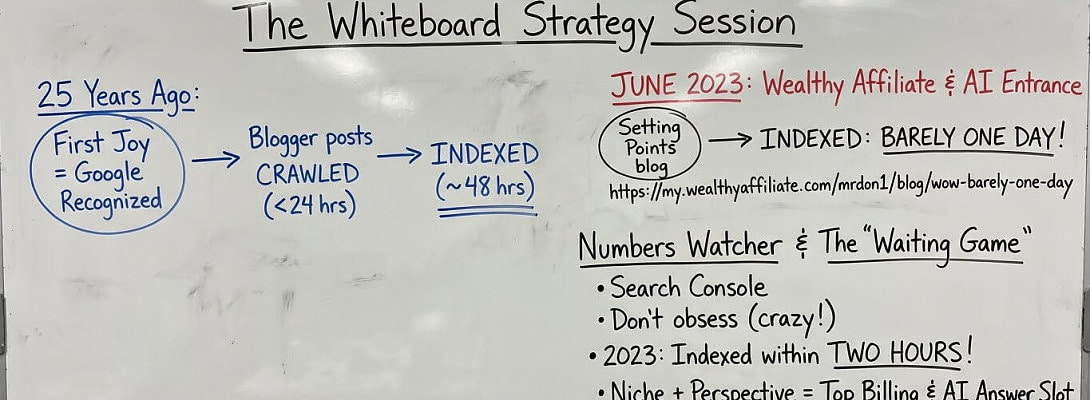
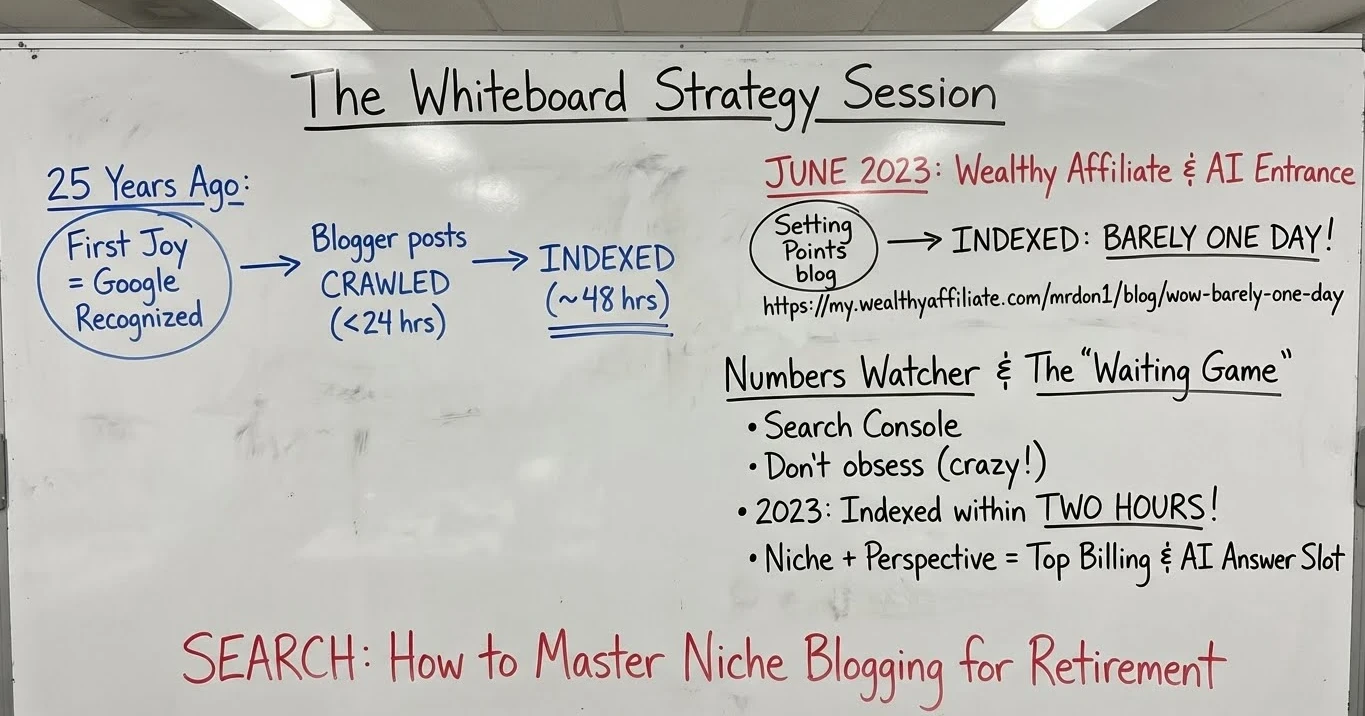
Twenty-five years ago, the first joy was getting recognized by Google. Then, I watched as my posts on Blogger got crawled. The wait was not long; it took less than 24 hours to find your site. The real joy came about 48 hours after the "crawl" when the posts got indexed.
Fast forward to June 2023, when I joined Wealthy Affiliate. AI had just made an entrance. Setting Points, my first blog site, built by me for me, got indexed. That was barely one day.
https://my.wealthyaffiliate.com/mrdon1/blog/wow-barely-one-day
Then life got crazy for creating content. AI has sent the number of posts skyrocketing. Is Google keeping up?
Numbers Watcher
I am always looking for which pages are indexed on Google's Search Console. Before I remind you that we shouldn't be numbers-watching in the beginning, I couldn't help it. It will drive you crazy if you let it. I didn't let it. But I like to know what I am looking at. I assume that you do as well.
The "Waiting Game" – How Long Does It Actually Take?
One of the most common questions I get is: "I hit publish, so why isn't it on Google yet?"
In 2023, I was seeing my posts get indexed within two hours after publishing. Google has always liked my niche and perspective. I still garner top billing and am now in their AI Answer slot. Wealthy Affiliate taught me well. Go ahead and search for:
How to Master Niche Blogging for Retirement
Google Hasn't Kept Up
There is a reason that they haven't - AI is filling the processors full of spam and clogging the machinery.
Do You Know The Scale of the 2026 Index?
- 7.5 Million Daily Posts: Bloggers alone are pumping out over 7.5 million new posts every single day.
- Hundreds of Billions of Pages: Google’s total index now contains roughly 400 billion documents.
- Trillions of Searches: Google handles over 8.5 billion searches per day.
That is a ton of indexing to do daily. Google is falling behind.
Today, Google is much more selective. If you’re running a new blog, here is the reality of the 2026 indexing timeline:
- The First 24–48 Hours: If you manually "Request Indexing" in GSC, Google usually takes a look. But "looking" isn't "indexing."
- The 1 to 6 Week Window: For a new site (under 6 months old), this is the standard "waiting room." If blogging has been your thing for a while, Google swore that it did not sandbox new sites. They do! Google is essentially "vetting" you and your site to see if you are a consistent creator or just another fly-by-night spammer.
- The 3-Month "Stall": Don’t panic if your posts stay in Discovered - Currently Not Indexed for months. Google is prioritizing "Crawl Budget" for sites that have already proven their value.
Why the Delay?
Google’s index is bloated. Between AI-generated fluff and billions of new pages, they’ve raised the bar. They aren’t just looking for "content"; they are looking for authority.
How to speed it up:
- Internal Links: Link your newly published post to a post that is already indexed. It’s like giving the Google crawler a roadmap.
- Consistency: Posting once a month tells Google your site is a low priority. Posting 2–3 times a week tells Google it needs to stop by more often.
- Social Traffic: If you can get actual humans to click your link from social media, Google notices the activity and often crawls the page faster.
Ready to put this into action?
Start your free journey today — no credit card required.
Bottom line: If it’s been more than 2 months and you’re still not indexed, it’s rarely a technical glitch. It’s a signal that you need to up the quality and prove your site deserves the space.
Your Site is Indexed- Now What?
The first hurdle has been crossed. Google knows your site exists.
In the Google Search Console "Pages Tab", you get a snapshot of your indexed pages and those awaiting inclusion. Under "Why pages aren’t indexed" (Remember, pages that aren’t indexed can’t be found on Google), you encounter two key categories: Crawled and Discovered.
But do you understand what this means? Let me go back into my Librarian analogies to illustrate the difference between "Crawled - currently not indexed" and "Discovered - currently not indexed".
Crawled Not Indexed – The "Review" Pile
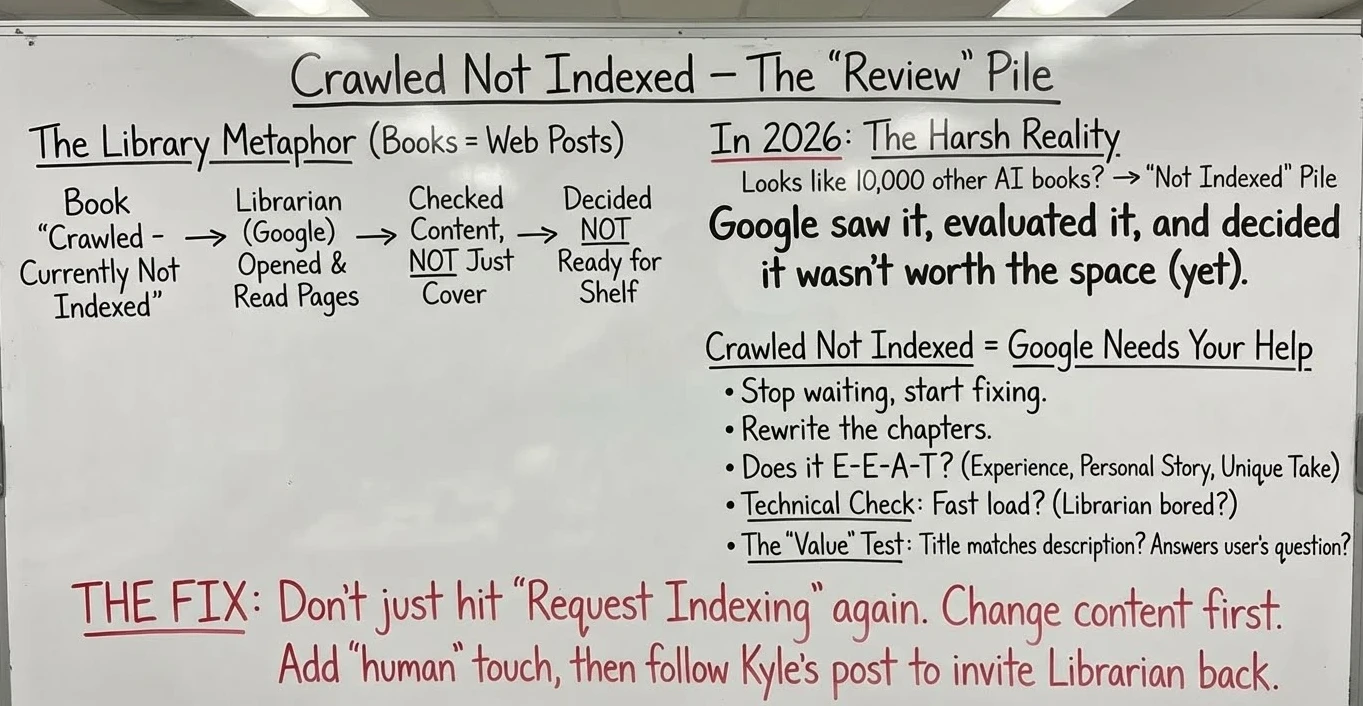
Imagine a library where books represent web posts. When a new book is "Crawled - Currently Not Indexed," it means The Librarian (Google) has actually opened the book and read the pages. She didn’t just look at the cover—she checked the content and decided it wasn't ready for the shelf.
In the past, we said this meant the Librarian just "needed more time." In 2026, the reality is harsher. If the Librarian reads your book and it looks exactly like the 10,000 other AI-generated books she read that morning, she puts it in the "Not Indexed" pile and moves on.
You are looking for black-and-white answers. Here it is: Google saw it, evaluated it, and decided it wasn't worth the space (yet).
Crawled Not Indexed = Google Needs Your Help
What should you do? Stop waiting and start fixing. If the Librarian rejected the book, you need to rewrite the chapters.
- Does it E-E-A-T? Google is hunting for Experience. Did you add a personal story, your own photos, or a unique take? If it sounds like a textbook, it’s going to stay in the "review" pile.
- Technical Check: Does the page load fast, or is the Librarian getting bored waiting for images to pop up?
- The "Value" Test: Does the Title match the description, and does the content actually answer the user's question?
The Fix: Don't just hit "Request Indexing" again. Change the content first. Make it undeniably better, add your "human" touch, and then follow Kyle's post How to Request Indexing in Google (Through Search Console) to invite the Librarian back for a second look.
Next is your waiting to be read section.
Discovered - Currently Not Indexed
Google indexes billions of new and rewritten posts and pages daily. They are the most effective at doing this. Their ability to index based on what you "mean" is unmatched. They are not just indexing on your keywords, but also on your intent. Keeping the intent of the post clear helps.
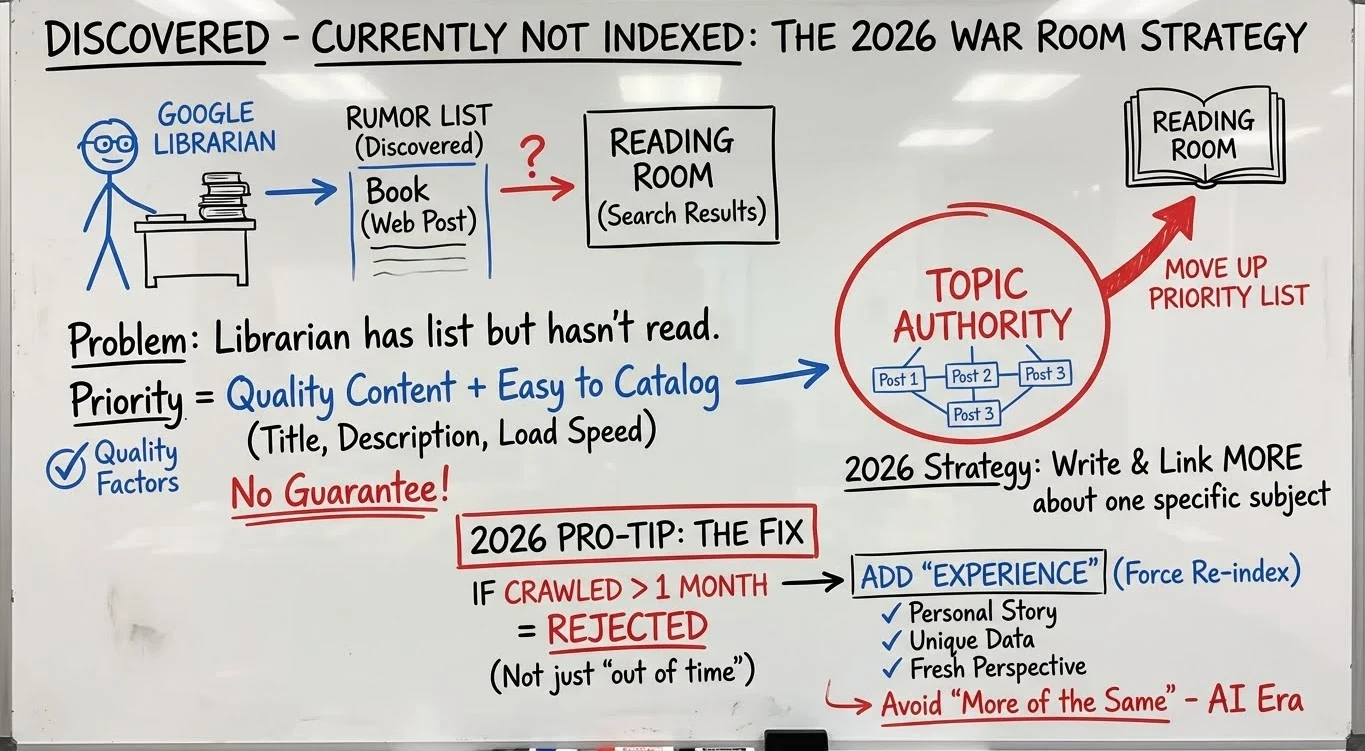
When a book is "Discovered - Currently Not Indexed," it means the librarian has heard rumors, or seen a list where the book (web post) exists, but hasn't read it yet.
Our Librarian will have a list of books to process and prioritize based on various factors. The priority is quality content that is easy to catalog. The title matches the description, the description matches the content, and it loads quickly.
Even if your site checks the above boxes, there is no guarantee of getting read. In 2026, making it to the Librarian’s Rumor list isn't a guarantee of a visit. To move from the list to the reading room, you need Topic Authority. The more you write (and link) about one specific subject, the higher you move up her priority list
This delay in indexing mirrors the librarian's need to manage their workload efficiently before formally cataloging a book, ensuring that only valuable and relevant content is included in the library's catalog (search results).
2026 Pro-Tip: If a post stays in "Crawled - Currently Not Indexed" for more than a month, the Librarian hasn't just run out of time, she’s rejected the content. In the age of AI, "more of the same" doesn't get a shelf. Add a personal story, unique data, or a fresh perspective to prove your "Experience" and force a re-index.
Get Indexed
Enhance your website's crawlability by optimizing internal linking. Internal linking functions are akin to a spider weaving its web, seamlessly connecting all your pages. This approach prevents crawl budget issues and eliminates the risk of orphan pages or internal no-follow links.
Additionally, check your robots.txt file to ensure it allows Google to crawl your site effectively. By understanding these statuses and taking appropriate actions to improve crawlability and content quality, new bloggers can enhance their chances of having all their valuable pages indexed for better visibility in search engine results.
What to Remember
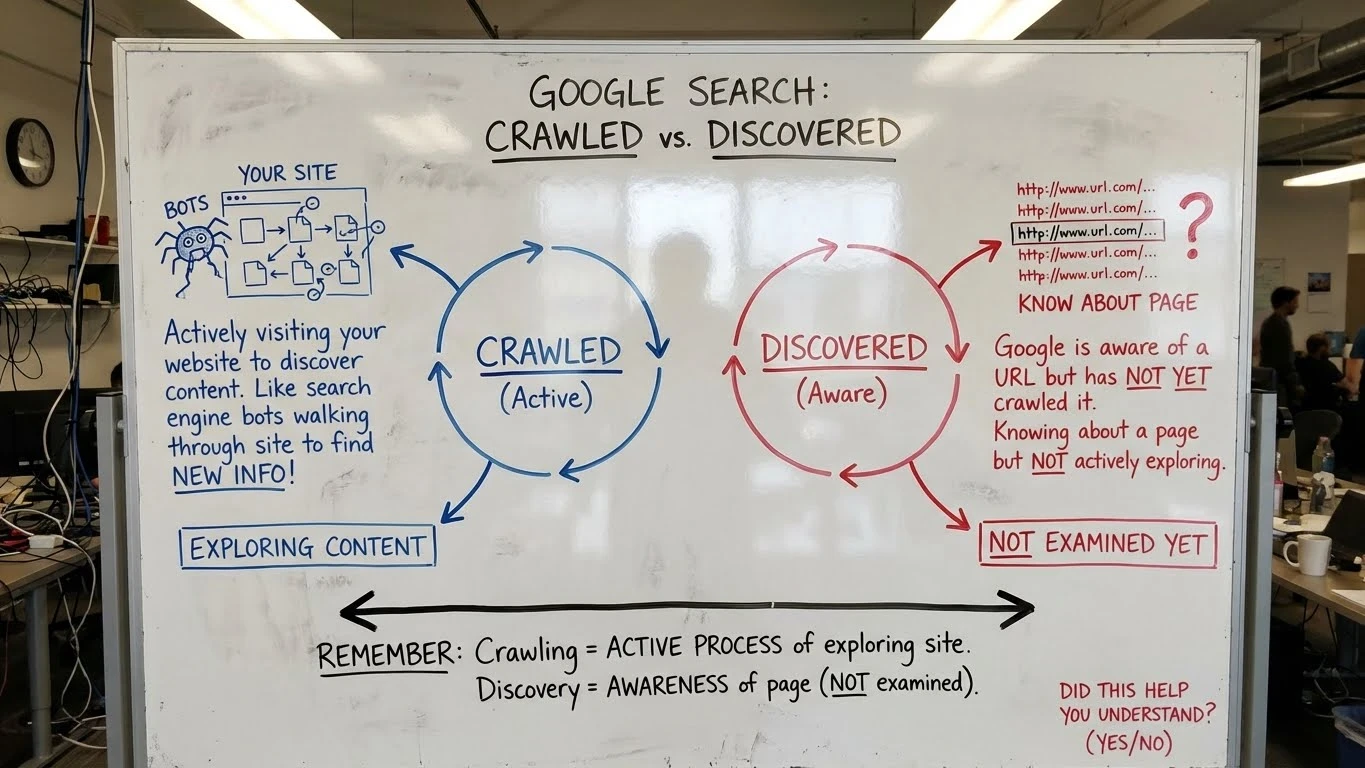
Crawled: Crawling is the act of Google actively visiting your website to discover its content. It's like search engine bots walking through your site to find new information.
Discovered: On the other hand, discovered means that Google is aware of a URL but has not yet crawled it. It's like search engines knowing about a page but not actively exploring its content.
Remember, crawling is the active process of search engines exploring your site, while discovery indicates that search engines are aware of a page but have not yet examined it.
Did this help you to understand the difference?
Share this insight
This conversation is happening inside the community.
Join free to continue it.The Internet Changed. Now It Is Time to Build Differently.
If this article resonated, the next step is learning how to apply it. Inside Wealthy Affiliate, we break this down into practical steps you can use to build a real online business.
No credit card. Instant access.