New AI Experiment - Translating Old Spanish Works To Be Published


Published on September 2, 2026
Published on Wealthy Affiliate — a platform for building real online businesses with modern training and AI.

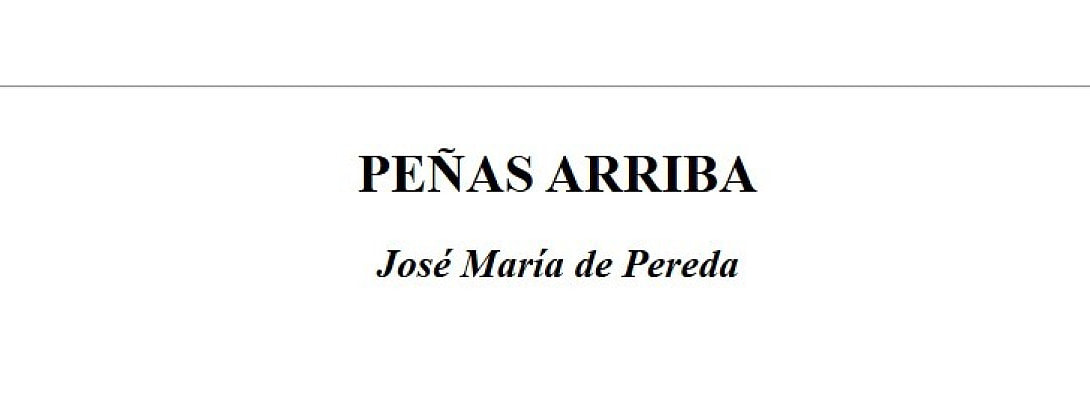
Hi everyone,
It is trying to maintain the original intent and meanings.
Here is the Audit for the first 10 Chapters:
Translation Style Sheet Going Forward
For Chapters XI onward, I recommend that we formalize the following as our working standard.
Narrative voice: polished literary English, somewhat elevated but never faux-Victorian.
Marcelo: sophisticated, ironic, self-conscious, occasionally pompous.
Don Celso: exuberant, humorous, rustic, affectionate, highly expressive.
Chisco / Tarumbo / Pito: recognizably rural speech without artificial English phonetic dialect.
Neluco: restrained, educated, sincere, intellectually precise.
Lita: lively, graceful, provincial but naturally sophisticated.
Catholic language: preserve it exactly as part of Pereda’s world—Our Lady, the Rosary, holy water, blessed objects, Mass, Christendom, the Blessed Sacrament, Providence, prayers for the dead, and theological/religious expressions. Do not secularize them.
Latin: preserve significant Latin in the text, with an English translation or note when necessary.
Recurring regional vocabulary: retain selectively at first occurrence with contextual explanation. Current candidates include espolique, lástico, solana, Prao-Concejo, braña, invernal, morio, and jándalo.
Names and nicknames: preserve Spanish names. Nicknames that function as names should usually remain Spanish rather than being continually converted into English.
Ready to put this into action?
Start your free journey today — no credit card required.
Historical references: explain in restrained endnotes rather than burdening dialogue with exposition.
Uncertain flora, tools, weapons, architecture, and obsolete medical vocabulary: flag for lexical verification rather than guessing.
Final Assessment After Ten Chapters
The most important finding is what I didn't find.
I did not find passages where the Spanish says one thing and our translation invents another.
I did not find lost paragraphs.
I did not find doctrinal or religious content being altered.
I did not find characters losing their individual voices.
I did not find a gradual deterioration as the prose became more difficult.
What I found instead is exactly what one would expect in a serious human first draft of a literary translation: a relatively small number of ambiguous idioms, regional words, historical references, and specialist terms requiring a second editorial pass.
The two clearest actual corrections are:
Chapter III — cornucopia mirrors.
Chapter IX — historical meaning of asistolia.
The remainder is chiefly refinement and annotation.
Publication Judgment
After auditing Chapters I–X, I would continue this project.
I would not market the present chat output untouched as a finished translation. But after a controlled fidelity pass, terminology pass, copyedit, and final proof against the Spanish, I believe this method is capable of producing a professionally publishable new English translation of Peñas arriba.
The experiment has passed its first serious checkpoint.
---------------------------------------------
To me this is impressive and when the book becomes ready for publishing, I will select other well known authors whose original language texts did not get translated into English.
What could you have translated especially if you are a native speaker of another language and could have something translated into English?
To Our Success!
Mel Waller
Share this insight
This conversation is happening inside the community.
Join free to continue it.The Internet Changed. Now It Is Time to Build Differently.
If this article resonated, the next step is learning how to apply it. Inside Wealthy Affiliate, we break this down into practical steps you can use to build a real online business.
No credit card. Instant access.