Faith and Healing: Rebuilding Trust in God After Trauma


Published on December 24, 2025
Published on Wealthy Affiliate — a platform for building real online businesses with modern training and AI.


This isn’t a typical business or marketing post. It’s a personal reflection I felt called to share — about faith, grief, and rebuilding trust in God after unimaginable loss. I’m sharing it here because our journeys don’t begin with strategies; they begin with survival, healing, and purpose.
Experiencing profound loss can shake the very foundation of your beliefs. When pain enters your life in a way you never imagined possible, it doesn’t just break your heart — it can fracture your faith too.
I know this because I’ve lived it.
After losing my daughter Mikayla, my world didn’t just fall apart emotionally — it collapsed spiritually. The God I had trusted, prayed to, and leaned on suddenly felt distant. I was left standing in the aftermath of unimaginable loss, questioning everything I thought I knew about faith, protection, and trust.
If you’ve ever felt this way, I want you to know this from the start: questioning God in the face of trauma is not weakness. It is a deeply human response to unbearable pain.
Exploring the Spiritual Impact of Trauma
Trauma doesn’t stop at the mind or the body — it reaches into the soul. Grief has a way of disorienting everything, including your spiritual life. Practices that once brought comfort can suddenly feel hollow or unreachable. Prayer may feel heavy. Scripture may feel silent.
After Mikayla was murdered, I experienced this spiritual rupture firsthand. I had been deeply focused on my personal relationship with God. I prayed for her. I trusted Him. I asked Him to protect my daughter — and He didn’t.
That truth shattered me.
It wasn’t an abstract theological struggle. It was personal. I had spoken her name in prayer. I had placed her in God’s hands. And when the unthinkable happened, I felt betrayed. I was angry at God. I questioned whether He had turned His back on me — or on her.
For a long time, my faith felt like another casualty of grief.
When Faith Feels Like Betrayal
There is no gentle way to say this:
I was angry at God.
I didn’t understand how a God I trusted could allow something so violent, so irreversible, to happen. The anger wasn’t quiet. It wasn’t polite. It was raw and consuming. I questioned everything — not just what I believed, but who I believed in.
And for a long time, I didn’t try to fix that anger.
What surprised me most was this: God didn’t leave when I stopped being polite with Him.
I yelled. I cried. I accused. I sat in silence. I told Him exactly how abandoned I felt. And somehow, even in that rage, I began to realize something profound — my anger didn’t sever the relationship. It revealed how real it was.
Only someone you trust deeply can break your heart this badly.
When I Realized I Wouldn’tSurvive Without God
There came a moment when I understood something with complete clarity:
without God, I would not survive this.
The grief was too heavy. The pain too deep. Even lifting my head off the pillow felt like a defeated task on my own. There were days when simply breathing felt like work. I didn’t have the strength — emotionally, physically, or spiritually — to keep going.
But somehow, I did.
God gave me the strength I did not have. Strength to stand when my body wanted to collapse. Strength to do the unimaginable — to walk into a funeral home and choose my daughter’s casket. To select the pink roses that would be sprayed over it.
No mother should ever have to do those things. And I know I could not have done them alone.
That strength did not come from within me.
It came from Him.
The God Who Met Me in the Smallest Signs
In the quiet aftermath — when the world had moved on and my grief had not — God began to show up in ways I could not ignore.
Ready to put this into action?
Start your free journey today — no credit card required.
Not loudly.
Not dramatically.
But gently.
He gave me signs.
Rainbows — not just in the sky where you’d expect them — but in the most ordinary, unexpected places. A prism of light on the floor that caught my eye before my mind even registered it. A soft flicker in my peripheral vision that made me pause.
And then there was the morning of Mikayla’s first heavenly birthday.
I woke up that day to a glowing rainbow prism shining on my kitchen cabinet. It stopped me in my tracks. I didn’t question it — I felt it.
Later that same day, we gathered at her gravesite to celebrate her life. Family and friends came together, and her friends released blue balloons into the sky in her honor. When I later watched a video a friend had taken, something took my breath away.
In the sky — clearly visible — were three glowing lights, radiant and hovering, unmistakably resembling angels.
I didn’t ask for signs.
I didn’t search for meaning.
They simply appeared — and I knew, deep in my spirit, that I was not alone.
Redefining Faith: A Relationship Beyond Performance
Faith no longer looked the way it once did for me — and that was okay.
I learned that faith is not about perfect prayers, unwavering confidence, or having answers to impossible questions. It isn’t about keeping everything neat or saying the “right” words.
Faith is a relationship — one that can hold doubt, anger, grief, and silence.
God didn’t disappear in my hardest moments. He stayed. Sometimes quietly. Sometimes through other people. Sometimes through small, sacred signs that reminded me I was still being held. Faith stopped being something I performed and became something I lived — imperfectly, honestly, and slowly
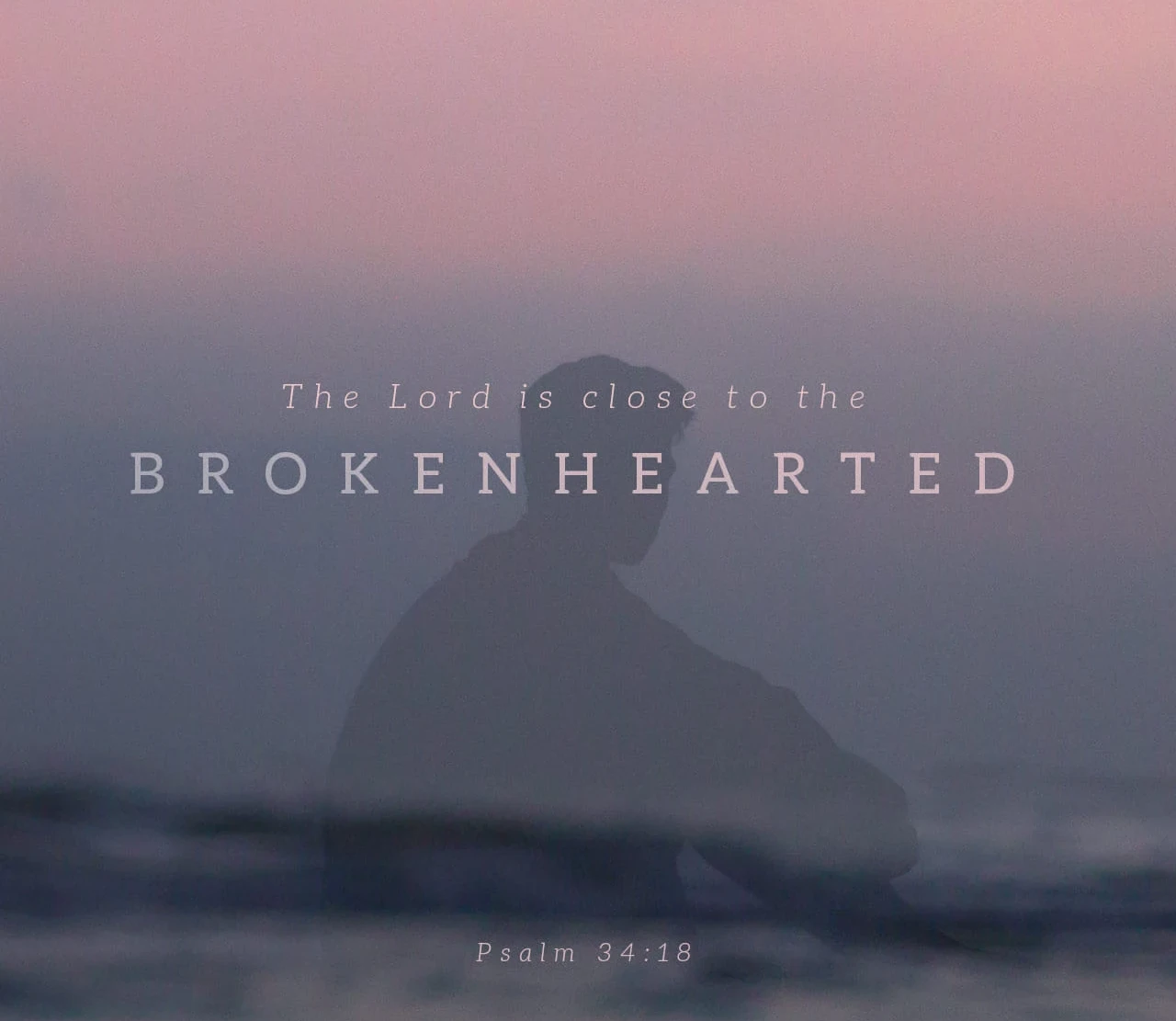
God is close to the broken hearted
Practices to Rebuild Spiritual Safety and Trust
Rebuilding trust in God after trauma doesn’t happen overnight. It happens in compassionate steps.
It starts to feel more real.
For me, healing began when I allowed my prayers to be honest — not polished, not filtered. I learned that God can handle our real emotions.
I approached Scripture differently too — not as an obligation, but as comfort. I allowed verses to meet me where I was instead of forcing myself back into who I used to be.
Stillness became another anchor. Quiet moments of breathing, reflection, and rest helped calm my nervous system and made room for peace to return — even if only in fragments.
I had to break free from wanting to isolate myself
Community mattered as well. Being around others who understood grief reminded me that I wasn’t alone. Healing didn’t erase my loss, but shared understanding lightened the weight.
The Transformative Power of Faith in Emotional Recovery
Faith doesn’t remove pain — but it changes how we carry it.
Over time, I learned that faith can coexist with grief. It doesn’t demand that you pretend everything is okay. Instead, it offers hope without denying reality. It creates space for both sorrow and healing to exist side by side.
Faith becomes less about certainty and more about resilience. Less about answers and more about presence.
It taught me that strength isn’t found in emotional armor — it’s found in vulnerability.
Moving Forward With a Faith That Holds Both Light and Shadow
Faith doesn’t delete your pain.
It walks with you through it.
Healing doesn’t mean forgetting or minimizing what you’ve endured. It means allowing your story to expand — not end.
My faith today looks different than it once did. It is quieter. Deeper. More grounded in reality than idealism. It holds both light and shadow — and that makes it real.
If you are rebuilding trust in God after trauma, know this:
You are not broken.
You are not alone.
And your questions do not disqualify you from faith.
Sometimes faith isn’t believing God will protect you from pain.
Sometimes faith is realizing you cannot survive the pain without Him.
And if you’re here, still breathing, still searching — that matters.
If you’re walking through grief or rebuilding your life in any way, you’re not alone — and I’m grateful to be part of a community that allows space for the whole journey.
You got this. 🌈💛
Jenn
Share this insight
This conversation is happening inside the community.
Join free to continue it.The Internet Changed. Now It Is Time to Build Differently.
If this article resonated, the next step is learning how to apply it. Inside Wealthy Affiliate, we break this down into practical steps you can use to build a real online business.
No credit card. Instant access.