What I Learned in Wealthy Affiliate (2022) vs What I Actually Do Now (2026)


Published on February 28, 2026
Published on Wealthy Affiliate — a platform for building real online businesses with modern training and AI.

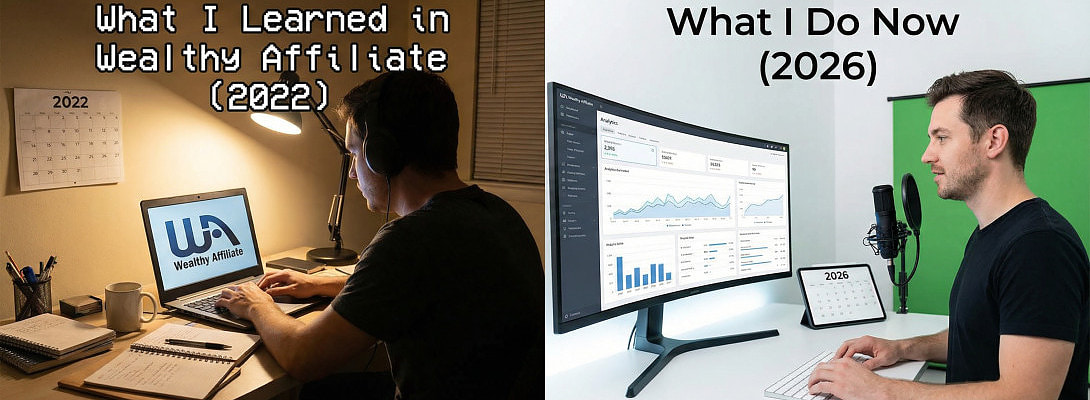
When I joined Wealthy Affiliate in 2022, I did exactly what most new members do. I followed the training step by step, used every tool that was mentioned, and didn’t question much. If something was recommended, I assumed there was a reason for it, so I implemented it.
Looking back now in 2026, I can see that the foundation was solid. The interesting part is how much the execution has changed. The principles stayed the same. The tools evolved. And honestly, so did I.
This isn’t a “what’s better” post. It’s just an honest look at how my workflow matured over four years.
1. “Da Button Factory” vs Custom HTML CTA Blocks
Some of you might remember those online button generators. I used one that was jokingly called the “button factory.” You’d open it in one tab, tweak colors, adjust fonts, download the image, upload it to WordPress, resize it, test it on mobile, realize it didn’t look quite right, go back and tweak again. It worked, but it was slow and fragmented.

At the time, I didn’t question it because I didn’t know any other way.
Now I don’t create image buttons at all. I build styled HTML blocks directly into my pages. They’re responsive, brand-aligned, and editable in seconds without leaving my editor.
Here’s a simple example of what I use now:
<div style="background:#1E2E4F;padding:28px;border-radius:14px;text-align:center;box-shadow:0 8px 24px rgba(0,0,0,0.08);margin:30px 0;">
<h3 style="color:#ffffff;margin-bottom:10px;font-size:22px;">
Ready to Build Your Own CTA Button?
</h3>
<p style="color:#e6e6e6;margin-bottom:18px;font-size:16px;">
Start with telling GPT to make you an HTML BUTTON code!
</p>
<a href="#" style="display:inline-block;background:#FFC857;color:#0F172A;padding:14px 28px;border-radius:8px;text-decoration:none;font-weight:600;font-size:16px;">
This is my new example
</a>
</div>

What changed wasn’t the goal. The goal was always better conversions. What changed was control. I stopped outsourcing small design decisions to random web tools and started structuring everything intentionally.
2. Cool Text Logos vs AI Image Systems
I also remember using text-based logo generators and graphic sites to create headings and stylized callouts. It felt advanced at the time. You type something in, choose a metallic or fiery font, export it, and drop it into your site.

Now, that workflow feels rigid. And 90's. And gamey.
Ready to put this into action?
Start your free journey today — no credit card required.
Today, instead of forcing ideas into prebuilt templates, I describe what I want. Lighting, camera angle, tone, realism, composition. AI-assisted image systems let me create visuals that match the message instead of settling for something “close enough.”

What WA taught me back then was that visuals matter. What experience taught me later was that brand consistency matters even more.
3. AI Detectors vs Developing My Own Editing Eye
When AI writing exploded, I went through a phase where I ran everything through AI detection tools. Blog posts, comments, even replies inside the platform. I didn’t want to sound robotic, and I didn’t want to get penalized anywhere for using assistance.
Over time, something interesting happened. I stopped worrying about detectors and started recognizing patterns myself. I could see the "fluff". The over-polished transitions. The generic motivational tone. The subtle "hype" that doesn’t quite sound like me. (Yes, even this seems too close to how AI writes, but I promise, it is edited!)
Using AI daily forced me to become a better editor.
Instead of writing to “beat a detector,” I started writing to sound like a real person with lived experience. I still tweak things (no really, i do). I still cut the non-sense down and modify it as best as i can to sound like me, because now it’s about authenticity, not paranoia.
Google’s stance evolved too. The issue isn’t AI. The issue is low value, low effort content. If your content is real, helpful, and rooted in experience, the delivery method matters less than people think.
4. WA Article Writer vs Structured HTML Workflow
This one is intersesting. In the early days when it was released, I used the internal writing tools (known as "article designer") inside WA. It is helpful (don't get me wrong), especially when structure feels overwhelming. Having prompts and a guided framework make things easier.
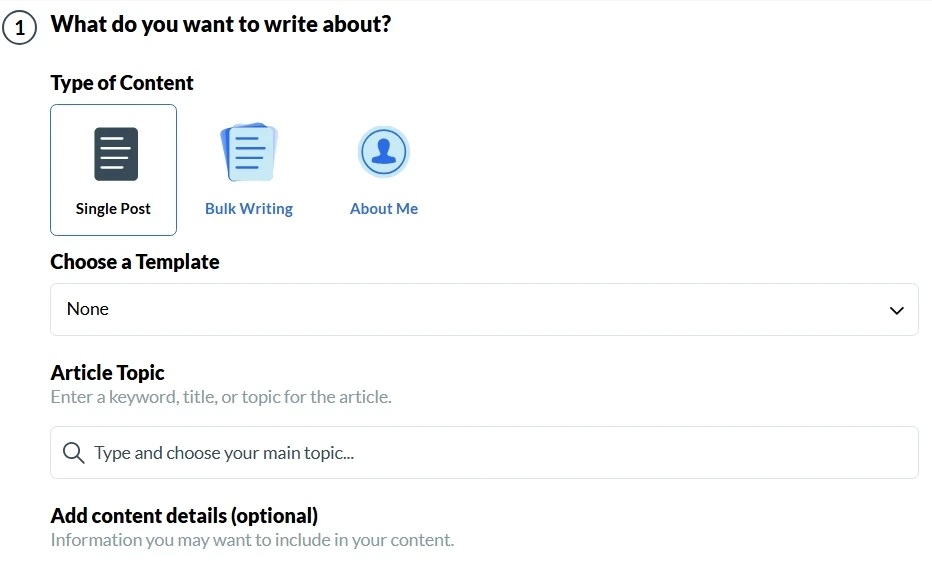
But as my sites grow, I want tighter control over layout, spacing, section flow, and on-page structure. So, I build articles directly in HTML blocks using GPT. It keeps formatting clean, consistent, and scalable across multiple sites.
The training taught me how to structure content properly. What changed is that I now apply that structure at a deeper technical level. It’s faster and far more efficient for how I build today. And, it's not for everyone to learn. Level up to this only once you've got the core writing technique nailed down first.
5. Stock Photos vs Prompt-Driven Images
I used Pixabay and stock photo sites for years. Search, scroll, download, hope it matches your message. Sometimes it worked. Often it felt generic.
Now, if I want something specific, I build it. I describe the environment, the emotion, the context, and generate something tailored to the article’s message.
The lesson wasn’t “use this stock site.” The lesson was “support your content visually.” Once you understand the principle, the tool becomes secondary.
I did write about this here: From Pixabay to Prompts: How Images Quietly Evolved Without Us Noticing
6. Automated Video Tools vs Showing Up on Camera
Video was always recommended in my early training days, and I resisted it for a long time. I used article-to-video converters, such as Steve.ai that would turn blog posts into automated YouTube content. It checked the box and it technically gave me video presence.
But it didn’t build trust.
Eventually, I realized that if I’m building a brand, hiding behind automation isn’t a long-term strategy. I still script. I still use teleprompter assistance. I’m not suddenly a natural on camera. But I show up now. That matters. As I look back on my Youtube video's, the difference between that first one, and my latest one is a world of difference.
It’s not perfectly polished. It’s not cinematic. It’s real. And real compounds differently. And it makes me feel better.... sort of!
7. Chasing ClickBank vs Building Real Assets
This one is probably the biggest mindset shift.
When I started, I chased ClickBank offers hard. High commissions, flashy landing pages, promises of fast payouts. It felt like that was the shortcut. Just find a hot offer, write around it, and hope conversions roll in.
Don't get me wrong, i'm sure ClickBank converts like crazy when used right, but the way i see it, that was then, this is now.
What I learned fairly quickly is that chasing high commissions without building a real asset underneath it is exhausting. The offers change, refund rates fluctuate, competition is aggressive and you’re building traffic for someone else’s funnel.
Over time, I realized I didn’t want to build around those types of offers. I wanted to build assets that I control. Brands, content hubs and authority sites that compound over years.
Now I steer clear of that whole chase. Not because affiliate marketing doesn’t work, but because my focus shifted toward sustainability. I’d rather build something that grows steadily than sprint after every shiny commission that pops up.
That shift alone changed how I approach everything else.
What Actually Stayed the Same
Here’s the part that matters.
The tools may have changed but the principles most definitely have not!
My advice:
- Build assets, not quick wins.
- Structure your content intentionally.
- Think long term.
- Improve conversion points.
- Keep learning and adapting instead of freezing your workflow in whatever year you started.
Wealthy Affiliate gave me the foundation in 2022. Everything since then has been iteration layered on top of that foundation.
If you’re new, don’t get distracted by every shiny tool that pops up. Learn the basics properly. Once you understand why something works, you’ll naturally evolve how you implement it.
That’s what happened to me, and I’m still refining the process and learning something new every day.
Share this insight
This conversation is happening inside the community.
Join free to continue it.The Internet Changed. Now It Is Time to Build Differently.
If this article resonated, the next step is learning how to apply it. Inside Wealthy Affiliate, we break this down into practical steps you can use to build a real online business.
No credit card. Instant access.