From Pixabay to Prompts: How Images Quietly Evolved Without Us Noticing


Published on December 14, 2025
Published on Wealthy Affiliate — a platform for building real online businesses with modern training and AI.

There was a time when discovering Pixabay felt like a breakthrough moment for online creators. Suddenly, you no longer needed a camera, a studio, or a budget to make your content look professional. All you needed were the right keywords and a bit of patience while scrolling.
For bloggers, affiliate marketers, and early digital builders, stock images weren’t just a convenience. They were permission. Permission to publish, experiment, and build something without waiting for perfect conditions. Ideas could move faster because visuals were no longer a bottleneck.
But as quietly as stock images solved that problem, they also stopped changing.
Not in a dramatic way, and not overnight, but gradually enough that most of us didn’t notice until the images themselves started feeling familiar, even when we were seeing them for the first time.
The Plateau Stock Photography Hit Without Warning
Anyone who has relied on free stock images long enough has seen the repetition creep in. The same smiling teams gathered around laptops. The same entrepreneurs working from cafés. The same staged productivity scenes meant to represent ambition, success, or creativity.
Technically, these images are still good. The lighting is right. The composition is clean. The quality hasn’t dropped.
What changed is relevance.
Stock photography solved access to visuals, but it never solved originality. Every image represents someone else’s interpretation of a concept, frozen in time, and reused by thousands of creators trying to communicate completely different messages.
As the internet matured, originality stopped being optional. Algorithms, audiences, and brands all started rewarding specificity instead of polish, and that’s where stock imagery quietly began to fall behind.
How AI Changed the Equation Entirely
AI didn’t make stock photos better. It removed the need to search through them in the first place.
Instead of translating an idea into keywords and hoping something close enough already exists, creators can now describe what they actually want to communicate and generate a visual built for that exact purpose.
There’s no scrolling through endless options, no licensing questions to double-check, and no settling for images that almost fit. The image isn’t borrowed anymore. It’s created.
That shift is what makes Image Studio different, even if it doesn’t announce itself loudly.
Ready to put this into action?
Start your free journey today — no credit card required.
Image Studio Without the Buzzwords
Image Studio isn’t about producing AI art for novelty or replacing designers. It’s about eliminating the creative loss that happens when ideas have to be filtered through availability.
For years, creators were forced to adapt their thoughts to match what already existed in image libraries. The idea came first, but the image always had the final say. Image Studio reverses that relationship.
You start with the idea, the tone, the setting, and the intent behind the content. From there, the visual is created to support that message instead of reshaping it. The result feels intentional because it is intentional, and that changes how content comes together.
Once the image is built from the thought itself, content creation stops being about compromise and starts feeling like expression.
A Visual Reality Check
Traditional stock images still look polished, but they also look familiar, and familiarity is what causes content to blend into the background instead of standing out.
Here are some example's we've all seen with stock photos:
 Digital Nomad (pixabay)
 Hot Air Balloon over the desert (pixabay)
 Person Over-looking a mountain (pixabay)
AI-generated visuals may not look perfect in a traditional sense, but they feel specific. That specificity is what builds identity, especially for creators trying to differentiate themselves in crowded spaces.
 Digital Nomad enjoing themselves by the pool with a laptop (image Studio)
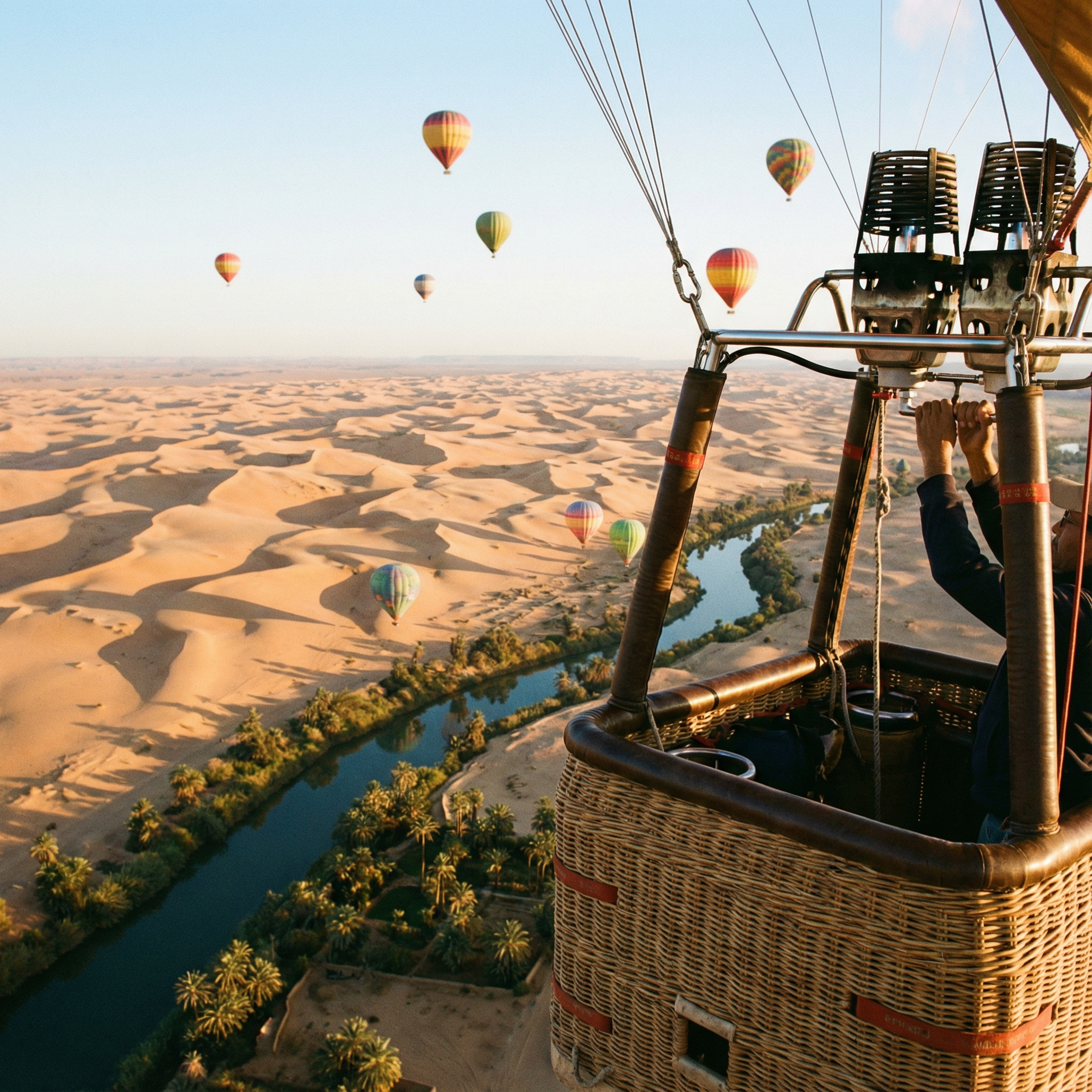 Looking out of a hot air balloon across the desert (Image Studio)
I think you see the differences?
Why This Shift Matters for Builders
You don’t need to be a designer to benefit from this change. You need clarity.
If you can explain an idea clearly, you can now visualize it without relying on someone else’s creative decisions. That’s the real skill shift happening behind the scenes.
Stock images trained creators to search. AI images train creators to think.
The Change Most People Haven’t Fully Processed
Stock platforms aren’t disappearing, but they are becoming secondary tools instead of foundational ones. AI image engines remove one of the last external dependencies creators had when turning ideas into publishable content.
If you can imagine something clearly enough to describe it, you can now make it visible. Libraries, stock engines, and workaround solutions are no longer mandatory steps in the process.
That changes how fast ideas move from thought to reality.
So I’ll ask you directly:
Do you still rely on free images from Pixabay, or have you started creating visuals that exist only because you imagined them?
Share this insight
This conversation is happening inside the community.
Join free to continue it.The Internet Changed. Now It Is Time to Build Differently.
If this article resonated, the next step is learning how to apply it. Inside Wealthy Affiliate, we break this down into practical steps you can use to build a real online business.
No credit card. Instant access.