Pinterest, Oh Pinterest, why do you confuse me!


Published on March 21, 2026
Published on Wealthy Affiliate — a platform for building real online businesses with modern training and AI.


About 2 months ago, I hit reset on Pinterest and shared what happened here:
https://my.wealthyaffiliate.com/jdenesovych/blog/i-deleted-all-my-pinterest-pins-and-then-ignored-it-for-a-month
That post was more about the decision itself and what I noticed right after stepping away.
This one is different.
This is what two months of actual progress looks like after starting over, without perfect consistency and without fully committing to the system yet.
What the last 60 days actually look like
I checked my analytics expecting things to be flat.
Instead, here’s what showed up:
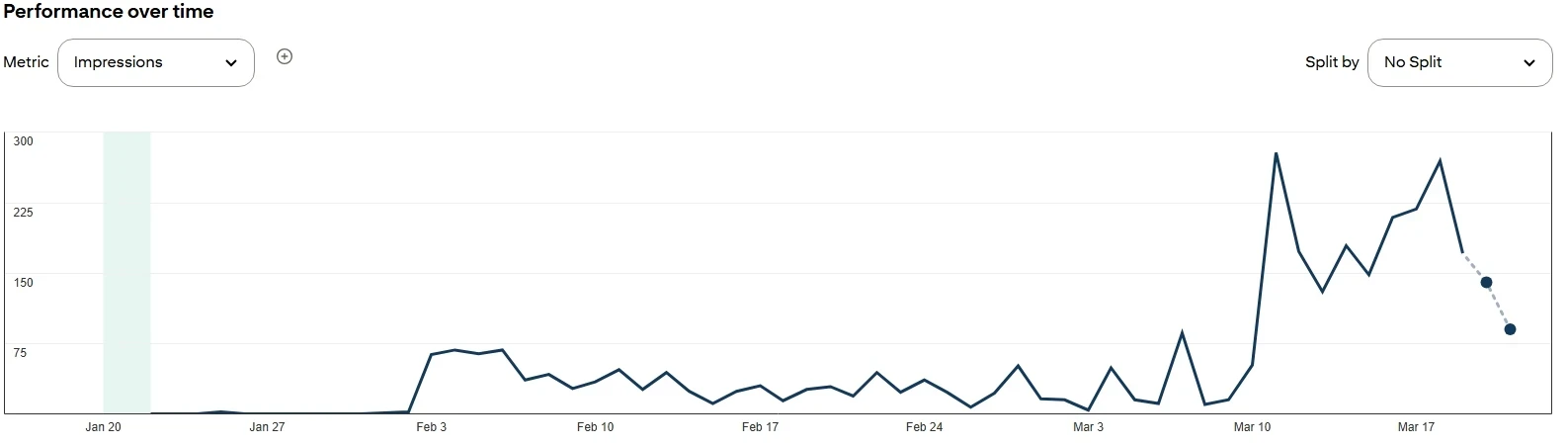
- 3,185 impressions
- 214 engagements
- 76 outbound clicks
- 26 saves
- just under 2,000 total audience
- 102 engaged users
Nothing here is explosive, and I’m not presenting it like it is. What matters is that there is movement at all, especially considering how inconsistent the effort has been.
That’s the part that made me stop and look closer.
Why this doesn’t quite add up
When I step back and look at the numbers, the effort doesn’t match what’s happening.
In the last 60 days, I’ve created 28 pins. That’s it.
I’ve been batching them using a simple system where I schedule about 7 pins at a time to go out once per night around 8:30. Some weeks I check trends and adjust angles, but I wouldn’t call this a dialed-in strategy yet. It’s more like controlled inconsistency.
Most of the pins are tied directly to new articles. I publish something, create a pin, schedule it, and move on.
On the design side, I’ve been using WA’s image studio and leaning into more POV-style visuals. Less of the soft, generic travel look and more of the kind of image that makes you stop for a second and wonder how it was even captured.
Keyword-wise, I’ve been loosely targeting trending searches, especially anything tied to 2026 and seasonal travel. I wouldn’t say I’ve mastered Pinterest SEO yet, but I’m not posting blindly either.
Total time invested across the entire two months is probably under two hours.
That’s the part that doesn’t make sense.
Ready to put this into action?
Start your free journey today — no credit card required.
Because with that level of input, Pinterest is still generating impressions, clicks, and engagement in the background.
What is starting to make sense
Once I looked closer, the randomness started to disappear.
The pins that are getting traction are clearly tied to focused topics. Costa Rica travel, affordable experiences, and itinerary-style content are showing up repeatedly. The same angles, just approached in slightly different ways.
That tells me this isn’t luck. It’s direction.
It also confirms something I’ve been resisting a bit. Pinterest isn’t about volume first. It’s about clarity first, then consistency.
The other piece that’s becoming obvious is how different this platform behaves compared to everything else. Content doesn’t fade the same way. It sits, gets indexed, and continues to circulate over time, even if you’re not actively feeding it every day.
That changes how effort compounds.
The part that’s on me
At this point, I can’t say the system isn’t working.
Between Pinterest analytics, Travelpayouts tracking, and what I’m seeing inside Google Analytics, there are clear signs of traffic starting to build. It’s not massive, but it’s consistent enough to prove the connection is there.
People are clicking through. Some are sticking around longer. The structure improvements on the site are starting to reflect in engagement.
So the issue isn’t whether this works.
The issue is that I haven’t been consistent enough to really see what it can do.
That’s not a strategy problem. That’s a follow-through problem.
Why it still feels unpredictable
Part of the confusion comes from how delayed everything is.
You don’t post something and immediately know if it worked. You publish, you schedule, and then you wait. The feedback shows up later, and by then you’re trying to remember what you even did differently.
When your effort is spread out and inconsistent, that delay makes it harder to connect cause and effect.
It ends up feeling random, even when it isn’t.
What this tells me going forward
Two months in, I don’t need more proof that Pinterest is worth the time.
What I need is consistency.
The system is already partially in place. Pins are being created, scheduled, and tied to real content. The topics are starting to align with what people are actually searching for.
Now it’s about tightening that up and repeating it properly.
Not more effort. Just better follow-through.
Final thought
If you’re wondering what progress looks like after a couple of months without going all in, this is it.
Some movement. Some traction. Enough data to know it’s working.
But also a very clear gap between what’s happening now and what could happen with consistent execution.
That’s the part I’m stepping into next.
Curious how long it took others before Pinterest started to feel less random and more predictable.
Share this insight
This conversation is happening inside the community.
Join free to continue it.The Internet Changed. Now It Is Time to Build Differently.
If this article resonated, the next step is learning how to apply it. Inside Wealthy Affiliate, we break this down into practical steps you can use to build a real online business.
No credit card. Instant access.